

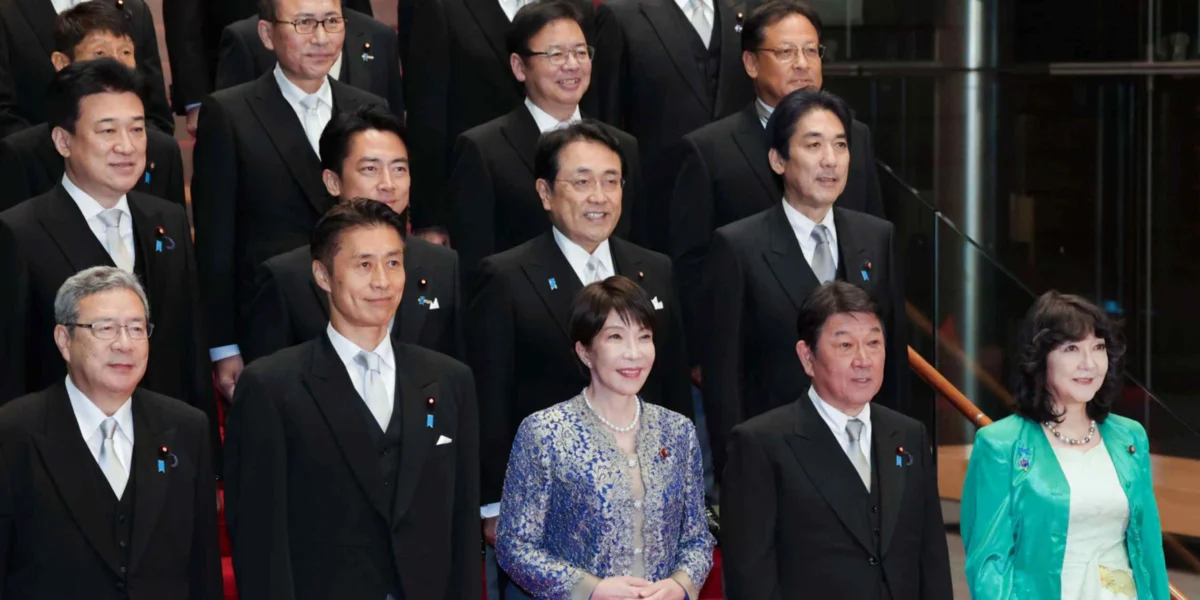
TOKYO – Prime Minister Sanae Takaichi’s administration continues to command significant public approval, with the latest poll conducted by Nikkei and TV Tokyo indicating a sustained support rate of 62% for her cabinet. This figure, released following a recent, comprehensive reshuffling of ministerial portfolios, underscores a period of remarkable public confidence that is beginning to rival some of Japan’s longest-standing leadership popularity streaks. The ongoing strength of Takaichi’s government is particularly noteworthy in the context of Japanese political history, where cabinet approval ratings can be notoriously volatile.
A Reshuffled Cabinet, Unwavering Support
The recent cabinet reshuffle, a standard practice for many governments seeking to inject new energy or address evolving challenges, appears to have had little to no negative impact on public sentiment towards Prime Minister Takaichi. In fact, the 62% approval rating suggests a consolidation of public trust. This level of support is a significant benchmark, placing Takaichi’s government on a trajectory to potentially challenge the tenure of some of Japan’s most enduring Prime Ministers. The previous approval rating for the Takaichi cabinet, prior to the reshuffling, had also been robust, indicating that the public’s positive perception is not solely a reaction to new faces but a broader endorsement of the Prime Minister’s leadership and policy direction.
The Nikkei and TV Tokyo poll, a widely respected barometer of public opinion in Japan, surveyed a representative sample of the electorate across the nation. The methodology typically involves telephone interviews with a statistically significant number of respondents, ensuring a reliable snapshot of national sentiment. The 62% approval rating signifies that a substantial majority of the Japanese public currently views the Takaichi cabinet favorably, expressing confidence in its ability to govern effectively. Conversely, the disapproval rating, while not explicitly stated in the initial report, is understood to be considerably lower, further emphasizing the government’s strong standing.
Historical Context: The Enduring Legacy of Popularity
To fully appreciate the significance of Takaichi’s current popularity, it is crucial to place it within the historical context of Japanese politics. The benchmark for prolonged cabinet popularity in recent decades is often associated with Shinzo Abe, whose second premiership (2012-2020) was characterized by a period of relative stability and consistent public approval, despite facing its own share of controversies and challenges. Abe’s government managed to maintain a significant level of public backing for an extended period, a feat that many subsequent leaders have struggled to replicate.
The current trajectory of Prime Minister Takaichi’s approval ratings suggests that her administration is not only weathering the typical storms of political life but is also building a foundation of enduring public trust. While the exact duration of Abe’s most popular periods varied across different polls and metrics, his government often hovered in the high 50s and 60s percent approval for significant stretches. Takaichi’s current 62% rating places her firmly in that echelon, and if sustained, could see her administration achieve a similar level of longevity in public regard.
The longevity of a prime minister’s popularity is often a critical factor in their ability to implement ambitious policy agendas and navigate domestic and international crises. A high approval rating provides a mandate and shields the leader from immediate political pressure, allowing for greater focus on governance. Conversely, a dip in popularity can embolden opposition parties and lead to a more fractured political landscape, potentially hindering legislative progress.
The Impact of the Recent Reshuffle
The recent cabinet reshuffle, which saw several key ministerial positions change hands, was reportedly aimed at invigorating the government and adapting to emerging national priorities. While the specific rationale behind each appointment and dismissal is often a subject of intense political analysis, the poll results indicate that the public has largely accepted and endorsed these changes. This suggests that the Takaichi administration has been successful in communicating the necessity and strategic thinking behind the reshuffle, or that the public’s trust in Takaichi’s judgment as Prime Minister overrides any potential concerns about the specific personnel changes.
The reshuffled cabinet, as indicated by the accompanying photograph and caption, includes a diverse range of individuals tasked with overseeing critical government functions. The 49% approval rating for the "personnel for the Liberal Democratic Party’s leadership and the reshuffled Takaichi cabinet" mentioned in the original report’s caption, while seemingly lower than the overall cabinet approval, likely refers to a specific aspect of the poll or a different survey altogether. It’s important to distinguish between overall cabinet approval and approval of specific personnel appointments, which can be influenced by individual minister’s perceived effectiveness or public profile. The 62% figure, however, represents the broader endorsement of the entire Takaichi government.
Underlying Factors Contributing to Sustained Support
Several factors may be contributing to the sustained popularity of Prime Minister Takaichi’s cabinet. While specific policy details are not elaborated in the initial report, general trends in Japanese governance often include a focus on economic stability, national security, and social welfare. If Takaichi’s administration has been perceived as successfully navigating these areas, it would naturally translate into public approval.
Economic Performance: Japan’s economy, while facing long-term demographic challenges, has seen periods of moderate growth and stability under Takaichi’s premiership. Policies aimed at stimulating domestic demand, encouraging investment, and managing inflation, if perceived as effective by the public, would be a significant driver of support. Detailed economic indicators, such as GDP growth rates, unemployment figures, and consumer confidence indices, would provide further quantitative evidence of the government’s impact on the lives of ordinary citizens.
National Security and Foreign Policy: In an increasingly complex geopolitical environment, a strong and decisive stance on national security can resonate with the public. Prime Minister Takaichi’s administration has likely been engaged in diplomatic efforts and defense policy initiatives that aim to safeguard Japan’s interests and maintain regional stability. Public perception of the government’s handling of international relations, including relations with neighboring countries and global powers, plays a crucial role in shaping approval ratings.
Social Policies and Public Services: The effectiveness of the government in delivering essential public services, managing social challenges such as an aging population, and implementing policies that benefit families and communities are also critical determinants of public trust. Initiatives related to healthcare, education, social security, and disaster preparedness would be closely scrutinized by the electorate.
Future Implications and the Path Ahead
The current high approval rating presents Prime Minister Takaichi with a valuable opportunity. It provides a strong mandate to pursue her policy agenda with greater confidence and less immediate political opposition. This can be particularly important for implementing potentially unpopular but necessary reforms, or for navigating significant national and international challenges.
The sustained popularity also raises questions about the future of Japanese politics. If Takaichi’s government continues to maintain this level of public endorsement, it could lead to a period of prolonged political stability, a rarity in recent Japanese history. This stability could, in turn, foster greater long-term planning and investment, both domestically and internationally.
However, political landscapes are rarely static. The factors contributing to Takaichi’s current popularity will need to be consistently addressed and adapted to evolving public sentiment and external pressures. Economic downturns, unforeseen international crises, or domestic scandals could quickly alter the public mood. The administration’s ability to remain responsive, transparent, and effective in the face of such challenges will be crucial in determining whether this popularity streak can indeed reach and surpass historical benchmarks.
The upcoming months and years will be a critical test for Prime Minister Takaichi and her government. The current 62% approval rating is a powerful indicator of public confidence, but sustained leadership requires not just initial approval, but the ability to consistently deliver on promises and adapt to the ever-changing realities of governing a complex nation like Japan. The ongoing performance of the reshuffled cabinet, the tangible impacts of their policies, and their ability to communicate effectively with the public will all be under close observation as the administration strives to etch its name into the annals of Japanese political history.
