

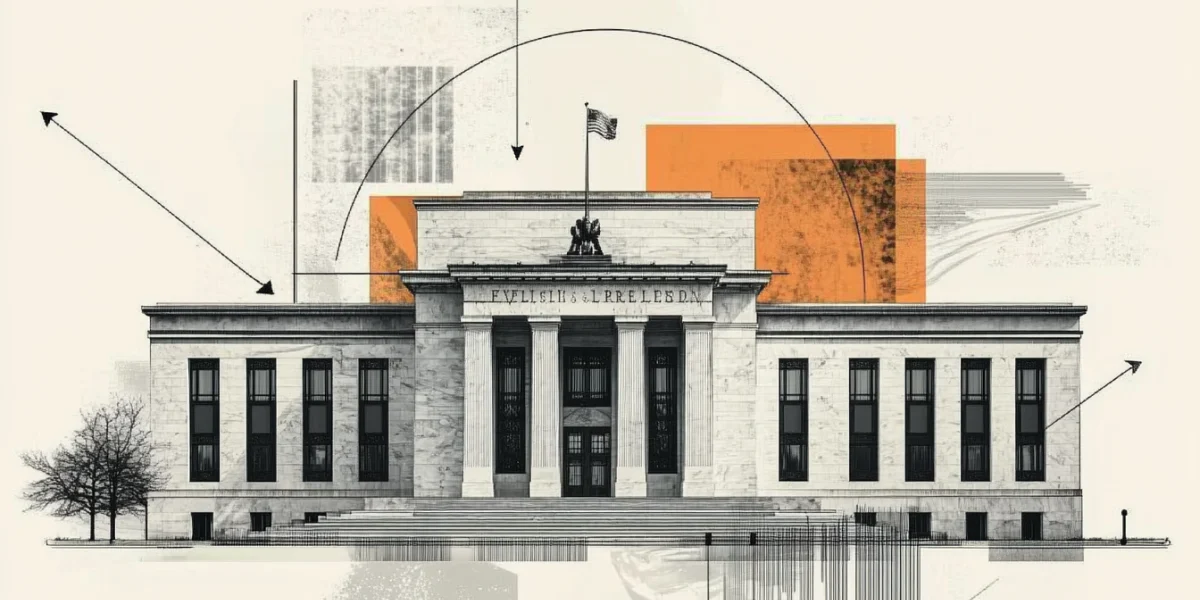
San Francisco Federal Reserve (Fed) President Mary C. Daly delivered a clear and resolute message on Friday, stating unequivocally that while the U.S. economy remains fundamentally sound, inflation stands as its "key problem." Her remarks strongly indicated a bias towards continued monetary tightening, asserting that "rates need to go up" and that "in all likelihood we will need to raise rates." Daly’s comments underscore the Federal Open Market Committee’s (FOMC) persistent vigilance over price stability, even as the economy demonstrates surprising resilience in other sectors.
Daly’s Candid Assessment: Inflation as the "Key Problem"
Speaking to a receptive audience, President Daly articulated a nuanced view of the American economic landscape. She praised the broad-based employment gains and a notable resurgence in manufacturing, signaling robust underlying demand and a healthy labor market. However, she quickly pivoted to the elephant in the room: inflation. Daly highlighted that a "myriad of things are pushing up inflation, which makes it concerning," pointing to the complex interplay of factors that have elevated prices beyond the Fed’s 2% target. A critical observation from her was the increasing propensity of producers to "pass on costs," suggesting that inflationary pressures are becoming more entrenched within the supply chain and consumer pricing. This behavior poses a significant challenge for policymakers, as it can perpetuate a cycle of rising prices and wages, making inflation harder to dislodge.
Daly’s assertion that "it is hard to say whether monetary policy is restrictive enough" reflects an ongoing debate within the Fed and among economists regarding the current stance of interest rates relative to the economy’s needs. Despite a series of aggressive rate hikes over the past year, the enduring strength of consumer spending and a tight labor market suggest that the full impact of monetary tightening may not yet have fully materialized. The San Francisco Fed chief emphasized that she is "watching services ex-housing inflation carefully, it’s not moving in the right direction," singling out a particularly sticky component of inflation that often reflects underlying demand and wage pressures more directly than volatile goods prices.
The Economic Backdrop: A Robust Yet Challenging Landscape
To fully appreciate Daly’s remarks, it is essential to contextualize them within the broader economic narrative of the past few years. Following the unprecedented disruption of the COVID-19 pandemic, the U.S. economy experienced a rapid rebound, fueled by massive fiscal and monetary stimulus. This swift recovery, however, collided with strained global supply chains, leading to an initial surge in inflation that many central bankers, including those at the Fed, initially deemed "transitory."
As the "transitory" narrative faded, replaced by concerns of persistent inflation, the Federal Reserve embarked on one of its most aggressive tightening cycles in decades. Beginning in March of the previous year, the FOMC raised the federal funds rate from near-zero levels to a range that is now considered restrictive. The Fed’s dual mandate—to achieve maximum employment and maintain price stability—has been heavily weighted towards the latter, given the historically high inflation rates observed. The Consumer Price Index (CPI), a key measure of inflation, peaked at over 9% year-over-year in mid-2022, a level not seen in four decades. While it has since moderated, it remains well above the Fed’s target.
The labor market, as Daly noted, has remained remarkably resilient. The unemployment rate has hovered near multi-decade lows, and job growth has continued to surprise on the upside. This strength, while positive for workers, also contributes to inflationary pressures through rising wages and robust consumer demand. Daly’s observation of "overlapping shocks" changing the "underlying rate of inflation" points to the confluence of factors—from the pandemic’s supply chain dislocations to geopolitical events like the war in Ukraine—that have fundamentally altered the inflation dynamics of the economy, making it more challenging to return to pre-pandemic price stability.
A Hawkish Tone from the San Francisco Fed
Daly’s comments align with a generally hawkish stance prevalent among many Fed officials, particularly those who emphasize the need to bring inflation firmly back to target. Her statement that "markets understand Fed’s reaction function" suggests confidence that the central bank’s commitment to fighting inflation is well-communicated and priced in by investors. This "reaction function" refers to how the Fed is expected to adjust policy in response to changes in economic data, particularly inflation and employment figures. When inflation is high, the market anticipates rate hikes; when it is low or the economy weakens, rate cuts are expected.
The Federal Open Market Committee (FOMC), the Fed’s primary policymaking body, comprises twelve members: the seven members of the Board of Governors, the President of the Federal Reserve Bank of New York, and four of the remaining eleven regional Reserve Bank presidents who serve on a rotating basis. As a regional Fed president, Daly’s voice is integral to these discussions. Her perspective, rooted in direct observations from businesses and consumers in her district, provides valuable ground-level insights that inform the broader monetary policy debate. Her dismissal of the Summary of Economic Projections (SEP) as "just a point in time" is also notable. The SEP, which includes the infamous "dot plot" illustrating individual FOMC members’ projections for future interest rates, is often closely scrutinized by markets. Daly’s comment implies that while useful, these projections are highly fluid and subject to change based on evolving economic data, and should not be over-interpreted as fixed policy commitments. She instead stresses that the "FOMC must be transparent, accountable and clear" in its communication, emphasizing the importance of clear guidance rather than rigid adherence to past forecasts.
Decoding the Data: Inflation, Labor, and Producer Behavior
Daly’s remarks prompt a deeper look into the economic indicators she referenced.
- Inflation Components: The focus on "services ex-housing inflation" is crucial. While headline inflation has declined due to falling energy prices and easing goods inflation, core services inflation (which excludes volatile food and energy components and is further refined by removing housing costs) tends to be more persistent. This category is highly sensitive to wage growth and labor market tightness, as services are labor-intensive. If this component is not "moving in the right direction," it signals that underlying inflationary pressures remain strong, necessitating continued vigilance from the Fed.
- Labor Market Strength: Daly’s observation of "employment broad-based" is supported by consistently low unemployment rates (e.g., around 3.7% recently) and strong payroll additions, often exceeding expectations. Wage growth, while showing some signs of moderation, has generally remained elevated, contributing to household purchasing power and consumer resilience.
- Producer Behavior: The willingness of "more producers saying they want to pass on costs" is reflected in producer price index (PPI) data and various business surveys. The PPI measures average changes in selling prices received by domestic producers. When input costs rise, businesses attempt to maintain profit margins by passing these costs along to consumers, thereby fueling consumer price inflation. Surveys like the ISM Manufacturing and Services PMIs often include components on prices paid and prices received, which can corroborate these anecdotal observations.
- Consumer Resilience: "Consumer spending surprisingly resilient" is a testament to the strong labor market and accumulated savings from the pandemic era. Retail sales figures and personal consumption expenditures (PCE) data have shown continued strength, even in the face of higher interest rates and elevated inflation. This resilience, while preventing an economic downturn, also complicates the Fed’s task of cooling demand to bring inflation down. Daly’s interest in "how the gap between consumer sentiment and behavior gets closed" highlights the paradox where surveys often show consumers feeling pessimistic about the economy, yet their spending habits remain robust. This gap suggests that while concerns exist, they are not yet translating into a significant slowdown in economic activity.
The Productivity Puzzle: AI, Technology, and Labor Dynamics
Daly touched upon another critical, long-term economic factor: productivity. She noted that "there is little evidence yet that higher productivity AI-driven," but that "other tech is being used to do more with fewer workers." This observation is highly relevant to the inflation outlook. Increased productivity, where workers can produce more output per hour, can be a powerful anti-inflationary force, allowing businesses to absorb higher costs without raising prices, or even reduce prices.
The current excitement around Artificial Intelligence (AI) has sparked hopes for a new era of productivity growth. However, Daly’s cautious stance suggests that while AI holds immense potential, its widespread impact on aggregate productivity is not yet evident in economic data. Instead, businesses are likely leveraging existing technologies and process improvements to optimize labor utilization, allowing them to expand output or maintain current levels with a smaller workforce. This trend, if sustained, could alleviate some labor market tightness and wage pressures, contributing to disinflation over time. However, the immediate impact on inflation remains limited without a broad-based, significant surge in productivity across the economy.
Market Reactions and Policy Implications
Daly’s hawkish tone, particularly her explicit statement that "in all likelihood we will need to raise rates," has significant implications for financial markets. When Fed officials signal further rate hikes, it typically leads to:
- Higher Bond Yields: The yields on U.S. Treasury bonds, particularly short-term maturities, tend to rise as investors anticipate higher future interest rates.
- Stronger U.S. Dollar (USD): As interest rates increase in the U.S., it makes dollar-denominated assets more attractive to international investors seeking higher returns. This increases demand for the dollar, strengthening its value against other major currencies. The provided data indicates that on the day of Daly’s remarks, the US Dollar was indeed strongest against the Swiss Franc, and generally showed positive movements against other major currencies like the Euro, Pound, and Yen, reflecting this sentiment.
- Stock Market Volatility: Higher interest rates can dampen corporate earnings by increasing borrowing costs and potentially slowing economic growth, which can lead to downward pressure on stock valuations.
- Altered Rate Hike Expectations: Futures markets, which price in the probability of future Fed rate changes, would likely adjust to reflect a higher probability of upcoming hikes following such explicit guidance.
Daly’s emphasis that "businesses are cautiously optimistic, but everyone is worried about inflation" perfectly encapsulates the current sentiment. Businesses want to invest and grow, but the uncertainty and cost pressures from inflation act as a significant drag on their confidence and planning. The Fed’s objective is to reduce inflation without triggering a severe recession, a delicate balancing act often referred to as achieving a "soft landing."
The Road Ahead: Navigating Uncertainty
The path forward for the Federal Reserve is fraught with challenges. The "myriad of things" pushing inflation, coupled with the resilience of the economy, means that the terminal rate—the peak interest rate in the current tightening cycle—remains a subject of intense debate. Daly’s remarks clearly lean towards a higher terminal rate than previously anticipated by some, indicating that the Fed is prepared to do what is necessary to restore price stability, even if it entails further tightening.
The FOMC’s commitment to transparency, accountability, and clarity, as articulated by Daly, will be crucial in guiding market expectations and ensuring that policy actions are understood. As the Fed continues to assess incoming data, particularly on inflation and employment, each subsequent meeting will be critical in shaping the economic outlook. The global economy also watches closely, as U.S. monetary policy decisions have ripple effects worldwide, influencing exchange rates, capital flows, and global growth prospects. The Fed’s dual mandate requires a constant re-evaluation of economic conditions, and Daly’s latest comments reinforce the central bank’s unwavering focus on its primary challenge: taming inflation without unduly harming the underlying strength of the American economy.
Understanding the Dollar’s Movement
The US Dollar’s performance is a direct reflection of monetary policy expectations and economic fundamentals. The table provided illustrates the percentage change of the US Dollar (USD) against major currencies. On the day of Daly’s statements, the USD exhibited strength, particularly against the Swiss Franc (CHF), with a 0.49% gain. It also appreciated against the Euro (EUR), British Pound (GBP), and Japanese Yen (JPY), albeit by smaller margins (0.25%, 0.23%, and 0.02% respectively). This strengthening is a typical market reaction to hawkish Fed commentary, as higher anticipated interest rates make the dollar a more attractive asset for yield-seeking investors. Conversely, when the Fed signals a pause or cut in rates, the dollar tends to weaken.
Fed’s Toolkit and Mandate Explained
The Federal Reserve plays a pivotal role in shaping monetary policy in the U.S., operating under a dual mandate to achieve price stability and foster maximum employment. Its primary tool for these goals is adjusting interest rates. When inflation is above its 2% target, as Daly highlighted, the Fed raises interest rates. This increases borrowing costs across the economy, aiming to cool demand and reduce inflationary pressures. Higher rates also strengthen the US Dollar, making the U.S. a more appealing destination for international investment. Conversely, if inflation falls below 2% or unemployment is too high, the Fed may lower rates to stimulate borrowing and economic activity, which typically weighs on the Greenback.
Beyond conventional interest rate adjustments, the Fed has other tools for extreme situations. Quantitative Easing (QE) involves the Fed buying large quantities of bonds from financial institutions, effectively injecting money into the financial system to lower long-term interest rates and stimulate lending. This non-standard measure, used during crises like the 2008 Great Financial Crisis, typically weakens the US Dollar. Quantitative Tightening (QT), the reverse of QE, involves the Fed reducing its balance sheet by allowing maturing bonds to roll off without reinvestment. QT removes liquidity from the financial system and is generally positive for the US Dollar’s value, as it represents a tightening of monetary conditions. Daly’s focus on rate hikes indicates the Fed is primarily using its conventional tool, but the broader context of its toolkit remains relevant for understanding its full capacity to influence the economy.
