

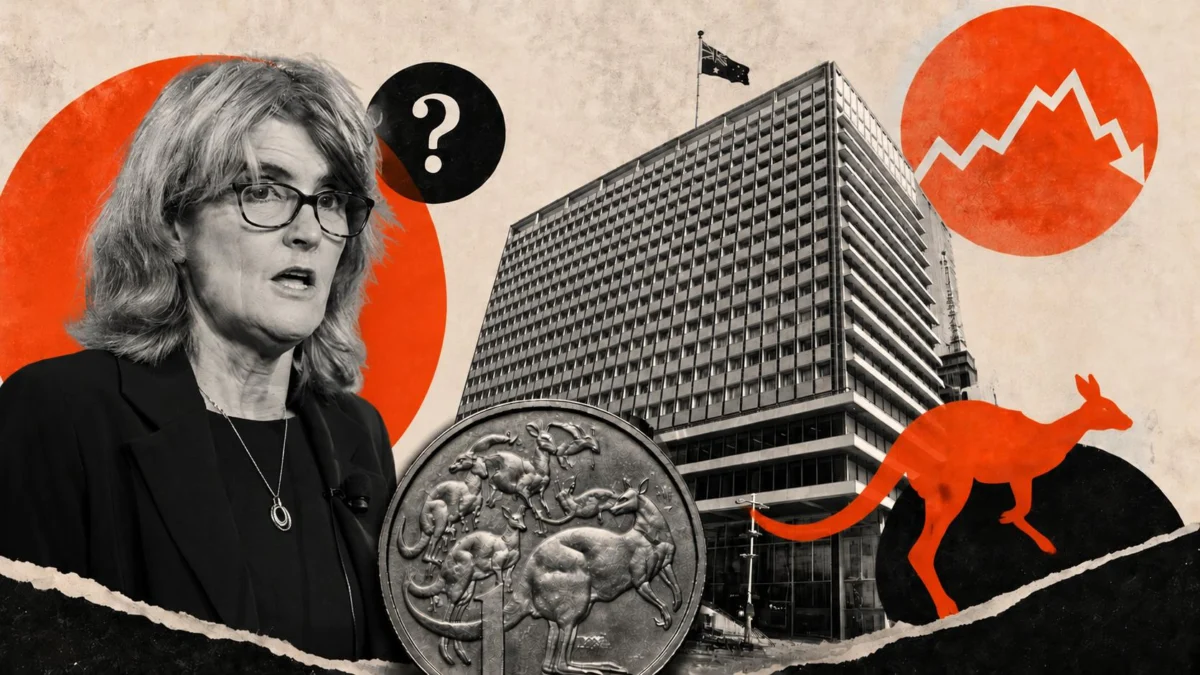
The Reserve Bank of Australia (RBA) is set to announce its latest monetary policy decision on Tuesday, with widespread anticipation among economists and market analysts for a 25 basis point (bps) increase in the Official Cash Rate (OCR), elevating it to 4.85% from its current 4.6%. Should the RBA proceed as expected, this move would mark the fifth interest rate hike already in 2026, propelling the OCR to an 18-year high, a significant milestone reflecting the central bank’s aggressive stance against persistent inflation. The eagerly awaited decision will be unveiled at 03:30 GMT, concurrently with the release of the RBA’s comprehensive Monetary Policy Statement, providing crucial insights into the bank’s economic outlook and future policy trajectory. This will be followed an hour later, at 04:30 GMT, by a press conference led by RBA Governor Michele Bullock, where her commentary will be dissected for any signals regarding the path of monetary policy. In the hours leading up to this pivotal announcement, the Australian Dollar (AUD) has demonstrated fragility, struggling to maintain parity above the key psychological threshold of 0.7000 against the US Dollar (USD), underscoring market anxiety and the currency’s sensitivity to interest rate differentials and domestic economic health.
The Unrelenting March of Inflation: A Global and Domestic Challenge
The primary catalyst behind the RBA’s series of rate increases throughout 2026 has been the stubborn persistence of elevated inflationary pressures, a phenomenon not unique to Australia but one that has necessitated decisive action from its central bank. Australia’s journey into this current tightening cycle began notably in February 2026, with the RBA initiating its first rate hike of the year, a move that predated the subsequent escalation of the Middle East conflict which later contributed to a surge in global energy prices. Despite four subsequent rate increases already implemented this year, the latest available data paints a challenging picture. Australia’s annual inflation rate, as measured in Q3 2026, stood stubbornly at 3.9%, a figure considerably above the RBA’s mandated target range of 2-3%. Further compounding these concerns, the RBA’s preferred measure for underlying inflation, the core Trimmed Mean Consumer Price Index (CPI), accelerated to 3.7% year-on-year, marking an increase from 3.6% recorded in Q2. These figures clearly illustrate that the central bank’s previous efforts, while substantial, have yet to fully tame the inflationary beast.
Governor Michele Bullock recently articulated the RBA’s concerns during an appearance before Parliament, stating unequivocally that "Some of the international and domestic upside risks to inflation have materialized or are materializing." This candid admission highlights the RBA’s recognition of both external shocks, such as geopolitical tensions impacting commodity markets and global supply chains, and internal factors, like robust domestic demand and wage pressures, contributing to the inflationary environment. Bullock further emphasized the critical importance of price stability, noting, "It’s important for the economy that inflation does not diverge from the target for too long, since that risks it becoming embedded in inflation expectations, which feeds through to price and wage setting decisions." This statement underscores the RBA’s proactive stance to prevent a wage-price spiral, where rising wages chase rising prices, leading to a self-perpetuating cycle of inflation that becomes significantly harder to break. The confluence of elevated inflation data and the Governor’s resolute statements strongly points towards the necessity of another rate hike at the upcoming Board meeting.
A Chronology of Tightening: RBA’s 2026 Policy Path
The year 2026 has been characterized by a resolute and consistent effort by the Reserve Bank of Australia to rein in inflationary forces through a series of interest rate increases. The trajectory began in February, with the RBA surprising some market participants by delivering its first hike, setting the tone for what would become an aggressive tightening cycle. This initial move was predicated on burgeoning domestic demand and early signs of accelerating wage growth, even before geopolitical events significantly impacted global energy markets. March saw a continuation of this policy, as subsequent inflation data confirmed the RBA’s concerns, pushing the OCR higher.
The decision in April further solidified the central bank’s commitment, driven by persistent strength in the labor market and consumer spending figures that suggested the economy was absorbing the initial rate increases with resilience. By May, the RBA was grappling with the full impact of global energy price surges, exacerbated by the Middle East conflict, which fed directly into Australia’s import costs and domestic fuel prices, necessitating yet another hike. Each of these four preceding hikes was accompanied by statements reinforcing the RBA’s unwavering focus on returning inflation to its target band.
Through this period, the RBA’s Monetary Policy Statements have consistently highlighted the evolving domestic and international economic landscape. Early 2026 statements focused on robust employment figures, with unemployment rates hovering near multi-decade lows, and the inflationary impact of strong consumer balance sheets built during the pandemic. As the year progressed, the emphasis shifted to the imported component of inflation, particularly from energy and supply chain disruptions, alongside domestic factors such as strong services inflation and a tightening labor market driving wage expectations higher. The upcoming decision marks the culmination of these sustained efforts, potentially bringing the total number of hikes for the year to five, a pace that reflects the urgency of the inflation challenge.
Underlying Economic Currents: Beyond the Headline Inflation Figures
While headline and core inflation figures remain the primary concern, the RBA’s policy decisions are informed by a broader spectrum of economic indicators that collectively paint a picture of the Australian economy’s health and its capacity to absorb higher borrowing costs. The labor market, for instance, has demonstrated remarkable resilience throughout 2026. Unemployment rates have remained historically low, indicating strong demand for labor, which in turn fuels wage growth. While a healthy labor market is generally positive, excessive wage growth without corresponding productivity gains can become an inflationary driver, a concern Governor Bullock alluded to regarding "wage setting decisions." Data on average weekly earnings and unit labor costs have been closely monitored for signs of acceleration, providing further justification for tightening monetary policy.
Consumer spending, a significant component of Australia’s GDP, has also remained robust, albeit with some signs of moderation in discretionary categories. Retail sales data, while perhaps showing a slight deceleration in growth compared to the peak post-pandemic surge, still indicates a resilient consumer base, suggesting that previous rate hikes have not yet significantly dampened aggregate demand to the extent needed to cool inflation. Similarly, business investment, though facing higher borrowing costs, has generally held up, reflecting ongoing confidence in future economic prospects.
The housing market, a particularly sensitive sector to interest rate changes, has shown mixed signals. While some segments, particularly in major metropolitan areas, have seen price corrections, the overall market has demonstrated a degree of resilience, partly due to persistent supply shortages and strong population growth. However, rising mortgage interest payments are increasingly impacting household disposable income, potentially becoming a constraint on future consumer spending and a source of financial stress for some homeowners.
Globally, the price of key commodities, particularly Iron Ore, Australia’s largest export, continues to play a pivotal role in the nation’s economic health and, by extension, the strength of the Australian Dollar. While Iron Ore prices have seen some fluctuations, generally strong demand from major trading partners, especially China, has provided a consistent tailwind for Australia’s export earnings. However, the global economic slowdown, particularly in China, presents a potential downside risk to commodity prices and, consequently, to the Australian economy. The RBA considers these international factors carefully, as they influence both Australia’s terms of trade and imported inflation.
Governor Bullock’s Forward Guidance: A Hawkish Path Ahead?
The upcoming press conference with Governor Michele Bullock will be scrutinized intensely for any nuances in her tone and forward guidance. With a rate hike already largely priced into market expectations, the critical element will be what Bullock communicates about the RBA’s future intentions. Her recent parliamentary testimony provided a clear indication of the central bank’s resolve. By explicitly stating that "upside risks to inflation have materialized or are materializing," Bullock signaled that the RBA is not merely reacting to past data but is also concerned about the trajectory of future price pressures. These risks likely encompass a range of factors, including persistent global supply chain vulnerabilities, potential for further energy price shocks, and the continued strength of domestic demand.
Her emphasis on preventing inflation from becoming "embedded in inflation expectations" highlights the RBA’s proactive approach to anchor long-term price stability. If households and businesses begin to expect higher inflation consistently, they adjust their wage demands and pricing strategies accordingly, creating a self-fulfilling prophecy. To break this cycle, the RBA must demonstrate its commitment to its inflation target, even if it means prolonged periods of restrictive monetary policy.
Given the current economic landscape, it is highly probable that Governor Bullock will maintain a decidedly hawkish tone. This stance would involve reiterating the RBA’s primary focus on bringing inflation back within the 2-3% target band and leaving the door firmly open for additional interest rate hikes in the coming months. Such communication is crucial to manage market expectations and reinforce the RBA’s commitment to price stability. A hawkish signal would suggest that the central bank is prepared to continue tightening policy for as long as necessary, even if it entails some degree of economic slowdown. Conversely, any softening of this stance, though highly unlikely given recent data, would send a dovish signal and could significantly impact market perceptions and the Australian Dollar’s valuation.
Market Anticipation and AUD Dynamics: Navigating the RBA Decision
The RBA’s decision carries substantial implications for the Australian Dollar, particularly against the US Dollar. As the market has largely priced in a 25 bps rate hike, the immediate reaction of the AUD/USD pair will hinge not just on the rate increase itself, but more significantly on the hawkishness embedded in the accompanying Monetary Policy Statement and, crucially, Governor Bullock’s subsequent press conference.
Should the RBA deliver the anticipated 25 bps hike, the Aussie is likely to find near-term support. However, the extent of these gains will be directly proportional to how assertive and forward-looking Bullock’s hawkish tone is. If she strongly signals that further hikes are likely, or that the RBA remains highly vigilant against inflation, the AUD could see sustained upward momentum. A more muted or balanced statement, even with a hike, might temper AUD’s appreciation.
A scenario involving a larger-than-anticipated hike – for example, a surprise 50 bps increase – while less probable, would undoubtedly trigger a significant near-term AUD rally. Such a move would be interpreted as the RBA acting with greater urgency, potentially supported by a broader "risk-on" mood in global markets and a weakening Greenback (USD). This aggressive tightening could attract yield-seeking capital flows into Australia, bolstering the currency.
Conversely, an "on-hold" decision, where the RBA opts to keep rates unchanged, is considered highly unlikely given the persistent inflation data and Bullock’s recent remarks. However, if such an unexpected decision were to occur, it would almost certainly lead to a sharp plummet in the AUD. Markets would interpret this as the RBA either being behind the curve on inflation or signaling significant unforeseen economic weakness, leading to a rapid unwinding of hawkish bets.
From a technical perspective, FXStreet Chief Analyst Valeria Bednarik notes that the AUD/USD pair is currently at risk of falling. On the daily chart, the pair encountered resistance at the start of the week around a flat 100-day Simple Moving Average (SMA) at 0.7030, which serves as the immediate resistance level. The previous week’s peak at 0.7067 looms as the next hurdle, with the 200-day SMA situated just a few pips below this level, likely attracting additional sellers. Bednarik highlights that technical indicators on the same chart are turning south, although they are holding above their midlines. This reflects ongoing weakness but, critically, falls short of signaling an imminent steeper decline. She adds that a decisive slide below 0.6990 would likely trigger further selling pressure as buyers become more inclined to retreat, potentially extending the decline towards the 0.6640 region. Conversely, sustained gains beyond 0.7070 could enable the pair to re-conquer the 0.7100 mark, indicating a shift in momentum.
Broader Economic Implications: Households, Businesses, and the Future
The RBA’s continued tightening cycle carries significant broader implications for the Australian economy, affecting households, businesses, and the overall trajectory of economic growth. For millions of Australian households, particularly those with variable rate mortgages, each interest rate hike translates directly into higher monthly repayments. This erosion of disposable income can lead to reduced consumer spending on non-essential goods and services, potentially dampening overall economic activity. Concerns about mortgage stress are rising, especially for recent homebuyers who entered the market at historically low rates.
Businesses, particularly small and medium-sized enterprises (SMEs), also face increased borrowing costs, which can impact investment decisions, expansion plans, and profitability. While larger corporations may have more diversified funding sources, SMEs are often more reliant on bank lending, making them particularly vulnerable to rising interest rates. This could potentially slow job creation and stifle innovation in certain sectors.
The RBA’s balancing act is delicate: tame inflation without triggering a recession. The risk of an "overtightening" leading to a significant economic slowdown or even a recession remains a concern among some economists. However, the RBA has consistently indicated that the greater risk is allowing inflation to become entrenched. The current policy trajectory suggests a willingness to accept some degree of economic deceleration to ensure price stability in the medium term. The upcoming Monetary Policy Statement will provide crucial insights into the RBA’s latest economic forecasts, including updated projections for inflation, GDP growth, and unemployment, offering a clearer picture of the central bank’s assessment of these risks.
The Global Context: Australia in a World of Tightening
The RBA’s aggressive monetary policy stance is not occurring in isolation but within a broader global context of central banks battling similar inflationary pressures. Major central banks, including the US Federal Reserve, the European Central Bank, and the Bank of England, have also engaged in significant tightening cycles, albeit with varying degrees of success and differing economic backdrops. This global synchronization of monetary policy creates both opportunities and challenges for Australia.
On one hand, if other major economies manage to bring inflation under control, it could alleviate some of the imported inflationary pressures on Australia, particularly from global supply chains and commodity markets. On the other hand, a synchronized global slowdown could reduce demand for Australian exports, impacting economic growth and potentially complicating the RBA’s efforts to achieve a "soft landing." The relative pace of tightening between the RBA and other central banks, particularly the Federal Reserve, also significantly influences the AUD/USD exchange rate. If the Fed continues to raise rates more aggressively than the RBA, it could put downward pressure on the AUD, making imports more expensive and potentially contributing to domestic inflation.
Ultimately, the RBA’s decision on Tuesday is a critical juncture in Australia’s battle against inflation. While a rate hike is widely expected, the true impact will be determined by the nuances of Governor Bullock’s communication and the RBA’s forward guidance. The central bank faces the formidable challenge of restoring price stability without unduly stifling economic growth, navigating a complex interplay of domestic resilience and global headwinds. The coming months will reveal whether their aggressive stance in 2026 has been sufficient to steer the Australian economy towards a sustainable path of low and stable inflation.
