

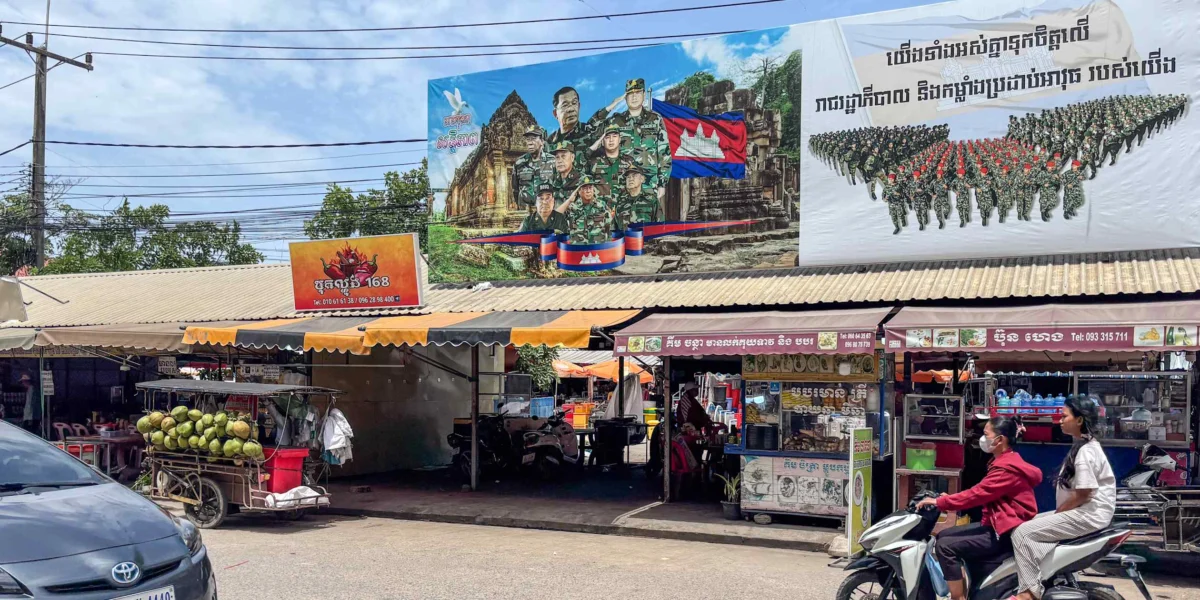
POIPET, Cambodia — Until last year, Nget Nhean was employed in Poipet, a Cambodian city on the border with Thailand, helping migrant workers, traders, and transporters apply for short-term permits and passports to work in the neighboring nation. But after the border was closed in June 2025 over rising political tensions that erupted into military clashes, Nget Nhean was left unemployed. This dramatic shutdown of the vital cross-border flow of people and goods has plunged Poipet into an economic crisis, leaving its bustling markets eerily silent and its residents grappling with an uncertain future.
The closure, initiated by Cambodian authorities following a period of escalating diplomatic friction and localized skirmishes along the shared frontier, effectively severed Poipet’s primary economic artery. For decades, this Cambodian border town has thrived as a crucial transit point and labor hub, facilitating the movement of hundreds of thousands of Cambodians seeking employment in Thailand’s more developed economy. The informal and formal sectors of Poipet were intricately woven around this cross-border activity, encompassing everything from visa processing and currency exchange to transportation services and the provision of food and lodging for transient populations. The sudden cessation of this movement has not only halted Nget Nhean’s livelihood but has also rendered the city’s once-vibrant commercial infrastructure largely redundant.
The Genesis of the Crisis: A Timeline of Escalation
The closure of the Poipet border in June 2025 was not an isolated incident but the culmination of a deteriorating relationship between Cambodia and Thailand, exacerbated by territorial disputes and alleged cross-border incursions.
- Early 2024: Reports of minor skirmishes and heightened military presence along less-defined sections of the Cambodian-Thai border began to surface. These incidents, initially attributed to local disputes over resource access or demarcation issues, gradually intensified.
- Late 2024 – Early 2025: Diplomatic channels became strained. Both governments engaged in a war of words, with Cambodian officials accusing Thailand of violating sovereignty and Thai authorities raising concerns about security threats emanating from Cambodian territory. This period saw an increase in border patrols and a more cautious approach to cross-border movement by local authorities on both sides.
- May 2025: A significant military clash occurred near a disputed border area, resulting in casualties on both sides. This event dramatically escalated tensions and prompted immediate calls for de-escalation from international bodies.
- June 2025: Citing national security concerns and the need to regain control over its borders, the Cambodian government officially announced the closure of the Poipet border crossing, a move that was reciprocated by Thailand shortly thereafter. The stated objective was to conduct a thorough review of border security protocols and to resolve outstanding territorial issues.
Economic Fallout: Beyond Empty Market Stalls
The image of empty market stalls in Poipet, adorned with patriotic signage in support of the Cambodian government and military leadership, starkly illustrates the immediate economic vacuum created by the border closure. However, the repercussions extend far beyond the visible signs of commercial inactivity.
1. Unemployment and Displacement: Nget Nhean’s story is representative of thousands. Individuals employed in border-related services – from visa agents and transport providers to informal money changers and stall owners catering to cross-border travelers – have lost their primary source of income. This has led to a significant rise in unemployment and, in many cases, forced displacement as people seek alternative employment in other Cambodian provinces or, if possible, attempt more perilous undocumented routes to Thailand.
2. Decline in Remittances: A substantial portion of Cambodia’s national income is derived from remittances sent back by its citizens working abroad, particularly in Thailand. The inability of migrant workers to travel to Thailand and the subsequent loss of employment for those already there directly impacts the flow of these crucial funds, affecting household incomes across Cambodia. The World Bank estimated that remittances to Cambodia reached over $2 billion annually prior to the pandemic, and a significant portion of this was facilitated through cross-border movement. While exact figures for 2025-2026 are not yet available, the impact of the Poipet closure is expected to be substantial.
3. Impact on Local Businesses: Beyond those directly involved in border services, Poipet’s local economy is intrinsically linked to the influx of people. Restaurants, guesthouses, retail shops, and entertainment venues have all experienced a drastic decline in patronage. Businesses that relied on the constant flow of workers and traders are now struggling to survive, with many facing closure.
4. Disruption of Supply Chains: The Poipet crossing is a vital artery for trade between Cambodia and Thailand. The closure has disrupted the timely import and export of goods, impacting Cambodian industries that depend on Thai raw materials or components, as well as agricultural producers who export their produce to Thailand. This has led to increased costs for businesses and consumers alike, contributing to inflationary pressures.
5. Informal Economy Collapse: A significant portion of Poipet’s economy operates within the informal sector. This includes a vast network of small-scale traders, service providers, and laborers whose livelihoods are directly dependent on the unhindered flow of people and goods. The border closure has effectively dismantled this informal ecosystem, leaving many vulnerable individuals without any safety net.
Supporting Data and Trends
While specific, real-time economic data for Poipet post-closure is scarce due to the volatile situation, broader economic indicators for Cambodia and the region offer a glimpse into the severity of the crisis.
- Cambodia’s GDP Growth: Prior to the pandemic, Cambodia was one of Southeast Asia’s fastest-growing economies, with a significant portion of its growth fueled by garment exports and tourism, both indirectly linked to regional economic integration. The prolonged closure of a major border crossing like Poipet is expected to have a dampening effect on projected GDP growth for 2025 and 2026, potentially reducing it by 0.5 to 1.0 percentage points according to preliminary economic analyses.
- Migrant Worker Numbers: Pre-pandemic estimates suggested that over 1 million Cambodians were working in Thailand. While numbers fluctuated, the Poipet crossing was a primary conduit for many. The inability to legally cross means a significant portion of this workforce is now either unemployed or attempting to find alternative, often riskier, means of entry.
- Cross-Border Trade Volume: Official figures for cross-border trade through Poipet, which typically ran into hundreds of millions of dollars annually, have naturally plummeted to near zero since the closure. This directly impacts the trade balance and revenue for both nations.
Official Responses and International Reactions
The Cambodian government, while firm in its stance on border security, has acknowledged the economic hardship faced by its citizens. Official statements have emphasized the necessity of the closure for national security and territorial integrity, while also hinting at efforts to provide economic relief.
- Government Relief Measures: While details remain limited, Cambodian authorities have reportedly initiated some measures to support affected communities, including the provision of essential food supplies and modest financial assistance to those who have lost their livelihoods. However, the scale and sustainability of these measures are subject to ongoing scrutiny.
- Diplomatic Efforts: International organizations and neighboring countries have urged both Cambodia and Thailand to resolve their disputes through dialogue and to reopen the border. The Association of Southeast Asian Nations (ASEAN) has reportedly been engaged in quiet diplomatic efforts to mediate between the two nations.
- Thai Perspective: The Thai government has echoed concerns about border security and has indicated a willingness to engage in discussions but has also stressed the need for Cambodia to address the root causes of the tensions. The economic impact on Thailand, while less severe than on Poipet, is also significant, with disruptions in labor supply and trade.
Broader Implications and Future Outlook
The prolonged closure of the Poipet border has far-reaching implications that extend beyond the immediate economic devastation of the border town.
- Humanitarian Concerns: The inability of Cambodians to legally seek work in Thailand raises humanitarian concerns, as many may resort to illegal and dangerous routes, increasing their vulnerability to exploitation and trafficking.
- Regional Stability: The ongoing border tensions and the closure of a key crossing point contribute to a sense of instability in the region, potentially impacting investor confidence and broader economic cooperation within ASEAN.
- Shift in Labor Dynamics: The crisis may accelerate efforts by both governments to diversify labor markets and reduce reliance on cross-border migration. Cambodia might intensify efforts to create domestic job opportunities, while Thailand may explore alternative labor sources.
- Geopolitical Ramifications: The border dispute and its resolution could have broader geopolitical implications, influencing regional alliances and the balance of power in Southeast Asia.
The once-bustling New Market in Poipet, now a silent testament to a severed economic lifeline, serves as a stark symbol of the human cost of geopolitical tensions. The patriotic signage, meant to evoke national pride, now underscores a profound sense of displacement and economic hardship. For individuals like Nget Nhean, the return to normalcy hinges not only on the reopening of the border but also on a lasting resolution of the underlying political issues that brought Poipet to its knees. The path forward requires a delicate balance of security imperatives and economic realities, with the welfare of thousands of ordinary citizens hanging in the balance.
