

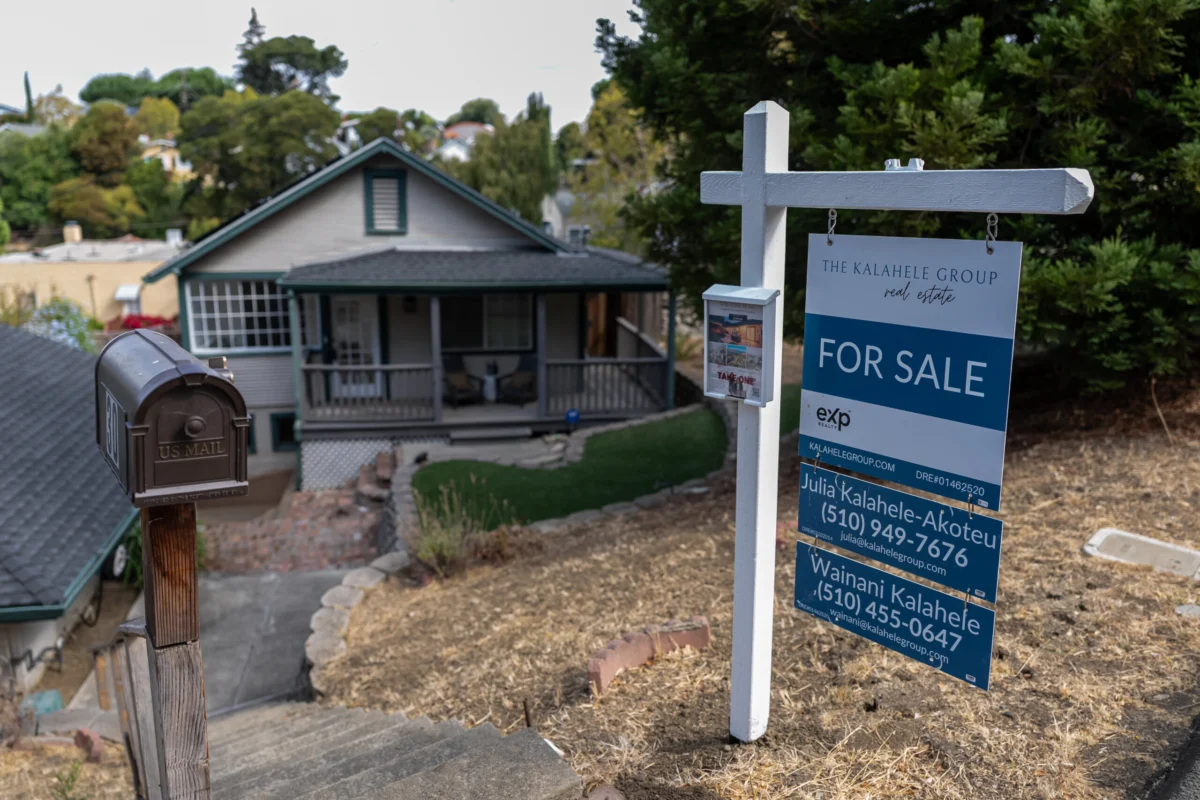
The United States housing market continued to navigate turbulent waters in August 2026, as elevated mortgage rates and stubbornly high home prices significantly dampened buyer enthusiasm, leading to a notable decline in sales of previously owned homes. According to the latest report from the National Association of Realtors (NAR), sales activity for existing homes fell by 2% from July, reaching a seasonally adjusted, annualized rate of 3.98 million units. This marks the slowest pace of sales recorded since June 2025, underscoring the persistent challenges facing prospective homeowners across the nation.
The slowdown was not uniform, with the Northeast and Midwest regions experiencing the most pronounced impacts, signaling regional variations in market resilience and affordability pressures. On a year-over-year basis, August 2026 sales were down 1.2%, indicating a sustained period of market contraction when viewed against the backdrop of the previous year’s activity. These figures, based on completed transactions, primarily reflect contracts signed in June and July when mortgage rates surged, reaching levels that significantly eroded purchasing power for many buyers.
The Mortgage Rate Conundrum and Its Broad Impact
The primary catalyst for the August slowdown can be directly attributed to the trajectory of mortgage rates, which saw a sharp upward movement in the middle of July. This increase extended a trend of rising borrowing costs that has been a defining feature of the housing market since late 2024. The Federal Reserve’s aggressive monetary tightening cycle, initiated to combat persistent inflation, has had a profound, albeit indirect, effect on the 30-year fixed-rate mortgage. As the Fed raised its benchmark interest rate, lenders adjusted their rates upwards, passing on higher borrowing costs to consumers.
Throughout 2025, mortgage rates steadily climbed, moving from historical lows seen during the pandemic into a range that began to strain affordability. By early 2026, rates had stabilized somewhat but remained elevated. However, inflationary pressures, particularly in core services and energy, reignited concerns among policymakers, leading to renewed expectations of a "higher for longer" interest rate environment. This sentiment, coupled with robust economic data that suggested continued resilience despite higher rates, pushed Treasury yields upward in June and July 2026, which in turn dragged mortgage rates higher. For many potential buyers, especially those on the margin, this mid-summer surge proved to be the tipping point, forcing them to either delay purchases or withdraw from the market entirely.
Lawrence Yun, chief economist for the National Association of Realtors, articulated this inverse relationship succinctly: "Mortgage rates and home sales move in opposite directions, so it’s not surprising to see a mild dip in home buying activity due to high mortgage rates." He added, however, a note of resilience, observing, "Still, home prices are rising, and existing home sales are actually up 1.6% year-to-date through the first eight months of the year." This suggests that while recent months have seen a deceleration, the broader trend for 2026 still indicates a market that, despite headwinds, has managed to outperform 2025 in terms of cumulative sales. This seemingly contradictory trend highlights the nuanced nature of the current market, where strong underlying demand continues to clash with affordability constraints.
Supply Dynamics and Persistent Price Appreciation
Despite the cooling sales activity, home prices continue their upward trajectory, presenting a persistent challenge to affordability. The median price of an existing home sold in August reached $429,100, marking a 1.6% increase from August 2025. This figure not only represents a new high for the month of August but also extends a long-running streak of year-over-year price gains, now stretching over several years. The resilience of home prices in the face of higher borrowing costs is a complex phenomenon, primarily driven by a chronic shortage of housing supply.
At the end of August, the total housing inventory stood at 1.62 million homes for sale. While this figure represents a modest increase of 3.2% from July and a more significant 5.9% rise from the year before, it remains critically low relative to historical averages and current demand. At the current sales pace, this inventory translates to a 4.9-month supply, which, according to NAR, is the highest level in over a decade. A balanced market is typically characterized by a 6-to-7-month supply, indicating that despite recent gains, the market remains firmly in sellers’ territory. The increase in supply is a welcome development for buyers, offering slightly more choice, but it has not been sufficient to significantly ease price pressures.
Regional disparities in price appreciation underscore the varied market conditions across the U.S. The Northeast experienced the strongest price gains, a direct consequence of its particularly tight inventory levels. In this region, where new construction has historically lagged, even a marginal increase in demand can quickly translate into significant price hikes. Conversely, the West was the only region to register a median price decline year-over-year. This could be attributed to a combination of factors, including higher pre-existing affordability challenges, outmigration trends from some high-cost urban centers, and potentially a more significant response to rising interest rates among buyers in historically expensive markets.
Shifting Buyer Demographics and Market Segmentation
The current market environment is also reshaping who is buying homes and at what price points. Sales continue to be strongest at the highest end of the market, indicating a widening gap between affluent buyers who are less sensitive to interest rate fluctuations and those in lower and mid-tier price ranges. Compared with August 2025, sales of homes priced between $100,000 and $250,000 were down a substantial 10%. In stark contrast, sales of homes priced above $1 million saw a 3.9% increase, marking the only price range that experienced growth. This "K-shaped" recovery in the housing market suggests that luxury buyers, often with substantial cash reserves or less reliance on conventional mortgages, are sustaining activity at the top, while affordability challenges disproportionately affect first-time buyers and those seeking more modestly priced homes.
The role of cash buyers remains significant, comprising 27% of all August sales. This figure is slightly higher than July but marginally down from August of the previous year. The prevalence of cash transactions highlights the advantage held by buyers who can circumvent the high-interest-rate environment, putting traditional mortgage-dependent buyers at a disadvantage in competitive markets. First-time buyers, despite the challenging conditions, made up 30% of sales, a slight increase from both July and August 2025. This indicates a persistent desire for homeownership among new entrants, even if it means stretching budgets or making compromises on location and size. However, the consistent presence of first-time buyers often relies on factors like family assistance, significant savings, or finding more affordable pockets within markets.
Conversely, investors and second-home buyers showed a notable retreat from the market. This segment accounted for just 15% of August sales, a significant drop from 21% in August 2025. The decline suggests that the higher cost of capital, coupled with potentially lower returns on investment due to cooling appreciation rates in some areas, has made real estate a less attractive proposition for speculative buyers. This shift could be a positive development for owner-occupant buyers, reducing some of the competition that drove up prices in previous years.
Homes are also spending slightly more time on the market, averaging 31 days in August compared with 29 days in July. While still a relatively fast pace compared to pre-pandemic norms, this increase suggests that buyers are becoming more discerning, and sellers are facing a slightly less frantic environment. Properties are not flying off the shelves as quickly, giving potential buyers a bit more time for due diligence and negotiation.
Broader Implications and Future Outlook
The current state of the U.S. housing market carries significant implications for the broader economy and for the aspirations of millions of Americans. The deepening affordability crisis, driven by the dual forces of high prices and elevated interest rates, poses a formidable barrier for first-time buyers and those with moderate incomes. Many aspiring homeowners find themselves priced out of desirable neighborhoods or even entire metropolitan areas, leading to prolonged rental periods and delayed wealth accumulation.
For the economy, a slowing housing market can have ripple effects across various sectors. The construction industry, while still facing labor and material shortages, could see a further slowdown in new projects if demand continues to wane. The mortgage lending industry is already experiencing reduced activity, impacting employment and revenue. Retail sectors tied to home purchases, such as furniture, appliances, and home improvement, may also feel the pinch as fewer transactions occur.
Looking ahead, the market’s trajectory will largely depend on the path of inflation and the Federal Reserve’s monetary policy. A sustained period of disinflation could pave the way for the Fed to ease its stance, potentially leading to a gradual decline in mortgage rates. Such a scenario would undoubtedly provide much-needed relief to buyers and could help re-energize sales activity. However, any significant drop in rates is unlikely to occur rapidly, and the chronic undersupply of housing will continue to exert upward pressure on prices for the foreseeable future.
Some economists suggest that while the current environment is challenging, it also represents a period of necessary rebalancing after years of extraordinary growth. A slower pace of appreciation and slightly longer days on market could, in the long run, lead to a more sustainable and less speculative housing market. However, achieving true affordability will likely require a multi-faceted approach, including increased new home construction, reforms to zoning and land-use regulations, and potentially targeted assistance programs for first-time buyers.
In conclusion, the August 2026 existing home sales report paints a picture of a housing market under significant strain. While some underlying resilience persists, particularly in price growth and year-to-date sales, the immediate future points to continued challenges. High mortgage rates are effectively rationing demand, pushing many potential buyers to the sidelines, while a persistent supply shortage ensures that homeownership remains an increasingly elusive dream for a substantial portion of the population. The market is not collapsing, but it is certainly recalibrating, demanding adaptability from both buyers and sellers as it navigates this complex economic landscape.
