

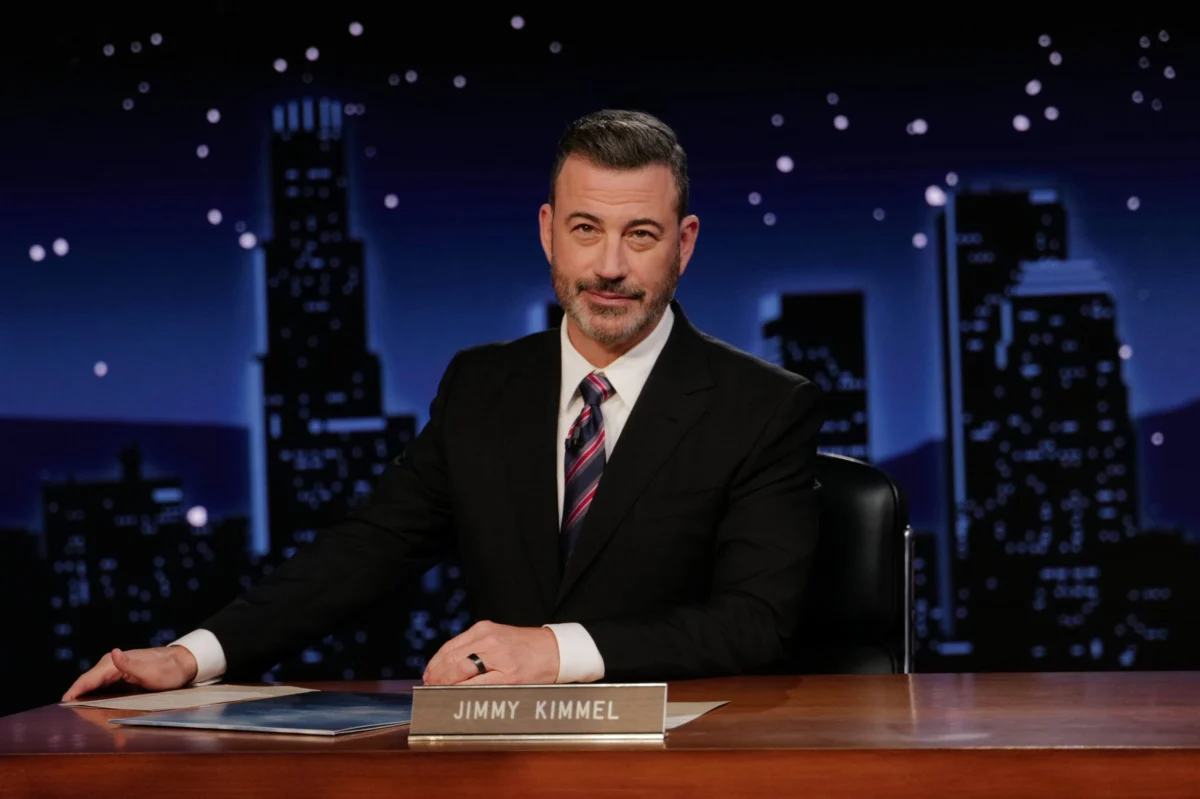
Late-night talk show host Jimmy Kimmel, helming ABC’s "Jimmy Kimmel Live!", has announced a significant shift in his programming strategy, opting to move a scheduled interview with Democratic U.S. Senate candidate James Talarico from national television broadcast to a digital-only release on YouTube. This unprecedented move, revealed during his Wednesday night broadcast, comes amidst heightened scrutiny from the Federal Communications Commission (FCC) regarding the classification of late-night shows and their exemption from equal airtime rules for political candidates. Kimmel explicitly stated that the decision was a precaution against perceived threats from the FCC, which he implied were politically motivated by the current administration.
The FCC’s Regulatory Shadow: Equal Time and "Bona Fide" Programs
At the heart of the controversy lies Section 315 of the Communications Act of 1934, often referred to as the "Equal Time Rule." This federal regulation mandates that if a broadcast station permits a legally qualified candidate for public office to use its facilities, it must afford equal opportunities to all other such candidates for that office. The intent is to prevent broadcasters from unfairly favoring one candidate over another. However, Section 315 contains several exemptions, most notably for appearances by candidates in "bona fide news events," "bona fide news interviews," "bona fide news documentaries," and "on-the-spot coverage of bona fide news events." For decades, late-night talk shows, with their mix of entertainment and celebrity interviews, have generally been understood to fall outside the strict purview of this rule, often leveraging the "bona fide news interview" or general entertainment classification to host political figures without triggering equal time obligations for every other candidate.
Earlier this year, in January, the FCC, under the leadership of a chairman appointed by President Donald Trump, initiated an inquiry that questioned whether television talk shows, including those on ABC like "Jimmy Kimmel Live!" and "The View," genuinely qualify as "bona fide" news programs. This inquiry signaled a potential reinterpretation of long-standing precedents, raising concerns across the broadcasting industry about the regulatory landscape for political discourse on television. Critics argue that such a reevaluation could stifle political engagement on popular platforms, forcing broadcasters to either avoid political interviews or face the logistical and financial nightmare of providing equal time to dozens of minor candidates.
The FCC, an independent agency of the United States government, is responsible for regulating interstate and international communications by radio, television, wire, satellite, and cable. While its mandate is to serve the public interest, convenience, and necessity, its actions can often become embroiled in political disputes, especially concerning content and licensing. The agency’s recent focus on the "bona fide" status of talk shows is seen by many as an extension of the Trump administration’s broader efforts to challenge and, at times, intimidate media outlets perceived as critical of the president.
Kimmel’s Rationale: Protecting Affiliates and Challenging Authority
During his Wednesday night broadcast, Kimmel minced no words in explaining his decision. "For some reason, and I can’t seem to figure out what that reason is, something has changed," Kimmel quipped, a thinly veiled reference to the political climate. He elaborated, "Now that [Trump] is president, his FCC has threatened me, threatened our show, threatened our network, ABC, our affiliates, our local stations, based on simple, traditional editorial decisions." This statement underscores a significant concern within the broadcasting industry: the potential for regulatory bodies to leverage their power to influence editorial content, particularly when it involves political figures.
Kimmel emphasized that the decision to withhold Talarico’s interview from national television was "out of consideration" for ABC affiliates. These local stations, he explained, would be the ones primarily tasked with navigating the "nonsense" of potential FCC scrutiny, including legal challenges and the costly obligation to provide equal airtime. The network-affiliate relationship is a cornerstone of American broadcasting, where local stations license content from national networks while retaining their own operational independence and local programming. Any regulatory pressure on a network’s content can therefore have direct and burdensome consequences for its numerous local affiliates.
The late-night host also offered a somber assessment of the current political environment. "In the America we live in right now, that is the best we can do, until November, of course," he stated, alluding to the upcoming presidential election and the hope among many critics of the administration that a change in leadership could alleviate such pressures. The FCC did not immediately respond to a request for comment on Kimmel’s specific claims, maintaining its characteristic silence on ongoing or potential investigations.
The Political Hotbed: Texas Senate Race Dynamics
The interview at the center of this controversy involves James Talarico, a Democratic U.S. Senate candidate and current Texas state representative. Talarico is locked in a high-stakes and intensely watched Senate race against incumbent Texas Attorney General Ken Paxton, a Republican. The contest is considered one of the most significant in the upcoming election cycle, drawing national attention due to its potential impact on the balance of power in the U.S. Senate.
Ken Paxton, a controversial figure in Texas politics, has been endorsed by President Donald Trump, signaling the race’s importance within the national Republican Party. Paxton’s tenure as Attorney General has been marked by significant legal and ethical challenges. Most notably, he was impeached by the Texas House of Representatives on allegations of corruption, including bribery and abuse of public trust. Although he was subsequently acquitted by the state Senate, the impeachment proceedings cast a long shadow over his political career and fueled intense partisan division within the state. Public polling has shown Talarico slightly ahead of Paxton, indicating the race is highly competitive and could be decided by a narrow margin. The decision to air Talarico’s interview on a national platform like "Jimmy Kimmel Live!" would have provided him with invaluable exposure to a broad, diverse audience, a factor that makes Kimmel’s decision to pull the broadcast particularly impactful for the candidate.
A Pattern of Pressure: Kimmel, ABC, and the Trump Administration
Kimmel’s show has increasingly become a lightning rod for debates surrounding broadcasting rights, First Amendment protections, and the extent of government intervention in media. This is not the first instance of "Jimmy Kimmel Live!" drawing the ire of powerful figures or facing internal network challenges due to its political commentary.
Last year, in 2025, ABC-affiliate station owners made the unusual decision not to air "Jimmy Kimmel Live!" following comments Kimmel made during a monologue that drew significant public backlash and criticism. The specific content of that monologue, though widely debated at the time, centered around politically charged commentary regarding a national event, prompting network executives to temporarily suspend the show for roughly a week. Kimmel later issued a public statement, saying, "It was never my intention to make light of [the serious subject]." This incident highlighted the delicate balance networks must strike between allowing their hosts creative freedom and managing the commercial and political sensitivities of their affiliate stations and advertisers.
Since then, ABC and its parent company, Disney, have faced continued pressure from the Trump administration. In April of the current year, 2026, the FCC initiated an early license renewal process for ABC-owned stations, a move considered unusual and potentially punitive. The FCC cited an investigation into the company’s diversity, equity, and inclusion (DEI) practices as the rationale for this early review. While ABC promptly filed the required license renewals, the network perceived the action as part of a broader, politically motivated campaign.
This perception solidified in August, when Disney-owned ABC filed a lawsuit against the FCC, alleging that the agency’s investigation into its DEI practices was a "retaliatory campaign" and a violation of its First Amendment rights. The lawsuit marked a significant escalation in the ongoing tension between a major media conglomerate and a federal regulatory body, raising profound questions about media independence and the limits of governmental power over broadcasters. ABC’s legal challenge frames the FCC’s actions as an attempt to chill free speech and punish a network for content that has been critical of the administration.
Broader Implications: Free Speech, Media Independence, and Regulatory Overreach
The current standoff between Jimmy Kimmel, ABC, and the FCC carries profound implications for the future of late-night television, media independence, and the interpretation of First Amendment protections in the digital age. If the FCC successfully reclassifies talk shows as programs that are subject to the strict equal time rule, it could fundamentally alter the landscape of political commentary and engagement on broadcast television.
Legal experts and media watchdogs have voiced concerns about the potential "chilling effect" this could have. Broadcasters, fearing regulatory penalties or the logistical nightmare of providing equal airtime to every candidate, might simply choose to avoid interviewing political figures altogether. This would remove a significant platform for candidates to reach a mainstream audience and for hosts to engage in critical political discourse, thereby limiting public access to diverse viewpoints. The ability of late-night hosts to offer comedic or critical takes on political events and figures is a long-standing tradition, and any curtailment of this could be seen as an infringement on free speech.
Conversely, proponents of a stricter interpretation of Section 315 argue that its original intent was to ensure fairness and prevent broadcasters from becoming partisan mouthpieces. They contend that as late-night shows increasingly delve into serious political commentary and candidate interviews, they should be held to the same standards of fairness as traditional news programs. However, the subjective nature of what constitutes "bona fide news" versus "entertainment" makes this a complex legal and philosophical debate.
Media advocacy groups have largely sided with ABC, asserting that the FCC’s actions appear to be politically motivated and designed to punish critical media. They highlight the importance of an independent press, free from government coercion, as a cornerstone of democratic society. The ongoing legal battle between ABC and the FCC is therefore not just about one interview or one talk show; it is a critical test case that could redefine the boundaries of media regulation and free expression for years to come.
The Digital Alternative: YouTube as a Sanctuary
Kimmel’s decision to move the Talarico interview to YouTube highlights the evolving media landscape and the increasing reliance on digital platforms as alternatives to traditional broadcast television. For candidates like Talarico, YouTube offers an uncensored platform where content can be shared globally without the regulatory constraints of the FCC or the editorial decisions of network executives.
This shift presents both advantages and disadvantages. On the one hand, it grants greater freedom and direct access to audiences, bypassing traditional gatekeepers. On the other hand, while YouTube boasts an immense global reach, the audience for a specific political interview on the platform might be smaller and more self-selecting compared to the vast, diverse viewership of a national television broadcast. The algorithmic nature of digital platforms also means that content can be amplified or suppressed in ways that differ significantly from linear television programming. This incident underscores how digital platforms are increasingly becoming havens for content that might face restrictions or challenges on traditional media, further blurring the lines between broadcast, cable, and online distribution.
Looking Ahead: The November Election and Beyond
Kimmel’s pointed remark, "until November, of course," encapsulates the widespread sentiment that the outcome of the upcoming presidential election could significantly influence the regulatory environment for media. A change in administration might lead to a different FCC leadership with a potentially less confrontational approach towards media outlets. Conversely, a continuation of the current administration could see further escalation of these regulatory battles and legal challenges.
The lawsuit filed by ABC against the FCC is expected to proceed through the courts, setting a precedent for future interactions between federal regulators and broadcasters. This legal battle, alongside the ongoing public discourse on media freedom and governmental oversight, will undoubtedly shape the long-term relationship between Washington and the nation’s media institutions. The Kimmel incident serves as a stark reminder of the delicate balance required to uphold both regulatory fairness and the fundamental principles of free speech in a rapidly changing media landscape. The implications extend far beyond a single late-night interview, touching upon the very foundations of democratic discourse and media independence in the United States.
