

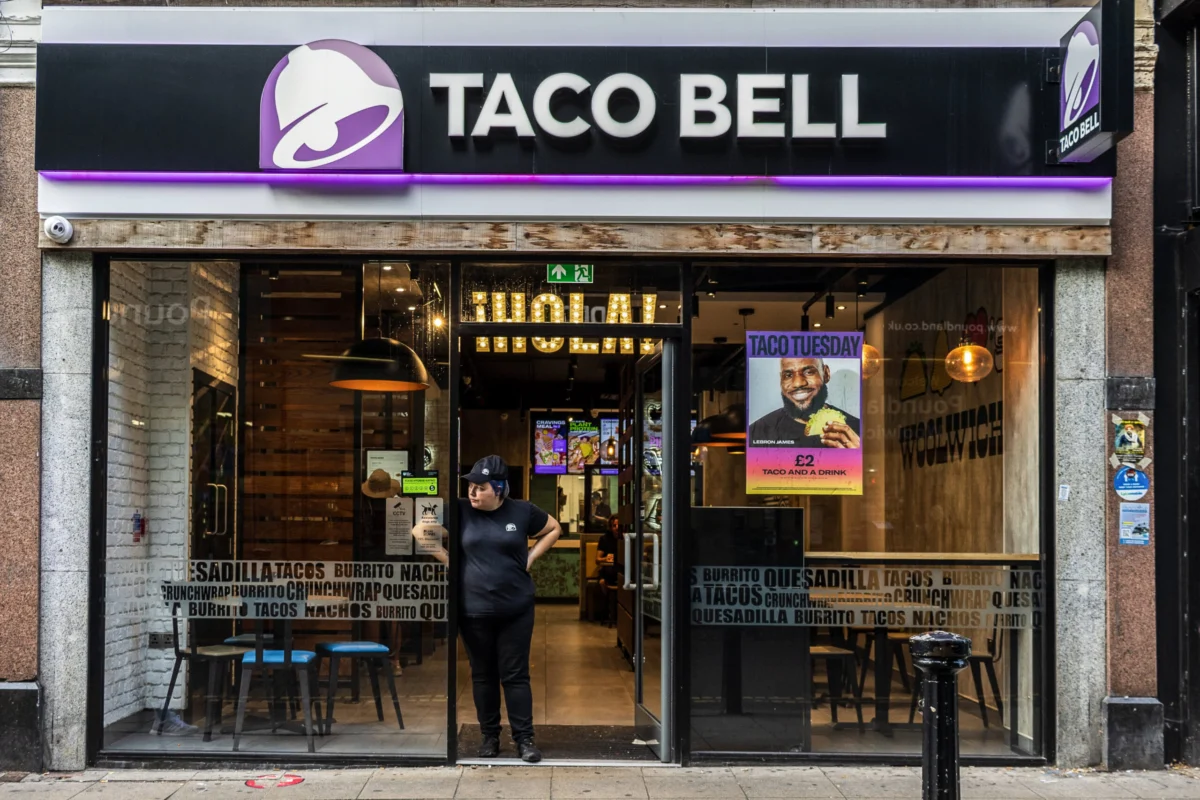
PepsiCo, the global food and beverage giant, has announced the renewal of its long-standing partnership with Taco Bell, extending their collaborative agreement through 2036. This significant announcement solidifies a relationship that spans decades, ensuring that PepsiCo’s extensive portfolio of beverages will continue to be served across Taco Bell’s vast network of restaurants, both domestically and in key international markets. The renewal comes at a pivotal moment, just one week after Taco Bell’s sister chain, KFC, revealed its decision to switch to Coca-Cola as its exclusive U.S. beverage supplier, underscoring the intense competition for lucrative contracts within the quick-service restaurant (QSR) sector.
A Legacy Partnership: From Ownership to Strategic Alliance
The relationship between PepsiCo and Yum! Brands, the parent company of Taco Bell, KFC, and Pizza Hut, is rooted in a unique corporate history. For many years, PepsiCo itself owned these restaurant chains, a strategy that aimed to vertically integrate its beverage sales directly into a massive restaurant footprint. This period saw the foundational establishment of PepsiCo products as the exclusive beverage offerings across these fast-food brands. However, in 1997, PepsiCo strategically spun off its restaurant division into a new, independent public company, Tricon Global Restaurants, which later rebranded as Yum! Brands. Despite this divestiture, PepsiCo managed to retain the highly valuable beverage supply contracts for its former subsidiaries, an arrangement that has largely persisted for over a quarter-century, forming one of the most enduring and unique partnerships in the corporate world. This historical connection provides PepsiCo with a distinct advantage, as its products are deeply embedded in the operational fabric and consumer expectations of these restaurant chains.
The Shifting Sands of QSR Beverage Contracts: KFC’s Defection
The announcement of the Taco Bell renewal gains particular resonance when viewed against the backdrop of KFC’s recent decision. On October 15, KFC U.S. declared its intention to transition from PepsiCo to Coca-Cola as its beverage partner. While such shifts are not commonplace for large restaurant chains, they are also not entirely unprecedented. The beverage industry’s titans, Coca-Cola and PepsiCo, constantly vie for these high-volume contracts, often through a combination of competitive pricing, marketing support, exclusive product development, and other strategic inducements.
KFC’s move represented a symbolic victory for Coca-Cola, reinforcing its perceived dominance in the soda category, particularly within the U.S. QSR landscape. For PepsiCo, the loss of the KFC U.S. contract was a significant blow, representing a divestment of a long-held territory. However, the memo issued by KFC U.S. President Catherine Tan-Gillespie on October 15, which was obtained by CNBC, clarified that despite the U.S. change, PepsiCo would remain an "important partner for Yum! and the chain’s international markets." This distinction highlighted the global nature of these agreements and the complex web of relationships that often vary by region.
Taco Bell’s Enduring Loyalty: A Win for PepsiCo’s Integrated Strategy
The subsequent renewal with Taco Bell, coming so swiftly after the KFC news, provides PepsiCo with a crucial counter-narrative and solidifies its position with one of Yum! Brands’ most innovative and rapidly growing chains. For PepsiCo, retaining Taco Bell is not merely about beverage sales; it’s a testament to the strength of its integrated food and beverage portfolio. Taco Bell has famously leveraged PepsiCo’s product line beyond traditional sodas, creating iconic and exclusive menu items that have become synonymous with the brand.
Foremost among these is Mountain Dew Baja Blast. Introduced in 2004, this exclusive lime-flavored soda quickly became a cult favorite, available only at Taco Bell. Its immense popularity has not only driven beverage sales but also acted as a significant traffic driver for the restaurant chain, with many consumers making specific trips to Taco Bell solely for the Baja Blast experience. Similarly, the Doritos Locos Tacos, featuring taco shells made from Nacho Cheese or Cool Ranch Doritos chips, are another prime example of successful cross-branding stemming from the PepsiCo-Taco Bell alliance. These innovations underscore the strategic value of PepsiCo’s snack division (Frito-Lay) in addition to its beverage arm, offering a unique "total portfolio" solution that competitors like Coca-Cola, primarily focused on beverages, cannot fully replicate.
The renewed agreement ensures the continuation of these beloved menu items, which are critical components of Taco Bell’s brand identity and customer loyalty. Moreover, the deal extends PepsiCo’s reach across Taco Bell’s international footprint, explicitly mentioning markets such as Canada, the United Kingdom, Ireland, and Thailand. This global consistency is vital for a brand like Taco Bell, which is aggressively expanding its presence worldwide, seeking to offer a uniform and familiar experience to consumers regardless of location.
Market Dynamics and Strategic Implications
The QSR beverage market is a battleground of immense proportions, with billions of dollars at stake annually. Coca-Cola has historically held a larger share of the U.S. fountain beverage market, often securing contracts with major chains like McDonald’s, Burger King, and Subway. PepsiCo, while a formidable competitor, has often relied on its robust snack division and historical ties to differentiate itself.
From a financial perspective, securing or losing a major QSR contract can have a noticeable impact on a beverage company’s revenue and market perception. While the exact financial terms of such agreements are rarely disclosed, they typically involve complex arrangements including volume discounts, marketing allowances, equipment provision, and co-branding initiatives. For PepsiCo, retaining Taco Bell represents a stabilization after the KFC setback and ensures continued access to a demographic that aligns well with its youth-oriented brands. Taco Bell, known for its innovative marketing and appeal to younger consumers, provides an excellent platform for PepsiCo to introduce new beverage products and maintain brand relevance.
For Yum! Brands, the decision to maintain separate beverage partners for its flagship chains (KFC with Coke in the U.S., Taco Bell with PepsiCo globally) highlights a nuanced strategic approach. It suggests that each brand’s specific needs, historical ties, and unique menu item collaborations may dictate individual partnerships rather than a blanket corporate policy. This approach allows each brand to maximize its specific advantages, whether it’s the widespread appeal of Coca-Cola with KFC or the innovative, co-branded success with PepsiCo at Taco Bell.
Broader Industry Impact and Future Outlook
The recent flurry of activity in the QSR beverage sector underscores the dynamic nature of these long-term contracts. They are not merely transactional agreements but strategic alliances that influence product innovation, marketing campaigns, and ultimately, consumer choice. The intense competition between Coca-Cola and PepsiCo is expected to continue, with both companies constantly seeking to gain market share through aggressive bidding, technological advancements in dispensing systems, and tailored marketing support.
For consumers, these partnerships translate into specific beverage options available at their favorite fast-food establishments. The exclusivity of items like Mountain Dew Baja Blast demonstrates how these corporate relationships can directly shape the consumer experience and even create unique culinary niches. As the beverage industry continues to evolve, with increasing demand for healthier options, sparkling waters, and energy drinks, the scope of these QSR contracts may also broaden to include a wider array of products beyond traditional sodas.
Looking ahead, the renewed PepsiCo-Taco Bell partnership through 2036 provides stability for both entities, allowing for long-term planning and continued innovation. For PepsiCo, it secures a vital anchor in the QSR space, leveraging a deep historical connection and a proven track record of successful product collaboration. For Taco Bell, it ensures the continuity of beloved, exclusive menu items and a consistent beverage supply chain as it pursues ambitious global growth targets. This enduring alliance stands as a testament to the power of strategic partnerships in a fiercely competitive market, demonstrating that even amidst shifts, some foundations remain robust.
