

According to all polls in recent months, Israel’s prime minister is losing his majority. However, there are three scenarios in which he could still stay in power.
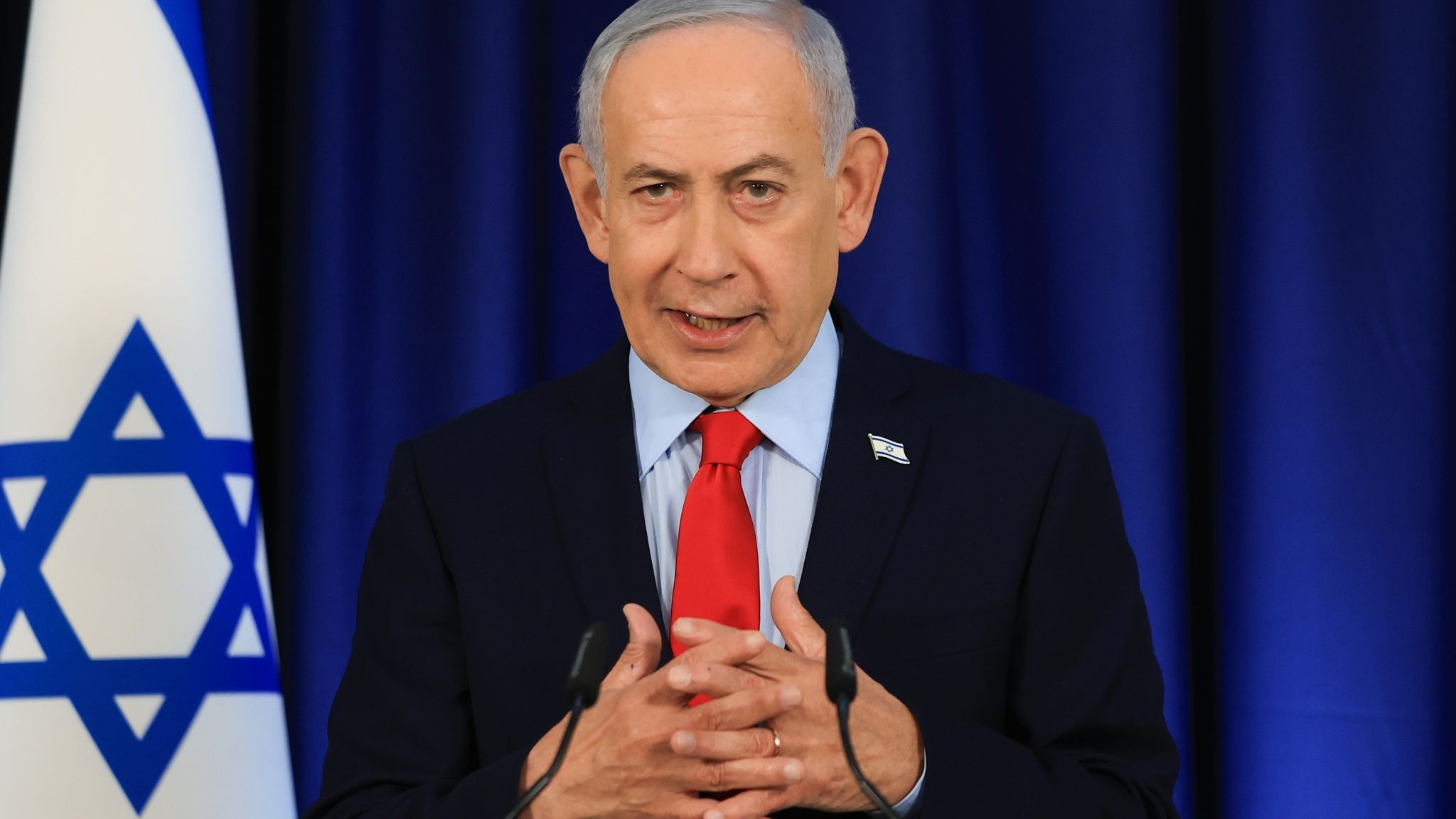
Tel Aviv – Israel is set to elect a new parliament on October 27th, and if the polls of recent months are to be believed, Prime Minister Benjamin Netanyahu is on track to lose his parliamentary majority. His bloc is projected to secure only around 50 of the 120 seats in the Knesset. The main challenge comes from the "Gush Hashinoui," meaning "Block of Change," led by former Chief of Staff Gadi Eisenkot. This alliance of four Zionist parties may indeed poll ahead of Netanyahu’s Likud, but it is also unlikely to achieve a governing majority on its own. This scenario, however, could ultimately play into Netanyahu’s hands.
The intricacies of Israel’s electoral system, a proportional representation system where parties must cross a 3.25% threshold to enter the Knesset, often lead to complex coalition negotiations. Unlike many parliamentary democracies, Israel does not have a direct election for prime minister. Instead, the President of Israel typically tasks the leader of the largest party, or a candidate deemed most likely to form a stable coalition, with attempting to assemble a government. This process can be lengthy and fraught with political maneuvering, creating opportunities for leaders who may not have secured the outright largest bloc of votes.

Political analyst Ofer Kenig of the Israel Democracy Institute explains the peculiar dynamic: "Netanyahu doesn’t need to win; it’s enough if no one else wins." This statement highlights a critical aspect of Israeli politics: the incumbent prime minister remains in office until a new government successfully obtains a vote of confidence from the Knesset. This means that even as a caretaker prime minister, Netanyahu can wield significant power, "even without a majority in the Knesset," as Kenig points out. This enduring influence stems from his deep-seated political network, his party’s organizational strength, and the inherent difficulty in forming a cohesive opposition coalition capable of presenting a viable alternative government.
Scenario 1: The Likud Pulls Off an Election Night Surprise
One of the most straightforward pathways for Netanyahu to retain power would be if the pre-election polls prove to be inaccurate and his Likud party, along with its traditional right-wing and ultra-Orthodox allies, manages to secure a slim but sufficient majority of 61 seats. While current projections indicate a deficit, the final tally on election night can sometimes deviate from polling averages. This could be due to late shifts in voter sentiment, effective last-minute campaigning, or a greater-than-expected turnout among the Likud’s core supporters.
The political landscape in Israel is characterized by a deeply polarized electorate. The right-wing bloc, often encompassing the Likud, religious parties, and nationalist factions, has historically been more cohesive in its electoral goals. If these parties can successfully mobilize their bases and secure the necessary votes, they could cross the 61-seat threshold. This scenario would see Netanyahu continuing his premiership, likely forming a government with parties such as Shas and United Torah Judaism, who typically align with the Likud on key ideological and policy issues. The formation of such a government would likely signal a continuation of current government policies, potentially with an emphasis on national security and settlement expansion.
Scenario 2: The "Anyone But Bibi" Coalition Fails to Materialize
A second, and perhaps more probable, scenario hinges on the inability of the diverse opposition parties to coalesce into a stable governing coalition. The "Gush Hashinoui," or "Block of Change," is a broad coalition encompassing parties with varying ideologies, from centrist and secular to left-leaning and Arab-majority parties. While united by their opposition to Netanyahu, the deep ideological differences among these factions present significant challenges to forming a cohesive government.

Historically, such broad coalitions have been difficult to maintain due to internal disagreements on key policy areas, such as the Israeli-Palestinian conflict, religious pluralism, and socio-economic issues. If these parties fail to bridge their differences and present a united front capable of forming a government, the existing government, led by Netanyahu, would continue in a caretaker capacity. This could lead to a prolonged period of political uncertainty, with the possibility of further elections if no stable government can be formed. The challenge for the opposition lies not only in winning enough seats but in demonstrating a credible path to governing and maintaining unity post-election. The willingness of parties to compromise and set aside their differences will be crucial.
The complexity of forming a coalition in Israel cannot be overstated. The country’s electoral system, while promoting representation, can also lead to fragmented parliaments where no single party holds a dominant position. The President’s role in designating a candidate to form a government is critical, and this decision is often influenced by the perceived ability of a candidate to garner the necessary support in the Knesset.

Scenario 3: Netanyahu Leverages the System to Remain in Power
The third scenario, and the one most concerning to Netanyahu’s opponents, involves him leveraging the existing political and legal framework to remain in power, even without a clear electoral victory. As a caretaker prime minister, Netanyahu retains considerable influence. He can continue to make policy decisions, manage the state’s affairs, and utilize his political acumen to negotiate with potential coalition partners.
One specific mechanism that could facilitate this is the potential for a "rotation" government. In such an arrangement, two leaders agree to share the premiership, with one serving as prime minister for a set period, followed by the other. This was a model explored in the past, though often fraught with challenges. If Netanyahu can engineer a situation where he is part of a rotation agreement, even if he is not the initial prime minister, he could maintain a significant role in governance.

Furthermore, Netanyahu is currently facing corruption charges. The outcome of these legal proceedings could also influence the political landscape. While the legal process is ongoing and its direct impact on coalition formation is complex, it remains a significant backdrop to Israeli politics. The ability of a prime minister to serve while under indictment is a contentious issue, and any developments in his legal case could shift political dynamics and potentially influence the willingness of other parties to form a coalition with him.
The implications of Netanyahu remaining in power, regardless of the specific scenario, are significant for both domestic and international policy. Domestically, it could mean a continuation of policies that have led to increased settlement activity in the West Bank and a hardening stance on issues related to the Palestinian territories. Internationally, his premiership has been marked by a strong alliance with the United States, but also by strained relations with some European countries and a persistent focus on Iran as a primary security threat.

The upcoming election is thus more than just a choice between political parties; it is a decision that will shape the trajectory of Israel’s domestic policies, its relationship with its neighbors, and its standing on the global stage. The intricate dance of coalition building, the dynamics of the opposition, and the resilience of the incumbent prime minister within the Israeli political system all contribute to a complex and often unpredictable electoral outcome. As the election date approaches, the focus will remain on whether the opposition can forge a united front or if Netanyahu’s seasoned political maneuvering will once again allow him to navigate the turbulent waters of Israeli coalition politics and retain the reins of power.
