

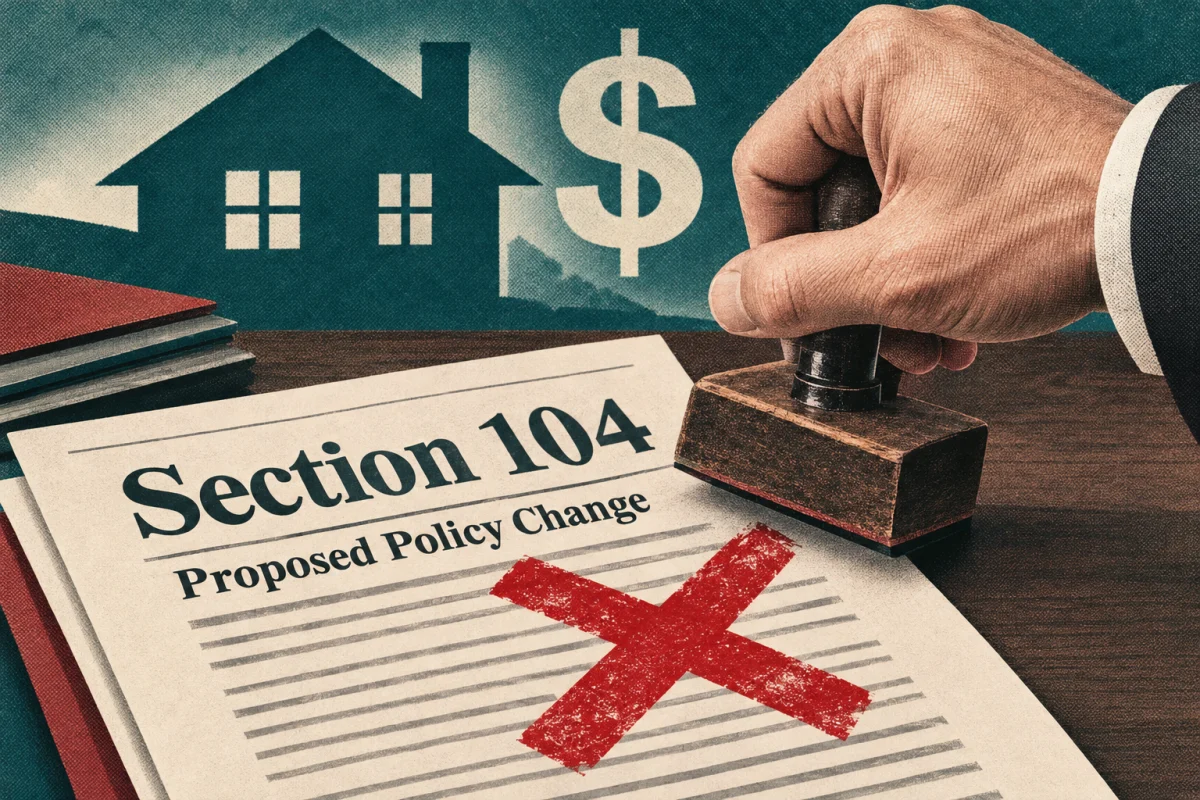
The National Association of Mortgage Brokers (NAMB) has launched a significant advocacy campaign directed at the United States Senate, urging lawmakers to oppose specific provisions within the Take Care of America’s Veterans Act that would substantially increase borrowing costs for military service members. The association, which represents the interests of mortgage professionals and home buyers nationwide, argues that the proposed legislation inadvertently places the financial burden of expanded veteran benefits onto the shoulders of other veterans seeking to utilize their earned housing benefits. At the heart of the controversy is Section 104 of the bill, which seeks to nearly triple certain funding fees associated with the Department of Veterans Affairs (VA) home loan program.
The legislative tension comes at a time when the Senate is weighing S. 4744, the upper chamber’s version of H.R. 9237. The House of Representatives passed its version of the bill by voice vote on Veterans Day, signaling strong bipartisan support for the broader goals of the legislation. However, as the bill moves toward a potential debate and vote on the Senate floor, the mortgage industry is sounding the alarm regarding the long-term fiscal impact on veteran homeowners. NAMB President Michael Farrell has been vocal in his opposition to the fee structure, emphasizing that while the association supports the expansion of benefits for combat-injured veterans, the method of funding those benefits through increased loan fees is fundamentally flawed.
The Financial Mechanics of Section 104
The proposed changes in Section 104 represent a significant departure from current VA loan fee structures. Under the current framework, the funding fee for an Interest Rate Reduction Refinance Loan (IRRRL)—a popular tool used by veterans to lower their monthly payments when interest rates drop—is set at 0.5% of the total loan amount. The Senate proposal would increase this fee to 1.42%. Furthermore, the fee for VA loan assumptions, which allows a buyer to take over a seller’s existing VA mortgage, would double from 0.5% to 1.0%.
Beyond the immediate increase in rates, the legislation proposes to make these higher fees permanent. Historically, such fee structures have included a 10-year sunset provision, allowing Congress to periodically review the necessity of the charges based on the economic climate and the health of the VA loan pool. By eliminating the sunset provision, the bill would lock in these higher costs indefinitely, fundamentally altering the affordability of the VA home loan program for future generations of service members.
To illustrate the impact on the average borrower, NAMB provided a breakdown of the costs. On a standard $400,000 mortgage, a veteran seeking to refinance through an IRRRL currently pays approximately $2,000 in funding fees. Under the proposed 1.42% rate, that cost would jump to $5,680. This $3,680 increase represents a significant barrier to entry for families already struggling with the high cost of living and housing affordability. NAMB estimates that the cumulative impact of these changes would result in an additional $4 billion in costs for veteran borrowers across the country, averaging an extra $3,780 per veteran over the life of the loan or at the time of closing.
Legislative Chronology and the Path to the Senate
The journey of this legislation reflects a complex intersection of veteran advocacy and fiscal policy. The Take Care of America’s Veterans Act was designed to streamline and enhance benefits for those who served, with a particular focus on those injured in the line of duty.
- January 2023: Early versions of the Major Richard Star Act were introduced in both the House (H.R. 2102) and the Senate (S. 1032). This act sought to fix a long-standing "offset" where combat-injured veterans with less than 20 years of service had their disability pay deducted from their retirement pay.
- Summer 2024: Legislative architects combined elements of various veteran-focused bills into the broader Take Care of America’s Veterans Act. To comply with federal budgeting rules (PAYGO), which require new spending to be offset by revenue increases or spending cuts, Section 104 was added as a funding mechanism.
- November 11, 2024 (Veterans Day): The House of Representatives passed H.R. 9237 by a voice vote. The timing was symbolic, intended to show a unified front in supporting the nation’s heroes.
- November 12, 2024: Following the voice vote on the broader act, the House also passed the standalone Major Richard Star Act after a successful discharge petition, a rare parliamentary move that forces a bill to the floor for a vote.
- Current Status: The Senate version, S. 4744, has been placed on the legislative calendar. It remains eligible for a floor vote, pending the resolution of concerns raised by advocacy groups like NAMB and other housing industry stakeholders.
The Conflict with VA Recoupment Requirements
One of the most technical but critical arguments raised by NAMB involves the VA’s existing "recoupment" rules. To protect veterans from "churning"—a practice where lenders encourage frequent refinancing that provides little benefit to the borrower—the VA requires that all fees and costs associated with an IRRRL must be recouped through monthly savings within 36 months.
If the funding fee is nearly tripled, the total cost of the loan increases significantly. For many veterans, particularly those with smaller loan balances or those seeking a modest reduction in interest rates, the higher fee would make it impossible to meet the 36-month recoupment requirement. Consequently, these veterans would be legally barred from refinancing their homes, even if doing so would provide them with much-needed financial relief.
Michael Farrell noted that this creates a paradoxical situation where the government is attempting to help veterans by providing new benefits while simultaneously stripping away their ability to manage their existing debt effectively. "It seems like there’s other solutions that can be looked into to raise the funding to support the benefit," Farrell stated. "But to alienate it just to one aspect of the IRRRL… now we’ve tripled the cost of getting that done."
Industry and Veteran Reactions
The mortgage industry’s reaction has been one of cautious support for the bill’s intent but firm opposition to its funding source. Mortgage brokers argue that the VA loan is one of the most successful tools for building veteran wealth, especially as it requires no down payment. By increasing the costs associated with the program, the government risks diminishing the primary advantage of the benefit.
While veterans’ service organizations (VSOs) are generally supportive of the Major Richard Star Act’s provisions—which would benefit approximately 54,000 combat-injured military retirees—the broader veteran community is divided on the "pay-for." The concept of "veterans paying for veterans" is a point of contention. NAMB’s position is that the debt owed to combat-injured soldiers is a national obligation that should be funded by the general taxpayer through the standard appropriations process, rather than through a targeted tax on veteran homebuyers.
"Our veterans serving our country took an oath to serve and defend," Farrell told HousingWire. "They didn’t take or raise their hand to receive a bill to pay for benefits for their fallen or disabled brothers and sisters. That is not the obligation of the soldier. That’s the obligation of the taxpayer."
Broader Implications for the Housing Market
The proposed fee increases arrive during a period of significant volatility in the U.S. housing market. With mortgage rates remaining higher than the historic lows seen in 2020 and 2021, many veterans are waiting for a window to refinance. If Section 104 becomes law, that window will become much smaller.
Furthermore, the doubling of the loan assumption fee could have a chilling effect on a niche but growing part of the market. Assumable mortgages are highly attractive in a high-interest-rate environment because they allow a buyer to take over a seller’s lower rate. By doubling the fee to 1%, the government adds thousands of dollars in closing costs to these transactions, potentially slowing down sales in military-heavy communities where VA loans are most prevalent.
There is also a concern regarding the racial wealth gap and homeownership access. Data consistently shows that VA loans are a vital tool for minority veterans to enter the housing market. Because these loans do not require a down payment, they are often the only viable path to homeownership for those without significant liquid assets. Adding thousands of dollars in fees could disproportionately affect lower-income and minority veterans, further widening the homeownership gap.
Fact-Based Analysis of Potential Outcomes
If the Senate passes the bill in its current form, the immediate impact will be a surge in revenue for the VA, which will be redirected to fund the expanded disability and retirement benefits. However, the long-term impact on the VA Home Loan Guaranty Program could be negative. A decrease in refinancing activity would mean fewer veterans are able to optimize their household finances, leading to higher default risks in the event of an economic downturn.
If NAMB and its allies are successful in striking Section 104, Congress will be forced to find an alternative funding source. This could involve searching for offsets in other departments, utilizing general fund appropriations, or delaying the implementation of the Major Richard Star Act provisions. The bipartisan nature of the Star Act makes it a high-priority item for both parties, but the fiscal "pay-for" remains the primary hurdle.
As the Senate moves toward a vote, the mortgage industry continues to advocate for the Major Richard Star Act as a standalone measure. By separating the benefits from the fee increases, NAMB believes Congress can honor its commitment to combat-injured veterans without penalizing the broader population of service members who rely on the VA loan program to secure their piece of the American dream. The coming weeks will be a critical period for veteran advocacy groups and mortgage professionals as they wait to see if the Senate will heed the call to protect the affordability of veteran homeownership.
