

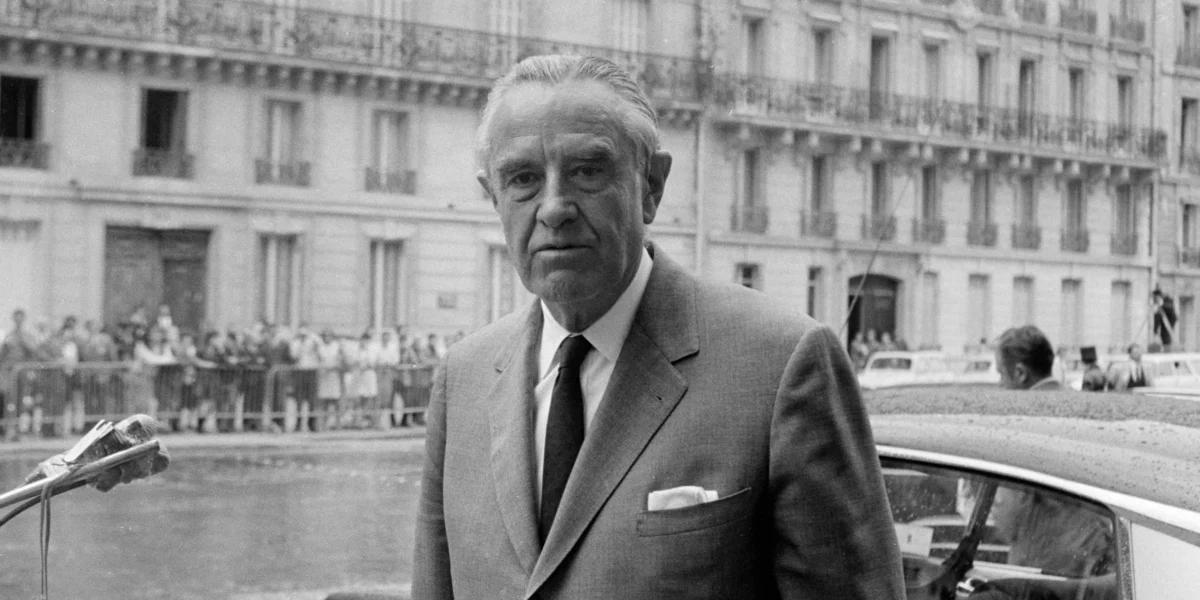
Stephen Schwarzman’s formative years were profoundly shaped by the wisdom and influence of Averell Harriman, a titan of American business, diplomacy, and politics. Harriman, himself a distinguished Yale graduate, served as a pivotal mentor for Schwarzman, imparting crucial lessons that would resonate throughout his illustrious career in finance. This mentorship, particularly Harriman’s emphasis on financial independence, laid the groundwork for Schwarzman’s later success and the establishment of The Blackstone Group, one of the world’s leading investment firms. The period of their association, stretching from Schwarzman’s early aspirations through his initial forays into the financial world, offers a compelling case study in mentorship and the enduring principles of wealth creation.
The Genesis of a Mentorship: Yale Roots and Financial Ambitions
Averell Harriman, born in 1891, was a scion of a prominent American family whose fortune was built on railroads. His father, Edward Henry Harriman, was instrumental in consolidating and expanding major railroad networks across the United States, earning him the moniker "the Railroad King." This legacy of industrial power and vast wealth provided Averell with a unique perspective on the levers of economic influence. After graduating from Yale University in 1913, Averell embarked on a career that would see him excel in various domains. He was a formidable figure in banking, serving as the chairman of the Union Pacific Railroad and later as a key player in the formation of Brown Brothers Harriman & Co., a prestigious private bank.
His influence extended far beyond the corporate boardroom. Harriman played a significant role in American foreign policy during the mid-20th century, serving as Ambassador to the Soviet Union under President Franklin D. Roosevelt and later as Ambassador to the United Kingdom under President Harry S. Truman. He was also a key figure in the Marshall Plan, instrumental in rebuilding post-war Europe. Furthermore, Harriman was a prominent figure in Democratic Party politics, serving as Governor of New York from 1955 to 1958.
It was against this backdrop of extraordinary achievement that Stephen Schwarzman, a younger Yale alumnus, sought out Harriman’s counsel. Schwarzman, who graduated from Yale in 1969, was embarking on his career path and recognized the immense value of learning from someone who had navigated the complex worlds of finance, government, and international affairs with such distinction. The connection between the two Yale graduates, separated by decades but united by ambition and intellect, proved to be a fertile ground for the transfer of invaluable life and business lessons.
Harriman’s Core Tenet: The Unshakeable Value of Financial Independence
The most profound lesson Schwarzman gleaned from Harriman was the paramount importance of financial independence. In the context of Harriman’s life, this was not merely about personal wealth accumulation but about the freedom it afforded to pursue one’s convictions, to act with autonomy, and to exert influence without being beholden to others. Harriman, having inherited and significantly expanded a vast fortune, understood the power that comes with economic self-sufficiency.
For Schwarzman, this translated into a guiding principle for his own professional journey. He absorbed the understanding that true power and the ability to effect change – whether in business or in public life – are amplified when one is not constrained by financial limitations. This philosophy likely informed Schwarzman’s early career decisions and his ambitious vision for what would eventually become The Blackstone Group. The firm, founded in 1985, was built on the premise of identifying and capitalizing on significant investment opportunities, with the ultimate goal of generating substantial returns for its investors and, by extension, fostering the financial independence of its principals.
The Chronology of Influence: From Yale to Wall Street
The timeline of Schwarzman’s engagement with Harriman, though not precisely detailed in the provided excerpt, can be inferred to have occurred during Schwarzman’s early professional development. After graduating from Yale, Schwarzman worked briefly at Lehman Brothers, a prominent investment bank, before pursuing an MBA at Harvard Business School. It was during this period of intense career exploration and foundational learning that Harriman’s guidance would have been most impactful.
- Late 1960s/Early 1970s: Stephen Schwarzman graduates from Yale University, marking the beginning of his professional aspirations.
- Early 1970s: Schwarzman begins his career in finance, likely seeking mentorship from established figures in the industry.
- Mid-1970s: Schwarzman pursues his MBA at Harvard Business School, a period where strategic career advice would be highly sought after. It is during this phase, or shortly thereafter, that the mentorship with Averell Harriman would have been most formative.
- 1985: Stephen Schwarzman co-founds The Blackstone Group, a testament to the principles of ambition and financial acumen he likely cultivated through his experiences, including the lessons learned from Harriman.
The echoes of Harriman’s philosophy can be seen in the very structure and growth of Blackstone. The firm’s focus on private equity, real estate, credit, and hedge fund solutions, all designed to generate significant returns, directly aligns with the pursuit of robust financial independence. By 2023, The Blackstone Group managed over $1 trillion in assets, a staggering figure that underscores the scale of Schwarzman’s realization of his mentors’ teachings.
Supporting Data: The Scale of Blackstone’s Success
The success of The Blackstone Group provides tangible evidence of the financial principles Schwarzman embraced. As of the end of 2023, Blackstone reported total assets under management (AUM) exceeding $1 trillion. This figure places Blackstone among the largest alternative investment firms globally, a testament to its strategic acumen and execution. The firm’s performance metrics, while subject to market fluctuations, have historically demonstrated a strong ability to generate returns for its investors, reinforcing the concept of wealth creation and financial growth.
- Assets Under Management (AUM): Over $1 trillion as of late 2023. This metric highlights Blackstone’s significant scale and reach in the global financial markets.
- Investment Strategies: Blackstone operates across various asset classes, including private equity, real estate, credit, and infrastructure, diversifying its revenue streams and investment opportunities.
- Global Presence: The firm has a substantial international footprint, with offices and operations in major financial centers worldwide, reflecting a global approach to investment.
- Economic Impact: Through its investments, Blackstone has a considerable impact on various industries, acquiring and growing companies, thereby contributing to job creation and economic activity.
This scale of operation and financial success is not accidental. It is the product of strategic vision, disciplined execution, and a deep understanding of financial markets – principles that were undoubtedly honed through Schwarzman’s early mentorship.
Broader Impact and Implications: A Legacy of Mentorship and Financial Vision
The relationship between Stephen Schwarzman and Averell Harriman serves as a powerful example of intergenerational mentorship in the world of finance. Harriman, a figure who bridged the old guard of American industrial wealth with the emerging landscape of modern finance and international diplomacy, passed on not just technical knowledge but a fundamental philosophy. This philosophy of financial independence, as espoused by Harriman, provided Schwarzman with a compass that guided his entrepreneurial spirit.
The implications of this mentorship extend beyond Schwarzman’s personal success. It underscores the enduring value of seasoned advice in navigating the complexities of the financial world. For aspiring leaders, understanding the principles that underpin long-term success – such as financial autonomy and strategic investment – is crucial. Harriman’s own multifaceted career, from railroad magnate to diplomat, demonstrated that financial independence can be a powerful enabler of influence and impact across diverse fields.
Schwarzman’s own philanthropic endeavors, including significant contributions to arts and education, can also be viewed through the lens of his accumulated financial independence. This freedom allows him to direct resources towards causes he deems important, further amplifying his impact beyond the financial markets.
In conclusion, the narrative of Stephen Schwarzman’s personal history, particularly his formative interactions with Averell Harriman, illuminates the profound influence of mentorship on entrepreneurial success. The lesson of financial independence, deeply ingrained by Harriman, became a cornerstone of Schwarzman’s career, leading to the creation of one of the world’s most influential investment firms and a legacy of impactful financial leadership. The story is a testament to the power of learning from those who have navigated the highest echelons of industry and public service, demonstrating that the principles of sound financial stewardship and strategic vision remain timeless.
