

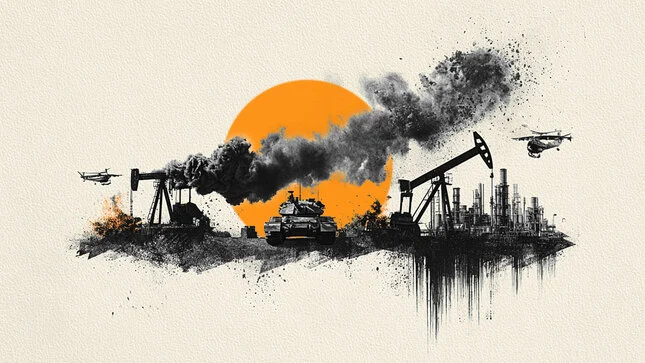
The protracted conflict involving the United States, Israel, and Iran has entered its fourth week, marking a grim milestone in a crisis that has reshaped the geopolitical landscape of the Middle East and sent shockwaves through the global economy. As aerial bombardments, missile exchanges, and proxy engagements intensify across multiple fronts, international efforts to de-escalate the hostilities have thus far proven largely ineffective, leaving millions caught in the crossfire and raising profound concerns about long-term regional stability. The current phase of the conflict is characterized by sustained military operations, a burgeoning humanitarian crisis, and unprecedented volatility in global energy markets.
Background to the Escalation: A Decade of Rising Tensions
The roots of the current conflagration extend back decades, but the immediate trajectory towards open warfare accelerated significantly over the past five years. Persistent disagreements over Iran’s nuclear program, its ballistic missile development, and its extensive network of regional proxy forces—including Hezbollah in Lebanon, various militias in Iraq and Syria, and the Houthi movement in Yemen—formed the bedrock of escalating tensions.
For years, the United States maintained a policy of "maximum pressure" on Tehran, reimposing stringent sanctions following its withdrawal from the Joint Comprehensive Plan of Action (JCPOA) in 2018. These sanctions, aimed at curtailing Iran’s oil exports and crippling its economy, were met with increased Iranian defiance, including breaches of the JCPOA’s uranium enrichment limits and a series of retaliatory actions against international shipping in the Persian Gulf. Israel, viewing Iran’s nuclear ambitions and regional expansion as an existential threat, consistently advocated for a more aggressive posture, frequently conducting covert operations and airstrikes against Iranian-linked targets in Syria and beyond.
Diplomatic overtures, often mediated by European powers, consistently faltered. The lack of a viable framework for de-escalation, coupled with a series of tit-for-tat provocations, created a highly combustible environment. The immediate trigger for the full-scale military confrontation is widely attributed to a coordinated series of drone and missile attacks launched from Iranian territory and by its proxies against key Israeli infrastructure and US military installations in the Gulf region in early May. While Iran denied direct involvement in all attacks, the scale and sophistication led Washington and Jerusalem to conclude that the threshold for a decisive response had been crossed.
Chronology of the Conflict: A Month of Unprecedented Warfare
Week 1 (Early May): Initial Strikes and Retaliation
The conflict ignited with overwhelming precision airstrikes by Israeli and US forces against Iranian nuclear facilities, Revolutionary Guard Corps (IRGC) bases, and missile sites deep within Iranian territory. These initial strikes, launched on May 7th, were framed by Jerusalem as a preemptive measure to neutralize Iran’s immediate threat capabilities and by Washington as a defensive response to attacks on its personnel and allies. Iran swiftly retaliated, launching barrages of ballistic missiles and armed drones targeting Israeli cities, including Tel Aviv and Jerusalem, and multiple US military bases in Iraq, Syria, and Qatar. While sophisticated air defense systems like Israel’s Iron Dome and US Patriot batteries intercepted a significant portion of these projectiles, several successful hits resulted in substantial civilian and military casualties. Naval skirmishes also erupted in the Strait of Hormuz, with US and allied naval vessels engaging Iranian fast boats and missile launchers.
Week 2 (Mid-May): Expansion of Fronts and Cyber Warfare
The second week saw a significant expansion of the conflict’s geographic scope. Iranian-backed groups, notably Hezbollah in Lebanon and various Shiite militias in Iraq, intensified their cross-border attacks into Israel and against US forces. This prompted further retaliatory strikes by Israel into southern Lebanon and by the US against militia strongholds in Iraq and Syria. Ground engagements, previously limited, began to emerge, particularly along the Iraqi-Iranian border and in eastern Syria, as US-backed forces clashed with Iranian-aligned elements. A parallel cyber war also intensified, with both sides reporting significant disruptions to critical infrastructure, including power grids, financial networks, and military command-and-control systems. Reports emerged of hundreds of thousands of civilians being displaced, particularly in border regions, as the humanitarian situation began to deteriorate rapidly.
Week 3 (Late May): International Condemnation and Energy Market Chaos
By the third week, the global implications of the war became starkly evident. Oil prices surged past $150 a barrel, triggering widespread economic instability and fears of a global recession. Major shipping lanes in the Persian Gulf, crucial for global energy supply, faced severe disruptions due to naval blockades and threats of attack. International bodies, including the United Nations Security Council, convened emergency sessions, issuing strong condemnations of the violence and demanding an immediate ceasefire. However, resolutions proposed by non-aligned nations were vetoed or watered down amidst geopolitical divisions, particularly between Western powers and Russia/China, who called for restraint but also criticized the initial US and Israeli actions. Humanitarian organizations reported a rapidly escalating crisis, with critical shortages of food, medicine, and clean water in conflict zones.
Week 4 (Early June): Sustained Engagements and Diplomatic Deadlock
As the conflict enters its fourth week, military operations remain intense. Aerial campaigns targeting military infrastructure and logistics hubs continue unabated on both sides. Ground forces are increasingly engaged in localized, yet fierce, skirmishes in contested border areas, particularly in western Iran and eastern Iraq. Urban warfare has been reported in several key towns near the Iran-Iraq frontier, leading to devastating civilian casualties and further mass displacement. Diplomatic efforts, led by the UN Secretary-General and several regional mediators, have failed to secure even a temporary humanitarian pause, let alone a ceasefire. Both Washington and Tehran maintain firm stances, with the US and Israel demanding a verifiable halt to Iranian aggression and dismantling of its nuclear program, while Iran insists on the withdrawal of foreign forces and an end to perceived interventionism in its internal affairs and regional influence.
Supporting Data: A Grim Tally
The human and economic toll of the conflict is mounting rapidly. Unofficial estimates, compiled from various international aid agencies and local reports, paint a grim picture:
- Casualties: Over 12,000 fatalities have been reported across all sides, including military personnel and an estimated 3,500 civilians. Tens of thousands more have been wounded, overwhelming medical facilities in the region.
- Displacement: More than 2.5 million people have been internally displaced within Iran, Iraq, and Syria, with an additional 800,000 seeking refuge in neighboring countries like Turkey and Pakistan, straining humanitarian resources to their breaking point.
- Economic Impact:
- Oil Prices: Brent Crude has consistently traded above $155 per barrel, an increase of over 80% since the onset of hostilities. This has translated into record-high gasoline prices globally, threatening to tip major economies into recession.
- Global Shipping: Insurance premiums for vessels traversing the Strait of Hormuz have skyrocketed by over 1,000%, leading to significant delays and rerouting, further disrupting global supply chains.
- Regional Economies: The economies of Iraq, Syria, Lebanon, and Yemen, already fragile, are facing collapse due to disrupted trade, infrastructure damage, and refugee burdens. Iran’s economy, already reeling from sanctions, has seen its currency plummet and inflation surge.
- Military Deployments: The United States has significantly bolstered its military presence in the Middle East, deploying an additional 40,000 troops, two carrier strike groups, and numerous air defense batteries to the region. Israel has mobilized its reserves, placing its military on full alert. Iran has activated its extensive network of Revolutionary Guard units and Basij volunteer forces.
- Infrastructure Damage: Satellite imagery indicates extensive damage to critical infrastructure in all involved nations, including power plants, oil refineries, transportation networks, and communication hubs. Early estimates suggest reconstruction costs could run into the hundreds of billions of dollars.
Official Responses and International Diplomatic Efforts
Statements from the primary belligerents remain unyielding, reflecting the deep-seated animosities and strategic objectives driving the conflict.
- United States: President [Fictional US President’s Name] stated, "We did not seek this conflict, but we will not hesitate to defend our interests, our allies, and the principles of international law against unprovoked aggression. Iran must cease its destabilizing actions and dismantle its illegal nuclear program."
- Israel: Prime Minister [Fictional Israeli PM’s Name] declared, "This war is a necessity for our survival. We are confronting an existential threat that seeks our destruction, and we will continue our operations until the Iranian regime’s capacity to wage war and develop nuclear weapons is irreversibly degraded."
- Iran: Supreme Leader [Fictional Iranian Supreme Leader’s Name] retorted, "The arrogant powers of America and the Zionist regime will regret their foolish aggression. We will defend our sacred land and our revolutionary ideals with all our might. The era of foreign domination in our region is over."
The international community, while largely united in its call for an end to hostilities, remains fractured on the path forward.
- United Nations: Secretary-General [Fictional UN Secretary-General’s Name] issued an impassioned plea for an immediate ceasefire, emphasizing the "catastrophic humanitarian consequences" and warning of the potential for the conflict to engulf the entire region. The Security Council has been largely paralyzed, with China and Russia blocking resolutions that explicitly condemn Iran or authorize coercive measures.
- European Union: The EU has expressed "grave concern" and called for "maximum restraint from all parties," offering to host peace talks in Geneva or Vienna. However, its influence has been limited, caught between its transatlantic alliance and its desire to maintain some diplomatic channel with Tehran.
- Russia: President Vladimir Putin, while urging de-escalation, has condemned the "unilateral actions" that led to the conflict and called for a comprehensive regional security dialogue involving all stakeholders, implicitly criticizing US and Israeli policies. Russia has also reportedly increased its naval presence in the Eastern Mediterranean.
- China: Beijing has called for "calm and restraint" and emphasized the need for a "political solution" to the crisis, reiterating its commitment to the JCPOA. China’s primary concern appears to be the disruption to global energy supplies and trade routes, and it has subtly increased its diplomatic engagement with Gulf states.
- Regional Actors:
- Saudi Arabia and Gulf States: Initially supportive of actions against Iran, they have grown increasingly apprehensive about the conflict’s spillover effects. While condemning Iranian aggression, they are also privately urging de-escalation, fearing direct attacks on their own infrastructure and potential destabilization of their monarchies.
- Turkey: President Recep Tayyip Erdoğan has condemned both US/Israeli aggression and Iranian provocations, positioning Turkey as a potential mediator but also expressing concerns about Kurdish groups potentially exploiting the chaos.
- Iraq: Caught directly between the warring factions, Iraq’s fragile government has issued desperate calls for an end to the use of its territory as a battleground, warning of national collapse.
Broader Impact and Implications
The fourth week of the US-Israel-Iran conflict underscores profound, far-reaching implications that extend beyond the immediate battlefields:
- Geopolitical Reconfiguration: The conflict is accelerating a fundamental realignment of alliances and power dynamics. The credibility of international institutions like the UN is being severely tested. The role of non-state actors and proxy forces has become even more central, complicating any future peace efforts. The conflict has also diverted global attention and resources from other pressing issues, such as climate change and global pandemics.
- Global Economic Instability: The sustained high oil prices and disrupted shipping lanes are pushing the global economy towards a severe recession. Businesses worldwide are facing increased operational costs, supply chain bottlenecks, and reduced consumer demand. Developing nations, heavily reliant on imported energy, are particularly vulnerable to economic collapse and social unrest.
- Humanitarian Catastrophe: The scale of displacement, casualties, and infrastructure damage is creating a humanitarian catastrophe of unprecedented proportions in the region. Long-term reconstruction and recovery efforts will require massive international coordination and funding, potentially for decades. The risk of widespread famine and disease outbreaks is growing, especially in areas where aid access is severely restricted.
- Energy Security Crisis: The conflict has exposed the fragility of global energy security, highlighting the world’s dependence on Middle Eastern oil. Nations are scrambling to diversify energy sources and build strategic reserves, but immediate solutions are scarce. This crisis could accelerate the transition to renewable energy sources, but not without significant short-term pain.
- Regional Instability and Radicalization: The vacuum of authority and the pervasive violence are creating fertile ground for the resurgence of extremist groups and further radicalization. The prolonged conflict risks transforming into a multi-front regional war, drawing in other actors and potentially leading to a complete breakdown of state structures in several countries. The prospect of chemical or biological weapons use, while currently contained, remains a terrifying possibility should the conflict escalate further out of control.
- Future of Nuclear Non-Proliferation: The war has cast a long shadow over the future of nuclear non-proliferation efforts. If Iran’s nuclear program was a direct trigger for this conflict, the outcome will inevitably influence the calculations of other nations considering developing nuclear capabilities, potentially leading to a more dangerous, proliferated world.
As the conflict grinds on into its second month, the immediate priority for the international community remains to secure a comprehensive ceasefire and establish humanitarian corridors. However, the deep-seated grievances, the scale of military engagement, and the significant geopolitical stakes involved suggest that a swift resolution remains elusive, leaving the Middle East and the world teetering on the precipice of an even greater crisis.
