

In a significant foreign excursion, German Chancellor Friedrich Merz received words of appreciation for his commitment to a "strong NATO" and a "united Europe." However, this diplomatic endeavor is overshadowed by mounting domestic political pressure, threatening to destabilize his chancellorship. The juxtaposition of international responsibilities and internal crises paints a stark picture of Merz’s current political landscape.
A Shadow of Political Peril Looms
Just months prior, in mid-June, the German Chancellor’s office in Berlin buzzed with preparations for a crucial NATO summit in Ankara. Chancellor Merz, in what was described as a characteristic "showcase role," lauded the outgoing British Prime Minister Keir Starmer, who had recently resigned following an internal party revolt. Merz’s words then were those of solidarity and acknowledgment of Starmer’s efforts toward a stronger European alliance.
However, the political winds have shifted dramatically. Three months later, Merz himself is engaged in a fierce battle for his political survival. The recent electoral debacle in Saxony-Anhalt, where the far-right Alternative for Germany (AfD) significantly eroded the CDU’s support, has led to a rapid decline in backing for the Chancellor within his own party ranks. If current trends persist, Merz could face a fate similar to Starmer’s, a stark reminder of the volatility of political leadership.
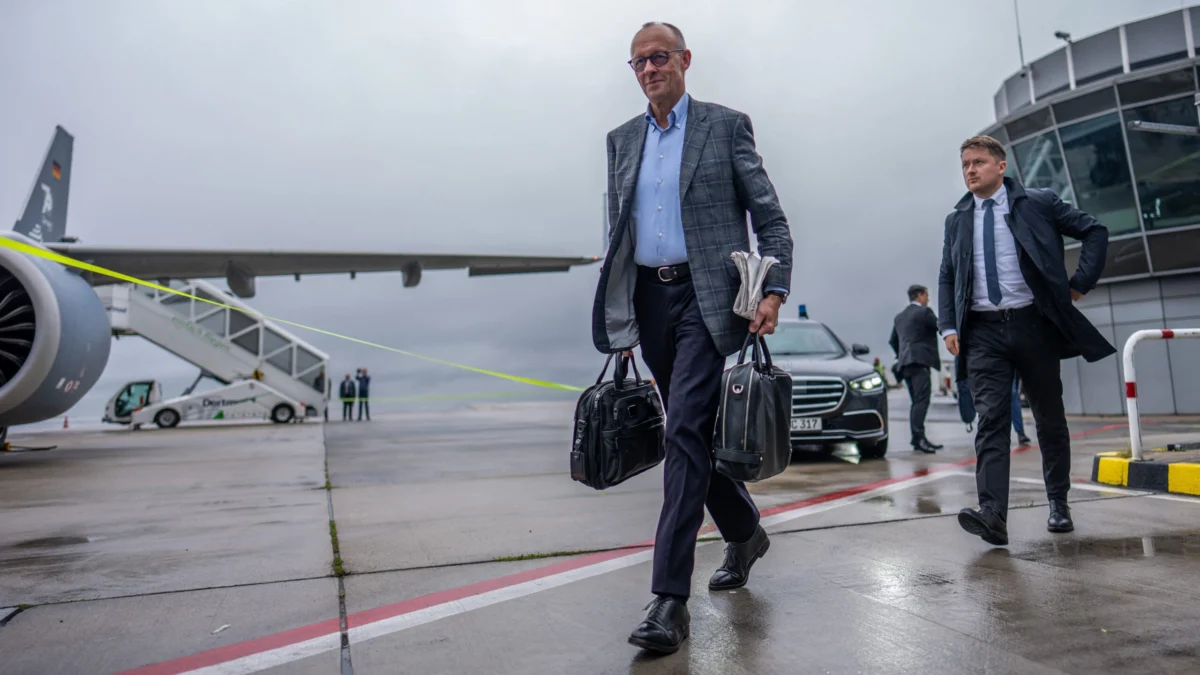
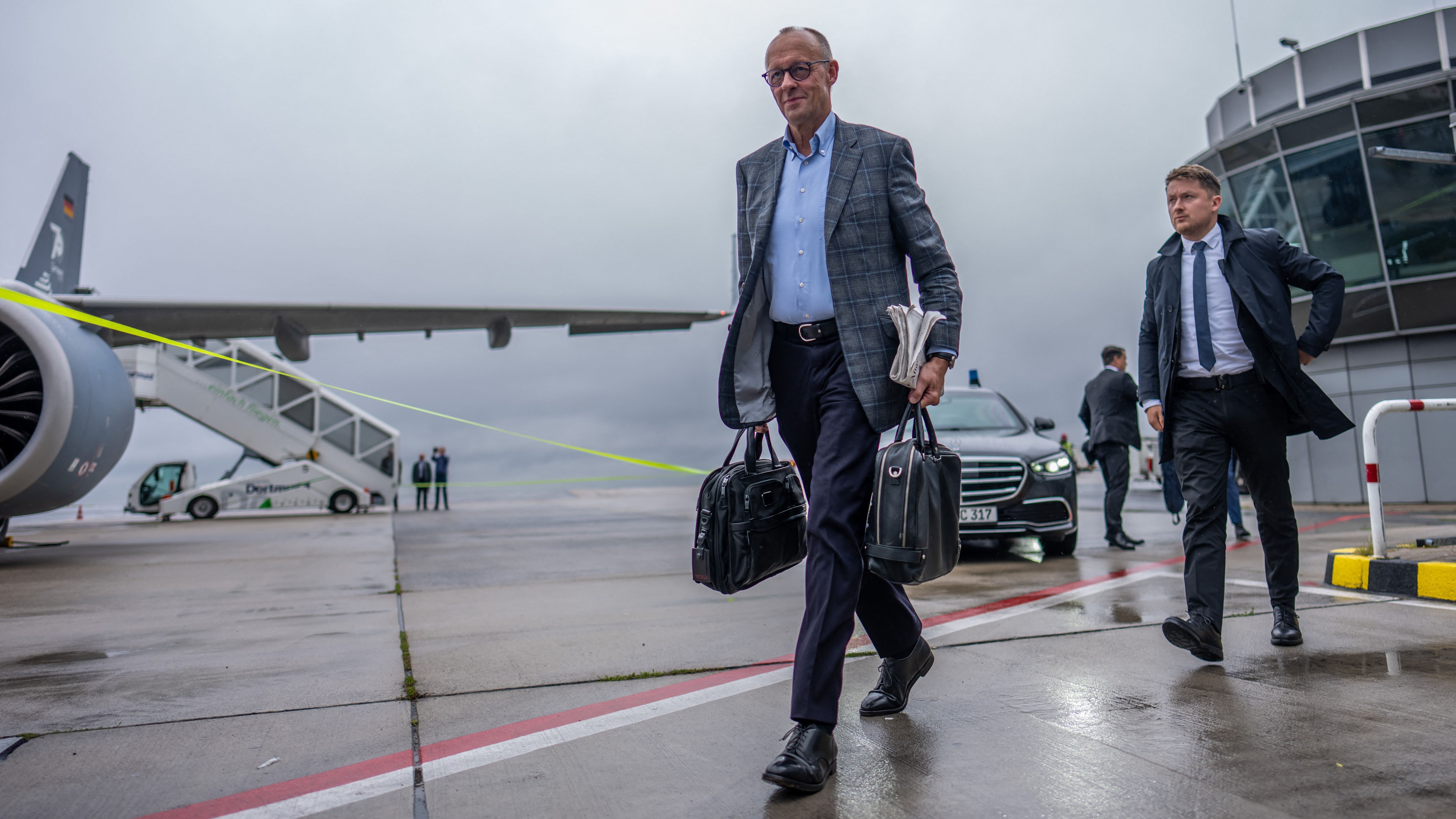
Despite the gravest crisis of his chancellorship, Merz appears determined to project an image of normalcy. Dressed in a casual jacket, he was observed on Sunday afternoon hurrying across the tarmac at Dortmund Airport. The weekend had been spent in his home region of Sauerland, with an upcoming summit on European Arctic policy on the horizon. A gray Luftwaffe Airbus was scheduled to transport him to Rovaniemi, Finland, located above the Arctic Circle, for this critical meeting.
The Perennial Companion: Declining Power
The Chancellor’s journey to Finland underscores a strategic imperative: to reassure Germany’s international partners of its continued reliability and, by extension, his own leadership. Tensions in the High North are escalating. Russia’s ongoing war of aggression in Ukraine is pushing its borders closer to the European Union, with Russian drones encroaching on Baltic airspace and a new military district being established near Finland at President Putin’s command.

Simultaneously, China and the United States are expanding their influence in the region. The European Union faces a critical need to counter these geopolitical maneuvers to safeguard its interests, a task that demands unified action.
However, the critical question remains: what political capital can Merz still leverage in this precarious situation? Prior to the summer recess, speculations about an early end to his chancellorship in Berlin were considered improbable, despite the dismal poll numbers for the coalition parties. The perceived threat landscape confronting Europe seemed to bolster the alliance between the CDU and SPD. Yet, following a botched cabinet reshuffle and a disastrous state election result, everything has become possible, including the potential ousting of the Chancellor.
The decline in power has become a constant shadow for Merz. "It’s like watching a car accident," remarked a source within the CDU. Some factions within the party are urging the Chancellor to form a minority government to deliver on campaign promises: a pure CDU agenda. However, Merz is reportedly unwilling to concede to this demand, firmly believing that Europe requires a stable Germany now more than ever.
Navigating the Political Crucible: Three Scenarios for a Chancellorship Change

The coming weekend looms large, with crucial state elections in Mecklenburg-Vorpommern and Berlin. If the results mirror the devastating outcome in Saxony-Anhalt, Merz’s position will become even more precarious.
Angela Merkel, Merz’s formidable predecessor, governed Germany for sixteen years. For Merz, his tenure could potentially conclude after just sixteen months, a bitter irony given the circumstances.
A key factor that still works in the Chancellor’s favor is the absence of a clear alternative within the party. While Keir Starmer was ousted due to a consensus among Labour MPs behind a challenger, Andy Burnham, the current Prime Minister, the CDU appears divided. Party members may grumble about Merz, but they remain undecided on the fundamental question: to support or to overthrow him.
The Uncertain Path Forward: Potential Scenarios for Leadership Transition

The political future of Chancellor Merz is currently uncertain, with several scenarios emerging as possibilities for a change in leadership:
Scenario 1: The Voluntary Resignation
This scenario posits that Merz, recognizing the insurmountable challenges and the declining support, might voluntarily step down. He could conclude that his continued leadership would be detrimental to the party and the nation. However, sources close to the Chancellor and within the parliamentary group consider this highly unlikely, with Merz reportedly resolute in his commitment to his current role. This option, while politically expedient in some respects, is not widely anticipated.
Scenario 2: The Orchestrated Chancellorship Swap – The "Starmer Scenario"

This path mirrors the situation in the UK, where the party leadership collectively turns against the incumbent, leading to a pre-arranged replacement. In Germany, this would involve the CDU leadership uniting to depose Merz and nominate a successor from the ranks of state premiers. Potential candidates frequently mentioned include Hendrik Wüst (North Rhine-Westphalia), Markus Söder (Bavaria), and Boris Rhein (Hesse).
However, this scenario is fraught with complications. The potential candidates themselves are reportedly hesitant, and internal rivalries are already evident. Söder and Wüst, for instance, are rumored to be at odds, with neither eager to yield to the other. Rhein, while a contender, is perceived by some as lacking the extensive experience required for the national stage. Furthermore, securing a majority in the Bundestag for any proposed successor would be a significant hurdle, given the current coalition dynamics and the fragmented political landscape. The political maneuvering required for such a transition would be immense and could lead to prolonged instability.
Scenario 3: The Unforeseen Ousting – The "Mutiny" Scenario
This represents the most unpredictable and potentially disruptive scenario. The cumulative frustration of the party base could reach a tipping point, leading to an internal revolt that forces Merz from office. The worse the election results on the upcoming Sunday, the higher the probability of this scenario materializing. For the CDU, this would be the least desirable outcome, as it would leave the party unprepared and potentially plunge the country into a destabilizing power struggle precisely when geopolitical stability is paramount.

While the German federal system grants the Chancellor a strong position, with the Bundestag capable of removing him through a constructive vote of no confidence, internal party dissent can erode authority beyond constitutional safeguards. If the party leadership falters and Merz’s mandate weakens significantly, the stabilizing mechanisms of the constitution might prove insufficient.
The Geopolitical Stage: Finland and the Arctic Summit
Merz’s flight to Rovaniemi, Finland, was more than just a diplomatic trip; it was a deliberate act to project strength and stability amidst escalating international tensions. The summit focused on European Arctic policy, a region increasingly vital due to its strategic location, natural resources, and the growing impact of climate change.
The Arctic is becoming a new frontier for geopolitical competition. Russia’s assertive military posture in the region, coupled with the expanding influence of China and the United States, necessitates a coordinated European response. Germany, as a leading economic power within the EU, plays a crucial role in shaping this response. Merz’s presence at the summit aimed to demonstrate Germany’s commitment to European security and its proactive engagement in addressing these complex challenges.

The discussions in Rovaniemi likely revolved around several key areas:
- Economic Interests: The potential for resource extraction (oil, gas, minerals) and new shipping routes due to melting ice caps presents both opportunities and challenges for European nations.
- Environmental Concerns: Climate change is disproportionately affecting the Arctic, leading to significant ecological shifts that require international cooperation for mitigation and adaptation.
- Defense and Security: The militarization of the Arctic by Russia, including the development of military bases and increased naval activity, poses a direct security threat to NATO and EU members. Discussions would have centered on enhancing surveillance, joint military exercises, and strengthening the collective defense posture in the region.
- Indigenous Rights and Sustainable Development: Balancing economic development with the rights and livelihoods of indigenous Arctic communities is a critical aspect of responsible governance in the region.
Internal Strife vs. External Stability: A Difficult Balancing Act
Merz’s administration has been characterized by a complex interplay between domestic political fragility and the imperative to project a stable image on the international stage. The recent electoral setbacks have amplified internal dissent, creating a palpable sense of crisis within the CDU. The party’s internal discourse is increasingly dominated by questions of leadership and strategy, particularly concerning the rise of the AfD and the perceived failure of the governing coalition to adequately address voter concerns.
Sources within the CDU have voiced concerns about the party’s direction. "It’s like watching a car accident," one individual stated, reflecting a widespread sentiment of unease and a sense of impending doom. The party is reportedly grappling with whether to form a minority government to fulfill its campaign pledges or to seek a more stable coalition, a decision that carries significant political risks. Merz’s firm stance against aligning with or emulating the AfD, while ideologically consistent, has alienated some within the party who see it as a missed opportunity to regain political ground.

The Chancellor’s strategy to counter this internal pressure appears to be a dual approach: projecting an image of unwavering leadership on the international stage and engaging in continuous internal dialogue to shore up support. His travels to critical international forums, like the Arctic summit in Finland, are designed to showcase his continued capacity to lead and to reassure allies of Germany’s steadfastness. Concurrently, he is reportedly engaged in extensive phone calls and meetings with party leaders, attempting to consolidate support and prevent further erosion of his authority.
The Systemic Challenge: Beyond Merz
A crucial argument emanating from Merz’s camp is that the current political turmoil is not merely a crisis of leadership but a symptom of a broader systemic issue. This perspective suggests that the center-left parties are increasingly failing to meet the expectations of their constituents. Compromises, a cornerstone of Germany’s consensus-based political model, are perceived by some voters as cumbersome and inadequate.
The argument is that neither a change in leadership nor a simple policy adjustment can resolve this structural dilemma. The inability to govern decisively ("durchregieren") without compromising, coupled with a growing refusal to accept incremental solutions ("durchwurschteln"), creates a political impasse. This dilemma, it is argued, would persist even under a new Chancellor. Therefore, the focus should remain on navigating the current complex geopolitical landscape rather than engaging in potentially destabilizing leadership changes. This line of reasoning is being used to rally party leadership and maintain a united front.

A Glimpse into the Future: The Implications of Political Instability
The precariousness of Merz’s position has broader implications for both Germany and Europe. A leadership vacuum or a prolonged period of political infighting within Germany could weaken its influence on the European stage, particularly at a time when decisive action is needed to address geopolitical challenges.
The upcoming elections in Mecklenburg-Vorpommern and Berlin will serve as critical barometers of public sentiment and will undoubtedly intensify the pressure on Merz. The CDU’s ability to adapt to the evolving political landscape, particularly in the face of the AfD’s growing appeal, will be crucial in determining the long-term stability of the center-right in Germany.
The coming weeks will be pivotal for Chancellor Merz and the CDU. His ability to navigate the storm of domestic dissent while effectively addressing the complex geopolitical challenges facing Europe will determine the future trajectory of his chancellorship and, potentially, the broader political landscape of Germany. The journey to Rovaniemi, while a symbol of continued engagement, also serves as a stark reminder of the high stakes involved in his current political predicament.
