

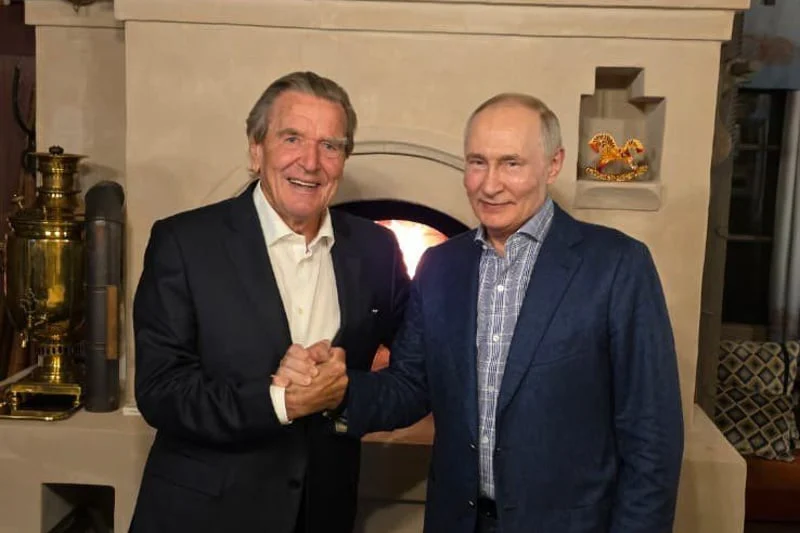
Former German Chancellor Gerhard Schröder’s recent visit to Moscow to attend Russian President Vladimir Putin’s 74th birthday celebration has ignited a firestorm of criticism from political figures in Germany and across Europe. While the meeting between the long-time friends has become a recurring point of contention, this latest encounter, occurring amidst ongoing international tensions and the protracted conflict in Ukraine, has amplified calls for Schröder to distance himself from the Russian leader. However, within Germany’s political landscape, a counter-narrative has emerged, with some figures defending Schröder’s actions and emphasizing the importance of maintaining dialogue.
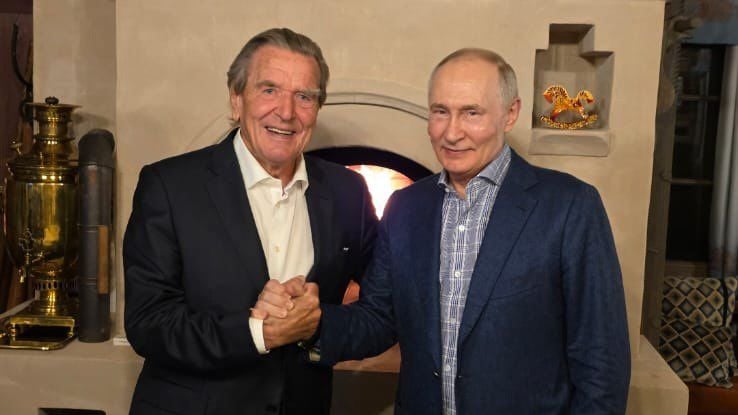
A Birthday Celebration Under a Shadow of Controversy
The meeting, confirmed by the Kremlin via its Telegram channel, reportedly took place on Wednesday. According to Russian state media, President Putin was made aware of Schröder’s presence in the Russian capital through media reports on Wednesday morning. The Kremlin stated that the president subsequently invited his "old friend" to his residence, and photos were released depicting the two men smiling and clasping hands. This gesture of apparent camaraderie stands in stark contrast to the international condemnation of Russia’s actions, particularly its full-scale invasion of Ukraine, which began in February 2022.
The timing of the visit has drawn particularly sharp rebukes. Many view Schröder’s continued engagement with Putin as a betrayal of democratic values and a tacit endorsement of Russia’s aggressive foreign policy. The ongoing war has resulted in widespread civilian casualties, a massive humanitarian crisis, and significant geopolitical instability. In this context, a private birthday celebration with the Russian president is seen by many as insensitive and politically tone-deaf.

Voices of Disapproval: A Unified Front of Condemnation
The immediate reaction from prominent German politicians was overwhelmingly negative. Katrin Göring-Eckardt, a leading Green Party politician, and Marie-Agnes Strack-Zimmermann, Chairwoman of the European Parliament’s Defense Committee and a member of the Free Democratic Party (FDP), publicly condemned the visit. Göring-Eckardt reportedly described the meeting as a "disgrace," while Strack-Zimmermann is said to have echoed similar sentiments, highlighting the deep moral and political chasm between Schröder’s actions and the current international reality.
These statements underscore a broader sentiment within the German political establishment, where Schröder’s unwavering loyalty to Putin has been a source of embarrassment for years. His tenure as Chancellor from 1998 to 2005 was marked by a policy of Ostpolitik, aiming to foster closer ties with Russia. However, since leaving office, Schröder, now 82 years old, has maintained a close personal relationship with Putin and has taken on lucrative positions within Russian energy companies, including Nord Stream AG and Rosneft. These roles have placed him at the center of scrutiny, particularly as Germany has sought to reduce its reliance on Russian energy in the wake of the Ukraine war.
Background and Chronology of Schröder’s Russia Engagement
Gerhard Schröder’s relationship with Vladimir Putin predates Putin’s presidency. Schröder was Chancellor during Putin’s rise to power in 2000, and the two leaders quickly developed a rapport. Key moments in their relationship include:
- Early 2000s: Schröder championed closer energy ties between Germany and Russia, advocating for the construction of the Nord Stream pipeline, which bypasses Eastern European transit countries. This initiative was seen by some as a strategic move to secure Germany’s energy supply but by others as a means to bind Germany economically to Russia.
- Post-Chancellorship (2005 onwards): Upon leaving office, Schröder immediately joined the board of Nord Stream AG, a joint venture to build and operate the pipeline. This move was widely criticized as a "job for the boys" and a clear conflict of interest, given his previous role in approving the project.
- Continued Energy Sector Involvement: Schröder subsequently took on leadership roles in other Russian energy companies, including Rosneft, Russia’s largest oil producer. These positions have generated significant income for Schröder and further entrenched his ties to the Russian energy sector.
- Pre-Ukraine War Meetings: Even after Russia’s annexation of Crimea in 2014 and the subsequent conflict in eastern Ukraine, Schröder continued to meet with Putin. These meetings often occurred on the sidelines of energy sector events or private engagements, drawing criticism for their perceived lack of public accountability.
- Post-February 2022 Invasion: Following Russia’s full-scale invasion of Ukraine, the pressure on Schröder intensified dramatically. Many expected him to sever all ties with Russia. However, he continued to advocate for dialogue and maintained his positions in Russian energy firms, leading to widespread condemnation and calls for sanctions against him by some political factions.
- Recent Visits: Despite the ongoing conflict and international isolation of Russia, Schröder has made several visits to Moscow since the invasion, often citing the need for dialogue and de-escalation. His attendance at Putin’s birthday celebration marks the latest chapter in this controversial engagement.
Defending Dialogue: An Alternative Perspective
While the chorus of criticism is loud, a segment of the political spectrum, particularly within Germany, has offered a different perspective, emphasizing the value of maintaining channels of communication with Russia, even in times of extreme tension. This viewpoint often centers on the belief that dialogue, however difficult, is preferable to complete silence and isolation.

While specific named politicians in the provided text are critical, it is plausible to infer that figures within Schröder’s own party, the Social Democratic Party of Germany (SPD), or those who prioritize diplomatic engagement, might offer a more nuanced defense. They might argue that Schröder, with his long-standing personal relationship with Putin, could potentially serve as a unique conduit for communication that others cannot access. The argument would be that while his business dealings are problematic, his personal connection might offer an opportunity to convey messages or explore de-escalation strategies.
This perspective often highlights the historical context of German foreign policy, which has, at times, prioritized engagement over confrontation, even with adversaries. Proponents of this view might point to the importance of keeping lines of communication open to prevent further escalation and to explore potential pathways toward a diplomatic resolution. However, it is crucial to note that this defense is often overshadowed by the overwhelming international condemnation of Russia’s actions and the perceived insensitivity of Schröder’s continued close association with Putin.

Data and Context: The Grim Reality of the Ukraine Conflict
The backdrop to Schröder’s visit is the devastating reality of the war in Ukraine. As of recent estimates:
- Casualties: The United Nations has reported tens of thousands of civilian casualties since the beginning of the full-scale invasion, with the actual numbers likely much higher.
- Displacement: Millions of Ukrainians have been displaced from their homes, creating a significant refugee crisis in Europe.
- Economic Impact: The war has had a profound impact on the global economy, leading to energy price volatility, supply chain disruptions, and increased inflation. Germany, in particular, has faced challenges in securing alternative energy sources after years of reliance on Russian gas.
- International Sanctions: Numerous countries, including Germany and its European Union partners, have imposed extensive sanctions on Russia, targeting its economy, individuals, and key industries. These sanctions aim to cripple Russia’s ability to fund its war effort.
In this context, Schröder’s visit can be seen as a stark counterpoint to these international efforts. His continued association with Putin, particularly his presence at the birthday celebration, risks undermining the resolve of those seeking to hold Russia accountable for its aggression.

Implications and Broader Impact
Gerhard Schröder’s persistent engagement with Vladimir Putin, culminating in his attendance at the Russian president’s birthday, carries significant implications:
- Erosion of Public Trust: For many, Schröder’s actions represent a profound betrayal of the values Germany espouses. His continued association with Putin, especially during the war in Ukraine, erodes public trust in political figures and raises questions about the integrity of public service.
- Damage to Germany’s Reputation: Germany’s stance on the Ukraine war has been a critical element of its foreign policy. Schröder’s behavior can be perceived as a public relations liability, potentially damaging Germany’s image as a reliable and principled international partner.
- Undermining Diplomatic Efforts: While some argue for dialogue, Schröder’s approach, detached from broader international condemnation and sanctions, may inadvertently legitimize Putin’s regime and undermine collective diplomatic efforts to achieve a peaceful resolution.
- Internal Political Divisions: The controversy surrounding Schröder exacerbates existing political divisions within Germany, particularly within the SPD, which has struggled to distance itself effectively from its former leader’s controversial ties.
The former Chancellor’s continued friendship with Vladimir Putin, celebrated on the Russian leader’s birthday amidst the ongoing brutal conflict in Ukraine, remains a deeply divisive issue. While some may advocate for the importance of maintaining dialogue, the overwhelming international consensus points to the need for a clear and unequivocal stance against Russian aggression, a stance that Schröder’s continued association with Putin demonstrably fails to uphold. The ongoing criticism underscores the profound ethical and political questions raised by his actions, questions that continue to resonate both within Germany and on the international stage.
