

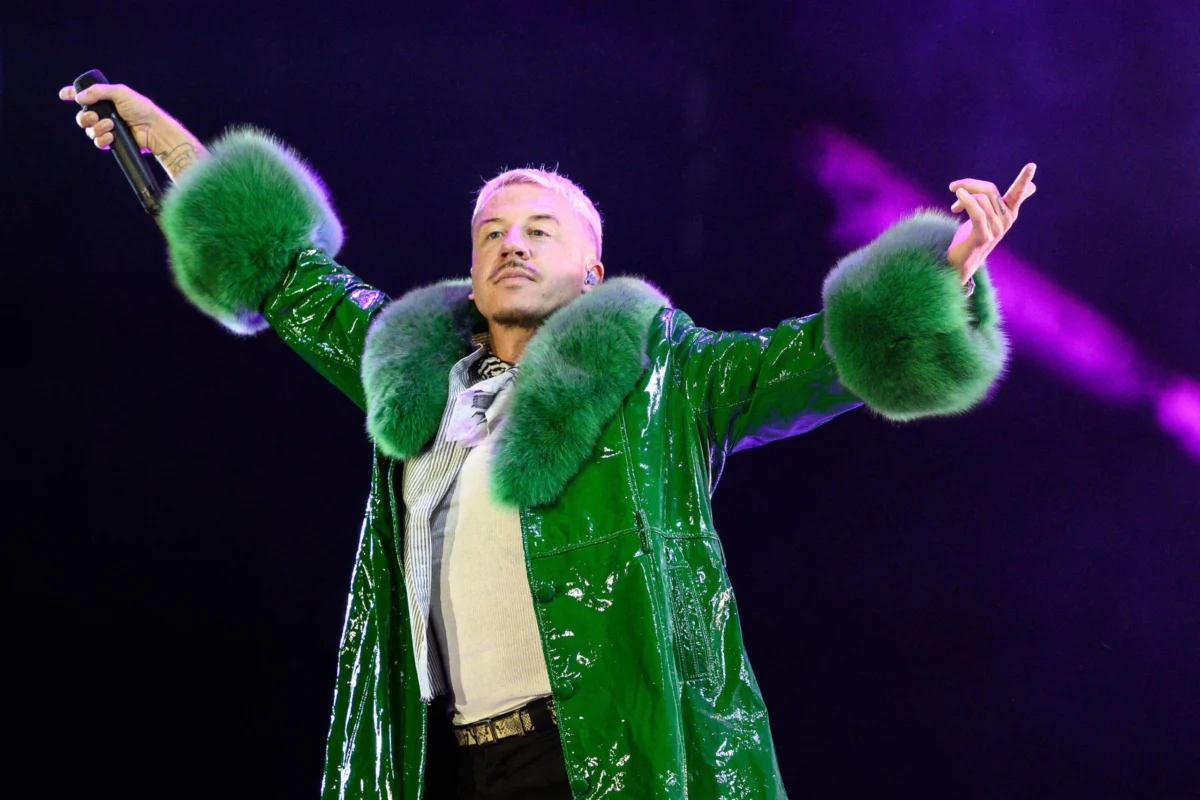
The music industry is grappling with significant ripple effects following the removal of US rapper, singer, dancer, and DJ Benjamin Haggerty, known professionally as Macklemore, from Ed Sheeran’s highly anticipated "Loop" tour. The decision, reportedly triggered by Macklemore’s pro-Palestinian comments made onstage earlier this month, has not only sparked a broader conversation about artistic freedom and political advocacy but has also created measurable volatility in secondary ticket markets for both artists. This unfolding saga, which began with a performance at MetLife Stadium in New Jersey on September 4, 2026, has escalated into a complex interplay of contractual obligations, public relations, and fan sentiment, prompting a wave of solidarity from other artists and a re-evaluation of the boundaries between entertainment and activism.
Chronology of Events: A Rapid Unfolding Controversy
The sequence of events leading to the current situation has been swift and dramatic, highlighting the rapid dissemination of information and public reaction in the digital age.
The initial flashpoint occurred on September 4, 2026, when Macklemore, performing as a supporting act for Ed Sheeran at MetLife Stadium in New Jersey, publicly voiced pro-Palestinian sentiments. While the exact wording of his remarks was not immediately detailed in all reports, they were sufficient to draw significant attention and, subsequently, controversy.
In the days following this performance, behind-the-scenes discussions and pressures mounted. By September 17, 2026, reports emerged that Macklemore had been officially dropped from the remainder of Sheeran’s "Loop" tour. This news was quickly followed by Macklemore’s own confirmation.
On Monday, September 22, 2026, Macklemore took to social media, specifically Instagram, to address his removal directly. He asserted that stadium owners had threatened to cancel upcoming shows if he remained on the tour, directly linking his dismissal to his pro-Palestinian remarks. This statement amplified the narrative of artistic censorship and brought the issue squarely into the public eye.
Just three days later, on Thursday, September 25, 2026, Macklemore made another significant announcement. In a move that underscored his commitment to his stated principles, he declared his intention to donate his entire $1 million earnings from the "Loop" tour to Palestinian aid organizations. This decision was widely seen as a powerful statement of solidarity and a direct response to his removal.
Concurrently, in a show of solidarity that further complicated the tour’s logistics, all other scheduled supporting acts for Ed Sheeran’s tour – including Finneas, Aaron Rowe, Beoga, and Lukas Graham – announced their withdrawal from the remaining dates. Their collective departure, largely communicated through their respective social media channels, signaled a united front in protest of Macklemore’s removal and the perceived suppression of free speech.
Amidst these developments, Ed Sheeran himself issued a statement on Wednesday, September 24, 2026, via an Instagram post. Sheeran clarified that Macklemore’s removal was a decision made by the tour’s promoter, not by him personally. He also defended his long-standing policy of maintaining political neutrality on his professional platform, citing his diverse audience, which includes young people and children, as a primary reason for avoiding political discourse during his concerts.
This rapid succession of events has left the "Loop" tour in disarray, prompting questions about replacement acts, future tour dynamics, and the broader implications for artists navigating sensitive geopolitical issues in their public lives.
Macklemore’s Stance and the Broader Context of Artistic Activism
Benjamin Haggerty, known as Macklemore, has a public history of using his platform to address social and political issues. His music, notably "Same Love" from 2012, which advocated for same-sex marriage, demonstrated an early willingness to engage with controversial topics and champion causes he believes in. This established precedent provides context for his recent pro-Palestinian comments, framing them not as an isolated incident but as part of a consistent pattern of advocacy.
The artist’s decision to vocalize his support for Palestinians comes at a time of heightened global tension and intense public scrutiny regarding the Israeli-Palestinian conflict. Celebrities and public figures who express strong opinions on this issue often face significant backlash, ranging from criticism and calls for boycotts to, in some cases, professional repercussions. Macklemore’s experience is not unique in the entertainment industry, where artists frequently find themselves at the intersection of their personal convictions, their public personas, and the commercial interests that underpin their careers. The swiftness of his removal and the subsequent explanation regarding threats from stadium owners underscore the immense pressure placed upon commercial entities to avoid controversy that could jeopardize large-scale events. For many, Macklemore’s actions are seen as a courageous stand for free speech, while for others, they represent an inappropriate use of a concert platform for political purposes.
The Financial Ripple Effect: An Analysis of Ticket Markets
The repercussions of Macklemore’s removal have extended directly into the financial landscape of live entertainment, specifically impacting the secondary ticket markets for both his and Ed Sheeran’s performances. Data from price tracking company TicketData, shared by its founder Keith Pagello, reveals a significant and immediate shift in ticket pricing.
For Macklemore’s upcoming October concert at Red Rocks in Colorado, a show that was announced months prior in March, resale ticket prices have surged dramatically. Pagello noted that "The get-in price [or the price for the cheapest available ticket] for that show is up 45% in the past 3 days, from $108 to $157." He attributed this surge directly to the week’s events, stating with confidence that "That’s a surge we can say with confidence would not have happened absent this week’s events." This increase suggests a strong wave of support for Macklemore, with fans potentially seeking to show solidarity or secure tickets to what they now perceive as a more significant, perhaps even defiant, performance. The controversy appears to have galvanized a segment of his fanbase, turning a standard concert into a statement event.
Conversely, secondary market prices for the remainder of Ed Sheeran’s "Loop" tour have shown a distinct downward trend. According to TicketData, which aggregates statistics from major platforms like SeatGeek, Vivid Seats, Gametime, and StubHub, ticket prices for Sheeran’s tour have decreased at nine out of the ten remaining venues. While Pagello acknowledged that price drops are a common phenomenon as concert dates approach—citing an average 22% decrease in the final two weeks for Sheeran’s North American concerts last summer—he emphasized a more telling metric: resale volume. "There has been a clear uptick in resale volume: since Monday, tickets have been selling at a slight to moderately increased pace compared to earlier tour stops at the same distance out, even with prices trending down," Pagello observed. This increase in resale activity, coupled with declining prices, suggests a significant portion of the audience is offloading their tickets. The motivations for this trend remain multifaceted, potentially stemming from opposition to Sheeran’s perceived inaction, support for Macklemore, or simply a disinterest in attending a tour without its originally advertised supporting lineup. The absence of the supporting acts, especially popular ones like Finneas, could certainly diminish the perceived value of the ticket for some attendees.
Sheeran’s Response and the Broader Context of Tour Management
Ed Sheeran’s public statement regarding Macklemore’s removal aimed to clarify his position and mitigate potential damage to his reputation. In his Instagram post, Sheeran asserted that the decision to remove Macklemore was made by the tour’s promoter, thereby distancing himself from the direct act of dismissal. This distinction is crucial in the complex world of large-scale concert tours, where promoters (such as Live Nation or AEG Presents) often bear the primary responsibility for logistics, contractual agreements with venues, and managing potential liabilities, including those arising from artist conduct or public outcry.
Sheeran also articulated his long-standing philosophy of maintaining political neutrality on his professional platform. "I have always used my platform and music to bring people from all backgrounds and cultures together and this won’t ever change," he wrote. "There is a reason I do not use my professional platform for politics – my audience includes young people, often children, of all backgrounds. Those who come to my shows do not expect a political forum." This stance resonates with a segment of the audience that prefers entertainment to be separate from political discourse. However, it also draws criticism from those who believe artists with significant platforms have a moral obligation to speak out on social and humanitarian issues.
Sheeran’s "Loop" tour is a monumental undertaking, building on a history of record-breaking success. His previous "Divide" tour, which concluded last year, grossed an astonishing $875.7 million and sold 8.8 million tickets, making it one of the highest-grossing tours in history, according to Billboard. The current "Play" tour, promoting his eighth album, has already demonstrated immense financial power, with its February leg in Australia alone bringing in $70.8 million, making it the highest-grossing tour globally that month. The sheer financial scale of these operations underscores the immense commercial pressures and risks involved. For promoters and artists alike, maintaining the smooth operation of such a tour, free from controversy that could lead to cancellations or reduced attendance, is a paramount business objective. Sheeran’s decision to maintain neutrality can thus be understood not just as a personal choice but also as a calculated business strategy aimed at protecting a massive global enterprise and its diverse audience.
Solidarity and Supporting Acts’ Departures
The immediate and unified departure of all other supporting acts from the "Loop" tour represents a significant development and a powerful statement of solidarity with Macklemore. Finneas, Aaron Rowe, Beoga, and Lukas Graham, each with their own fanbases and artistic identities, collectively announced their withdrawal. This concerted action goes beyond mere contractual obligation; it speaks to a shared understanding among artists regarding the importance of free expression and the potential chilling effect that Macklemore’s removal could have on the industry.
Such collective action is rare in the highly competitive music industry, where tour slots, especially on mega-tours like Sheeran’s, are highly coveted opportunities for exposure and career advancement. Their decision to sacrifice these opportunities highlights the depth of their conviction and their perception of the principle at stake. The departure of these acts not only leaves significant gaps in the tour’s lineup, requiring Sheeran and his promoters to scramble for replacements, but also sends a clear message to the broader industry about the potential consequences of perceived censorship. It transforms the narrative from a single artist’s removal into a broader industry-wide conversation about artistic integrity versus commercial pressures.
Industry Perspectives and Contractual Complexities
The events surrounding Macklemore’s removal expose the intricate web of contractual agreements and financial stakes that govern large-scale music tours. Promoters, artists, venue owners, and various sponsors are bound by complex contracts designed to protect their investments and ensure the smooth execution of events. Clauses related to "force majeure," "morality," or "conduct detrimental to the tour" are common, allowing parties to terminate agreements under specific circumstances.
The claim by Macklemore that "stadium owners threatened to cancel shows" is particularly revealing. Stadium owners and local authorities are often concerned with maintaining public order, ensuring safety, and avoiding protests or boycotts that could disrupt events or damage their venue’s reputation. In an era of heightened political polarization, public statements by artists on sensitive topics can quickly escalate into real-world security concerns or public relations nightmares, potentially triggering these contractual clauses. For promoters, the risk of a single show cancellation, let alone multiple, represents millions of dollars in lost revenue, logistical nightmares, and potential legal disputes. This immense financial pressure often dictates decisions, even when they clash with artistic principles.
Music industry analysts suggest that this incident will likely lead to even stricter contractual language in future tour agreements, potentially giving promoters and venue owners more explicit power to control artist messaging. Conversely, it might also galvanize artist unions or advocacy groups to push for stronger protections for artistic freedom of speech within contracts. The incident highlights the precarious balance artists must maintain between their personal beliefs and the commercial realities of their profession.
The Intersection of Art, Activism, and Commerce: Broader Implications
The Macklemore-Sheeran controversy serves as a stark illustration of the growing tension at the intersection of artistic expression, political activism, and the commercial imperatives of the entertainment industry. In an increasingly interconnected world, where artists are expected by many to use their platforms for social good, the line between personal conviction and professional responsibility becomes increasingly blurred.
This incident is likely to have several broader implications:
- Increased Scrutiny on Artist Conduct: Promoters, venues, and sponsors will likely intensify their scrutiny of artists’ public statements and social media activity, particularly regarding sensitive geopolitical issues. This could lead to more restrictive clauses in tour contracts.
- Galvanized Fan Bases: The controversy has clearly demonstrated the power of fan sentiment, both in boosting Macklemore’s ticket sales and in potentially affecting Sheeran’s. Artists who take a stance, whether for or against a cause, can expect strong reactions from their respective fan bases, leading to both increased loyalty and significant backlash.
- The "Neutrality" Debate: Sheeran’s defense of political neutrality will reignite the debate within the industry about whether artists have a moral obligation to speak out or if their primary role is simply to entertain. This divide often reflects broader societal fault lines.
- Solidarity Movements: The collective departure of the supporting acts signals a potential trend for artists to stand in solidarity against perceived censorship, even at personal career cost. This could empower artists in future disputes with promoters or venues.
- Financial Impact and Risk Assessment: The significant financial stakes involved mean that future decisions regarding artist conduct and political expression will be heavily weighed against potential financial losses and reputational damage. The $1 million donation by Macklemore also sets a precedent for artists to channel financial gains from controversial situations towards the causes they support.
As the "Loop" tour attempts to navigate its remaining dates without its full complement of supporting acts, the industry watches closely. The events surrounding Macklemore’s removal are more than just a tour change; they represent a critical moment in the ongoing dialogue about the role of artists in society and the boundaries of free speech in the highly commercialized world of global entertainment. The incident underscores the evolving challenges faced by public figures attempting to reconcile their artistic integrity and personal convictions with the immense pressures of a global music business.
