

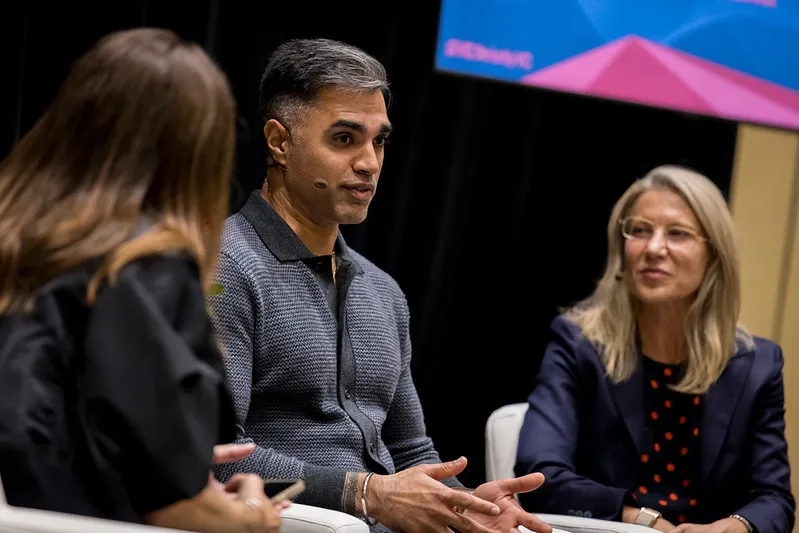
Limited Partners (LPs), the institutional investors and high-net-worth individuals who supply capital to venture firms, are currently experiencing a period of unparalleled excitement and potential profitability within the startup ecosystem. Often referred to as the "money behind the money," these crucial stakeholders find themselves in a unique market landscape, driven primarily by the explosive growth and valuations of artificial intelligence (AI) companies like OpenAI and Anthropic. While the prevailing sentiment among LPs is overwhelmingly positive, fueled by the promise of extraordinary returns, a nuanced undercurrent of caution persists, signaling a "yellow light" regarding the rapid pace of fundraising and the concentrated nature of investments. This complex environment, characterized by both bonanza-level opportunities and inherent risks, was recently discussed in depth with Beezer Clarkson of LGT Capital Partners, a diversified asset manager based in Zurich, and Amit Bhatti of TrueBridge, a Chapel Hill firm specializing solely in venture capital. Their insights reveal a venture market undergoing profound shifts, challenging traditional playbooks while simultaneously redefining success.
The AI Gold Rush: Unprecedented Portfolio Concentration
Historically, LPs have meticulously diversified their portfolios, spreading capital across a wide array of venture firms – from nascent emerging managers to established industry titans, and from generalist funds to sector specialists. This strategy aimed to maximize returns while strategically minimizing risk, a cornerstone of sound investment practice. However, the meteoric rise of generative AI companies has dramatically altered this conventional approach. OpenAI and Anthropic, in particular, have witnessed valuations skyrocket at an unprecedented velocity, compelling nearly every significant venture capital firm to invest in these two powerhouses. This phenomenon has led to a remarkable and largely unprecedented concentration of these specific companies within LP portfolios, often appearing multiple times across different venture funds backed by the same LP.
Despite this departure from the long-standing venture convention of avoiding conflicting investments, LPs are largely unperturbed. The sheer scale of potential returns has overshadowed traditional diversification concerns. Amit Bhatti of TrueBridge articulates this perspective, stating, "Venture has always been a power law business, so I actually view the concentration as a good thing." He explains that mature funds typically consolidate into a few dominant names (e.g., Databricks, SpaceX, Stripe), and the current generation is simply experiencing this consolidation much faster with companies like Anthropic and OpenAI. "That’s a feature, not a bug," Bhatti asserts, acknowledging that while not every company will succeed, such concentration is a natural outcome of the power law dynamic. Beezer Clarkson of LGT Capital Partners adds that at the early stage, a diversity of opportunity still exists, with smaller dollar amounts. While these early investments may eventually aggregate into the same dominant companies in later stages, the initial diversity provides some balance for LPs seeking broader exposure. This willingness to embrace concentration underscores the transformative potential LPs see in the AI sector, believing the reward justifies the heightened risk.
Accelerating Fund Cycles and Valuation Dynamics
One of the most significant indicators of the current market’s intensity is the dramatic acceleration in fundraising cycles. What was once a typical two-to-two-and-a-half-year deployment period for venture funds has shrunk to an astonishing 12 to 18 months, with some managers even returning for new capital within a single year. This rapid pace, while indicative of high demand and perceived opportunity, raises concerns among LPs. Beezer Clarkson describes this one-year pacing as "fast" and potentially "worrisome," noting that it is "typically harder to do a one-year vintage and get it right."
Amit Bhatti echoes this sentiment, calling the accelerated pacing a "yellow light" that causes "a little bit of heartburn." He attributes this speed to several factors: the increasingly large capital rounds for AI giants like Anthropic, where a single investment can consume a significant portion of a fund; and the substantial increase in seed round sizes, which have nearly doubled, requiring larger initial checks from lead investors. However, Bhatti distinguishes the current acceleration from past cycles, such as the 2021 crypto boom. He notes that while previous rapid deployments often involved "zero-revenue crypto moonshots," the current landscape sees many AI companies scaling from zero to $100 million in revenue at an unprecedented pace. This fundamental difference in underlying business performance provides a degree of reassurance, suggesting that despite the rapid capital deployment, the investments are often backed by tangible progress and market traction. The implication is that while the speed is concerning, the quality of assets acquired might be higher than in previous speculative bubbles.
Navigating LP Commitments and the "Seat at the Table"
The accelerated fundraising cadence presents a practical challenge for LPs: maintaining their allocations with top-tier managers without overcommitting or disrupting their own portfolio pacing. Venture capital is built on relationships, and a consistent commitment from LPs is crucial for securing a "seat at the table" with the most sought-after GPs. As Beezer Clarkson explains, "It’s very hard to leave a manager and then come back." LPs often have to adapt by downsizing their check rather than entirely sitting out a fund, lest they risk being excluded from future, potentially lucrative, opportunities. This delicate balance means LPs must carefully manage their capital allocation, often adjusting their internal pacing to match the faster cycles of their GPs.
Amit Bhatti confirms this strategic necessity, highlighting the importance of LPs being "reliable capital." He notes that managers sometimes bump up the size of an existing fund mid-cycle rather than launching an entirely new one, partly to accommodate the increased capital needs and partly to avoid coming back too frequently with new fundraises. This dynamic puts a strain on institutional LPs, particularly those with operating commitments (like endowments, hospitals, or foundations) that require regular distributions to meet their own obligations. When capital calls run hot with insufficient distributions, it can lead to LPs rotating out of venture, not due to lack of belief, but due to liquidity constraints. This pressure underscores the need for a healthy exit environment to ensure the long-term health of the LP-GP relationship.
Liquidity Evolution: Secondaries, Exits, and Employee Tenders
The venture capital ecosystem is fundamentally predicated on liquidity, allowing investors to realize returns on their investments. Historically, initial public offerings (IPOs) and strategic mergers & acquisitions (M&A) were the primary avenues. However, the past five years have witnessed the significant maturation and acceptance of the secondary market as a vital third pillar of liquidity. Beezer Clarkson highlights this shift, noting that secondaries have become "much more sophisticated" and "much more prevalent than before," particularly within the top-tier companies. This evolution is crucial because, as Clarkson points out, "if you wait 20 years for an IPO, that is not what structurally we all thought it could be." The secondary market now offers options for LPs to sell stakes in their GPs or strips of their portfolio, and the "taboo around it is less."
Amit Bhatti reinforces this, describing secondaries as the "third leg of liquidity" alongside IPOs and M&A. He recalls a time when secondaries were a "dirty word," associated only with distressed sales. However, the experience of holding illiquid positions during market downturns, like in 2021, taught managers the value of strategic secondary sales. Now, more managers judiciously use secondaries as a tool, not necessarily to exit entire positions in power-law companies, but to "sell 20% of your position and return your fund," which Bhatti argues "you should probably do." This strategic use of secondaries allows managers to provide earlier liquidity to LPs and demonstrate performance without fully divesting from high-potential assets.
Parallel to this, the rise of founder and employee tenders – allowing early partial liquidity for key personnel – has become more common, even early in a company’s "journey." While this is viewed positively for long-standing, financially robust companies like Stripe and Databricks, where it helps retain talent, it raises concerns for younger ventures. Bhatti draws an analogy to the crypto market, where immediate liquidity for tokens sometimes diminished motivation when projects faced challenges. Lead investors now play a crucial role in enforcing responsible tender practices, engaging in "conversations behind the scenes" to prevent premature employee exits. However, this oversight is often contingent on the founder’s leverage; in cases of extraordinary leverage, investor influence may be limited.
Ecosystem Transformation: New Managers and Geographic Shifts
The success of major tech companies invariably seeds the next generation of innovators and investors. As companies like OpenAI and Anthropic mature and employees gain liquidity, the ecosystem braces for a new wave of venture capital participants. Beezer Clarkson points to historical precedent: "It happened in the Google days." It is highly probable that a "whole new raft of emerging managers backed by people coming out of OpenAI and Anthropic" will materialize. These individuals, armed with deep industry knowledge, networks, and newfound capital, can become both LPs and GPs themselves, further enriching the venture landscape. Amit Bhatti emphasizes that these individuals tend to "stay in the ecosystem, investing in others, building new companies, starting new firms," which is a primary reason why regions like San Francisco continue to dominate the venture scene.
However, the soaring cost of living, particularly in San Francisco, presents a potential challenge to this ongoing cycle of talent generation. The rapid escalation of housing prices raises questions about whether the next generation of founders might be priced out, potentially pushing the center of gravity for innovation to other hubs like New York or beyond. While Beezer Clarkson acknowledges the "density effect in the Bay Area" as a powerful draw, she suggests that while the hub might not leave the region, it could potentially shift within it, perhaps "back into the suburbs" as YC once was in Mountain View. Despite the economic pressures, the unparalleled concentration of talent, capital, and established networks in the Bay Area makes it incredibly resilient against significant geographic displacement in the near term.
The Path for Emerging Managers: Niche, Access, and Prudent Growth
Despite the market’s increasing concentration of capital in the hands of a few large, established funds, opportunities for emerging managers (funds one through three) persist. LPs continue to allocate capital to these newer entrants, albeit often with smaller fund sizes. Beezer Clarkson notes that while "fifty percent of the money might go to the big funds," there is still room for numerous first funds ranging from $25 million to $50 million, collectively adding up to substantial capital. The key for emerging managers, she explains, is to offer a "differentiated point of view, a reason for being."
Amit Bhatti advises emerging managers to start with a more modest fund size, perhaps $5 million or $10 million, to build a track record and prove their thesis, access, and judgment. This approach, he argues, makes subsequent fundraises significantly easier compared to attempting a $50 million or $100 million fund on day one. He highlights the increasing flexibility in how LPs view emerging managers, now open to backing individuals who are still operating their companies while investing on the side. This "operator-turned-investor" model, as Clarkson describes it, provides unique insights, though the challenge remains for them to "win the right to be on the best cap tables."
TrueBridge, for instance, has backed a diverse range of emerging managers, including founders still running companies, spinouts from larger firms, and even "extremely young GPs, 22 and 23 years old," who possess "really close access to the next generation of AI-native founders." These young managers, by demonstrating strong "sourcing, picking, winning" capabilities even without significant capital, proved their potential. This demonstrates that for early-stage funds, there is "no one-size-fits-all" approach, and LPs are increasingly willing to consider diversified or concentrated strategies, and even part-time commitments, as long as the potential for outsized returns is evident.
Regarding check sizes, Beezer Clarkson states that LGT Capital Partners typically commits no less than $5 million to a fund and prefers to cap its investment at no more than 20% of a fund’s total capital to ensure the GP diversifies their LP base. Amit Bhatti, however, indicates TrueBridge’s flexibility, often investing $3 million to $5 million, and in "very specific scenarios," even smaller amounts. TrueBridge is also more open to higher concentration, sometimes committing "half or all of it," especially in initial funds, with the expectation that successful GPs will diversify their LP base in subsequent rounds.
Conclusion and Outlook
The current venture capital landscape is a fascinating paradox: a period of immense optimism driven by the transformative power of AI, yet underscored by inherent structural shifts and potential risks. Limited Partners are navigating a market where traditional diversification tenets are being re-evaluated in the face of power-law returns, where fundraising cycles are compressing at an unprecedented rate, and where liquidity options are evolving beyond traditional exits. While the "bonanza" of AI-driven valuations provides a powerful incentive, the "yellow lights" of rapid pacing, capital concentration, and the strain on LP portfolios demand vigilant oversight and strategic adaptation. The long-term implications for the venture ecosystem, including the emergence of new investors, the geographic distribution of talent, and the evolving role of secondaries, are still unfolding. What is clear is that the "money behind the money" is actively shaping, and being shaped by, one of the most dynamic periods in venture capital history, requiring a blend of excitement, experience, and prudent judgment to capitalize on the opportunities while mitigating the emerging dangers.
