

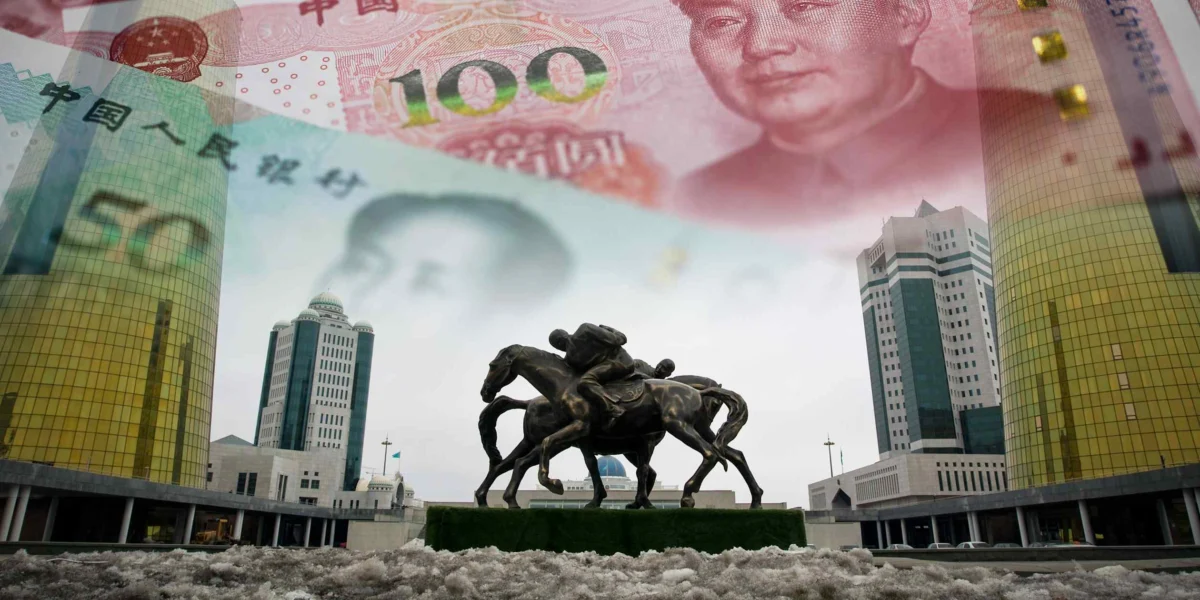
HONG KONG — Borrowers from Kazakhstan are capitalizing on remarkably low financing costs available in the Chinese renminbi (yuan), a trend that is fueling a surge in the yuan-denominated bond market and underscoring the deepening economic ties between Beijing and Central Asia’s largest oil exporter. The sovereign wealth fund Samruk-Kazyna, a prominent entity in Kazakhstan’s economy, has been actively raising funds through yuan bonds this year, signaling a strategic shift in its funding strategy. This move comes as geopolitical and economic dynamics foster a more favorable environment for such cross-border financial transactions.
A Strategic Pivot: Kazakhstan’s Embrace of the Yuan Bond Market
The current landscape reveals a significant uptick in Kazakh entities seeking capital through yuan-denominated debt instruments. This strategy is not merely opportunistic; it is rooted in the compelling advantage of lower interest rates compared to traditional borrowing avenues in Western currencies. For Kazakhstan, an economy heavily reliant on commodity exports, particularly oil and gas, diversifying its funding sources and managing financing costs are paramount for sustained economic growth and stability. The yuan bond market, often referred to as the "Panda bond" market when issued onshore in mainland China and the "Dim Sum bond" market when issued offshore in Hong Kong, offers an attractive alternative.
Samruk-Kazyna, the national wealth fund of Kazakhstan, stands as a prime example of this trend. Operating out of its headquarters in Astana, the fund manages a vast portfolio of state-owned enterprises across various strategic sectors, including energy, mining, transportation, and telecommunications. Its recent forays into the yuan bond market signify a calculated effort to leverage the liquidity and cost-effectiveness of Chinese financial markets. While specific figures for Samruk-Kazyna’s recent yuan bond issuances were not detailed in the initial report, the broader trend indicates substantial activity. For instance, in the past, Kazakh entities have successfully issued bonds in the Chinese market. In 2023, for example, the Eurasian Development Bank, which has significant Kazakh involvement, issued RMB 2 billion in bonds in China. This historical context provides a foundation for understanding Samruk-Kazyna’s current strategic maneuvers.
The Allure of Low Financing Costs
The primary driver behind this surge in yuan bond issuance is the consistently lower interest rate environment in China compared to major Western economies. For years, China has maintained a relatively stable and often lower interest rate policy, influenced by its domestic economic objectives and the managed nature of its currency. This has translated into lower borrowing costs for entities able to access the yuan market.
For a country like Kazakhstan, which often seeks large-scale capital for infrastructure development, resource extraction projects, and economic diversification initiatives, even a few percentage points reduction in interest rates can translate into billions of dollars in savings over the life of a bond. These savings can then be reinvested into the Kazakh economy, fostering further development and job creation.
Deepening Sino-Kazakh Economic Relations
The increased engagement with the yuan bond market is intrinsically linked to the broader strengthening of economic and political ties between China and Kazakhstan. Since the inception of China’s Belt and Road Initiative (BRI) in 2013, Kazakhstan has been a crucial partner, serving as a land bridge connecting China to Europe. This strategic positioning has led to a surge in bilateral trade, investment, and infrastructure development projects.
The BRI has facilitated significant Chinese investment in Kazakhstan’s energy sector, transportation networks, and industrial capacity. As a result, the economic interdependence between the two nations has grown considerably. This growing relationship creates a natural demand for financial instruments that facilitate cross-border transactions and investment, with the yuan playing an increasingly important role.
Historical Context of Bilateral Economic Ties
The economic relationship between China and Kazakhstan dates back to the early days of Kazakhstan’s independence in 1991. However, it has experienced a significant acceleration in the last decade, propelled by the BRI. Key milestones include:
- Early 2000s: Initial collaborations in the energy sector, with Chinese companies investing in Kazakh oil fields.
- 2013: Launch of the Belt and Road Initiative, with Kazakhstan identified as a core transit hub.
- 2014-2016: A period of increased Chinese investment in Kazakh infrastructure, including the Khorgos Gateway dry port and the development of road and rail networks.
- 2017-Present: Diversification of economic cooperation beyond energy and infrastructure to include areas like manufacturing, agriculture, and digital technologies. The increasing use of the yuan in bilateral trade settlements also gained momentum during this period.
The trend of Kazakh entities issuing yuan bonds is a logical progression within this evolving economic architecture. It reflects a maturing financial relationship where the yuan is not just a currency for trade but also a viable instrument for capital raising.
Supporting Data and Market Trends
While precise, real-time data on all Kazakh yuan bond issuances can be proprietary and complex to aggregate, broader market trends provide strong indicators. The offshore yuan (CNY) bond market, primarily based in Hong Kong, has seen consistent growth over the past decade, attracting issuers from various emerging markets.
- Growth of Offshore Yuan Market: The total outstanding volume of offshore yuan bonds has expanded significantly, reflecting increasing international acceptance and demand for yuan-denominated assets. This market liquidity is crucial for large-scale fundraising.
- Interest Rate Differentials: Historically, benchmark interest rates for yuan bonds have often been lower than those for US dollar or Euro bonds of comparable maturity and credit quality, especially during periods of monetary tightening in Western economies. For example, during periods when the US Federal Reserve was raising interest rates, the People’s Bank of China might have maintained a more stable or even accommodative stance, widening the differential.
- Kazakhstan’s Credit Rating: Kazakhstan generally maintains a stable investment-grade credit rating from major rating agencies. This creditworthiness makes its entities attractive to international investors, including those seeking yuan-denominated assets. A higher credit rating typically translates to lower borrowing costs, further enhancing the appeal of the yuan bond market.
The involvement of entities like Samruk-Kazyna suggests that the volume and value of such issuances are substantial enough to warrant strategic attention from the Kazakh government and its major economic players. These issuances are often facilitated by major international and Chinese investment banks, acting as arrangers and underwriters, further demonstrating the integration of Kazakh borrowers into global financial markets.
Official Responses and Strategic Implications
The strategic shift towards yuan financing is unlikely to be a standalone decision by individual entities like Samruk-Kazyna. It is more likely to be a reflection of broader economic policy and strategic alignment at the governmental level.
Potential Statements or Reactions (Inferred):
- Kazakh Ministry of Finance/National Bank: Officials might express satisfaction with the diversification of funding sources and the ability to secure capital at competitive rates, contributing to macroeconomic stability. They may also highlight the role of yuan financing in strengthening bilateral economic ties and supporting infrastructure development.
- Samruk-Kazyna Management: Executives would likely emphasize the prudent financial management that led to exploring and successfully utilizing the yuan bond market, citing the cost benefits and alignment with strategic investment plans. They might also point to the fund’s commitment to international best practices in capital raising.
- Chinese Financial Regulators/Banks: Chinese authorities would likely welcome the increased use of the yuan in international capital markets, viewing it as a step towards RMB internationalization. They might also highlight the opportunities for Chinese financial institutions to participate in and facilitate these cross-border transactions.
Analysis of Implications:
- Reduced Currency Risk for Certain Transactions: For Kazakh companies heavily involved in trade with China, or those with significant yuan-denominated revenues, issuing debt in yuan can help mitigate currency mismatch risks. This can lead to more predictable financial outcomes.
- Enhanced Financial Autonomy: By diversifying funding sources away from traditional Western markets, Kazakhstan can potentially enhance its financial autonomy and reduce its vulnerability to geopolitical pressures or fluctuations in Western capital markets.
- Catalyst for Yuan Internationalization: Increased use of the yuan by significant state-owned entities in resource-rich countries like Kazakhstan contributes to the gradual internationalization of the Chinese currency, a long-term strategic goal for Beijing.
- Potential for Increased Chinese Influence: As financial ties deepen, there is a potential for increased Chinese economic influence in Kazakhstan. This requires careful management by Kazakh authorities to ensure that such influence is mutually beneficial and does not compromise national interests.
- Diversification of Investment Opportunities: For Chinese investors, the availability of yuan-denominated bonds issued by Kazakh entities provides new avenues for investment, potentially offering attractive yields and diversification benefits.
Broader Impact and Future Outlook
The trend of Kazakh borrowers utilizing the yuan bond market is part of a larger global phenomenon where the renminbi is increasingly being used in international trade, investment, and finance. For Central Asian nations, particularly those deeply integrated into the BRI, this trend is expected to continue.
The success of entities like Samruk-Kazyna in accessing these markets can serve as a blueprint for other Kazakh companies and potentially for borrowers in neighboring countries. As the yuan’s convertibility and accessibility improve, and as China’s financial markets continue to mature, the appeal of yuan-denominated financing is likely to grow.
Future Outlook:
- Continued Growth in Issuances: Expect to see a sustained or even increased volume of yuan bond issuances by Kazakh entities, especially for projects aligned with the BRI or those with significant trade links to China.
- Development of Local Currency Markets: This trend may also spur efforts to further develop Kazakhstan’s own financial markets and potentially facilitate the use of the Kazakh Tenge in bilateral transactions, though this is a longer-term prospect.
- Regulatory Harmonization: As cross-border financial flows increase, there may be a need for greater regulatory cooperation and harmonization between Chinese and Kazakh financial authorities to ensure smooth and secure transactions.
- Geopolitical Considerations: While economic factors are the primary drivers, geopolitical considerations will continue to play a role. Shifts in global alliances or trade relations could impact the attractiveness and accessibility of different capital markets.
In conclusion, the strategic borrowing by Kazakh entities, exemplified by Samruk-Kazyna, in the Chinese yuan bond market represents a significant development in Sino-Kazakh economic relations. It is a testament to the evolving role of the renminbi as an international financial instrument and highlights Kazakhstan’s proactive approach to optimizing its financing costs and diversifying its economic partnerships in a rapidly changing global landscape. This trend is poised to shape the financial strategies of Central Asian economies and contribute to the ongoing internationalization of the Chinese currency.
