

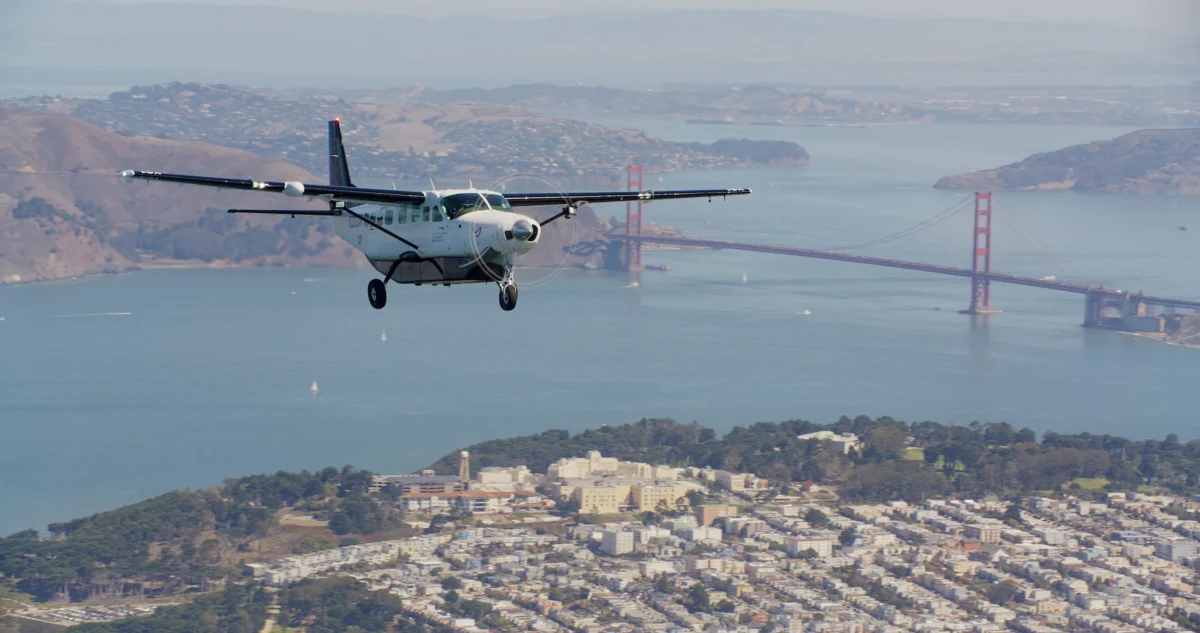
In a landmark achievement for autonomous aviation, an aircraft equipped with Joby Aviation’s advanced autonomy technology successfully traversed more than 3,100 miles across the United States without any human pilot intervention, the company announced on Friday. This monumental journey, described by Joby as the "first-ever autonomous flight across the United States," not only underscored the robust capabilities of its proprietary autonomy stack but also emphatically signaled the company’s strategic expansion beyond its well-publicized pursuit of electric air taxis, venturing significantly into defense and diverse logistical applications. The pioneering aircraft, having completed its initial westbound leg, is slated to embark on its return journey to the West Coast over the coming two weeks, with planned stops in various cities including Louisville, Kentucky, and Salt Lake City, providing further opportunities for data collection and demonstration.
The Genesis of a Groundbreaking Journey
The historic cross-country flight encompassed a full spectrum of autonomous operations, from meticulous taxiing and precise takeoffs to complex in-flight navigation and flawless landings. Throughout the entire operation, the aircraft was remotely supervised from Joby’s operational headquarters in California and Shaw Air Force Base in South Carolina, demonstrating a hybrid oversight model that blends advanced automation with human expertise. While a pilot was onboard the converted Cessna Caravan aircraft for compliance and safety protocols, Joby confirmed that the machine executed every phase of the mission autonomously, validating its sophisticated systems in real-world, dynamic environments. This distinction is crucial, as it moves beyond mere autopilot functions to full, end-to-end mission execution without manual control inputs.
The choice of a converted Cessna Caravan, a widely recognized and robust utility aircraft, for this demonstration was strategic. It showcased the adaptability of Joby’s autonomy technology, proving it can be retrofitted onto conventional aircraft platforms, thereby extending its potential applications far beyond Joby’s bespoke electric vertical takeoff and landing (eVTOL) designs. This adaptability is a cornerstone of Joby’s emerging strategy, positioning its autonomy stack as a versatile solution for a multitude of missions that demand reliability and efficiency.
Beyond Urban Air Mobility: A Strategic Pivot
For years, Joby Aviation has been synonymous with the future of urban air mobility, diligently developing and seeking type certification from the Federal Aviation Administration (FAA) for its all-electric eVTOL aircraft. These aircraft are designed to revolutionize intra-city travel, offering quiet, efficient, and emission-free short-haul passenger transport. The company’s efforts in this arena have garnered significant attention, with substantial investments and partnerships aimed at establishing an eventual urban air taxi service. However, this recent autonomous cross-country flight illuminates a crucial, increasingly prominent facet of Joby’s business model: its deep and expanding engagement with the U.S. Department of Defense and the broader defense sector.
The successful flight serves as a powerful testament to the viability of Joby’s autonomy technology for a diverse array of demanding environments and missions. The company explicitly highlighted its potential for critical applications such as rapid medical transport, agile disaster response, and efficient defense logistics. These areas represent significant markets where autonomous capabilities can offer unparalleled advantages in terms of speed, safety, and operational cost-effectiveness, especially in hazardous or difficult-to-access locations.
Deepening Ties with the Defense Sector
Joby’s strategic push into the military sector is not a recent development but rather a calculated expansion rooted in a longstanding relationship with the U.S. Department of Defense. This relationship has seen Joby leveraging its innovative aerospace technologies to meet defense requirements, identifying synergies between its commercial endeavors and military needs. The company’s autonomy stack, designed with modularity and retrofittability in mind, is central to this strategy. It is envisioned to equip a wide range of conventional aircraft, transforming them into autonomous platforms capable of executing complex missions.
The initial market focus for this autonomy stack includes a regional airframe equipped for defense missions and commercial freight transport. This dual-use approach maximizes the commercial viability of the technology while addressing critical defense capabilities. This effort has been substantially supported by a $17 million Air Force contract awarded through AFWERX, the U.S. Air Force’s innovation arm. Such contracts provide not only financial backing but also invaluable validation and access to real-world operational insights from military stakeholders.
Joby’s commitment to the defense sector took a significant leap forward with its acquisition of Resonant Sciences. The acquisition, finalized in August last year, involved a transaction valued at $500 million in cash and stock. Ohio-based Resonant Sciences specializes in cutting-edge radio frequency and sensor systems, technologies that are absolutely critical for advanced autonomous operations, particularly in defense contexts. The integration of Resonant Sciences’ expertise has fortified Joby’s dedicated defense business unit, which now encompasses several strategic projects, including the development of next-generation turbine-electric and hydrogen-electric aircraft, alongside the continuous refinement of its autonomy technology stack. This move underscores Joby’s ambition to become a comprehensive provider of advanced aerial solutions, from propulsion systems to full autonomous flight capabilities.
Further solidifying its defense footprint, Joby entered into a significant agreement last year with defense contractor L3Harris Technologies. This partnership aims to "explore opportunities" to develop a new class of aircraft, specifically a gas-turbine hybrid vertical takeoff and landing (VTOL) aircraft capable of autonomous flight, tailored for specialized defense applications. Such collaborations are vital for accelerating the development and deployment of advanced aerospace technologies, combining Joby’s innovation with L3Harris’s extensive experience in defense systems integration and manufacturing.
Technological Prowess: The Autonomy Stack
At the heart of Joby’s recent achievement is its sophisticated autonomy stack. This integrated suite of hardware and software components is designed to perceive the aircraft’s environment, make real-time decisions, and execute flight maneuvers with precision and reliability exceeding human capabilities in certain aspects. Key elements of such a system typically include:
- Advanced Sensor Fusion: Integrating data from multiple sources like cameras, radar, lidar, GPS, and inertial measurement units (IMUs) to create a comprehensive understanding of the aircraft’s surroundings.
- Path Planning and Navigation Algorithms: Intelligent systems that can dynamically plan optimal routes, avoid obstacles, and adapt to changing conditions (weather, air traffic, restricted airspace).
- Flight Control Systems: Software and hardware that translate navigational commands into precise control surface movements, ensuring stable and accurate flight.
- Fault Detection and Redundancy: Critical systems designed to identify potential failures and seamlessly switch to backup systems, ensuring mission continuity and safety.
- Remote Supervision Interface: A robust communication link and user interface that allows human operators to monitor the aircraft’s status, intervene if necessary, and manage missions from a ground station.
The successful cross-country flight validates the maturity and robustness of these integrated systems, demonstrating their ability to handle the complexities of diverse airspaces, varying meteorological conditions, and extended flight durations without human input. This level of autonomy is a significant step beyond traditional autopilots, which primarily assist pilots rather than replace them in core flight functions.
Regulatory Landscape and Certification Hurdles
While the technological achievement is undeniable, the path to widespread commercial deployment of autonomous aircraft, particularly for passenger transport, is heavily contingent on regulatory approvals. The Federal Aviation Administration (FAA) is tasked with developing comprehensive frameworks for certifying autonomous systems, a complex undertaking that involves ensuring unprecedented levels of safety and reliability.
The FAA’s approach to certifying new aviation technologies, particularly those involving a paradigm shift like full autonomy, is rigorous and methodical. This historic flight by Joby provides invaluable data and real-world operational insights that can inform regulatory development. It demonstrates practical capabilities that the FAA can analyze against existing safety standards and use to develop new ones. Challenges include defining acceptable levels of risk, establishing protocols for remote supervision, and ensuring cybersecurity against potential threats. Joby’s compliance pilot on board during the flight underscores the current regulatory requirement for human oversight, even in highly automated operations. The company’s continued testing and data collection, including the return journey, will be crucial in building a robust case for future certifications.
Broader Market Implications and Future Outlook
Joby Aviation’s autonomous cross-country flight carries profound implications for the future of aviation, positioning the company not just as an eVTOL pioneer but as a leader in autonomous flight technology across multiple sectors.
- Diversified Revenue Streams: This achievement clearly signals Joby’s potential to cultivate a robust "second business" line focused on autonomous solutions for defense, logistics, and specialized commercial operations, complementing its urban air mobility ambitions. This diversification can de-risk its business model and open up new, substantial revenue opportunities beyond passenger transport, which faces its own unique regulatory and market adoption challenges.
- Impact on Logistics and Cargo: Autonomous cargo aircraft, particularly those capable of long-range flights, could revolutionize freight transport. They offer the potential for lower operating costs (reduced pilot wages, optimized fuel efficiency through precise navigation), increased operational hours (unconstrained by human pilot fatigue limits), and access to remote or challenging locations. This could be particularly impactful for express cargo, humanitarian aid, and military supply chains.
- Defense Modernization: For the Department of Defense, autonomous aircraft offer strategic advantages, including reducing human risk in dangerous missions, enhancing surveillance capabilities, improving logistical efficiency in contested environments, and enabling rapid response to crises. Joby’s demonstrated capability positions it as a key partner in military aviation modernization efforts.
- Competitive Landscape: While Joby has made a significant splash, it operates in a burgeoning field. Other companies and research institutions are also pursuing various forms of autonomous flight. However, Joby’s end-to-end autonomous cross-country flight on a retrofitted conventional aircraft provides it with a distinct advantage and validates its technological approach in a highly visible manner.
- Public Acceptance and Trust: Demonstrating the safety and reliability of autonomous flight in a highly public and successful manner is crucial for building public trust, which is essential for the eventual widespread adoption of autonomous technologies, particularly for passenger applications.
The Journey Continues: Data and Refinement
The aircraft’s planned return journey to the West Coast, with intermediate stops, signifies a continued phase of rigorous testing and data acquisition. Each leg of this extended mission will provide Joby engineers with invaluable data on system performance under varied conditions, including different airspaces, weather patterns, and operational demands. This continuous feedback loop is critical for refining algorithms, enhancing system reliability, and preparing for future commercial and defense deployments. The data collected will be instrumental in demonstrating the safety, efficiency, and versatility of Joby’s autonomy stack to regulatory bodies and potential customers alike.
In conclusion, Joby Aviation’s autonomous cross-country flight represents a pivotal moment in the evolution of aviation. It firmly establishes the company as a frontrunner in autonomous flight technology, extending its strategic horizons far beyond urban air taxis. By showcasing the practical application of its autonomy stack on a conventional aircraft and deepening its ties with the defense sector, Joby is charting a course towards a diversified future, poised to reshape not only how people move within cities but also how critical cargo is transported and how national defense needs are met in an increasingly automated world. The skies, it seems, are becoming increasingly intelligent.
