

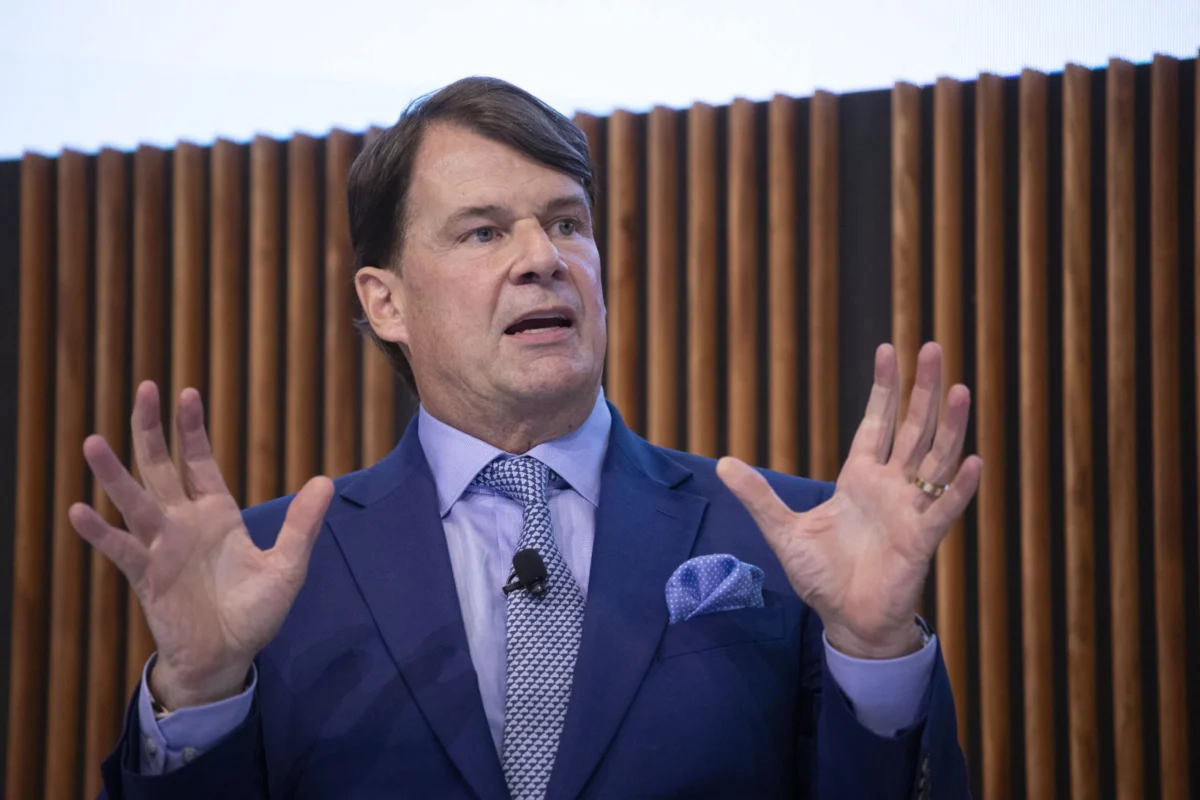
DETROIT – Jim Farley, President and CEO of Ford Motor Co., issued a stark warning to U.S. policymakers on Tuesday regarding the burgeoning threat of Chinese automakers, urging them to heed the lessons learned – or unlearned – from Europe’s experience. Speaking at the prestigious 2026 Automotive News Congress in Detroit, Farley cautioned that while it might be "too late" for Europe to effectively stem the tide of Chinese automotive brands, the American market still has a window of opportunity to implement considered and strategic policies. His remarks underscore a growing anxiety within the legacy automotive industry about China’s rapid ascent and its potential to disrupt established global markets.
Farley’s address, delivered to an audience of industry leaders, analysts, and journalists, painted a picture of urgency. "I think it’s just important for us to take our time to be considerate," Farley stated, emphasizing the need for a deliberate approach. "I watch what’s happening in Europe right now, where that was not the case, and it’s really something that they have to deal with now, and it’s too late." This direct assessment highlights the perceived irreversible penetration of Chinese brands into the European market, a scenario U.S. executives and policymakers are keen to avoid replicating.
The European Experience: A Cautionary Tale
The trajectory of Chinese automakers in Europe serves as a compelling, if unsettling, precedent. According to market research and consulting firm GlobalData, the global market share for Chinese brands experienced a staggering nearly 70% jump from 2020 to 2025. This aggressive expansion has been particularly pronounced in Europe. Dataforce, a Germany-based firm, reported that Chinese automakers held virtually no market share in Europe in 2020. Yet, by August 2026, that figure had skyrocketed to 12%. This rapid market penetration, achieved in just half a decade, has sent shockwaves through the continent’s long-established automotive industry, prompting both concern and a scramble for strategic responses.
The success of Chinese brands in Europe is multifaceted. It is driven by a combination of competitive pricing, rapid innovation in electric vehicle (EV) technology, and substantial state subsidies that allow them to offer vehicles at price points often unattainable by European and American manufacturers. Brands like BYD, MG (owned by SAIC), Nio, Xpeng, and Geely have made significant inroads, appealing to consumers with feature-rich, technologically advanced, and increasingly affordable EVs. European automakers, many of whom were slower to pivot to electrification, now find themselves in a challenging position, facing intense price competition and the need to accelerate their EV strategies. This influx has prompted the European Union to launch anti-subsidy investigations into Chinese EV imports, a move signaling the depth of concern among European policymakers about fair competition and the future of their domestic industry.
Ford’s Strategic Tightrope: Partnership Amidst Competition
Ford Motor Co., under Farley’s leadership, finds itself navigating a complex global landscape where Chinese influence is undeniable. The company’s strategy is a delicate balance: simultaneously competing against the influx of Chinese automakers while also exploring partnerships in specific regions and technological domains. "Our answer is pretty simple. We’re going to partner with the Chinese where we don’t have [intellectual property], where we can be more capital efficient in places like Europe or Southeast Asia," Farley explained, outlining a pragmatic approach to leveraging Chinese capabilities without ceding core competitive advantages.
An illustrative example of this strategy is the joint venture announced in July 2026 between Ford and Chinese automaker Geely. Under this agreement, Geely plans to commence building EVs at a Ford-owned plant in Spain by early next year. This collaboration allows Ford to optimize its existing manufacturing infrastructure in Europe while tapping into Geely’s EV expertise and potentially streamlining production costs for a market segment where affordability is increasingly crucial. Such partnerships reflect a broader industry trend where global automakers, facing immense pressure to electrify and innovate, are looking to strategic alliances to share risks, accelerate development, and penetrate new markets more efficiently.
However, Ford’s strategy is not solely about collaboration. Farley also emphasized the company’s commitment to robust competition, particularly in its home market. He announced Ford’s plans to launch its "universal electric vehicle" next year, spearheaded by a new electric pickup truck. This initiative signals Ford’s intent to aggressively compete in the burgeoning EV segment, leveraging its strong brand recognition and deep understanding of the American truck market. The "universal EV" platform is expected to underpin a range of future electric models, designed to be cost-effective, adaptable, and appealing to a broad consumer base, directly challenging the value proposition of incoming Chinese competitors.
Washington’s Deliberation: Geopolitical and Economic Crossroads
Farley’s cautionary remarks arrive at a critical juncture for U.S.-China relations and domestic industrial policy. The geopolitical backdrop is one of heightened tensions and strategic competition, with the automotive sector increasingly viewed through a lens of national security and economic sovereignty.
Earlier this month, the Trump administration conveyed its "profound concern" to Ford Motor Co. via a letter, specifically questioning its strategic trajectory given its increasing ties to Chinese companies. The letter reportedly detailed anxieties regarding potential intellectual property transfer, supply chain vulnerabilities, and the broader implications for American industrial independence. Ford, in response, robustly defended its stance, asserting its position as America’s top-producing carmaker and highlighting its significant employment of hourly workers in the country—more than any other automaker. This exchange underscores the tightrope walk for multinational corporations like Ford, balancing global operational necessities with the demands and concerns of national governments.
Further complicating the landscape was a high-profile visit last week by Chinese President Xi Jinping with President Donald Trump. While the specifics of their automotive discussions were not fully disclosed, Trump had previously indicated a nuanced position, stating earlier this month that he "might be OK" with allowing Chinese automakers into the U.S. market, provided they committed to producing vehicles domestically. This conditional openness reflects a desire to attract foreign investment and job creation, even from strategic rivals, while simultaneously protecting U.S. manufacturing interests. However, such a stance also opens the door to potential debates about national security risks, fair labor practices, and the long-term impact on domestic industry.
The legislative branch is also actively engaged in this debate. Currently, several bills are under consideration in Congress that aim to restrict or even permanently ban Chinese automotive brands from entering the U.S. market. These legislative efforts are driven by a range of concerns, including economic protectionism, national security fears related to data collection and potential cyber espionage, and a desire to prevent the erosion of American manufacturing jobs. The potential imposition of tariffs, quotas, or outright bans would represent a significant escalation in trade tensions and could reshape the future of the U.S. auto market for decades to come.
The Shifting Global Automotive Landscape
The discussion around Chinese automakers in the U.S. cannot be divorced from the broader transformations sweeping the global automotive industry, particularly the rapid transition to electric vehicles. China has established a commanding lead in the EV ecosystem, from the mining and processing of critical raw materials (like lithium and cobalt) to battery manufacturing and the production of finished electric vehicles. Chinese companies like CATL and BYD dominate the global battery supply chain, making the world’s automakers heavily reliant on their technology and production capacity.
This dominance provides Chinese automakers with significant cost advantages, allowing them to produce EVs at lower price points than many Western counterparts. Furthermore, the sheer scale of China’s domestic market has fostered intense competition and rapid innovation, pushing Chinese brands to develop cutting-edge technology and sophisticated software integration within their vehicles.
For the U.S. auto industry, the stakes are incredibly high. A significant influx of Chinese EVs could lead to intense price wars, potentially squeezing profit margins for established American brands and threatening the viability of some domestic manufacturing operations. This, in turn, could impact hundreds of thousands of jobs across the automotive supply chain, from assembly line workers to engineers and component suppliers. Labor unions, such as the United Auto Workers (UAW), have expressed profound concerns about the potential job losses and the erosion of hard-won wages and benefits if Chinese-made vehicles flood the market without reciprocal access for U.S. products or adherence to similar labor standards.
Consumers, meanwhile, face a dilemma. While the prospect of more affordable EVs is appealing, particularly as the transition to electric vehicles accelerates, the broader economic and national security implications are also significant. The debate centers on balancing consumer choice and affordability with the strategic imperative to protect domestic industries, ensure supply chain resilience, and safeguard national interests.
Government policies, such as the Inflation Reduction Act (IRA), aim to bolster domestic EV manufacturing and supply chains through significant incentives. However, the IRA’s strict requirements for battery components and critical minerals to be sourced from North America or allied nations have also created complexities, highlighting the global interconnectedness of the industry and the difficulty of completely decoupling from China.
Charting the Path Forward: A Complex Future
Farley’s warning serves as a clarion call for a comprehensive, strategic, and timely response from U.S. policymakers. The "too late" scenario he describes for Europe underscores the urgency of proactive measures rather than reactive ones. The decisions made in the coming months and years will shape the future of the American automotive industry, its workforce, and its position in the global economy.
The path forward is fraught with complexity. It requires a delicate balance between fostering healthy competition and protecting national interests. It demands robust dialogue between government and industry to craft policies that promote innovation, ensure fair trade, and safeguard American jobs. Whether the U.S. opts for restrictive tariffs, targeted bans, or a more nuanced strategy of conditional market access coupled with strong domestic incentives, the outcome will undoubtedly redefine the landscape of the automotive world. The challenge is not merely about managing trade, but about steering the course of an entire industry through an era of unprecedented global transformation and geopolitical realignment.
