

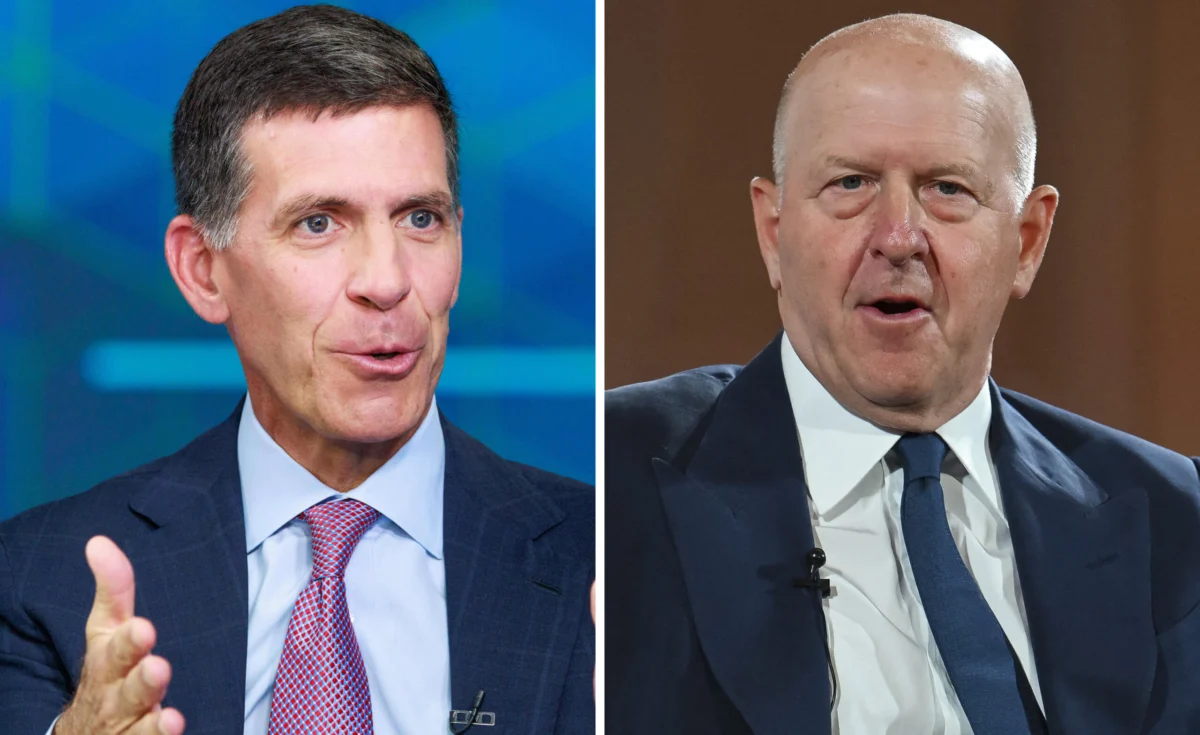
Goldman Sachs Group Inc., a titan of Wall Street, finds itself in a paradoxical situation: despite achieving remarkable financial milestones, its board has reportedly engaged in discussions concerning a leadership transition that could see current Chairman and CEO David Solomon, 64, cede his chief executive role to President and Chief Operating Officer John Waldron, 57, as early as next year. This potential handover, which would elevate Solomon to an executive chairman position, signals a complex interplay of strategic planning, corporate governance, and personal ambition at the apex of one of the world’s most influential financial institutions.
A Firm at its Zenith: The Context of Succession Discussions
The discussions surrounding a change at the top are particularly striking given Goldman Sachs’ stellar performance in recent periods. The bank has demonstrated formidable strength, advising on an astounding more than $1 trillion in merger and acquisition (M&A) deals and generating over $12 billion in equities revenue within the first six months of the year alone. These figures not only represent record achievements for the firm but also underscore its dominant position in the fiercely competitive landscape of investment banking. Such robust results typically solidify a CEO’s standing, making the reported succession talks a subject of intense scrutiny and speculation across the financial world.
The Wall Street Journal first broke the news late Monday, detailing that the bank’s board could vote on this transition plan in the coming months. Industry analysts, such as Wells Fargo banking analyst Mike Mayo, have characterized such a move, if it materializes, as potentially one of the "smoother and more deliberate" leadership handovers seen on Wall Street. However, the path to a seamless transition is fraught with inherent risks, primarily stemming from the formidable influence and potentially differing aspirations of the key individuals involved: Solomon’s readiness to relinquish his operational command and Waldron’s willingness to indefinitely await the top job.
Solomon’s Transformative Tenure and Strategic Pivot
David Solomon assumed the CEO role in October 2018, succeeding Lloyd Blankfein. His tenure has been marked by significant strategic shifts and a period of both ambitious expansion and necessary retraction. Early in his leadership, Solomon spearheaded a bold, albeit ultimately ill-fated, foray into consumer banking with the Marcus platform. This initiative, designed to diversify Goldman’s revenue streams beyond its traditional investment banking and trading powerhouses, faced considerable challenges, including higher-than-expected costs, regulatory scrutiny, and a struggle to gain significant market share against established retail banking giants. The project’s struggles led to substantial write-downs and became a focal point of criticism.
However, Solomon demonstrated a pragmatic leadership by orchestrating a strategic pivot, recalibrating the firm’s focus back to its core strengths: investment banking, trading, and asset management. This redirection proved prescient. Goldman Sachs, under Solomon’s renewed focus, has capitalized on a resurgence in M&A activity, fueled by factors such as a post-pandemic economic rebound, evolving geopolitical landscapes, and the transformative potential of artificial intelligence. The AI boom, in particular, has driven significant deal flow and capital markets activity, positioning Goldman Sachs as a leading advisor in emerging technology sectors.
Under Solomon’s stewardship, Goldman Sachs shares have surged by more than 300% since he took the helm. This performance places Goldman second only to JPMorgan Chase among major banks when measured against the KBW Bank Index, a testament to the value created for shareholders. Jamie Dimon, CEO of JPMorgan Chase, who has led his firm for nearly 21 years, represents a rare parallel in terms of sustained long-term leadership in the financial sector. This impressive track record further complicates the narrative of a potential early departure for Solomon, as high-performing CEOs are rarely pushed out, especially when their firms are thriving.
John Waldron: The Heir Apparent and Architect of Stability
John Waldron, as President and Chief Operating Officer, stands as the clear successor-in-waiting. With a long and distinguished career at Goldman Sachs, Waldron has been instrumental in the firm’s recent operational successes and strategic execution. His deep understanding of the firm’s various businesses, particularly its core investment banking and trading operations, positions him as a natural fit to lead.
Waldron’s importance to Goldman Sachs is underscored by the substantial efforts made to retain him. Reports indicate that he had previously engaged in discussions for leadership roles at prominent alternative asset managers such as Apollo and Carlyle. To prevent his departure and ensure leadership continuity, Goldman Sachs reportedly offered Waldron an $80 million retention package that extends through 2030. This significant financial commitment highlights the board’s recognition of Waldron’s critical role and his value to the firm’s future. The package, while substantial, does not entirely eliminate the risk of a deep-pocketed suitor making an irresistible offer, particularly if Waldron’s aspirations for the top CEO role remain unfulfilled over an extended period.
The Intricacies of Power and Succession: An Expert Perspective
The dynamics at play within Goldman Sachs echo broader themes in corporate governance and leadership transitions. Charles Elson, a retired University of Delaware law professor and an expert in corporate governance, highlighted the inherent difficulty in orchestrating the departure of a high-performing CEO. "It’s just very hard for a person like that to decide they are really going to retire," Elson noted, adding a generational perspective: "Being 65 years old today is like being 55 was 30 years ago." This sentiment suggests that the traditional retirement age holds less sway for highly driven executives, particularly those at the peak of their professional power.
Elson also pointed out Solomon’s dual role as chairman of Goldman’s board, granting him "outsized influence over the body," which makes it exceedingly challenging for him to be forced out against his will. This concentration of power, while common in many American corporations, can complicate succession planning, as the individual making decisions about their future also wields significant control over the decision-making body.
Jeffrey Sonnenfeld, a professor at the Yale School of Management and another authority on CEO succession, echoed concerns about governance, stating it "would be bad governance if Goldman’s board was trying to ‘drive out a high performing CEO like David Solomon.’" This perspective underscores the delicate balance a board must strike: ensuring robust succession planning while simultaneously supporting a CEO who is delivering exceptional results for shareholders.
The Lame Duck Dilemma and the Waiting Game
A critical aspect of the succession dilemma is the "lame duck" effect. If Solomon were to publicly announce a definitive departure timeline a year or more in advance, it could inadvertently diminish his influence within the bank. As Elson explained, "Even if Solomon is planning on leaving in a year, he has little incentive to say so. Doing so would make him a lame duck with less influence inside the bank." This scenario could create uncertainty among employees, clients, and investors, potentially affecting morale and strategic execution during a crucial transition period.
Conversely, if Solomon, energized by the ongoing AI boom—which he believes is still in its early innings and promises continued growth—decides he wants to remain CEO for an extended period, Waldron’s patience could wear thin. The analogy used by Elson—"It’s like Prince Charles waiting for his mother to die. You can’t set your own priorities, because there’s someone else in charge"—vividly illustrates the tension inherent in such a setup. A highly capable and ambitious successor might eventually seek opportunities where their leadership ambitions can be realized sooner, even with a substantial retention package in place. The allure of leading a major financial institution, especially one with the global reach and prestige of Apollo or Carlyle, could eventually outweigh the benefits of waiting, however well-compensated.
Official Response and Board’s Mandate
In response to the reports, Goldman Sachs spokesman Tony Fratto stated, "There is no definitive timeline for succession" at the bank. He added that bank boards routinely discuss succession planning over the near, medium, and longer term, framing the reported discussions as part of standard corporate governance practice rather than an immediate or forced transition. This official stance aims to temper speculation and maintain a sense of stability, emphasizing that while succession is always on the board’s agenda, no firm decisions have been made.
The board’s role in this scenario is paramount. Its fiduciary duty requires it to act in the best interests of shareholders, which includes ensuring stable, high-quality leadership for the long term. This involves a continuous assessment of leadership capabilities, talent pipeline development, and the orchestration of smooth transitions when necessary. The board must balance the desire to retain a highly successful incumbent CEO with the imperative to nurture and eventually elevate a strong successor, avoiding any perception of instability or a potential talent drain.
Broader Implications and Future Outlook
The situation at Goldman Sachs is a microcosm of broader challenges faced by major corporations, particularly in industries where leadership personality and vision play a significant role. The eventual outcome of these succession discussions will have several implications:
- Market Perception: A well-managed transition, even if unexpected, can be viewed positively by investors, signaling stability and a proactive approach to governance. A perceived power struggle or an acrimonious departure, however, could introduce uncertainty and negatively impact stock performance.
- Strategic Direction: While Waldron is expected to largely continue Solomon’s strategic direction, particularly the focus on core investment banking, a new CEO always brings subtle shifts in emphasis, culture, and priorities. His leadership could further refine Goldman’s approach to technology, global markets, and client engagement.
- Talent Management: The way this transition is handled will send a clear message throughout Goldman Sachs’ vast organization regarding internal mobility, career progression, and the bank’s commitment to its senior talent. A smooth elevation of Waldron would reinforce the idea of a clear path to the top for deserving executives.
- Industry Precedent: A deliberate, planned transition from CEO to Executive Chairman could set a precedent for other financial institutions contemplating similar moves, especially those with long-serving, successful leaders.
In conclusion, Goldman Sachs is navigating a pivotal moment in its leadership history. The reported discussions about David Solomon’s succession by John Waldron highlight a complex tension between a highly successful CEO at the helm of a thriving firm and the strategic necessity of preparing for future leadership. The firm’s ability to orchestrate a transition that harnesses the experience of its current leader while empowering its next generation will be a defining challenge, with significant implications for its trajectory in the competitive global financial landscape. The coming months will reveal how this Wall Street giant manages to balance continuity with change, ensuring its enduring prominence.
