

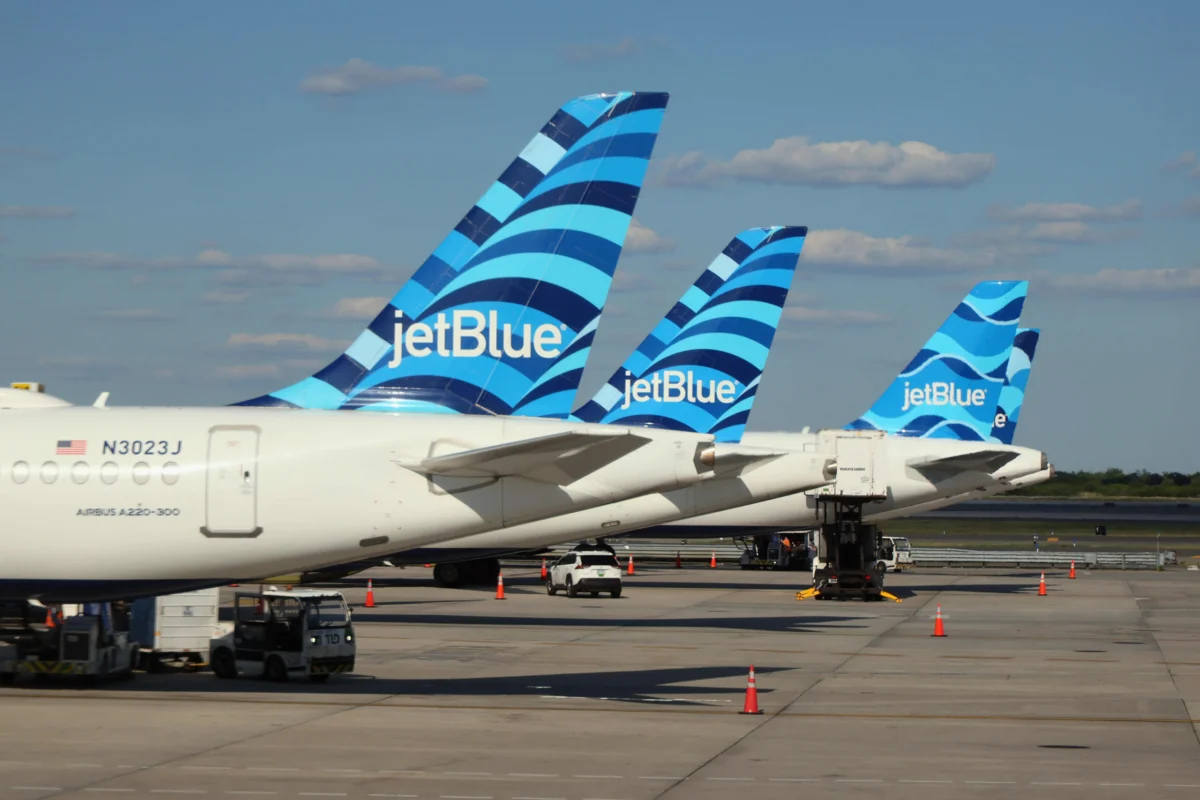
New York, NY – JetBlue Airways reported a significantly larger net loss in the third quarter of 2026 compared to the previous year, yet saw its stock surge approximately 11% in after-hours trading Monday, as the New York-based carrier sought to reassure investors amidst burgeoning fuel expenses and a fresh low for its shares earlier in the day. The airline’s management pointed to robust travel demand as a critical mitigating factor, helping to offset the escalating operational costs, even as reports surfaced of its senior creditors engaging a restructuring adviser.
Deeper Dive into Third Quarter Financials
For the three months ending September 30, JetBlue posted a net loss of $257 million, a stark increase from the $143 million loss recorded in the same period a year prior. This widening deficit underscores the persistent financial pressures facing the airline. A primary driver of this increased loss was a dramatic surge in fuel expenses, which climbed 61% year-over-year to reach $868 million. The volatility and upward trend in global energy markets have proven to be a formidable headwind for the entire airline industry, and JetBlue, with its operational footprint, has felt the brunt of these cost increases.
Despite the considerable financial strain, the company’s revenue performance provided a glimmer of positive news. CEO Joanna Geraghty highlighted in an earnings release that "Resilient demand and strong yields drove revenue well ahead of our initial expectations, allowing us to recapture more of the increase in fuel costs than we initially expected." This suggests that while costs soared, the airline’s ability to generate income from robust passenger traffic helped to cushion the blow, preventing an even larger loss. The momentum from the third quarter is reportedly carrying into the fourth quarter, with specific mention of Fort Lauderdale continuing to deliver "exceptional results" even as the airline significantly expands capacity in that market, a key focus for its operational strategy.
Further illustrating the strong demand environment, JetBlue’s average fares rose by more than 19% in the third quarter, reaching $245.11, up from $205.67 in the year-earlier period. This ability to command higher prices for tickets, even as broader economic concerns linger, indicates a continued willingness among consumers to spend on travel. However, it also raises questions about the sustainability of such price increases in the long term, particularly if economic conditions were to soften.
Investor Reaction and Market Context
The immediate market response to JetBlue’s earnings, particularly the 11% surge in after-hours trading, reflects a complex interplay of factors. While the headline loss was larger, the market may have reacted positively to the stronger-than-expected revenue performance and the company’s assertion that it managed to recoup more of its fuel costs than anticipated. Furthermore, the stock had fallen to a new low on Monday prior to the earnings announcement, suggesting that investor expectations might have been exceptionally low, making any positive nuance in the report appear relatively favorable. This often occurs when a company’s stock has been heavily battered, leading to a "relief rally" if the news isn’t as catastrophic as feared.
The broader airline sector has been navigating a challenging environment. Post-pandemic travel demand has indeed been robust, leading to record passenger numbers for many carriers. However, this demand has been met with persistent inflationary pressures, primarily from fuel and, increasingly, labor costs. While larger, more established carriers with broader networks and stronger balance sheets have, in some cases, managed to return to profitability or maintain healthier margins, smaller or mid-sized airlines like JetBlue often face unique headwinds in this highly competitive landscape. The ability to efficiently scale operations, manage a diverse route network, and optimize fuel hedging strategies are critical differentiators.
Liquidity, Debt, and Future Financial Projections
Despite the current losses, JetBlue emphasized its liquidity position, stating it ended the third quarter with $2.2 billion in available funds. The carrier also highlighted its substantial unencumbered asset base, valued at $7 billion, which includes $2.8 billion in aircraft and engines. These unencumbered assets represent collateral that could potentially be used to secure future financing, providing a degree of financial flexibility.
However, the airline’s total debt load remains a significant concern, standing at $8.4 billion as of September 30. This substantial debt, coupled with sustained losses, is a key reason for investor apprehension and, critically, for the reported actions of its creditors.
CFO Ursula Hurley addressed these concerns directly, stating, "Importantly, we believe we have the liquidity and financing options to create a strong bridge to at least $1 EPS and positive free cash flow in 2028." This forward-looking statement aims to provide a clear roadmap to profitability, signaling management’s confidence in their long-term strategy. Hurley added that the company remains "focused on disciplined cost execution and capital management as we work toward sustained profitability and positive free cash flow." Achieving this ambitious target of $1 EPS (Earnings Per Share) and positive free cash flow by 2028 will require rigorous financial discipline and successful implementation of the airline’s strategic initiatives.
A Multiyear Turnaround Plan and Strategic Pivots
JetBlue’s current financial struggles are not new; the airline last posted an annual profit in 2019, before the onset of the global pandemic reshaped the aviation industry. In response, the company has embarked on a multiyear turnaround plan designed to restore profitability. This plan primarily focuses on two key areas: aggressive cost cutting and boosting revenue.
On the revenue side, JetBlue is investing in premium offerings, exemplified by a new domestic first-class section that recently went on sale. This move aims to capture a higher-spending segment of the market, offering more lucrative yields per seat. Historically known for its "low-cost carrier with a premium feel" model, JetBlue is now leaning more heavily into the premium segment to differentiate itself and improve its revenue mix. The success of these premiumization efforts will be crucial in driving average fares and overall revenue growth.
Chronology of Strategic Setbacks and Competitive Challenges
JetBlue’s path to sustained profitability has been further complicated by a series of strategic setbacks and intense competition from larger rivals. The airline operates in a highly consolidated industry dominated by giants like American Airlines, Delta Air Lines, United Airlines, and Southwest Airlines, all of whom possess greater scale, more extensive networks, and often lower unit costs.
The Spirit Airlines Merger Attempt: A significant blow to JetBlue’s growth ambitions came with the thwarted attempt to acquire Spirit Airlines. In a protracted and contentious bidding war, JetBlue ultimately prevailed over Frontier Airlines to secure a deal for the ultra-low-cost carrier. The rationale behind the acquisition was to create a stronger fifth-largest airline in the U.S., allowing JetBlue to expand its network, gain access to more aircraft, and achieve greater economies of scale to better compete against the "Big Four." However, a federal judge blocked the deal in January 2024, ruling it was anticompetitive. This decision represented a major strategic defeat for JetBlue, denying it a significant avenue for expansion and forcing it to incur substantial legal and advisory costs without the anticipated benefits. The unwinding of this deal left JetBlue without a clear path to rapidly scale its operations, contributing to investor uncertainty regarding its long-term growth trajectory.
The Northeast Alliance (NEA) with American Airlines: Prior to the Spirit saga, JetBlue had forged a regional partnership with American Airlines, known as the Northeast Alliance (NEA). Launched in 2021, the NEA aimed to enhance competition in the congested Northeast U.S. by allowing the two carriers to coordinate schedules, share revenue, and offer reciprocal loyalty benefits, effectively creating a more formidable competitor against Delta and United in key hubs like New York and Boston. The airlines argued that this partnership was essential to compete against the entrenched dominance of other carriers in the region. However, this alliance also faced intense scrutiny from the U.S. Department of Justice, which ultimately succeeded in blocking it in 2023, deeming it anticompetitive. The judicial order forced JetBlue to unwind the partnership, leading to operational complexities and the loss of a key strategic relationship. JetBlue has since pivoted to a more limited partnership with United Airlines, a significantly less comprehensive arrangement than the NEA.
These two major legal defeats have not only cost JetBlue financially but have also consumed considerable management attention and resources, diverting focus from internal operational improvements and organic growth initiatives. They underscore the challenges for smaller carriers attempting to carve out a larger market share in an industry heavily scrutinized by antitrust regulators.
Emerging Creditor Scrutiny and PJT Partners Involvement
Perhaps the most significant new development underscoring JetBlue’s precarious financial position is the report that a group of the airline’s senior creditors is working with restructuring adviser PJT Partners. The Wall Street Journal reported this development on Friday, sending ripples of concern through the market.
The engagement of a restructuring adviser by senior creditors typically signals a heightened level of concern about a company’s financial health. Senior creditors, who are typically banks or holders of the company’s most secure debt (like secured bonds), have a vested interest in ensuring the company can meet its obligations. When a company experiences sustained losses, significant debt, and faces strategic challenges, creditors may seek independent advice to assess their options, protect their investments, and potentially explore scenarios ranging from debt renegotiation to more formal restructuring processes.
PJT Partners is a highly respected global advisory firm known for its expertise in financial restructuring. Their involvement suggests that these creditors are taking a proactive approach to evaluate JetBlue’s financial trajectory, its ability to achieve its stated profitability targets, and the long-term viability of its business model. While this does not necessarily imply imminent bankruptcy or a formal restructuring, it does place significant pressure on JetBlue’s management to demonstrate concrete progress toward profitability and sound capital management. The earnings call scheduled for Tuesday at 10 a.m. ET will undoubtedly see analysts pressing executives for details and reassurances regarding these creditor discussions and the company’s broader financial stability.
Broader Implications and Future Trajectory
JetBlue’s current predicament reflects broader trends in the airline industry where scale, efficiency, and a clear strategic vision are paramount. The combination of high fuel costs, intense competition, and the inability to execute on major growth strategies has created a challenging environment for the carrier.
The company’s ability to navigate the coming quarters will be critical. Success hinges on several factors:
- Fuel Cost Management: Effective hedging strategies and operational efficiencies will be vital in mitigating the impact of volatile fuel prices.
- Turnaround Plan Execution: The success of cost-cutting measures and the revenue-boosting initiatives, particularly the premium seat offerings, must translate into tangible financial improvements.
- Capital Management: Prudent management of its substantial debt and liquidity will be key to maintaining investor and creditor confidence.
- Market Demand: Continued strong travel demand, especially in key markets like Fort Lauderdale, will be essential to drive revenue.
The shadow of creditor involvement looms large over JetBlue’s future. While management expresses confidence in reaching profitability by 2028, the engagement of PJT Partners suggests that creditors are not passively waiting for these targets to be met. Their proactive stance could lead to increased scrutiny, demands for specific financial covenants, or even influence future strategic decisions. For employees, customers, and the broader aviation market, JetBlue’s journey over the next few years will be a closely watched case study in resilience and adaptation within a highly dynamic industry. The airline’s capacity to turn its current challenges into a pathway for sustained profitability will ultimately determine its long-term standing in the competitive U.S. airline landscape.
