

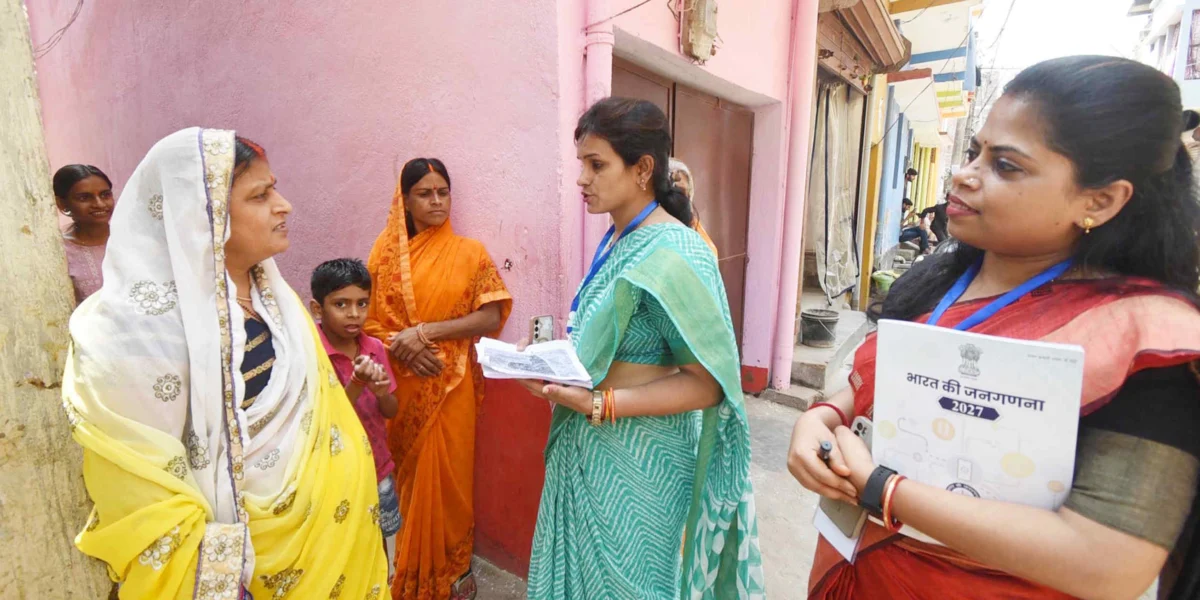
The commencement of India’s decennial census, long overdue and now finally underway, marks a pivotal moment for the nation’s democratic fabric. This comprehensive demographic exercise, last conducted in 2011, is not merely a headcount but a foundational data-gathering operation that will directly influence the allocation of parliamentary seats, the distribution of resources, and the formulation of national and regional development strategies for the next decade. The delay, attributed to logistical challenges exacerbated by the COVID-19 pandemic and subsequent political considerations, has amplified the urgency and significance of its completion, with the results poised to trigger substantial shifts in the political landscape and policy priorities across the country.
A Crucial Undertaking: Understanding the Scope and Significance
The census, a monumental undertaking involving millions of enumerators fanning out across the vast and diverse Indian subcontinent, aims to capture a granular picture of India’s population. This includes detailed information on age, gender, literacy, occupation, housing conditions, migration patterns, and access to basic amenities. The data collected will be instrumental in redrawing the boundaries of India’s 543 parliamentary constituencies, a process known as delimitation. Under Article 81 of the Indian Constitution, the number of seats allocated to each state in the Lok Sabha (the lower house of Parliament) is based on population figures derived from the census. Consequently, states that have experienced significant population growth may see an increase in their parliamentary representation, while those with slower growth or population decline might see a reduction. This redistribution of power is a highly sensitive and politically charged aspect of the census, often leading to intense debate and negotiation among states and political parties.
Beyond political representation, the census data serves as the bedrock for evidence-based policymaking. Government ministries and agencies rely on this information to plan and implement welfare programs, allocate funds for infrastructure development (such as roads, schools, and hospitals), and design targeted interventions for vulnerable populations. For instance, data on poverty levels, access to sanitation, and healthcare facilities will inform the design of social security schemes, public health initiatives, and rural development projects. The absence of this updated data has already presented challenges, forcing policymakers to rely on projections and older statistics, potentially leading to inefficiencies and misallocation of resources.
A Delayed Chronicle: The Road to the Current Census
The 2021 census was initially slated to begin in April 2020, with the enumeration phase scheduled to be completed by September 2020 and the data released by 2021. However, the unprecedented global health crisis of COVID-19 brought the entire process to a grinding halt. The nationwide lockdown and the imperative to maintain social distancing rendered large-scale field operations impossible. As the pandemic subsided, the government faced further complexities. The delimitation commission, responsible for redrawing constituency boundaries, had its work postponed, as its mandate is typically tied to the latest census figures.
Moreover, the political implications of the census, particularly regarding the potential shift in parliamentary seats, have often led to a cautious approach from successive governments. States with significant population increases often lobby to delay the delimitation process, fearing a loss of political clout if their representation is reduced. This interplay of logistical hurdles, public health imperatives, and political considerations has collectively contributed to the multi-year delay, pushing the commencement of the census well into 2026. The finalization of the census process and the subsequent delimitation exercise are now anticipated to significantly impact the electoral landscape leading up to the general elections beyond 2029.
Supporting Data and the Demographic Landscape
India’s demographic profile has undergone substantial changes since the 2011 census. While the overall population growth rate has been declining, the absolute numbers continue to rise, making India the world’s most populous country, surpassing China in April 2023 according to UN estimates. The 2011 census recorded a population of 1.21 billion, with a decadal growth rate of 17.7%. Projections suggest the current population could be well over 1.4 billion.
Key demographic trends that the new census will illuminate include:
- Urbanization: India continues to witness rapid urbanization, with a growing proportion of its population migrating to cities in search of economic opportunities. The census will provide updated figures on urban agglomerations, housing shortages, and the strain on urban infrastructure.
- Fertility Rates: While total fertility rates (TFRs) have been declining across most Indian states and are now at or below replacement level (2.1 children per woman) nationally, variations persist. The census will offer a granular view of these trends at district and sub-district levels, crucial for long-term planning of education, healthcare, and employment.
- Age Structure: India has a young population, a demographic dividend that presents both opportunities and challenges. The census will provide up-to-date data on the size of the working-age population, the dependent elderly population, and the youth demographic, informing policies on education, skill development, and social security.
- Literacy and Education: Improvements in literacy rates are expected, but the census will highlight disparities across gender, rural-urban divides, and different socio-economic groups, guiding efforts to bridge educational gaps.
- Migration: Internal migration, driven by economic factors and climate change, is a significant phenomenon. The census will map these movements, providing data for regional planning and resource allocation.
Official Responses and Preparations
The Ministry of Home Affairs, under which the Registrar General and Census Commissioner of India operates, has been at the forefront of the census preparations. Officials have emphasized the use of technology to streamline data collection and processing. The 2021 census was intended to be largely digital, with enumerators using mobile applications to collect data, a significant departure from the paper-based surveys of the past. While the pandemic may have necessitated adjustments, the commitment to leveraging technology remains strong.
A spokesperson for the Ministry of Home Affairs, speaking on condition of anonymity due to the ongoing nature of the operations, stated, "The census is a fundamental exercise for national planning and governance. We have put in place robust mechanisms and are utilizing advanced technological tools to ensure the accuracy and efficiency of data collection. The results will empower us to serve the citizens of India even better."
The training of enumerators, the deployment of logistics, and the public awareness campaigns are all critical components of the census process. The government has also engaged with state governments to ensure smooth coordination, given the decentralized nature of census operations.
Broader Impact and Implications
The successful completion of the census and the subsequent delimitation exercise will have far-reaching implications:
- Political Realignment: The redistribution of parliamentary seats will inevitably alter the political balance of power at the national level. States that gain seats may see an enhanced voice in national policy debates, while those that lose seats might face political challenges. This could lead to increased focus on regional aspirations and a potential shift in the dynamics of coalition politics.
- Resource Allocation: The population-based distribution of central government funds to states, often channeled through schemes and grants, will be directly influenced by the census data. States with larger populations, and consequently more parliamentary seats, are likely to see a greater share of national resources, impacting development projects and public services.
- Policy Precision: With precise demographic data, policymakers can design more targeted and effective interventions. For example, understanding the concentration of specific age groups or occupational sectors in particular regions can lead to tailored employment generation schemes or educational programs.
- Social Equity: The census provides crucial insights into disparities in access to education, healthcare, sanitation, and housing. This data can be used to identify underserved communities and to implement affirmative action policies and targeted development programs to promote social equity.
- Understanding Demographic Shifts: The census will offer a definitive snapshot of India’s demographic trajectory, helping to anticipate future challenges and opportunities related to population growth, aging, and migration, thereby informing long-term strategic planning for the nation.
The current phase of data collection, while a significant step forward, is only the beginning of a complex process. The tabulation, verification, and analysis of the vast amounts of data collected will take considerable time. The subsequent delimitation process, which redraws constituency boundaries based on population shifts, is often a protracted affair, involving consultations and potential legal challenges. Nevertheless, the initiation of the census marks a critical juncture, laying the groundwork for a more informed, equitable, and representative future for India. The nation now awaits the detailed insights that this monumental undertaking will reveal, insights that will shape its destiny for years to come.
