

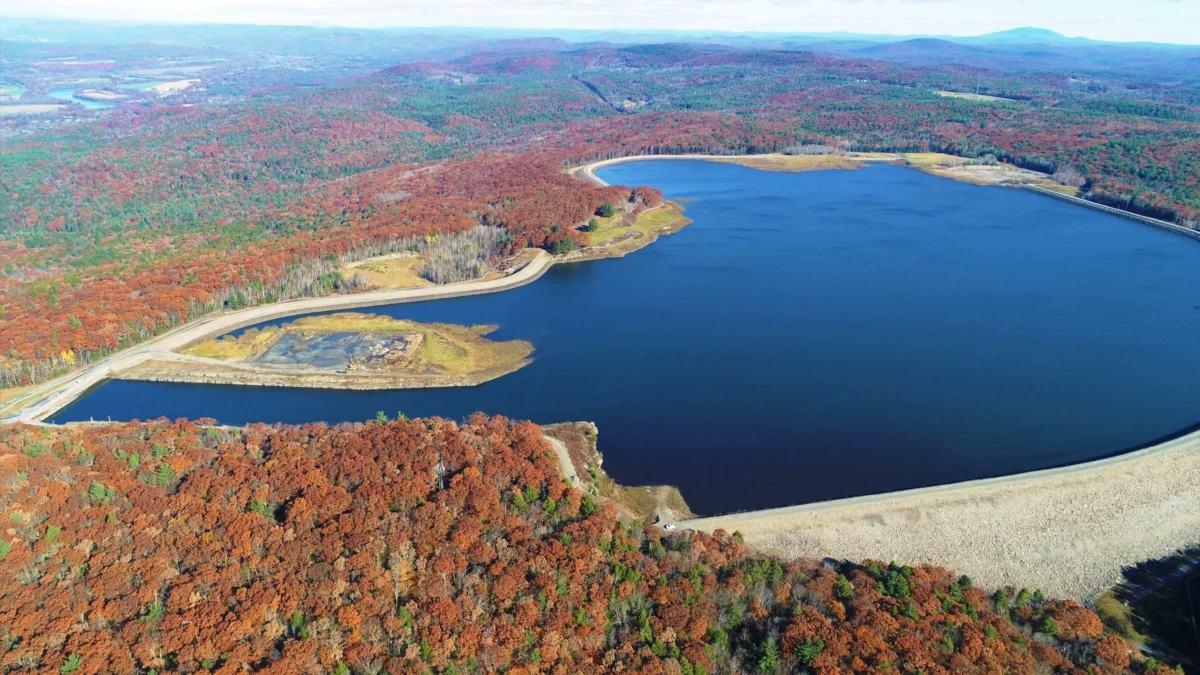
Hull Street Energy (HSE), a private equity firm specializing in the North American energy transition, has finalized its acquisition of FirstLight’s United States operations from the Public Sector Pension Investment Board (PSP Investments). This landmark transaction significantly expands Hull Street Energy’s footprint in the Northeast power market, incorporating a diverse array of renewable energy and storage assets totaling approximately 1,400 megawatts (MW) of capacity. Central to the acquisition is the Northfield Mountain Pumped Hydro Storage Station in Massachusetts, a facility widely regarded as the most critical energy storage asset in the New England region. The deal also encompasses 14 hydroelectric stations situated across Connecticut, Massachusetts, and Pennsylvania, alongside several operational solar and battery storage installations. This transition of ownership marks a pivotal moment for the regional grid, as the demand for firm, dispatchable clean energy continues to rise in response to aggressive state-level decarbonization mandates.
A Comprehensive Overview of the Acquired Portfolio
The acquisition represents a substantial consolidation of carbon-free generation assets under the Hull Street Energy umbrella. The centerpiece of the portfolio, Northfield Mountain, boasts a capacity of 1,168 MW. Unlike traditional run-of-river hydroelectric plants, Northfield Mountain operates as a "giant battery," utilizing two reservoirs at different elevations to store and release energy. During periods of low demand and lower electricity prices, water is pumped from the Connecticut River to an upper reservoir. When demand peaks or renewable generation from wind and solar fluctuates, the water is released through turbines to generate power instantaneously. This capability is essential for maintaining the stability of the ISO New England (ISO-NE) grid, particularly as the region retires older fossil fuel-burning plants.
In addition to the massive pumped storage facility, the deal includes 14 conventional hydroelectric stations. These assets are strategically located along major waterways, providing consistent baseload power and ancillary services to the local markets. The geographic spread across three states—Connecticut, Massachusetts, and Pennsylvania—provides HSE with significant exposure to the PJM Interconnection and ISO New England wholesale markets. Furthermore, the inclusion of three operational solar-plus-storage facilities highlights the evolving nature of the FirstLight platform, which has increasingly integrated diverse renewable technologies to complement its legacy hydro assets.
The Strategic Vision of Hull Street Energy
The acquisition aligns with Hull Street Energy’s long-term strategy of investing in the "middle market" of the North American power sector. Founded and led by Sarah Wright, the firm has built a reputation for identifying undervalued or strategically significant infrastructure assets that are vital to the decarbonization of the electric grid. By acquiring FirstLight, HSE is positioning itself as a dominant player in the Northeast’s energy transition.
"FirstLight represents an important addition to our portfolio and underscores our conviction that firm, clean resources like FirstLight’s hydropower and energy storage facilities will play an increasingly vital role in the Northeast’s evolving energy landscape," stated Sarah Wright, Founder and Managing Partner of Hull Street Energy. Wright emphasized that the firm intends to leverage its deep operational expertise to enhance the value of these assets. "We see tremendous opportunity in the hydro sector and look forward to combining HSE’s experience and expertise with FirstLight’s high-quality assets and innovative team to deliver value to the communities and markets we serve."
The leadership at FirstLight also expressed optimism regarding the new ownership. Justin Trudell, President and CEO of FirstLight, noted that the partnership would allow the company to build upon its established track record of operational excellence. "We are incredibly proud of the strong business our team has built at FirstLight through a commitment to operational excellence and a focus on delivering clean energy solutions that support grid reliability," Trudell said. He confirmed that the existing management team would continue to lead the Northeast business, ensuring continuity for employees and stakeholders.
Chronology of the Transaction and Regulatory Context
The path to the finalization of this acquisition involved complex regulatory reviews and strategic planning. While the financial terms of the deal were not publicly disclosed, the scale of the assets suggests a multi-billion-dollar valuation. The transaction required approval from the Federal Energy Regulatory Commission (FERC), which oversees the transfer of jurisdictional assets to ensure that such mergers do not result in market manipulation or reduced competition.
The history of these assets is intertwined with the evolution of the New England power market. Many of the hydroelectric facilities were originally developed by regional utilities before the deregulation of the power industry in the late 1990s. PSP Investments, one of Canada’s largest pension investment managers, acquired FirstLight in 2016 from GDF SUEZ (now Engie). Under PSP’s stewardship, FirstLight transitioned from a traditional hydro operator into a broader clean energy platform. The decision to sell the U.S. platform to Hull Street Energy reflects a common trend among institutional investors who seek to rotate capital out of mature infrastructure platforms after achieving specific growth milestones.
This acquisition follows closely on the heels of another major move by Hull Street Energy. In 2023, the firm entered into a definitive agreement with Consumers Energy to acquire 13 hydroelectric dams in Michigan. Once both the FirstLight and Consumers Energy transactions are fully integrated, HSE will control a formidable portfolio including 1,200 MW of flexible pumped storage capacity and nearly 400 MW of traditional hydroelectric capacity. This rapid expansion makes HSE one of the largest independent owners of hydroelectric assets in the United States.

Supporting Data: The Role of Hydro in the Northeast Energy Mix
To understand the impact of this acquisition, one must examine the current state of the New England energy grid. According to data from ISO New England, the region is increasingly dependent on natural gas for electricity generation, which accounts for roughly 45% to 50% of the annual energy mix. However, the states of Massachusetts and Connecticut have passed legislation requiring 80% to 100% carbon-free electricity by 2040 and 2050, respectively.
Hydroelectric power, particularly pumped storage, is the only proven technology capable of providing long-duration energy storage at the scale required to back up intermittent offshore wind and solar projects. While lithium-ion batteries are effective for short-duration storage (typically 2 to 4 hours), pumped storage facilities like Northfield Mountain can provide sustained output for 8 to 12 hours or more.
Key data points regarding the acquired assets include:
- Total Capacity: ~1,400 MW, enough to power more than one million homes during peak periods.
- Northfield Mountain’s Impact: It represents nearly 20% of the total installed storage capacity in the entire PJM and ISO-NE regions combined.
- Environmental Footprint: The portfolio prevents the emission of millions of tons of CO2 annually by displacing gas-fired "peaker" plants that would otherwise be needed during high-demand events.
- Economic Contribution: The facilities are major taxpayers in their host communities, supporting local infrastructure and services in rural parts of Massachusetts and Connecticut.
Broader Implications for the U.S. Energy Market
The acquisition by Hull Street Energy highlights several broader trends in the U.S. energy market. First, there is a growing recognition of the "scarcity value" of existing hydroelectric assets. Due to stringent environmental regulations and the high cost of new dam construction, it is virtually impossible to build new large-scale hydroelectric plants in the United States today. Consequently, existing plants have become highly sought-after assets for investors seeking stable, long-term cash flows and exposure to green energy.
Second, the deal underscores the importance of "firm" renewable energy. As the grid becomes more saturated with variable wind and solar, the market value of dispatchable assets—those that can be turned on or off at the request of grid operators—is expected to rise. Pumped storage is uniquely positioned to capture this value, as it can provide frequency regulation, black-start capability, and spinning reserves, all of which are essential for grid resilience.
Third, the transaction reflects the continued interest of private equity in the infrastructure sector. Firms like Hull Street Energy, which possess specialized technical knowledge, are increasingly taking over assets from generalist pension funds or utilities. This shift often leads to more aggressive operational optimizations and further investments in modernization and life-extension projects for aging infrastructure.
Environmental and Community Considerations
While the acquisition is primarily a financial and strategic move, it carries significant implications for environmental stewardship. Hydroelectric operations are subject to rigorous licensing processes by FERC, which include requirements for fish passage, water quality monitoring, and recreational access. FirstLight has historically maintained a complex relationship with environmental advocacy groups regarding the impact of Northfield Mountain on the Connecticut River’s ecosystem.
Hull Street Energy will now inherit these responsibilities, including ongoing relicensing efforts for several key facilities. The firm’s ability to balance the commercial demands of the power market with the environmental protections required by federal and state law will be a key metric of its success. In her statement, Sarah Wright alluded to this responsibility, noting the firm’s commitment to "deliver value to the communities" they serve. This likely involves maintaining local employment levels and ensuring that the facilities remain compliant with modern environmental standards.
Conclusion: A New Chapter for New England’s Energy Infrastructure
The completion of the FirstLight acquisition by Hull Street Energy marks the beginning of a new chapter for New England’s energy infrastructure. By securing a massive portfolio of "firm" clean energy assets, HSE has established itself as a cornerstone of the regional grid’s reliability. As Massachusetts, Connecticut, and Pennsylvania continue their transitions away from fossil fuels, the 1,400 MW of capacity managed by HSE will serve as a critical buffer against the inherent variability of a renewable-heavy grid.
For the employees of FirstLight and the communities that host these facilities, the transition to Hull Street Energy offers a promise of stability and continued investment. For the broader energy market, it serves as a clear signal that the transition to a carbon-free future will be built on a foundation of proven, large-scale storage and hydroelectric technologies. With the added capacity from its recent Michigan acquisitions, Hull Street Energy is now uniquely positioned to influence the trajectory of the North American power sector for decades to come.
