

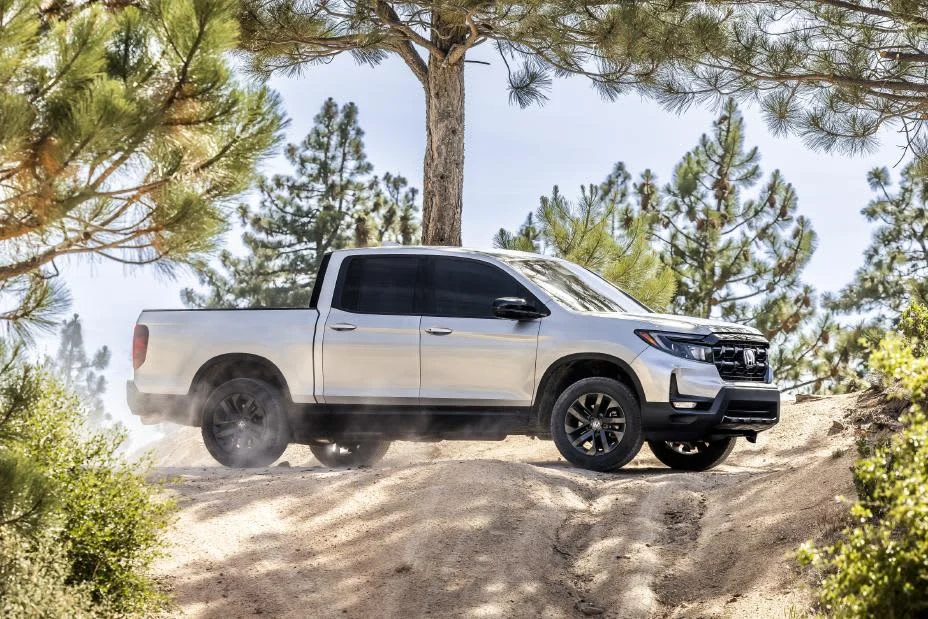
Honda Motor Co. on Thursday affirmed its commitment to the U.S. midsize pickup truck market, confirming that a next-generation model of its Ridgeline pickup truck will be produced in the United States. This announcement comes alongside the disclosure of a temporary production stoppage for the current model later this year, a hiatus necessitated by evolving emissions regulations and a strategic re-evaluation of the vehicle’s design and market positioning. The future iteration, likely targeting the 2026 model year, is expected to re-enter assembly lines at the company’s Alabama plant within the next two years, with a projected return to market around 2028.
Navigating Emissions Challenges and Manufacturing Realignment
The decision to temporarily halt production of the Ridgeline, a move that has been the subject of industry speculation for months, stems primarily from the vehicle’s current configuration not fully meeting stringent new emissions regulations, particularly those set forth by the California Air Resources Board (CARB). California’s emissions standards are often a bellwether for national automotive regulations, and non-compliance can significantly restrict sales in a crucial market. This regulatory hurdle forced Honda to reassess the Ridgeline’s immediate production schedule while simultaneously accelerating development of its successor.
The temporary pause will take effect later this year at Honda Manufacturing of Alabama (HMA) in Lincoln, Alabama, the dedicated facility for Ridgeline production. HMA is a cornerstone of Honda’s North American manufacturing operations, also responsible for the production of the Odyssey minivan, Pilot SUV, and Passport SUV. The downtime will allow Honda engineers to implement necessary design and powertrain modifications to ensure the next-generation Ridgeline meets all forthcoming environmental standards, including the increasingly stringent greenhouse gas emissions targets and zero-emission vehicle (ZEV) mandates. This retooling and redesign phase is crucial for the vehicle’s long-term viability in the U.S. market.
Lance Woelfer, vice president of auto sales at American Honda Motor, emphasized the company’s dedication to its customer base during an interview. "The goal is to continue to serve those customers who’ve been loyal to the Ridgeline," Woelfer stated. He further elaborated on the strategic direction for the new model, highlighting a push for enhanced attributes: "But one of the things that we want to bring forward in the future is increased ruggedness of that vehicle, even more capability." This declaration signals a potential shift in the Ridgeline’s core identity, moving it closer to the traditional expectations of a pickup truck buyer.
The Ridgeline’s Evolving Identity: Unibody vs. Body-on-Frame
Woelfer’s comments on "increased ruggedness" and "more capability" immediately sparked industry speculation regarding the underlying architecture of the next-generation Ridgeline. The current and past generations of the Ridgeline have famously distinguished themselves in the midsize truck segment by utilizing a unibody construction, shared with Honda’s larger SUVs like the Pilot and Passport, rather than the traditional body-on-frame chassis prevalent in nearly all other pickup trucks.
The unibody design, which integrates the body and frame into a single structure, offers several distinct advantages. It typically provides a more comfortable, car-like ride quality, superior handling dynamics, and often better fuel efficiency due to lighter weight. These characteristics have appealed to a niche segment of truck buyers who prioritize comfort and utility over maximum towing or off-road prowess. However, this design has also been perceived by some traditional truck enthusiasts as less "rugged" or capable than its body-on-frame counterparts, which typically offer higher towing capacities, greater payload ratings, and a more robust foundation for extreme off-road modifications.
When pressed on whether the future Ridgeline would transition to a body-on-frame architecture, Woelfer remained strategically guarded. "That’s been an important part of its history. Whether or not it’s part of its future, I won’t get into that," he responded, adding, "This is a step forward for the Ridgeline that I think everybody will appreciate." This ambiguity leaves open the possibility of a significant engineering overhaul, potentially adopting a hybrid approach or a completely new platform that aims to bridge the gap between unibody comfort and body-on-frame ruggedness. Such a move would represent a substantial investment and a clear signal of Honda’s ambition to expand the Ridgeline’s appeal beyond its current loyal following. Industry analysts suggest that a shift towards a more traditional or a hybrid-truck architecture could significantly broaden the Ridgeline’s market reach, appealing to a wider demographic of truck buyers who value both utility and capability.
Competitive Landscape and Market Share Dynamics
The Ridgeline’s journey towards a more rugged identity is underscored by its current performance in a fiercely competitive midsize truck segment. Sales of the Ridgeline experienced a modest decline of approximately 3% during the first half of the current year. Over the past few years, annual sales have consistently hovered between roughly 41,000 and 52,000 units since 2021. While these figures represent a consistent, albeit modest, presence, they pale in comparison to the segment’s dominant players.
For context, the segment-leading Toyota Tacoma, a stalwart of the midsize truck market renowned for its reliability and off-road capability, sold over 270,000 units in 2025 alone. Other strong competitors include the Ford Ranger, Chevrolet Colorado, GMC Canyon, and Nissan Frontier, all of which generally adhere to the traditional body-on-frame construction and boast higher sales volumes than the Ridgeline. The disparity in sales highlights the challenge Honda faces in attracting a larger share of the truck market, particularly against established rivals with strong reputations for durability and utility.
Expanding the capability and perceived ruggedness of the Ridgeline could be a strategic imperative for Honda to carve out a larger piece of this lucrative segment. While the current Ridgeline is lauded for its smooth ride, comfortable interior, and innovative features like the in-bed trunk and dual-action tailgate, its niche positioning has limited its overall market penetration. A more capable, tougher-looking Ridgeline could potentially attract buyers who previously overlooked it in favor of more traditional alternatives, thereby addressing the existing sales gap. This strategic shift reflects a broader trend in the automotive industry where manufacturers are continuously refining their offerings to better meet evolving consumer demands and competitive pressures.
Honda’s Broader U.S. Market Strategy and Manufacturing Commitment
The confirmation of the next-generation Ridgeline’s production comes at a time when Honda is experiencing significant successes in other critical segments of the U.S. auto market. Notably, the Honda CR-V compact crossover led U.S. auto sales through the first half of the year for the first time ever, a remarkable achievement. CR-V sales surged by approximately 6% compared to the previous year, demonstrating robust demand for Honda’s popular SUV. This success occurred while traditional sales leaders, such as the Ford F-Series pickups and the Toyota RAV4 crossover, contended with various production bottlenecks and supply chain disruptions.
The CR-V’s strong performance underscores Honda’s overall strength in the passenger car and SUV segments, providing a stable foundation from which to invest in and re-strategize for its less dominant offerings, like the Ridgeline. Honda’s commitment to U.S. manufacturing remains steadfast, with multiple plants across North America contributing significantly to its global output. The Alabama plant, where the Ridgeline is produced, is a key component of this manufacturing footprint. The temporary halt and subsequent retooling for the Ridgeline represent a substantial investment in the facility and its workforce, signaling Honda’s long-term vision for its U.S. production capabilities and its dedication to the North American market.
Moreover, this strategic pause aligns with Honda’s broader environmental goals and its transition towards an electrified future. By ensuring the next-generation Ridgeline meets stringent emissions standards, Honda is preparing its truck offering for a regulatory landscape that increasingly favors cleaner powertrains and, eventually, full electrification. While details on the next Ridgeline’s powertrain are not yet available, it is plausible that it could feature hybrid options or other advanced, fuel-efficient technologies to comply with future mandates and consumer preferences for greener vehicles.
Looking Ahead: Implications for Consumers and the Midsize Truck Segment
The announcement surrounding the 2026 Honda Ridgeline marks a pivotal moment for the vehicle and for Honda’s presence in the highly competitive U.S. truck market. For loyal Ridgeline owners, the confirmation of a next-generation model ensures continuity and reinforces Honda’s commitment to their preferred truck. The promise of "increased ruggedness" and "more capability" will likely be met with anticipation, as it suggests a more versatile and robust vehicle that could address some of the current model’s perceived limitations.
For the broader midsize truck segment, the re-entry of a redesigned Ridgeline around 2028, potentially with a revised architecture, could intensify competition. If Honda successfully merges the Ridgeline’s renowned comfort and utility with enhanced traditional truck attributes, it could disrupt the established hierarchy and attract new buyers who are seeking a blend of both worlds. The temporary production halt, though disruptive in the short term, is a calculated strategic move designed to ensure the Ridgeline’s long-term relevance and competitiveness in an evolving automotive landscape driven by both consumer demands and regulatory pressures.
As Honda embarks on this significant redesign and retooling phase, all eyes will be on the specifications and features of the forthcoming 2026 Ridgeline. Its success will not only be measured by sales figures but also by its ability to redefine its place within the midsize truck segment, proving that Honda can deliver a truck that satisfies both the traditionalists and those seeking innovation, all while navigating the complex demands of modern environmental regulations. The journey of the next-generation Ridgeline is poised to be a compelling narrative in the ongoing evolution of the American pickup truck.
