

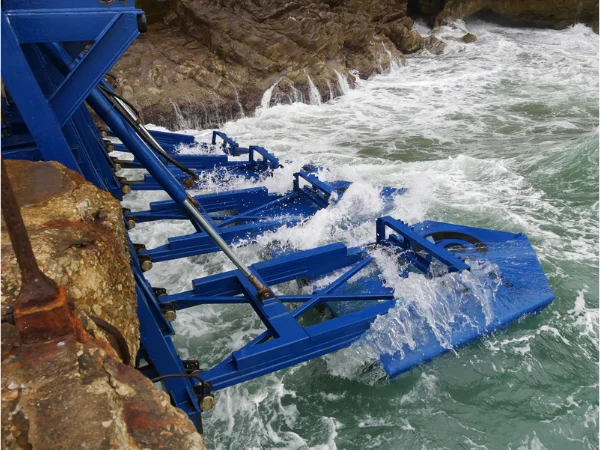
The rapid expansion of artificial intelligence and high-performance computing has triggered an unprecedented surge in global electricity demand, forcing technology giants and infrastructure developers to look beyond traditional renewable sources like wind and solar. According to recent projections from the International Energy Agency (IEA), electricity consumption from data centers is expected to roughly double by 2030, reaching an estimated 945 terawatt-hours (TWh) annually. This surge is driven primarily by the intensive processing requirements of AI models, which can consume significantly more power than standard cloud computing tasks. As the "AI arms race" intensifies, the search for "every available electron" has led the industry to the water’s edge, where wave energy is emerging as a uniquely compatible solution for the next generation of coastal data centers.
The Convergence of Marine Energy and Artificial Intelligence
While the renewable energy sector has long been dominated by solar and wind, these sources face inherent challenges regarding intermittency and land use. Wave energy, by contrast, offers a generation profile that is remarkably consistent. The motion of the ocean provides a continuous, highly predictable pattern of energy production that is significantly smoother than the fluctuating output of weather-dependent terrestrial renewables. For data center operators, who require a "base load" style of power to maintain 24/7 uptime, the stability of wave energy reduces the reliance on massive on-site battery storage systems.

Eco Wave Power (EWP), a leading developer in the sector, has positioned its technology as a modular, near-shore solution that bypasses the complexities of deep-sea installations. Unlike traditional wave energy concepts that involve massive structures far out at sea—often susceptible to damage and high maintenance costs—EWP’s system utilizes floaters attached to existing coastal infrastructure such as breakwaters, piers, and jetties. This "plug-and-play" philosophy allows for easier grid integration and lower capital expenditure, making it an attractive prospect for developers targeting coastal regions.
A Chronology of Wave Energy Innovation and Scaling
The journey of wave energy from a theoretical concept to a viable data center power source has been marked by several key milestones. Eco Wave Power’s trajectory serves as a template for the industry’s evolution:
- 2011–2015: Early Proof of Concept: The company began testing its patented technology in small-scale environments, focusing on the mechanical durability of floaters against varying sea states.
- 2016: The Gibraltar Milestone: Eco Wave Power launched its first grid-connected commercial-scale wave energy plant in Gibraltar. This project proved that wave energy could be integrated into an urban grid and survive the harsh marine environment over an extended period.
- 2021: Nasdaq Listing and Global Expansion: The company’s listing on the Nasdaq signaled growing investor confidence in marine renewables. This period saw the initiation of projects in major markets, including the United States and Portugal.
- 2023: The Jaffa Port Expansion: In Israel, the company successfully connected a 100-kilowatt pilot to the national grid, serving as a real-world laboratory for performance data.
- 2024: The NVIDIA Partnership: EWP joined the NVIDIA Inception program, marking a pivot toward the digitalization of wave energy. This partnership focuses on using AI to optimize the very systems intended to power AI, creating a symbiotic loop of technological advancement.
Supporting Data: The Scale of the Coastal Opportunity
The potential for wave energy is underscored by the geographic distribution of both the resource and the demand. Approximately 40% of the world’s population lives within 100 kilometers of a coast, and many of the world’s most critical data center hubs—from Northern Virginia to Singapore and Tokyo—are located in coastal or near-coastal regions.

The modularity of the EWP system allows for precise scaling based on available infrastructure. According to company data, approximately 200 linear meters of suitable coastal infrastructure can support 1 megawatt (MW) of installed capacity. At major industrial ports, the potential is vast. For example, the Port of Los Angeles features an outer breakwater that could theoretically support up to 60 MW of installed wave energy capacity.
Furthermore, the IEA notes that as AI workloads increase, the "power density" of data centers is rising. A single NVIDIA H100 GPU can have a peak power consumption of 700W; a cluster of these chips requires massive, steady cooling and power. Wave energy systems located directly adjacent to coastal data centers can provide not only electricity but also natural cooling via seawater heat exchangers, further improving the Power Usage Effectiveness (PUE) of the facility.
The Role of Digital Twins and NVIDIA-Accelerated Computing
A critical barrier to the widespread adoption of wave energy has been the difficulty of forecasting output in a dynamic marine environment. To solve this, Eco Wave Power has integrated NVIDIA-accelerated computing to create "digital twins" of its installations.

Using physics-based simulations and machine learning, these digital twins allow engineers to model the interaction between ocean waves and floaters in real-time. By processing operational data through the NVIDIA Omniverse platform, EWP can predict energy production with high accuracy and optimize the mechanical response of the floaters to maximize efficiency. This digital layer is essential for data center customers, who require precise forecasting to manage their energy portfolios and storage requirements.
Inna Braverman, CEO of Eco Wave Power, emphasizes that the future of the industry lies in an "Energy-Water-Compute" system. In this model, wave energy generation, seawater-based cooling, and AI workloads are managed as a single, integrated ecosystem. This approach minimizes energy loss during transmission and leverages the natural advantages of the coastal environment to meet the high-density requirements of modern AI campuses.
Official Responses and Market Reactions
The shift toward marine energy has drawn interest from both the public and private sectors. Clean energy advocates have expressed cautious optimism regarding recent movements in federal permitting, particularly in the United States. New policies aimed at streamlining the approval process for renewable energy projects could reduce the "soft costs" that have historically hindered wave energy deployment.

Industry analysts suggest that the "onshore" nature of EWP’s technology provides a significant regulatory advantage. Because the power conversion equipment remains on land and the floaters attach to existing man-made structures, the environmental impact assessments are often less complex than those required for offshore wind farms or seabed-mounted tidal turbines. This "reduced footprint" strategy has been welcomed by port authorities looking to decarbonize their operations while generating new revenue streams from their existing infrastructure.
Tech giants, including Microsoft, Google, and Amazon, have set ambitious 24/7 carbon-free energy goals. While they have invested heavily in wind and solar, the intermittency of those sources often necessitates a "green firming" strategy—usually involving expensive batteries or remaining tied to a fossil-fuel-heavy grid. Wave energy is being viewed by these entities as a potential "firming" agent that can fill the gaps when the sun is down and the wind is still.
Broader Impact and Future Implications
The integration of wave energy into the global power mix has implications that extend far beyond data centers. As coastal cities face rising sea levels and more frequent storms, the infrastructure used for wave energy—such as breakwaters—can serve a dual purpose: protecting the shoreline while generating clean power.

However, challenges remain. The Levelized Cost of Energy (LCOE) for wave power is currently higher than that of established solar and wind technologies. Achieving price parity will require the kind of economies of scale that only come with large-scale commercial deployments. The partnership between energy developers and the data center industry could be the catalyst needed to bridge this gap. Data centers provide a "bankable" off-taker for the power, offering the long-term contracts (Power Purchase Agreements) that allow developers to secure financing for large-scale projects.
As the 1 MW project in Porto, Portugal, moves toward completion and the Port of Los Angeles pilot demonstrates the viability of the technology in U.S. waters, the industry is moving from the demonstration phase into commercial reality. The vision shared by leaders like Inna Braverman suggests a future where the ocean is no longer just a barrier or a transport lane, but a vital engine of the digital economy.
The transition to an AI-driven world requires a fundamental rethinking of how we produce and consume energy. By moving the "compute" to the "source," and utilizing the predictable, modular power of the waves, the technology sector may find a way to sustain its growth without overwhelming the terrestrial grid. In the race to power the future of intelligence, the answer may well be found in the timeless rhythm of the tides.
