

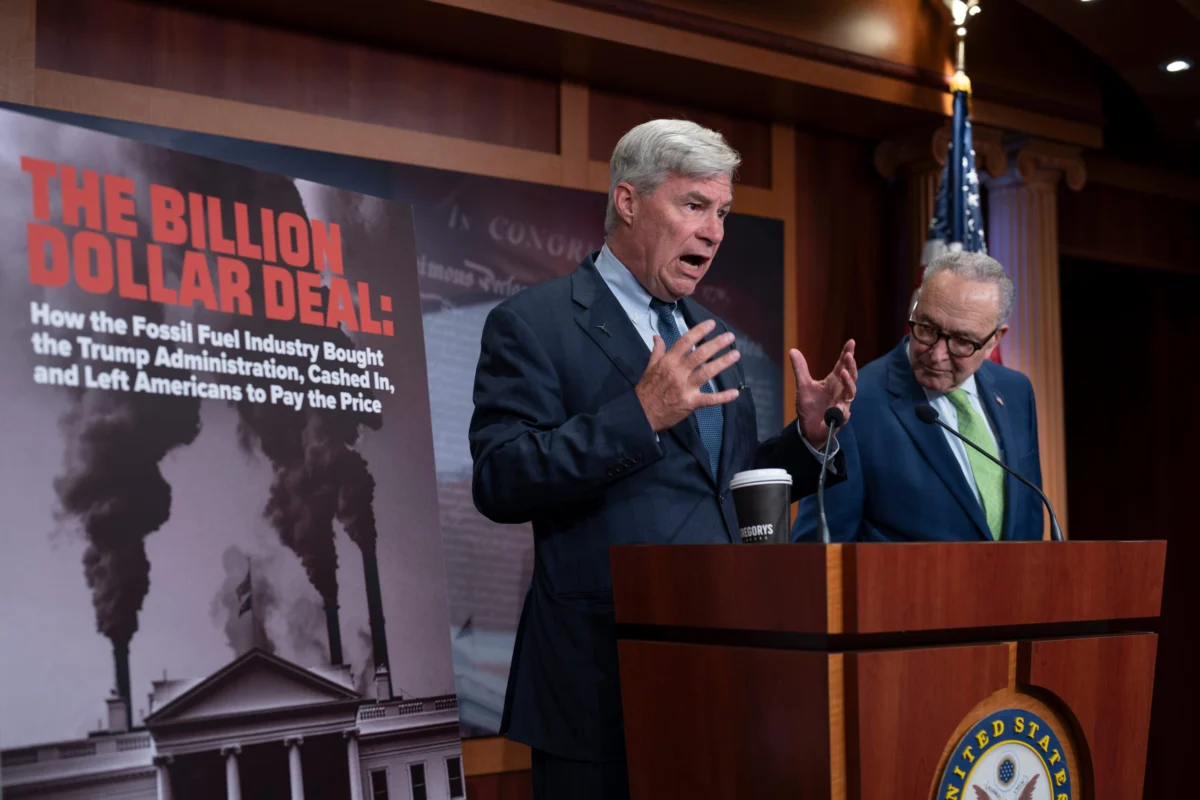
A bipartisan coalition of high-ranking U.S. Senators announced a landmark legislative agreement on Wednesday designed to modernize the nation’s energy infrastructure by streamlining the permitting process for major projects. The deal, spearheaded by leaders from both the energy and environment committees, seeks to address the years-long delays that have historically plagued both fossil fuel and renewable energy developments. As the United States grapples with a massive surge in electricity demand—driven largely by the rapid expansion of artificial intelligence (AI) and data centers—the bill introduces a critical "fair share" provision requiring tech giants to fund the grid upgrades necessitated by their high-consumption facilities.
The legislation represents a significant compromise between Republican and Democratic priorities. While Republicans have long sought to reduce the regulatory "red tape" associated with the National Environmental Policy Act (NEPA), Democrats have prioritized the expansion of the electrical grid to accommodate the transition to cleaner energy sources. The four principal architects of the deal—Senators Shelley Moore Capito (R-WV), Mike Lee (R-UT), Martin Heinrich (D-NM), and Sheldon Whitehouse (D-RI)—presented the framework as a "monumental" step toward ensuring American energy security and economic competitiveness in the 21st century.
Addressing the Surge in AI-Driven Energy Demand
A central pillar of the proposed legislation is a direct response to the unprecedented growth of the data center industry. With the proliferation of generative artificial intelligence, the energy requirements of the nation’s digital infrastructure have skyrocketed. Industry analysts suggest that a single AI-driven query can consume ten times the electricity of a traditional search engine request. This surge has placed immense strain on regional power grids, often leading to increased costs for residential consumers.
The new bill mandates that AI data centers must pay for the specific transmission costs and grid upgrades required to serve their facilities. Senator Martin Heinrich emphasized that this provision is designed to protect American families from subsidizing the massive infrastructure needs of trillion-dollar tech corporations. By shifting these costs to the developers of data centers, the bill aims to ensure that the rapid digitization of the economy does not come at the expense of affordable household electricity.
Beyond cost allocation, the bill seeks to provide "project certainty" for utility companies. By streamlining the environmental review process, proponents argue that the U.S. can more quickly build the transmission lines necessary to move power from remote generation sites to urban data hubs. Currently, the backlog of energy projects waiting for grid connection—known as the interconnection queue—represents thousands of gigawatts of potential capacity, much of which remains stalled due to regulatory bottlenecks.
Legislative Mechanics: Reforming NEPA and Strengthening FERC
The proposed reforms target several bedrock environmental and administrative laws that critics argue have become tools for obstruction rather than protection. The bill proposes strict limits on the timeframe for legal challenges under the National Environmental Policy Act (NEPA). Originally passed in 1970, NEPA requires federal agencies to assess the environmental impact of proposed actions. However, the average time to complete an Environmental Impact Statement (EIS) has ballooned to approximately 4.5 years, with some projects languishing for over a decade.
Key provisions of the reform package include:
- Judicial Review Limits: The bill would establish shorter statutes of limitations for filing lawsuits against energy projects, preventing "litigation loops" where projects are delayed indefinitely by sequential legal challenges.
- Concurrent Reviews: The legislation empowers the Federal Energy Regulatory Commission (FERC) to conduct major project reviews simultaneously with state-level assessments, rather than waiting for states to finish their processes first.
- Transmission Siting: It strengthens FERC’s authority to override state-level rejections of interstate transmission lines if those lines are deemed essential to national grid reliability.
- Cultural Protections: While streamlining reviews, the bill also attempts to balance the National Historic Preservation Act to protect Native American cultural sites while preventing the law from being used as a pretext for bad-faith delays.
A Chronology of Permitting Reform Efforts
The current deal is the culmination of years of failed attempts and incremental progress in Washington. The modern push for permitting reform gained significant momentum in 2022 during negotiations over the Inflation Reduction Act (IRA). At that time, Senator Joe Manchin (I-WV) sought a permitting deal in exchange for his support of the climate-heavy IRA, but the effort ultimately stalled due to bipartisan opposition from different flanks of the House and Senate.
In 2023 and 2024, the debate shifted toward the "interconnection crisis." As coal plants retired and renewable energy sources like wind and solar proliferated, the physical grid became a primary bottleneck. By early 2025, the pressure from the tech industry regarding AI power needs began to outweigh traditional partisan divides.

The timeline for the current bill reflects a strategic calculation by Senate leadership. Although the deal has been finalized in principle, a formal vote is not expected until the "lame-duck" session following the midterm elections in November 2026. This delay allows lawmakers to avoid the immediate political volatility of the campaign season while positioning the bill as a primary objective for the end of the legislative year. Senator Mike Lee expressed confidence that the bipartisan coalition is strong enough to withstand the shifts in power that may occur after the elections.
The "War on Wind" and Executive Tensions
A significant undercurrent of the negotiations involves the ongoing friction between the legislative branch and the executive branch’s energy policies. Specifically, Democratic Senators Sheldon Whitehouse and Martin Heinrich have raised alarms over the Trump administration’s treatment of the offshore wind industry. Throughout 2025 and 2026, the administration took several steps to pause or cancel large-scale wind projects off the East Coast, citing national security concerns and impacts on maritime navigation.
These actions led to a series of federal court interventions. In late 2025, a federal judge struck down an executive order that had attempted to block wind turbines, ruling that the administration had exceeded its authority. Despite these legal victories for the wind industry, Democrats remain wary. Senator Whitehouse noted that clarity is still needed on how the new permitting bill will prevent future administrations from "recklessly" targeting specific energy sectors for political reasons.
To bridge this gap, the Trump administration reportedly offered a compromise: easing the hold on certain renewable projects in exchange for Democratic support on the broader permitting overhaul. However, the details of this "truce" remain a point of contention, with environmental advocates questioning the long-term durability of such an agreement.
Stakeholder Reactions and Economic Implications
The reaction to the deal has been predictably mixed, reflecting the diverse interests affected by energy policy. The Edison Electric Institute (EEI), which represents the nation’s investor-owned electric companies, voiced strong support for the streamlining provisions. EEI President Drew Maloney highlighted that "project certainty" is the most critical factor for utilities looking to invest billions in grid modernization.
Conversely, environmental advocacy groups have expressed deep reservations. Brad Campbell, president of the Conservation Law Foundation, characterized the deal as a "fossil fuel industry wish-list." Critics argue that by curtailing the power of the Environmental Protection Agency (EPA) and shortening judicial review periods, the bill could lead to the approval of projects that harm local ecosystems and disproportionately affect marginalized communities.
From an economic perspective, the stakes are massive. According to data from the International Energy Agency (IEA), global electricity demand from data centers could double by 2026. In the United States, some regional grid operators have doubled their 15-year load growth forecasts in just the last twelve months. Failure to build new infrastructure could lead to "load shedding" or rolling blackouts in tech-heavy regions like Northern Virginia and Northern California.
Analysis of Long-Term Impact
If passed and signed into law, this permitting reform could redefine the American energy landscape for decades. By forcing AI data centers to internalize the costs of their energy consumption, the bill introduces a market-based mechanism to manage grid growth. It essentially treats high-density computing as a heavy industrial activity, similar to steel milling or chemical manufacturing, rather than a standard commercial utility customer.
Furthermore, the expansion of FERC’s authority marks a shift toward a more centralized, national approach to energy planning. Historically, the U.S. grid has been a fragmented patchwork of state and regional jurisdictions. This bill moves the country closer to a "macro-grid" model, which is widely considered necessary for integrating high levels of variable renewable energy and ensuring resilience against climate-related weather extremes.
As the 2026 midterm elections approach, the success of this bipartisan deal will serve as a litmus test for the Senate’s ability to function on complex, high-stakes policy issues. While the "lame-duck" session in November will provide the final verdict, the current agreement signals a growing recognition that the status quo of American energy permitting is no longer sustainable in an era of rapid technological change and increasing global energy competition. The outcome will likely determine whether the U.S. can maintain its lead in the AI revolution without compromising the stability and affordability of its domestic power supply.
