

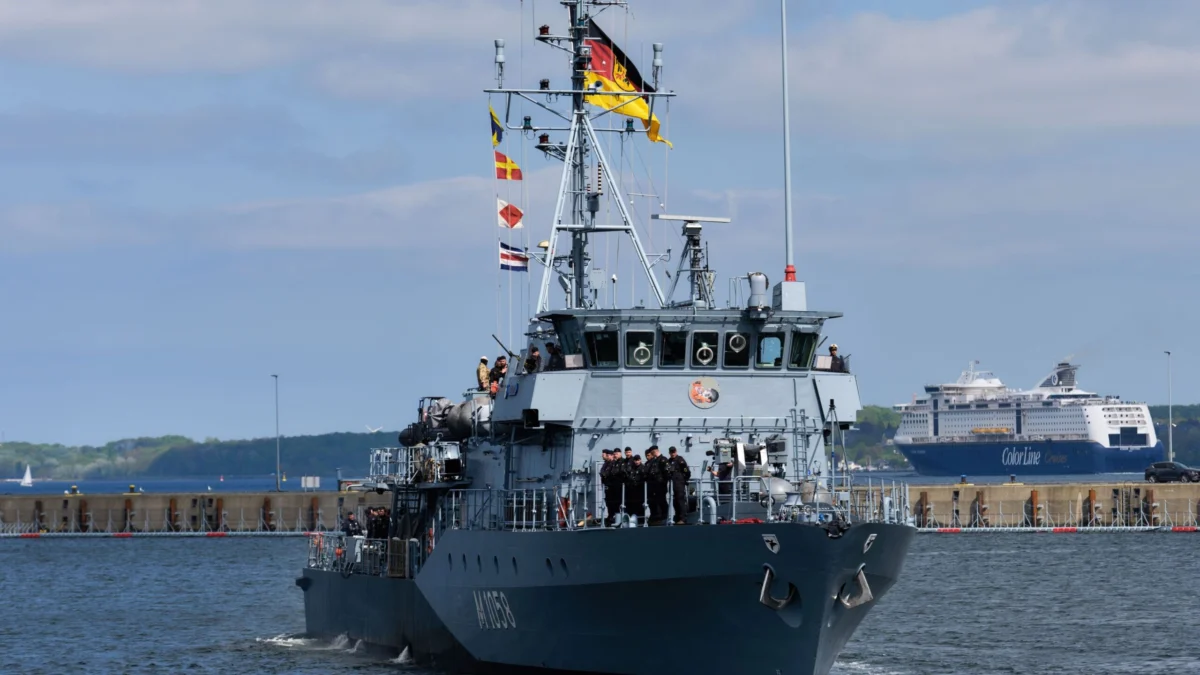
Düsseldorf, Berlin – The German Bundeswehr has initiated the repositioning of its mine hunter vessel, the "Fulda," from its station in Djibouti, Horn of Africa, to the eastern Mediterranean. This strategic redeployment, announced by the Ministry of Defence in Berlin on Thursday, signals a recalibration of German naval presence in response to evolving international security dynamics and unforeseen operational constraints.
Shifting Strategic Priorities in the Hormuz Strait Region
The decision to bring the "Fulda" closer to European waters stems from a reassessment of the immediate operational necessity in the Strait of Hormuz. The Ministry of Defence articulated that with a timely mission in the Strait appearing increasingly unlikely due to the "volatile political situation" between the United States and Iran, maintaining forces in that specific region is no longer deemed the most effective deployment of military assets. This suggests a broader strategic consideration by the German government, led by Defence Minister Boris Pistorius (SPD), to prioritize flexibility and responsiveness in light of a complex and unpredictable geopolitical climate.
The Strait of Hormuz, a crucial chokepoint for global oil and gas shipments, has been a focal point of international concern due to recurring tensions between Iran and Western powers. In recent years, the region has witnessed several incidents involving maritime security, including alleged attacks on commercial vessels and heightened military posturing. Germany, as a significant trading nation, has a vested interest in ensuring freedom of navigation and the unimpeded flow of international commerce. However, the current assessment indicates that the immediate threat or opportunity for a German mine-hunting operation in this specific strait has diminished, prompting a reassessment of the deployment.
Unforeseen Technical Hurdles Impact Operational Readiness
Beyond the geopolitical calculus, the Bundeswehr’s decision is also influenced by a significant technical consideration: the need to avoid "unavoidable strain on the technical systems" of the "Fulda." This aspect of the justification points to a more nuanced challenge related to the vessel’s design and its operational environment.
The "Fulda," commissioned in the late 1990s, was reportedly engineered for operations in the cooler waters of the Baltic and North Seas. The extreme heat and humidity of tropical latitudes, such as those experienced in Djibouti, appear to be placing an undue burden on its technical infrastructure. This raises questions about the long-term suitability of deploying vessels designed for temperate climates to consistently operate in such demanding environmental conditions. The strain on technical systems can lead to increased maintenance requirements, potential breakdowns, and a reduction in overall operational readiness, thereby impacting the mission’s effectiveness and the safety of the crew.
Crew Morale and Operational Comfort Under Scrutiny
Further underscoring the operational difficulties faced by the "Fulda" in Djibouti, reports have emerged of significant discontent among its crew members. According to information obtained by Handelsblatt, the primary source of this unrest has been the failure of the ship’s air conditioning systems to function adequately in the oppressive heat. This has reportedly led to crew members seeking respite from the tropical temperatures by sleeping on deck, a practice that highlights the severe impact of the climate on living and working conditions aboard the vessel.
The situation reportedly escalated to the point where a "contact ban" was imposed following critical inquiries. This suggests an internal communication challenge within the Bundeswehr regarding the management of personnel welfare and the reporting of operational issues. The failure to address basic comfort needs like adequate climate control can have a cascading effect on crew morale, performance, and overall mission success. A fatigued and uncomfortable crew is less efficient and more prone to errors, which can have serious implications in a maritime operational environment.
Background and Timeline of the "Fulda" Deployment
The mine hunter "Fulda" is part of the German Navy’s fleet tasked with ensuring maritime security and freedom of navigation in critical international waterways. Its deployment to Djibouti was part of a broader German contribution to international efforts to secure vital shipping lanes, particularly in the context of rising regional tensions.
The initial deployment to Djibouti, situated strategically on the Horn of Africa, provided a forward operating base for monitoring activities and potential intervention in the Bab-el-Mandeb Strait and the wider Gulf of Aden, as well as proximity to the Strait of Hormuz. This strategic positioning allowed for rapid response to maritime threats and facilitated intelligence gathering in a sensitive geopolitical region.
The decision to redeploy comes after a period of operational activity in Djibouti. While the exact duration of its presence in the region has not been specified, the emergence of technical challenges and crew discomfort suggests that the deployment may have encountered more difficulties than initially anticipated. The current repositioning to the eastern Mediterranean indicates a pragmatic approach by the German Ministry of Defence, seeking to balance strategic objectives with the practical realities of maintaining aging naval assets in challenging climates.
Broader Implications for German Naval Operations
The repositioning of the "Fulda" and the underlying reasons for its redeployment carry significant implications for the future of German naval operations and its broader defense strategy.
Equipment Modernization and Investment: The issues encountered by the "Fulda" highlight a potential need for accelerated modernization of the German Navy’s fleet, particularly its mine-hunting capabilities. Investing in newer vessels designed for a wider range of climatic conditions and equipped with more robust and efficient technical systems is crucial for ensuring long-term operational readiness and the ability to project power effectively. The current situation may prompt a re-evaluation of procurement strategies and the lifecycle management of naval assets.
Climate Change and Military Deployments: The challenges faced by the "Fulda" in Djibouti serve as a stark reminder of the increasing impact of climate change on military operations. Extreme weather conditions, including rising temperatures and increased humidity, can pose significant operational and logistical hurdles for armed forces deployed globally. This necessitates a strategic approach to climate resilience, including the development of equipment and strategies that can withstand diverse and challenging environmental conditions.
Personnel Welfare and Operational Effectiveness: The reported discontent among the crew underscores the importance of prioritizing personnel welfare. Ensuring adequate living and working conditions is not merely a matter of comfort but a fundamental prerequisite for maintaining crew morale, operational effectiveness, and overall mission success. Future deployments must incorporate robust mechanisms for addressing personnel concerns and ensuring the provision of essential amenities, even in remote and challenging environments.
Strategic Flexibility and Resource Allocation: The decision to move the "Fulda" to the eastern Mediterranean demonstrates a commitment to strategic flexibility and efficient resource allocation. By redeploying assets to areas where they can be more effectively utilized or where their presence is more strategically relevant, Germany can optimize its defense posture and respond more effectively to evolving security threats. This adaptive approach is essential in navigating a complex and rapidly changing international security landscape.
Diplomatic Signaling and Regional Engagement: The presence of German naval assets in the eastern Mediterranean can also serve as a diplomatic signal of commitment to regional security and stability. This region is of significant geopolitical importance, and Germany’s naval presence can contribute to deterring aggression, reassuring allies, and fostering a secure maritime environment. The repositioning allows Germany to maintain a visible and capable presence in a strategically important area without the operational burdens previously experienced in Djibouti.
Official Statements and Future Outlook
While the Ministry of Defence has provided a factual account of the redeployment and its primary justifications, further statements regarding the long-term plans for the "Fulda" and the broader implications for German naval presence in the Horn of Africa and the Persian Gulf are anticipated. The current move suggests a temporary recalibration rather than a complete withdrawal from engagement in these critical regions.
The Bundeswehr’s actions reflect a pragmatic approach to defense planning, balancing strategic objectives with operational realities. The "Fulda’s" journey back to European waters marks a significant chapter in its operational history, highlighting the complexities of modern naval deployments and the constant need for adaptation in the face of evolving geopolitical and environmental challenges. The lessons learned from this deployment are likely to inform future decisions regarding equipment, training, and strategic positioning of the German Navy. The German Ministry of Defence will undoubtedly continue to monitor the situation closely, ready to adjust its naval presence and capabilities as circumstances dictate.
