

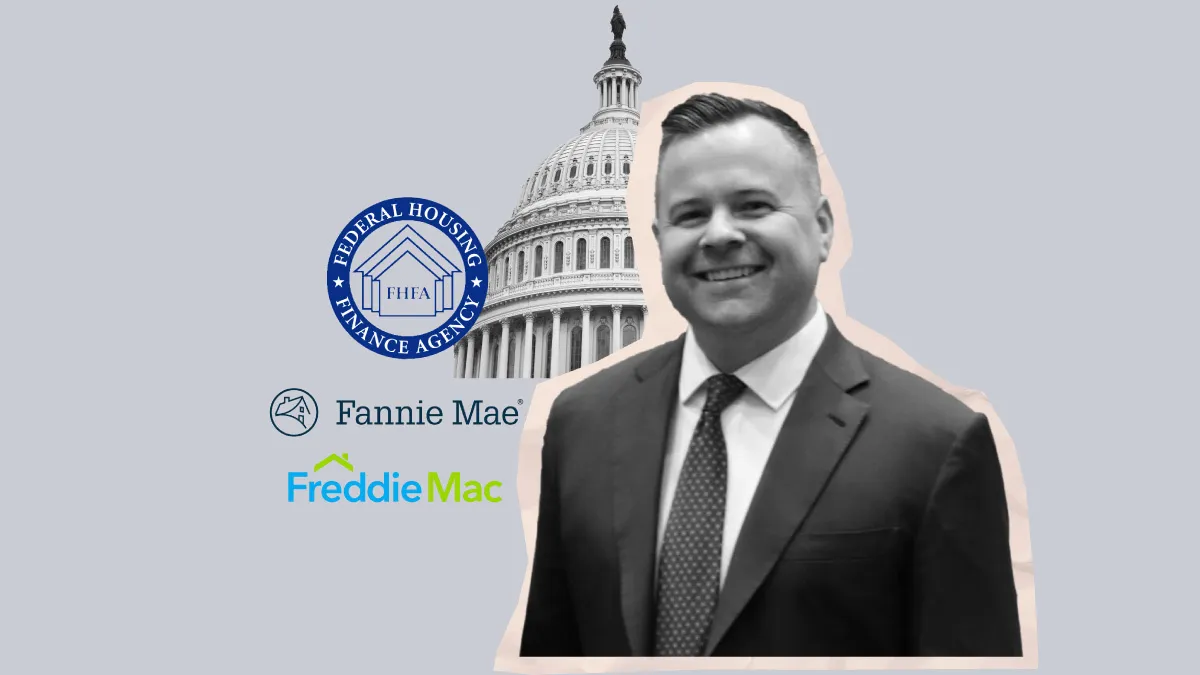
Federal Housing Finance Agency (FHFA) Director Bill Pulte has intensified his ongoing legal and political confrontation with New York Attorney General Letitia James, filing formal criminal referrals with the United States Department of Justice (DOJ). The new allegations center on claims of insurance fraud involving residential properties in Florida and Illinois. These referrals were directed to two U.S. Attorneys, Jason Reding Quinones of the Southern District of Florida and Andrew Boutros of the Northern District of Illinois, both of whom were nominated to their respective positions by President Donald Trump.
The move marks a significant escalation in the friction between the FHFA leadership and the New York Attorney General’s office. Pulte, who has overseen the FHFA’s regulatory mandate over government-sponsored enterprises (GSEs) like Fannie Mae and Freddie Mac, alleges that James knowingly misrepresented the occupancy and use of real estate assets to major insurance providers. These providers include Universal Property Insurance in Florida and Allstate Insurance Company in Illinois. The allegations first surfaced through reporting by the outlet MS Now, which cited the specific contents of the criminal referrals.
Specific Allegations of Misrepresentation and Fraud
At the core of the criminal referrals is the assertion that Attorney General James provided false information regarding the residency status of two properties to obtain more favorable insurance terms or coverage. In the insurance industry, occupancy status is a primary factor in determining risk profiles and premium costs. Owner-occupied primary residences typically carry different risk ratings and lower premiums than secondary homes, rental properties, or residences occupied by multiple unrelated individuals.
According to the referrals, Pulte claims that James represented a specific property as being occupied by a single adult with no children. However, citing information allegedly derived from social media posts and public disclosures—specifically a post by attorney Mike Davis—Pulte asserts that James was aware the residence was actually occupied by four individuals, including her niece and three children.
In the referral sent to the Southern District of Florida, the allegations extend to the duration of occupancy. Pulte claims that James indicated a Florida-based property would be used as a seasonal residence, occupied for approximately five months of the year. The referral alleges that the property was, in fact, occupied year-round by James’s niece. Such discrepancies, if proven, could constitute insurance fraud under state and federal statutes, as they involve the material misrepresentation of facts to an underwriter to influence the terms of a contract.
A Growing Chronology of Legal Conflict
The recent insurance fraud referrals do not exist in a vacuum; they are the latest chapter in a series of legal challenges initiated by Pulte against James. The conflict gained significant public attention in early 2025 following a similar trajectory regarding mortgage documentation.
In April 2025, Pulte filed a criminal referral with the DOJ alleging that James had engaged in mortgage fraud. That referral prompted the Department of Justice to open a formal criminal investigation in May 2025. The investigation focused on whether James had provided inaccurate information on loan applications for the same properties now under scrutiny for insurance discrepancies.
However, the momentum of that investigation was halted in November 2025. A federal judge dismissed the criminal case, not necessarily on the merits of the evidence, but on procedural and constitutional grounds. The court ruled that the prosecutor who brought the charges had been unlawfully appointed. Consequently, the prosecutor lacked the legal authority to present evidence to a grand jury or pursue the indictment. This ruling was a significant setback for the FHFA director’s efforts, leading to the current strategy of filing new referrals centered on insurance-related claims.
The Role of the FHFA and the DOJ
The Federal Housing Finance Agency is an independent regulatory agency established by the Housing and Economic Recovery Act of 2008. Its primary responsibility is to ensure that Fannie Mae, Freddie Mac, and the Federal Home Loan Bank System operate in a safe and sound manner so that they serve as a reliable source of liquidity and funding for the housing market.
While the FHFA’s traditional role is the oversight of the secondary mortgage market, Director Pulte has taken a more proactive stance on investigating potential fraud involving public officials who interact with the housing and financial systems. The decision to involve U.S. Attorneys in Florida and Illinois suggests a strategy of pursuing localized jurisdiction where the alleged acts of misrepresentation occurred.
The DOJ’s involvement remains a point of intense public interest. Under the current administration, the DOJ has faced scrutiny over the perceived politicization of criminal referrals. By directing these specific referrals to Trump-nominated U.S. Attorneys, Pulte has positioned the case within a legal framework that critics argue is politically motivated, while supporters argue it is a necessary step to ensure accountability for high-ranking officials.
Defense Response and Political Context
The response from Letitia James’s legal team has been swift and categorical. Abbe D. Lowell, a prominent defense attorney representing James, issued a statement characterizing the referrals as a "vendetta" and an abuse of power. Lowell’s statement emphasized that previous attempts to bring charges against James had been rejected by both judges and grand juries.
"Frustrated by repeated failures, where judges and grand juries have rejected their attempts to charge Attorney General James, Trump and his political enablers keep abusing their power to pursue a vendetta against her by trying to rename, refile, and repeat baseless allegations," Lowell stated. He further characterized the move as "desperate tactics" and "petty political payback," suggesting that the administration is prioritizing personal grievances over national economic concerns such as the rising cost of living.
The backdrop of this conflict is the historical tension between Letitia James and Donald Trump. As the New York Attorney General, James led a high-profile civil fraud case against the former president, his adult sons, and the Trump Organization. That case resulted in a multi-million dollar judgment against Trump, a fact that James’s supporters point to as the primary motivation behind the FHFA director’s repeated referrals.
Technical Analysis of Insurance Fraud Claims
In a legal sense, insurance fraud involving occupancy usually falls under "application fraud." For a conviction to occur, prosecutors must generally prove that:
- The defendant made a false statement or representation.
- The statement was material to the insurance policy (i.e., it would have changed the insurer’s decision to provide coverage or the price of the premium).
- The defendant made the statement with the intent to deceive or defraud.
In the case of the Florida property, the distinction between a "seasonal" and "full-time" residence is significant. Seasonal homes are often subject to different risks, such as theft or undiagnosed maintenance issues (like pipe bursts), while full-time residences carry risks associated with daily wear and tear and increased liability. Similarly, the number of occupants in a home directly impacts liability coverage. If an insurer is told one person lives in a home but four actually reside there, the risk of a liability claim (such as a slip-and-fall) increases fourfold.
If the DOJ decides to pursue these referrals, they will likely subpoena insurance applications, policy documents, and communications between James and her insurance agents. They would also look for evidence of residency, such as utility bills, mail delivery records, and witness testimony, to determine the actual occupancy of the homes during the periods in question.
Potential Implications for the Housing and Legal Landscape
The ongoing battle between a federal regulator and a state attorney general has broader implications for the American legal system and the housing market.
First, it highlights the potential for federal agencies to be used as tools for oversight—or, as critics argue, as tools for political retribution. The FHFA’s move to investigate an individual’s personal insurance applications is an unconventional use of the agency’s focus, which typically remains at the institutional level.
Second, the case underscores the importance of "occupancy fraud" as a target for regulators. While typically associated with mortgage applications (where "straw buyers" or investors claim they will live in a house to get lower interest rates), occupancy fraud in the insurance sector is a multi-billion dollar problem for the industry. A high-profile case involving a public official could lead to increased scrutiny of occupancy declarations for thousands of homeowners nationwide.
Finally, the outcome of these referrals will likely hinge on the "unlawful appointment" issue that derailed the previous mortgage fraud case. If the DOJ attempts to bring charges through a specially appointed prosecutor again, they may face the same constitutional challenges that led to the November dismissal. This creates a complex procedural hurdle for the government, requiring them to use permanent, Senate-confirmed U.S. Attorneys to handle the proceedings to avoid further dismissals.
Current Status and Unanswered Questions
As of the latest reports, neither the Department of Justice nor the FHFA has provided official comments to the press regarding the specific timeline for reviewing these referrals. The U.S. Attorneys’ offices in Florida and Illinois have also remained silent, adhering to standard protocols regarding potential or ongoing investigations.
The situation remains fluid. If the U.S. Attorneys in the Southern District of Florida and the Northern District of Illinois find merit in Pulte’s claims, the next step would be the empaneling of grand juries to review evidence. If they decline to prosecute, it would mark the third time James has successfully navigated these allegations without an indictment.
For the housing market and the legal community, the case serves as a stark reminder of the intersection between personal financial disclosures and political life. As the FHFA continues its oversight under Director Pulte, the scrutiny of high-profile figures’ real estate dealings appears likely to remain a central theme of his tenure, regardless of the legal outcomes in the James case.
