

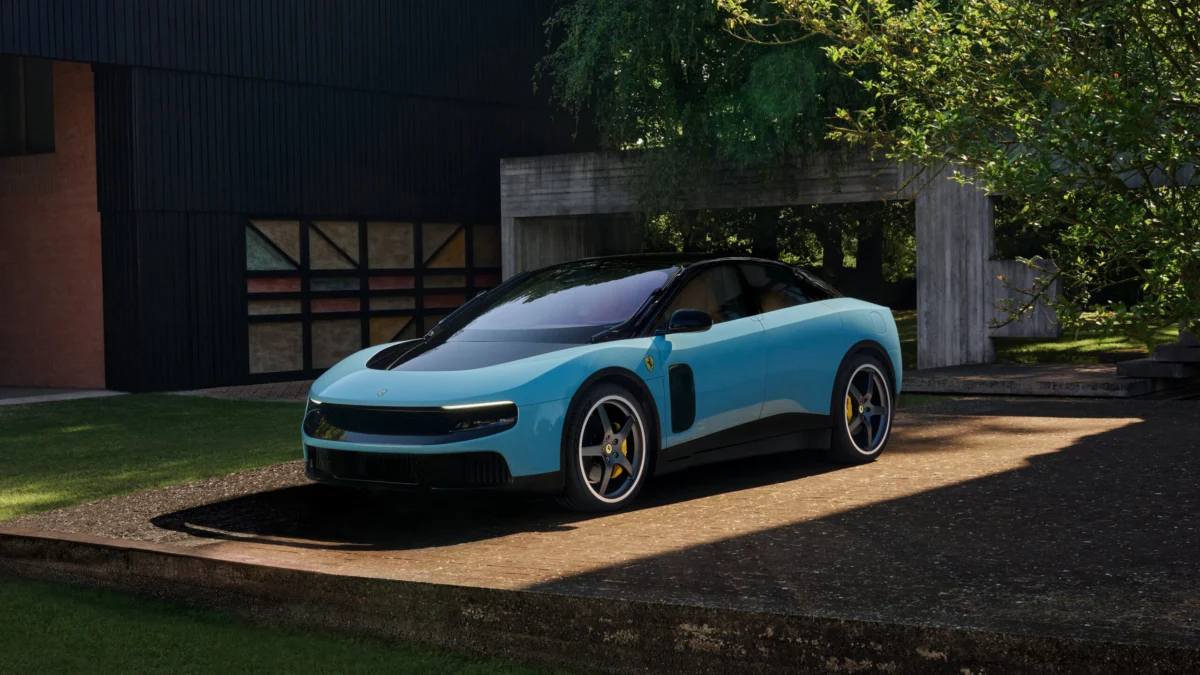
Maranello, Italy – Ferrari, the iconic Italian automaker renowned for its combustion-powered masterpieces, is confidently defending the launch of its first all-electric vehicle, the Ferrari Luce, despite significant market criticism and a notable dip in share prices following its May 2026 debut. CEO Benedetto Vigna reiterated his unwavering satisfaction with the strategic rollout and the vehicle’s groundbreaking design, asserting that the company "would not change anything" about the process. This staunch defense comes as the luxury brand navigates the delicate balance between preserving its storied heritage and embracing the inevitable shift towards electrification.
A Bold Unveiling and Immediate Fallout
The Ferrari Luce made its highly anticipated global debut on May 25, 2026, in the architecturally striking setting of the Vela di Calatrava, part of Rome’s Città dello Sport. The event was designed to be as avant-garde as the vehicle itself, signaling a dramatic departure for the brand. Priced at a staggering 550,000 euros (approximately $640,000 USD), the Luce was positioned not merely as an electric car, but as a new paradigm for ultra-luxury performance.
However, the initial reception was far from universally celebratory. Almost immediately following the unveiling, Ferrari’s U.S.-listed shares experienced their largest daily decline of the year, plummeting 8.4%. The market’s apprehension was palpable, driven by concerns over the Luce’s radical aesthetic and the potential dilution of Ferrari’s cherished brand identity. Criticism wasn’t limited to financial analysts; even revered figures within the Ferrari legacy, such as former chairman Luca di Montezemolo, reportedly expressed reservations, contributing to a wave of negative reactions across industry publications and enthusiast forums. The design, notably spearheaded by former Apple design chief Jony Ive, was described by some as "bubbly" and its interior as "minimalistic," starkly contrasting with the aggressive, driver-focused designs traditionally associated with the Prancing Horse.
Vigna’s Unwavering Conviction Amidst Q2 Earnings
Speaking to reporters on Thursday during a call to discuss Ferrari’s robust second-quarter results for 2026, CEO Benedetto Vigna addressed the controversy head-on. "I would not change anything in the launch of [Luce]. We are very pleased about what has been done," Vigna declared, projecting an image of calm assurance amidst the storm of opinion. While he declined to disclose specific order numbers or expected sales forecasts for the Luce, his confidence was underscored by the company’s broader financial health, with order books for its entire vehicle lineup reportedly full through 2027. This strong demand across its portfolio provides Ferrari with a stable foundation to weather initial turbulence surrounding its electric venture.
Despite the CEO’s reticence on Luce-specific figures, reports from the Financial Times on Wednesday indicated a remarkable early sales performance. Ferrari reportedly aimed to sell just under 500 units of the Luce model within the year, a quota that was astonishingly filled in less than two months following the car’s May 25 launch. "We are very much satisfied because we are proceeding as planned," Vigna affirmed, choosing not to elaborate further on the specific sales report but reinforcing the strategic success from Ferrari’s internal perspective. This swift uptake of the initial production run suggests that despite the vocal criticism, a segment of ultra-wealthy buyers remains eager to embrace Ferrari’s vision for an electric future.
A Departure in Design and Strategy: The Jony Ive Influence
The Ferrari Luce represents a monumental shift not just in powertrain but in design philosophy. Jony Ive’s involvement marked a significant statement from Ferrari, signaling a willingness to look beyond traditional automotive design conventions. Ive, celebrated for his minimalist and user-centric approach at Apple, brought a distinct aesthetic to the Luce. Its "bubbly exterior" and "minimalistic interior design" adorned with multiple screens are a stark contrast to the aggressive lines, visceral controls, and raw, analog feel that have defined Ferrari for decades. This design choice, while polarizing, aligns with a broader trend in luxury electric vehicles towards sleek, aerodynamic forms and digitally integrated cockpits.
Vigna emphasized that this radical design was a deliberate choice, integral to the car’s identity and its communication strategy. "The car has a lot of new things and that was the best way to make sure that the people understand all the novelties of this car," he explained. To effectively convey these innovations, Ferrari adopted a tiered rollout strategy. This involved revealing the interior design ahead of the full vehicle launch and releasing a series of online videos detailing the Luce’s development and unique features. This approach aimed to educate potential buyers and enthusiasts, allowing them to digest the novelties gradually rather than being overwhelmed by a single, abrupt reveal. This method, according to Vigna, "has been very good" in managing the narrative around such a transformative product.

The Broader Context: Ferrari’s Electrification Journey
Ferrari’s foray into pure electric vehicles is not an isolated event but a strategic response to a rapidly evolving global automotive landscape. The company has long been vocal about its electrification roadmap, which includes hybrids and eventually fully electric models. The Luce is the culmination of years of research and development, representing Ferrari’s commitment to sustainability without compromising its core tenets of performance, luxury, and exclusivity.
For a brand built on the visceral roar of a V12 engine and the tactile feedback of a manual gearbox, the transition to electric power presents unique challenges. Purists often express concern that electric propulsion might strip Ferrari of its "soul." However, the industry trend is undeniable. Competitors like Porsche have successfully launched the Taycan, while Lamborghini, Aston Martin, and Rolls-Royce are all deep into their own electric vehicle programs, with models like the Spectre already on the market or nearing release. Ferrari’s strategy, under Vigna’s leadership, appears to be to embrace this future head-on, albeit with a distinctly Ferrari approach that emphasizes technological prowess and bespoke luxury.
Market Dynamics and Brand Evolution
The initial stock market reaction to the Luce’s debut highlights the inherent risks for heritage brands venturing into new, disruptive territories. An 8.4% single-day drop reflects investor anxiety over several factors:
- Brand Dilution: The fear that a radical design and electric powertrain could alienate traditional customers and dilute the brand’s exclusive image.
- Execution Risk: The inherent challenges in developing and launching a completely new technology platform for the first time.
- Market Acceptance: Uncertainty regarding how a high-priced, aesthetically controversial EV will perform in a niche market.
However, the subsequent recovery of Ferrari’s stock indicates that initial fears may have been somewhat mitigated by the strong reported sales figures and the company’s overall financial stability. The full order books through 2027 for its conventional and hybrid models provide a substantial revenue stream, allowing Ferrari the financial breathing room to innovate and refine its EV strategy.
The target of "just under 500 units" for the Luce’s first year underscores Ferrari’s commitment to exclusivity. Unlike mass-market EVs, the Luce is designed for a select clientele who value rarity and cutting-edge technology. This limited production model helps maintain high demand and preserves the brand’s ultra-luxury status, even as it introduces a new product category. The rapid sale of these initial units, despite the criticism, suggests that Ferrari’s loyal customer base, along with new buyers seeking ultimate luxury EVs, are willing to embrace the brand’s forward-looking vision.
Implications and Future Outlook
The Ferrari Luce is more than just an electric car; it is a declaration of intent for the brand’s future. Its success, both critically and commercially, will have profound implications:
- Brand Identity Redefinition: The Luce will test the boundaries of what constitutes a "Ferrari." If successful, it could broaden the brand’s appeal to a new generation of environmentally conscious ultra-luxury buyers, demonstrating that passion and performance can coexist with sustainability.
- Technological Leadership: As Ferrari’s first EV, the Luce serves as a technological flagship. The innovations developed for it will likely trickle down into future electric and hybrid models, cementing Ferrari’s position at the forefront of automotive engineering.
- Financial Stability and Growth: While current profits are largely driven by traditional models, the Luce’s long-term success is crucial for Ferrari’s sustained growth in an increasingly electrified world. It opens new revenue streams and allows Ferrari to tap into the burgeoning luxury EV market.
- Industry Influence: As a leader in the ultra-luxury segment, Ferrari’s approach to electrification will undoubtedly influence other high-end manufacturers. Its bold design choices and strategic rollout provide a case study for balancing tradition with innovation.
In conclusion, Benedetto Vigna’s steadfast defense of the Ferrari Luce’s launch is not merely an act of corporate defiance but a strategic assertion of confidence in Ferrari’s carefully crafted future. Despite the initial market jitters and design controversies, the reported strong early sales figures suggest that Ferrari might be successfully navigating the treacherous waters of electrification, proving that even a brand steeped in gasoline-fueled glory can innovate and captivate in the electric age. The Luce, polarizing as it may be, represents a pivotal moment in Ferrari’s illustrious history, charting a new course for the Prancing Horse in the 21st century. The world will be watching closely as Ferrari continues to electrify its legend, one Luce at a time.
