

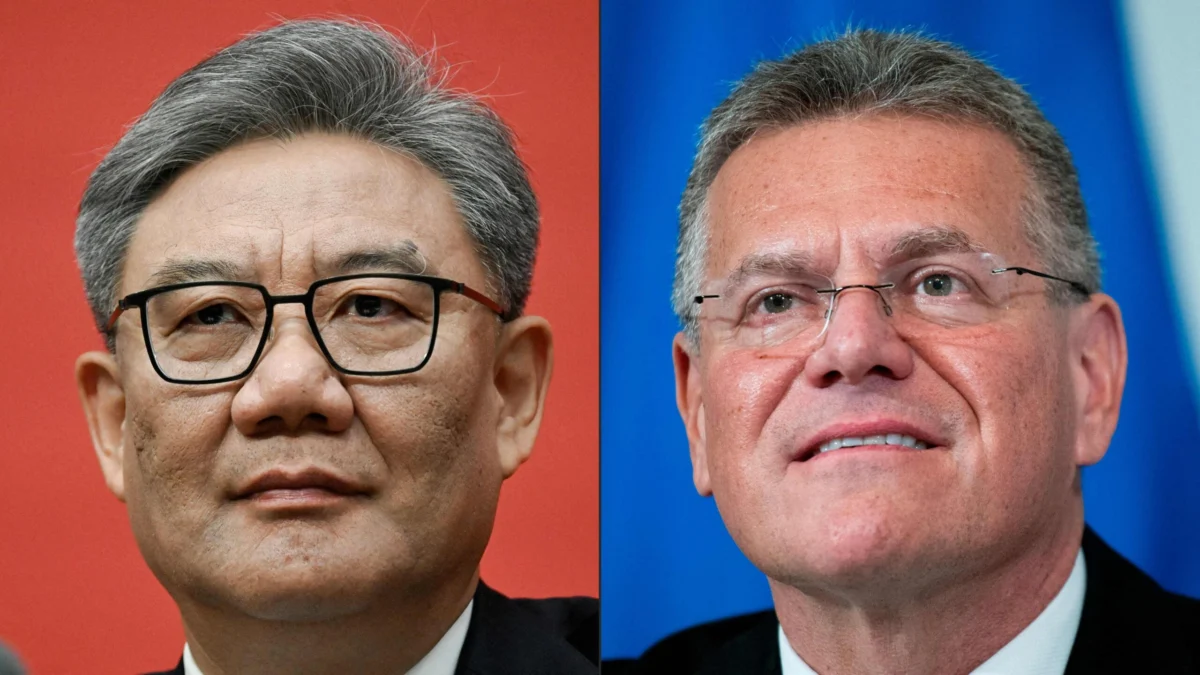
European Union Trade Commissioner Maros Sefcovic announced that China’s imports of hybrid electric vehicles into Europe are expected to be halved over the next four years compared to projections without an agreement. This statement, made following a meeting with Chinese Minister of Commerce Wang Wentao, initially suggests a significant concession from Beijing. However, a closer examination reveals the agreement to be less definitive, focusing on limiting projected growth rather than a strict reduction in current import volumes. Both sides have deliberately left ambiguity regarding the precise number of vehicles China will be permitted to export to Europe and how this figure relates to existing import levels, leaving a crucial element of the deal open to interpretation.
The Elusive Nature of the Agreement
The lack of transparency surrounding the specific terms of this agreement is a cause for concern. Such opacity makes it challenging to verify China’s adherence to its commitments and provides Beijing with considerable leeway to interpret its obligations in a manner favorable to its interests. While the EU aims to protect its domestic automotive industry from what it perceives as unfair competition fueled by Chinese state subsidies, the current agreement appears to fall short of providing the concrete protections initially sought by European manufacturers.
The core of the dispute centers on the EU’s investigation into alleged illegal subsidies for Chinese-made electric vehicles (EVs). Launched in October 2023, this probe has been a significant point of contention, threatening to escalate into a full-blown trade war between the two economic giants. The investigation sought to determine if Chinese EV manufacturers were benefiting unfairly from government support, allowing them to undercut European competitors. The potential imposition of substantial tariffs by the EU loomed large over the negotiations, creating an urgent need for a resolution.
A Timeline of Tensions and Negotiations
The path to this ambiguous agreement has been paved with escalating tensions and a series of high-stakes diplomatic engagements. The EU’s decision to initiate an anti-subsidy investigation into Chinese EVs marked a significant shift in its approach to trade relations with China, moving from a more conciliatory stance to one of assertive enforcement of trade rules. This investigation, the first of its kind into Chinese EVs, was triggered by a surge in imports of these vehicles, which the European Commission claimed were being dumped on the market at artificially low prices.
Throughout the investigation, China has vehemently denied the allegations, accusing the EU of protectionism and hypocrisy. Beijing has argued that its EV industry’s success is a testament to innovation and market competitiveness, not unfair state intervention. The rhetoric from both sides has often been sharp, highlighting the deep-seated disagreements and the significant economic stakes involved.
Several rounds of high-level discussions have taken place between EU officials, including Trade Commissioner Sefcovic, and their Chinese counterparts, including Minister Wang Wentao. These talks have been characterized by intense negotiations, with both sides seeking to avoid the damaging economic consequences of a full-blown trade dispute. The threat of retaliatory measures, including potential Chinese tariffs on European agricultural products or luxury goods, has added further pressure to reach a compromise.
The timeline of these negotiations has been closely watched by industry leaders, investors, and policymakers worldwide. The automotive sector, a cornerstone of many European economies, has been particularly anxious, with manufacturers like Volkswagen, BMW, and Stellantis heavily invested in the Chinese market and reliant on global supply chains. Any disruption to these established patterns could have far-reaching implications.
Deconstructing the "Halving" Claim: A Matter of Growth vs. Reduction
Commissioner Sefcovic’s assertion that Chinese hybrid EV imports will be "halved" needs careful dissection. The operative phrase is "compared to projections without an agreement." This implies that the agreement is not about reducing current import levels but about moderating the expected future growth of these imports.
For instance, if the EU projected that Chinese hybrid EV imports would grow from 500,000 units in year one to 1,000,000 units in year four without any intervention, the agreement might aim to cap that growth at, say, 750,000 units. In this scenario, the imports would still increase, albeit at a slower pace than initially anticipated. The crucial missing pieces of information are the baseline current import figures and the precise growth trajectory that the EU was forecasting. Without these details, the "halving" statement remains a rhetorical flourish rather than a concrete statistical commitment.
This approach allows China to continue expanding its EV exports to Europe, albeit at a less aggressive pace than it might have otherwise. It also provides the EU with a perceived victory in addressing the issue of subsidized imports, potentially averting a more damaging trade war. However, it leaves European carmakers in a precarious position, still facing significant competition from a rapidly growing Chinese EV sector.
The Shadow of Unspecified Terms
The fact that the specific conditions of the agreement are not publicly disclosed is a significant red flag. In international trade, transparency is paramount. When the details of an agreement are kept behind closed doors, it raises several concerns:
- Verification Challenges: Without clear, quantifiable targets and reporting mechanisms, it becomes exceedingly difficult for the EU to monitor whether China is indeed adhering to its commitments. This lack of transparency can create loopholes that China might exploit.
- Interpretation and Enforcement: Ambiguous terms allow for differing interpretations. China could argue that its actions are consistent with the spirit of the agreement, even if they fall short of the EU’s expectations. Enforcing such an agreement then becomes a complex and potentially contentious diplomatic undertaking.
- Fair Competition Concerns: The core of the EU’s investigation was the concern about unfair competition arising from subsidies. If the agreement does not clearly define and limit the impact of these subsidies, the fundamental issue may not be adequately addressed.
- Impact on European Industry: The primary beneficiaries of any trade agreement should be the industries it is designed to protect. If the terms are vague, European automakers may not receive the tangible benefits they were hoping for, leaving them vulnerable to continued competitive pressure.
The precedent set by this lack of transparency could also have broader implications for future trade negotiations. It might embolden other nations to seek similar opaque arrangements, potentially undermining the principles of open and fair international trade.
Broader Economic and Geopolitical Implications
This agreement, or lack thereof, carries significant weight beyond the immediate automotive sector. It is a crucial indicator of the evolving trade relationship between the EU and China, two of the world’s largest economic blocs.
For the EU: The agreement represents a delicate balancing act. On one hand, the EU aims to safeguard its strategically important automotive industry and uphold principles of fair trade. On the other hand, it seeks to avoid a full-blown trade war that could harm its own economy, particularly given the significant trade ties with China. The current outcome suggests a preference for de-escalation, but it may come at the cost of fully addressing the underlying issues of unfair competition. The long-term success of this approach will depend heavily on China’s future actions and the EU’s ability to adapt and respond.
For China: Beijing has managed to avoid significant punitive tariffs, which would have had a substantial negative impact on its burgeoning EV industry and its export ambitions. While the growth of its EV exports to Europe will be tempered, the agreement allows China to continue its market penetration. This outcome can be seen as a diplomatic win for China, showcasing its ability to navigate complex trade disputes with major economic partners.
For the Global Automotive Industry: The European market is a significant destination for Chinese EVs. Any restrictions, even if aimed at moderating growth, will influence global supply chains and production strategies. European car manufacturers, many of whom have substantial operations and investments in China, will need to recalibrate their strategies in response to this evolving landscape. The agreement also highlights the growing global competition in the EV sector, with China emerging as a dominant player.
Geopolitical Considerations: The trade dispute over EVs is not merely an economic issue; it is also intertwined with broader geopolitical tensions between the West and China. The EU’s stance on Chinese subsidies reflects a growing concern about China’s state-led economic model and its potential impact on global markets. The outcome of these negotiations could influence how other Western nations approach similar trade challenges with China.
Future Outlook and Potential Scenarios
The current agreement, characterized by its ambiguity, leaves the door open to several future scenarios.
One possibility is that China will genuinely abide by the spirit of the agreement, moderating its EV exports and allowing European manufacturers some breathing room to adapt. This would require strong diplomatic engagement and continued monitoring by the EU.
Conversely, China might interpret the vague terms to its advantage, continuing to expand its market share in Europe, albeit through different strategies or by focusing on other segments of the automotive market. This could lead to renewed trade tensions and potentially a more confrontational response from the EU in the future.
Another scenario involves the EU itself needing to implement further measures if the current agreement proves insufficient. This could include additional investigations, the imposition of tariffs on specific components, or stronger incentives for domestic EV production.
The development of European charging infrastructure and battery production capabilities will also play a crucial role. If Europe can successfully bolster its own EV ecosystem, it will be less susceptible to external competitive pressures.
Ultimately, the effectiveness of this "ambiguous agreement" will be determined not by the initial pronouncements but by the concrete actions taken by both sides in the coming years. The lack of clear, publicly verifiable commitments suggests that the underlying challenges of fair competition and market access in the critical electric vehicle sector remain largely unresolved, leaving European industries and policymakers in a state of cautious uncertainty. The next few years will be pivotal in determining whether this diplomatic maneuver leads to a more stable and equitable trading relationship or merely postpones a more significant confrontation.
