

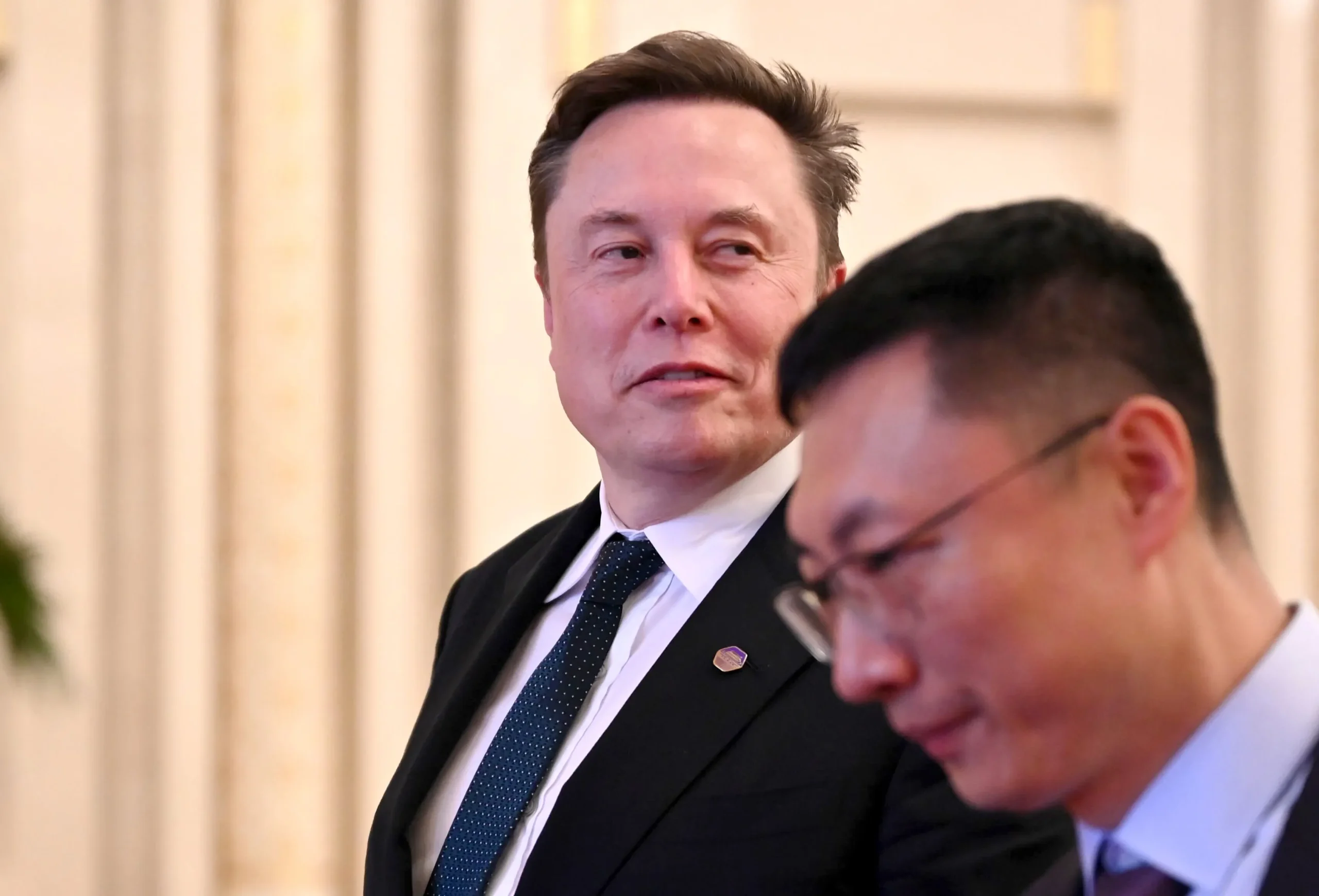
Elon Musk, CEO of SpaceX and Tesla, has significantly escalated his public criticism of Indian billionaire Mukesh Ambani, CEO of Reliance Industries, accusing him of wielding undue influence over the Indian government and actively blocking Starlink’s satellite internet service from entering the market. This aggressive rhetoric comes as Starlink continues to face regulatory hurdles in securing the necessary approvals to commence commercial operations in the world’s most populous nation, a market of immense strategic importance for global technology giants.
The Escalating Rhetoric: Accusations of Monopoly and Influence
The latest salvo in this high-stakes corporate confrontation unfolded on Friday, when Musk took to X (formerly Twitter) to directly challenge Ambani. In a pointed post, he mockingly referred to Ambani as the "prime minister" of India, a clear insinuation that the billionaire exerts an outsized, almost governmental, control over the nation’s economic and regulatory landscape. Musk further elaborated on his frustration, arguing that Starlink could be a transformative force for digital inclusion in India, particularly in underserved rural areas. He highlighted the potential for Starlink to provide internet access to millions, thereby enhancing educational opportunities for children and enabling small businesses to connect with a global customer base. "Naturally, you would prefer to maintain your monopolistic exploitation of the great people of India, but would you nonetheless consider allowing Starlink to compete?" Musk wrote, directly addressing Ambani and Reliance Jio, the telecom arm of Reliance Industries.
This Friday statement marked a peak in a week of increasingly sharp accusations from Musk. Earlier in the week, he had broadly hinted at unnamed "oligarchs" obstructing Starlink’s launch to protect their entrenched business interests. India’s Ministry of Communications swiftly rejected these initial allegations, asserting that the country’s regulatory framework for satellite communications is "fair and non-discriminatory." Undeterred, Musk intensified his attack on Thursday, specifically naming Ambani and questioning his power in another X post: "Is Ambani the real boss of India?" Reliance Jio has, notably, refrained from commenting on Musk’s accusations.
The Starlink India Saga: A Chronology of Hurdles and Hopes
SpaceX’s journey to launch Starlink in India has been protracted and fraught with challenges, extending over several years. The company first signaled its intent to enter the Indian market in 2021, generating considerable excitement given India’s vast, largely untapped potential for satellite broadband. However, early efforts were met with caution from Indian authorities. In late 2021, the Indian government warned Starlink against pre-selling services without a license, leading to the company refunding pre-orders and temporarily halting its operations in the country. This early setback underscored the complexities of navigating India’s regulatory environment.
Despite these initial difficulties, Starlink persisted, demonstrating its commitment to the Indian market. A significant development occurred in 2023 when Starlink announced distribution agreements with two of India’s largest telecom operators: Ambani’s own Reliance Jio and Bharti Airtel. These partnerships were seen as a strategic move to smooth the path for market entry, leveraging the established infrastructure and customer bases of these domestic giants. The agreements aimed to facilitate the offering of Starlink’s service once the necessary government approvals were secured.
By mid-2025, there was a renewed sense of optimism as Starlink reportedly secured several key regulatory clearances, leading many to believe that its launch was "a matter of when, not if." This progress, however, did not translate into immediate commercial operations. The final hurdle, as outlined by the Indian Ministry of Communications in its Thursday statement, pertains to ongoing security assessments. The ministry clarified that Starlink, along with two other licensed satellite operators, is currently undergoing these mandatory security reviews, which must be completed before they can be allocated satellite spectrum and begin commercial services. Crucially, the ministry emphasized that all three operators are at "broadly the same regulatory stage," thereby refuting Musk’s suggestion that Starlink was being unfairly singled out or deliberately delayed.
India’s Digital Landscape and Ambani’s Dominance
India represents an enormous and strategically vital market for any global technology company. With a population exceeding 1.4 billion people, it is the world’s most populous country and boasts over a billion internet users, a number that continues to grow rapidly. This massive digital footprint, coupled with ambitious government initiatives like "Digital India" aimed at fostering digital literacy and connectivity, makes it an irresistible target for companies offering internet services.
However, expanding into India means navigating a complex business ecosystem dominated by powerful domestic conglomerates, none more prominent than Mukesh Ambani’s Reliance Industries. Reliance Industries is a behemoth with diversified interests spanning petrochemicals, oil and gas, retail, and, crucially, telecommunications. Its telecom arm, Reliance Jio Infocomm, launched in 2016 and rapidly disrupted the Indian telecom market by offering highly affordable data plans, effectively democratizing internet access for millions. Jio’s aggressive pricing strategy and expansive 4G network propelled it to become India’s largest telecom operator, commanding a subscriber base of over 470 million users as of early 2024, representing a market share of approximately 40%. This dominance has given Reliance Jio immense leverage and influence within the country’s digital infrastructure.
Ambani’s influence extends beyond market share; his conglomerate frequently collaborates with Prime Minister Narendra Modi’s government on major infrastructure and development projects, further cementing its position as a key player in India’s economic and political landscape. This close relationship between powerful business figures and the government is a characteristic feature of India’s economic model, which foreign companies often find challenging to navigate.
Regulatory Framework and Official Responses: A Question of Process
The core of the dispute between Starlink and the Indian government, as framed by official responses, revolves around regulatory process and national security considerations. The Ministry of Communications has consistently maintained that its framework for satellite communications is "fair and non-discriminatory," applying equally to all prospective operators, foreign or domestic. The ongoing security assessments are a standard part of this process, ensuring that any new communication infrastructure meets national security protocols before being granted full operational clearance.
Prior to Musk’s latest offensive, Starlink and Reliance Jio had also clashed over the method of allocating satellite spectrum in India. Starlink, aligned with global practices in some regions, advocated for an administrative process for spectrum assignment, which typically involves government agencies directly allocating spectrum based on technical merits and policy objectives. Reliance Jio, on the other hand, strongly pushed for an auction-based approach, where companies bid for spectrum licenses, a method commonly used for terrestrial mobile spectrum in India. Ultimately, New Delhi sided with Starlink’s preference for an administrative allocation, incorporating it into the new Telecommunications Bill 2023. This decision, while seemingly a win for Starlink, underscores the dynamic and often contentious nature of policy-making in this crucial sector.
On Friday, India’s telecom minister, Jyotiraditya Scindia, publicly pushed back against Musk’s allegations, unequivocally stating that India "does not allow a monopoly in any sector." This assertion directly countered Musk’s claims of monopolistic exploitation by Ambani and sought to reassure both domestic and international investors about the fairness of India’s competitive landscape.
Competition in the Satellite Internet Space: A Crowded Arena
It is important to note that Starlink is not the only player vying for a slice of India’s satellite internet market. Both Reliance Jio and Bharti Airtel, the country’s two largest telecom operators, are actively developing their own satellite internet services. Jio has established a joint venture with Luxembourg-based SES, a global satellite operator, to offer satellite broadband solutions. Similarly, Airtel is a major shareholder in Eutelsat OneWeb, a global constellation operator that is also striving to provide satellite connectivity in India. This indicates a robust competitive environment brewing in the satellite broadband sector, further complicating Starlink’s entry. The competition among these players for spectrum and regulatory approvals highlights the strategic importance and lucrative potential of this nascent market.
Broader Challenges for Tesla in India: A Pattern of Obstacles
The difficulties faced by Starlink are not isolated incidents for Elon Musk’s ventures in India. Tesla, his electric vehicle company, has also encountered significant headwinds in establishing a strong foothold in the market. After years of anticipation and intermittent talks, Tesla finally launched in India in 2025. However, its initial performance has been underwhelming. According to data cited by Electrek, Tesla registered a mere 699 vehicles in its first 12 months of deliveries.
A primary factor contributing to this slow start has been the steep import duties imposed by the Indian government on fully built imported vehicles. These duties significantly inflated the price of Tesla’s models, with the Model Y, for instance, costing nearly twice its U.S. price in India. While Tesla did implement price reductions earlier in 2026, its cars remain considerably more expensive in India compared to the U.S. or other markets. This pricing challenge, combined with India’s nascent EV charging infrastructure and the strong competition from domestic automakers like Tata Motors and Mahindra, which offer more affordable EV options, has made market penetration difficult for Tesla. The shared experience of Starlink and Tesla suggests a pattern of significant market entry barriers and regulatory complexities that Musk’s companies face in India, irrespective of the sector.
Implications for Foreign Investment and Digital Inclusion
Musk’s public confrontation with Ambani and the Indian government carries significant implications. For foreign investors, the saga highlights the persistent challenges of operating in highly regulated emerging markets, particularly when competing with powerful domestic players. While India actively seeks foreign investment and promotes its ease-of-doing-business initiatives, the reality for large foreign tech companies often involves navigating intricate local power dynamics and a regulatory landscape that can appear opaque or subject to the influence of well-connected entities.
From the perspective of digital inclusion, the delay in Starlink’s launch is a missed opportunity, at least for now. Starlink’s low-Earth orbit (LEO) satellite technology is uniquely positioned to bridge the digital divide in India’s vast rural and remote areas, where laying fiber optic cables or building traditional cellular towers is economically unfeasible or geographically challenging. Universal internet access is a key enabler for economic growth, education, and healthcare, and any delay in deploying advanced connectivity solutions impacts millions of citizens.
The ongoing stalemate underscores the delicate balance India seeks to strike: fostering innovation and attracting global technology while simultaneously protecting domestic industries and ensuring national security. The outcome of the Starlink saga will likely serve as a benchmark for how India manages the entry of other disruptive technologies and foreign enterprises in critical sectors. As the world watches, the question remains whether Elon Musk’s aggressive tactics will ultimately pave the way for Starlink’s entry or further entrench the existing barriers in India’s highly competitive and politically charged telecom market.
