

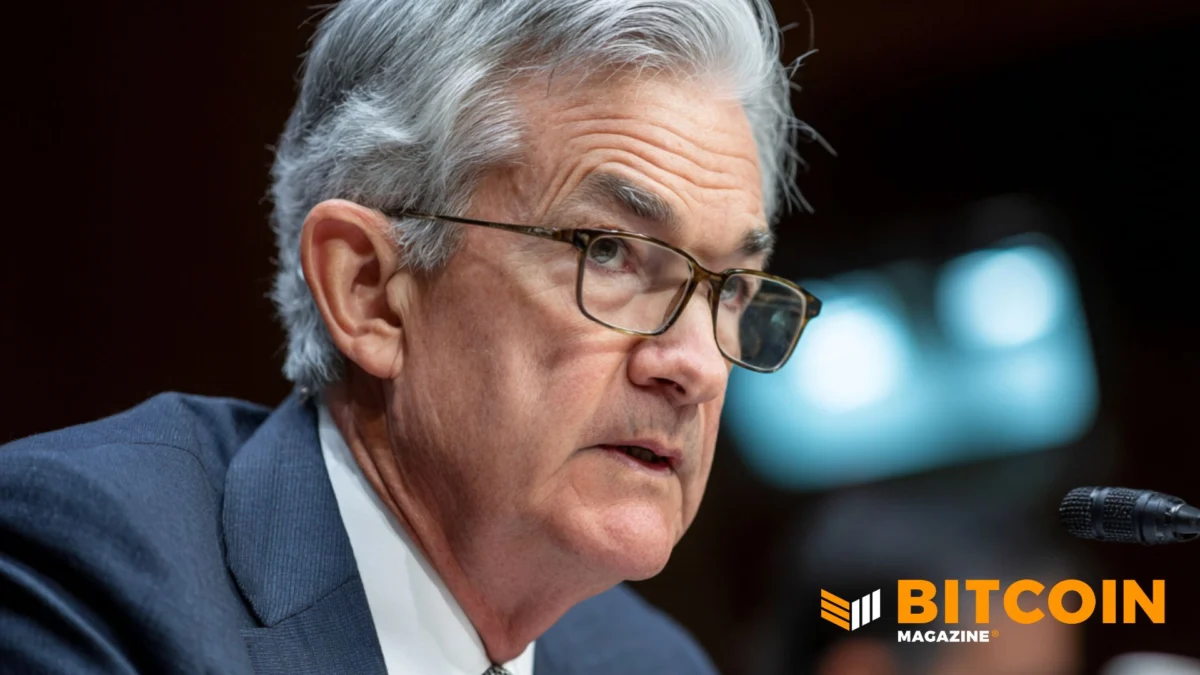
The Department of Justice has officially concluded its criminal investigation into Federal Reserve Chair Jerome Powell, a development that decisively removes a significant hurdle to the Senate confirmation of Kevin Warsh as the central bank’s next leader. This resolution carries substantial implications not only for the future direction of U.S. monetary policy but also for the volatile landscape of cryptocurrencies like Bitcoin.
The announcement of the probe’s closure came on Friday from U.S. Attorney for the District of Columbia Jeanine Pirro. The investigation, initiated in January, centered on alleged cost overruns associated with a substantial $2.5 billion renovation of the Federal Reserve’s Washington headquarters. Pirro stated that the matter would now be transferred to the Federal Reserve’s own Inspector General for further review, requesting a "comprehensive report in short order." While the criminal proceedings have been halted, Pirro did not definitively rule out the possibility of their reinstatement should new evidence warrant it.
A "Bogus" Probe and Its Political Fallout
The legal underpinnings of the DOJ’s investigation were notably weak. In March, a federal judge, James Boasberg, quashed subpoenas issued by the Department of Justice. This action followed a concession by a government prosecutor that the investigation had uncovered "essentially zero evidence" of criminal activity. Judge Boasberg characterized the justification for the probe as "thin and unsubstantiated."
Federal Reserve Chair Jerome Powell himself had previously characterized the investigation as a politically motivated attack. In January, he stated that the probe was "a consequence of the Federal Reserve setting interest rates based on our best assessment of what will serve the public, rather than following the preferences of the President." This assertion directly challenged the notion that the Fed’s independent monetary policy decisions were being unduly influenced or retaliated against.
The closure of the investigation is particularly consequential for the confirmation process of Kevin Warsh, a former Fed governor and Stanford professor who is President Trump’s nominee to lead the central bank. Senator Thom Tillis, a Republican member of the Senate Banking Committee, had publicly declared his intention to block Warsh’s confirmation until the DOJ probe was resolved. Tillis had described the investigation as "bogus," highlighting its perceived lack of merit. His opposition, coupled with unified resistance from Democratic senators, had effectively stalled Warsh’s nomination. With the investigation now formally closed, Senate leadership anticipates a swift vote in the Banking Committee followed by a floor confirmation, likely before Powell’s current term concludes on May 15.
Kevin Warsh: A Hawkish Outlook and Market Implications
Kevin Warsh, aged 56, presented his case before the Senate Banking Committee on Tuesday. During his testimony, he emphasized his commitment to "strict independence" from the White House regarding interest rate decisions. When questioned by senators, Warsh asserted, "The president never once asked me to commit to any particular interest rate decision, period." This assurance aimed to allay concerns about potential White House interference in monetary policy, a recurring theme during the Trump administration.
However, Warsh’s nomination has elicited contrasting reactions. Senator Elizabeth Warren, a prominent progressive Democrat, voiced her skepticism, referring to Warsh as a "sock puppet" for President Trump. Conversely, Republican senators largely praised Warsh’s qualifications and experience, viewing him as a suitable candidate to lead the Federal Reserve.
The potential policy stance of a Warsh-led Federal Reserve carries significant weight for the cryptocurrency market, particularly for Bitcoin. This year, Bitcoin has experienced considerable volatility, trading within a range of $70,000 to $92,000. This price action has been closely monitored by traders, who are keenly attuned to signals from the Federal Reserve regarding interest rates. Historically, lower interest rates tend to reduce the yields offered by conventional, less risky assets. This can incentivize investors to allocate capital towards higher-risk, higher-return assets, such as Bitcoin.
When the DOJ probe was initially launched in January, Bitcoin’s price surged, approaching the $92,000 mark. Analysts at the time suggested that institutional investors perceived the investigation as a potential threat to the dollar’s credibility and a possible precursor to interest rate cuts, which would be beneficial for risk assets.
Warsh’s public statements indicate a more hawkish stance on inflation compared to Chair Powell. He has previously described the Federal Reserve’s post-pandemic response to inflation as "the biggest policy error in 40 or 50 years." If Warsh assumes leadership of the Federal Reserve on May 15 and maintains a restrictive monetary policy, this could present a challenge for Bitcoin proponents who are anticipating a liquidity expansion driven by anticipated rate cuts. A prolonged period of higher interest rates could dampen enthusiasm for risk assets and potentially lead to a recalibration of market expectations.
Chronology of Events
- Early January: The Department of Justice initiates a criminal investigation into Federal Reserve Chair Jerome Powell, citing alleged cost overruns on a $2.5 billion headquarters renovation.
- January: During the initial phase of the DOJ probe, Bitcoin’s price experiences a notable surge, nearing $92,000, with market participants interpreting the investigation as a potential catalyst for policy shifts.
- March: A federal judge, James Boasberg, quashes DOJ subpoenas related to the investigation, citing a lack of evidence of criminal activity.
- April: Senator Thom Tillis vows to block Kevin Warsh’s confirmation until the DOJ investigation is closed, labeling it "bogus."
- May (Early): Kevin Warsh testifies before the Senate Banking Committee, pledging independence from the White House on monetary policy.
- Friday (Prior to Publication): The Department of Justice announces the closure of its criminal investigation into Jerome Powell, transferring the matter to the Fed’s Inspector General.
- May 15: Jerome Powell’s term as Federal Reserve Chair is set to expire, a deadline that underscores the urgency of the confirmation process for Kevin Warsh.
Broader Context and Potential Economic Ramifications
The investigation into Chair Powell, regardless of its outcome, has underscored the delicate balance between political pressures and the Federal Reserve’s mandate for independent monetary policy. The Fed’s primary objectives are to maintain price stability and maximize employment. Achieving these goals often requires decisions that may be unpopular with specific political factions or industries.
The Federal Reserve’s monetary policy decisions, particularly regarding interest rates, have a far-reaching impact on the U.S. economy and global financial markets. A higher interest rate environment generally leads to increased borrowing costs for businesses and consumers, which can slow economic growth and curb inflation. Conversely, lower interest rates can stimulate economic activity by making credit more accessible and encouraging investment.
The potential for a more hawkish stance under Kevin Warsh suggests a greater emphasis on combating inflation, even at the risk of slower economic growth. This approach could be seen as a response to the inflationary pressures that emerged in the post-pandemic era, which some economists and policymakers have argued were exacerbated by overly accommodative monetary policies.
For the financial markets, this shift could mean a more cautious approach to interest rate reductions. Traders and investors who have been anticipating a series of rate cuts to fuel asset price appreciation might need to adjust their strategies. The cryptocurrency market, often sensitive to liquidity conditions and risk appetite, could experience a period of heightened uncertainty as it digests the implications of a potentially tighter monetary policy.
The Federal Reserve’s communication and forward guidance are critical tools for managing market expectations. Should Warsh lead the central bank, his pronouncements on inflation, economic growth, and the appropriate path for interest rates will be scrutinized intensely by investors, policymakers, and the public alike. The ongoing debate surrounding the appropriate level of inflation and the trade-offs between price stability and economic growth will likely continue to shape the Federal Reserve’s policy deliberations.
The outcome of this confirmation process and the subsequent policy direction of the Federal Reserve will be closely watched as indicators of the central bank’s commitment to its dual mandate and its ability to navigate a complex economic landscape, all while maintaining its crucial independence from political influence. The resolution of the DOJ probe, therefore, is not merely a procedural step but a significant event with tangible consequences for the U.S. economy and its place in the global financial system.
