

The United States Department of Energy’s (DOE) Hydropower and Hydrokinetic Office (H2O) has officially entered the next phase of its national grid modernization strategy by selecting 14 pioneering hydropower projects to begin negotiations for technical vouchers. These vouchers, issued through the Hydropower Testing Network (HyTN), represent a significant investment in the domestic renewable energy sector, providing developers with in-kind support rather than direct capital. By facilitating access to the nation’s most advanced laboratory environments, the DOE aims to bridge the "valley of death" between technological conceptualization and commercial viability. The selected recipients are slated to collaborate with a network of 21 premier testing facilities, leveraging specialized expertise to refine, validate, and scale the next generation of hydropower solutions.
The announcement underscores the federal government’s commitment to maintaining and enhancing a resource that has served as a cornerstone of the American power grid for over a century. Nichole Fitzgerald, the Director of the Hydropower and Hydrokinetic Office, emphasized that the initiative is designed to pair private-sector industry innovators with the technical rigor of U.S. national laboratories and academic institutions. According to Fitzgerald, this synergy is essential for accelerating the development of technologies that ensure hydropower remains a reliable, abundant, and flexible component of the national energy portfolio.
The Strategic Role of Hydropower in the Modern Grid
Hydropower currently accounts for approximately 6% of the total utility-scale electricity generation in the United States and represents nearly 29% of all renewable energy generation. Despite being one of the oldest forms of power generation, its role in the 21st-century grid is evolving. Unlike intermittent sources such as wind and solar, hydropower provides essential baseload power and critical grid services, including black-start capabilities, frequency regulation, and spinning reserves.
The DOE’s push for modernization is driven by the dual necessity of meeting rising energy demands and achieving national decarbonization goals. As the nation transitions toward a carbon-free electricity sector by 2035, the existing hydropower fleet—much of which was constructed decades ago—requires significant technological upgrades. The 14 projects selected in this second cohort of the HyTN program are expected to address these needs by focusing on efficiency improvements, environmental mitigation strategies, and the integration of digital monitoring systems to extend the lifespan of aging infrastructure.
Chronology and Framework of the Hydropower Testing Network
The Hydropower Testing Network was established as a multi-phase initiative to streamline the pathway from the laboratory to the marketplace. The program’s structure reflects a systematic approach to infrastructure development and public-private partnership.
- Phase I: Facility Identification (June 2024): The Water Power Technologies Office (WPTO) launched the inaugural phase of HyTN by identifying and vetting the nation’s top testing facilities. This phase resulted in a network of 21 institutions, including national laboratories like Oak Ridge National Laboratory (ORNL) and Pacific Northwest National Laboratory (PNNL), as well as specialized university research centers.
- Phase II: First Round Selections (Early 2025): In the first quarter of 2025, the DOE announced the first 12 technology developers to receive support. This initial cohort set the precedent for the voucher system, focusing on diverse technologies ranging from small-scale hydro to advanced turbine designs.
- Phase III: Second Round Selections and Implementation (Current): The current selection of 14 projects marks the expansion of the program. These developers are now entering the negotiation phase to define the scope of work with their matched testing facilities.
The program is managed by ENERGYWERX in partnership with the DOE. This collaboration is made possible through a partnership intermediary agreement established by the DOE’s Office of Technology Commercialization. This administrative structure allows for greater flexibility and speed in connecting small businesses and independent innovators with federal resources.
Technical Capabilities and the Voucher Model
The HyTN voucher system is a departure from traditional grant-based funding. Instead of receiving cash, developers are granted access to more than 65 specialized physical testing and modeling capabilities. This model ensures that federal resources are utilized efficiently, as the "funding" goes directly toward the operation of world-class facilities and the time of leading scientists.
The capabilities available through the 21 testing facilities are categorized into several critical domains:
- Hydraulic Testing: Evaluation of turbine efficiency, flow dynamics, and pressure tolerances using advanced flumes and water tunnels.
- Biological Testing: Assessing the environmental impact of hydropower equipment, specifically focusing on fish passage and aquatic habitat preservation. This is a vital area of research for projects seeking federal relicensing.
- Techno-Economic Analysis: Utilizing complex modeling to determine the long-term financial viability and grid-integration potential of new technologies.
- Materials Science: Testing new alloys and coatings that can resist cavitation and corrosion, thereby reducing maintenance costs and downtime.
By matching the 14 selected developers with these specific capabilities, the DOE ensures that each project receives the exact type of technical validation required to move to the next stage of investment or deployment.

Industry Reactions and the Kingsbury Visit
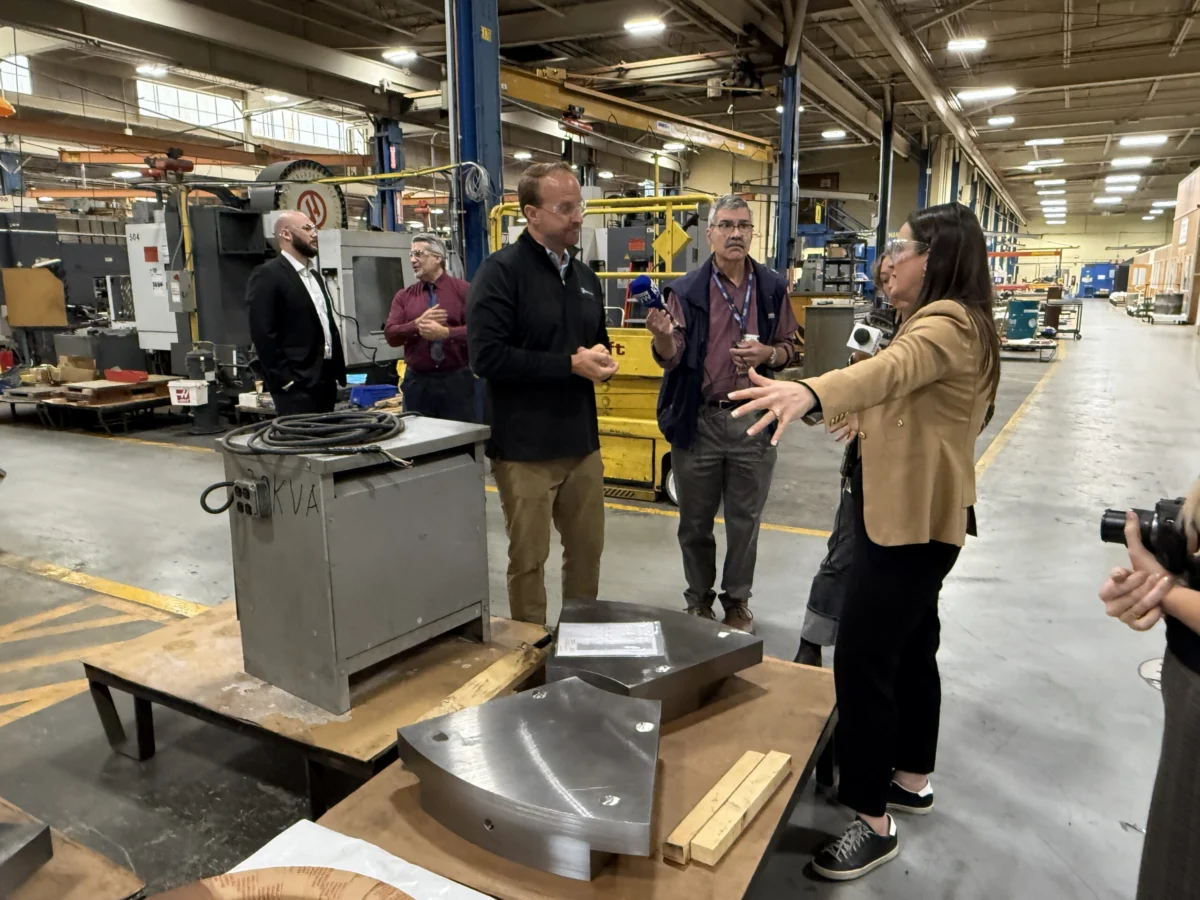
The significance of this program was recently highlighted during a high-level visit to the Kingsbury facility, a leader in the manufacturing of thrust and journal bearings used in hydroelectric turbines. Assistant Secretary of Energy Audrey Robertson visited the site to observe the practical application of DOE-supported research.
Mike Brawley, President and CEO of Kingsbury, noted that the company’s technology has supported hydropower generation across North America for more than a century. Brawley emphasized that the ongoing collaboration with Oak Ridge National Laboratory and the Department of Energy is vital for improving the reliability and longevity of critical hydropower equipment. His sentiments reflect a broader industry consensus: that federal support for research and development is the primary catalyst for maintaining the competitiveness of the U.S. hydropower sector.
The visit also served as a backdrop for the announcement of the 14 new selections, illustrating the "full-circle" nature of the program—where theoretical research conducted at national labs eventually finds its way into the manufacturing floors of American companies.
Looking Back: The Impact of the First Cohort
The success of the HyTN program is built on the foundations laid by the 12 technology developers selected in the first round in early 2025. Those projects addressed a wide array of challenges, from optimizing low-head hydropower for irrigation canals to developing modular turbine units that can be deployed with minimal environmental disruption.
The transition from the first round to the second round indicates a maturing ecosystem. While the first round focused heavily on establishing the feasibility of the voucher model, the second round involves a larger group of participants and a more refined matching process. The DOE has used data from the initial 12 projects to optimize how developers are paired with facilities, ensuring that the specialized needs of modern hydro-kinetic technologies—such as river current turbines—are met with the appropriate sensor arrays and simulation software.
Broader Implications for Energy Security and Prices
Beyond the immediate technical benefits, the modernization of hydropower has significant economic implications. The DOE argues that by implementing new technologies, the nation can drive down energy prices for consumers. Modern turbines and digital controls allow plants to operate more efficiently, producing more power from the same volume of water. Furthermore, by increasing the reliability of these plants, the risk of costly emergency repairs and grid instability is mitigated.
From a policy perspective, the HyTN program is a key component of the Bipartisan Infrastructure Law and the Inflation Reduction Act’s broader goals. These legislative frameworks prioritize domestic supply chains and the revitalization of American manufacturing. By supporting U.S.-based developers and testing facilities, the DOE is ensuring that the intellectual property and manufacturing capabilities for the future of hydropower remain within the United States.
The focus on "next-generation technologies" also prepares the U.S. for a future where hydropower must coexist with a high penetration of variable renewables. As wind and solar capacity grows, the ability of hydropower plants to ramp up and down quickly becomes even more valuable. The research supported by these vouchers will likely include advancements in "pumped storage" and "flexible operation" technologies, which are essential for maintaining a stable grid frequency.
Conclusion and Future Outlook
The selection of the 14 projects for the second round of the Hydropower Testing Network marks a pivotal moment in the DOE’s effort to future-proof the American energy sector. By removing the technical and financial barriers to high-level testing, the H2O office is fostering an environment where innovation can thrive.
As negotiations proceed, the focus will shift to the empirical results generated at the 21 testing facilities. The data collected will not only benefit the individual developers but will also contribute to a growing body of national knowledge regarding water power. With the 14 new projects joining the 12 from the previous year, the HyTN program is rapidly becoming the primary engine for technological advancement in the hydropower industry, ensuring that this legacy resource remains a vital part of the nation’s clean energy future.
