

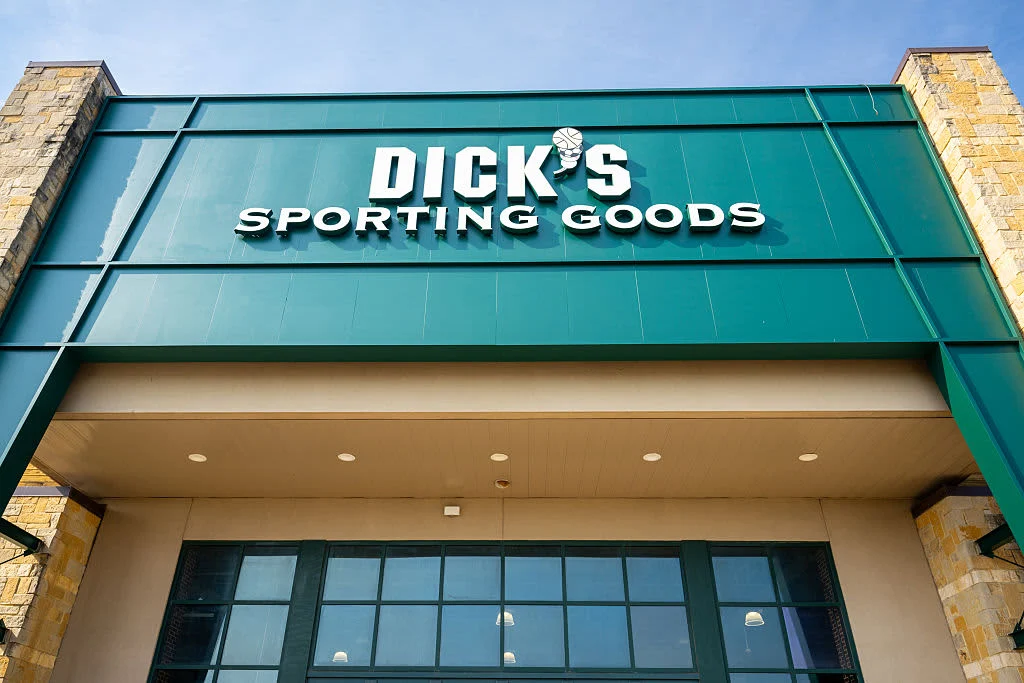
Dick’s Sporting Goods faced a significant setback in its second fiscal quarter, reporting financial results that fell short of Wall Street’s expectations and prompting a downward revision of its full-year outlook. The disappointing performance, primarily attributed to a "challenging athletic footwear and apparel marketplace" and particularly the underperformance of its acquired Foot Locker business, sent the company’s stock tumbling by approximately 15% in premarket trading on Tuesday. This downturn signals growing investor concern regarding the strategic integration and profitability prospects of the Foot Locker acquisition amidst broader market headwinds.
Q2 Financial Performance: A Mixed Picture
For the second fiscal quarter ended August 1, 2026, Dick’s Sporting Goods reported net income of $315 million, translating to $3.50 per diluted share. This figure represents a notable decline from the $381 million, or $4.71 per share, reported in the same period a year prior. When adjusted for one-time items, including costs associated with its Foot Locker acquisition, the company reported adjusted earnings of $3.53 per share. This adjusted figure still landed below the consensus estimate from analysts surveyed by LSEG (formerly Refinitiv), which had anticipated higher earnings.
Despite the earnings miss, sales for the quarter showed growth, rising to $5.59 billion from $3.65 billion in the year-ago period. However, this revenue figure also failed to meet the more optimistic projections from Wall Street. The sales increase was largely driven by the inclusion of Foot Locker in the consolidated results and robust performance from Dick’s core retail segment.
Core Business Resilience vs. Acquisition Headwinds
A deeper dive into the company’s comparable sales figures reveals a bifurcated performance between its legacy Dick’s Sporting Goods stores and the newly acquired Foot Locker business. Dick’s core stores demonstrated resilience, achieving a commendable 4.9% comparable sales growth for the quarter. This growth was characterized by "broad-based growth" across various product categories, with particularly strong results attributed to the excitement and sales surge surrounding the World Cup. This performance underscores the enduring strength and market position of Dick’s primary brand, which continues to resonate with consumers seeking sporting goods and active lifestyle products.
In stark contrast, the Foot Locker segment experienced a significant decline, with comparable sales falling by 3.6%. This underperformance was the primary catalyst for the company’s revised outlook and the overall negative market reaction. The disparity highlights the substantial integration challenges and market pressures facing the Foot Locker brand, even as the broader athletic footwear and apparel market sees considerable activity.
Revised Outlook: A More Cautious Path Forward
In light of the Q2 results, Dick’s Sporting Goods has adjusted its financial guidance for the remainder of the fiscal year. The company now expects the Foot Locker business to perform in a range from flat to down 2% in terms of comparable sales, a more conservative projection than previous estimates. While the core Dick’s business is still projected to achieve growth between 2.5% and 4%, the drag from Foot Locker has necessitated a lowering of the consolidated outlook.
The company’s overall net sales outlook for the year has been revised downward from a previous range of between $22.1 billion and $22.4 billion to a new range of between $21.9 billion and $22.2 billion. Similarly, the consolidated operating income outlook has been reduced significantly, moving from a previous range of between $1.69 billion and $1.81 billion to a new range of $1.45 billion to $1.55 billion. These revisions signal a more cautious stance from management regarding the immediate future and reflect the headwinds encountered in the athletic retail space, particularly concerning the Foot Locker integration.
The Foot Locker Acquisition: A Timeline and Strategic Rationale
The acquisition of Foot Locker by Dick’s Sporting Goods for $2.4 billion in 2025 was a pivotal strategic move designed to significantly expand Dick’s market footprint and diversify its offerings. At the time of the announcement, Dick’s articulated several key strategic imperatives behind the deal. These included a desire to enhance its international presence, leveraging Foot Locker’s established global network, and to better position itself against a rapidly evolving competitive landscape dominated by both traditional rivals and direct-to-consumer strategies from major brands like Nike and Adidas. The acquisition was also seen as an opportunity to tap into new customer segments and capitalize on the booming sportswear market.
However, the path to synergy realization has proven to be more arduous than initially anticipated. Foot Locker has historically faced its own set of challenges, including intense competition, shifts in consumer purchasing habits towards online channels, and a diminishing exclusivity with key footwear brands. Even prior to the acquisition, Foot Locker’s performance had occasionally weighed on its own financial health, making it a turnaround project for Dick’s from the outset.
The integration efforts have focused on refining Foot Locker’s strategy, aiming to revitalize its brand appeal and operational efficiency. This includes optimizing product assortments, enhancing the in-store customer experience, and strengthening its digital capabilities. The goal is to return Foot Locker to a path of sustainable growth, especially at a time when the broader sportswear and athletic leisure market continues to exhibit strong consumer interest.
Management’s Perspective and Investor Sentiment
In her statement accompanying the earnings report, CEO Lauren Hobart acknowledged the current challenges while attempting to reassure investors about the company’s long-term vision. "While we are taking a more cautious view of the balance of the year, we remain highly confident in the strength of the DICK’S Business and our long-term opportunity at Foot Locker," Hobart stated. This sentiment reflects a delicate balance: acknowledging immediate difficulties, particularly with Foot Locker, while emphasizing the underlying strength of the core Dick’s brand and the perceived long-term value of the acquisition.
The market’s immediate reaction, with the stock plummeting, indicates that investors are placing greater weight on the short-to-medium term challenges, especially the revised guidance. The significant cut to operating income outlook suggests that the costs and difficulties associated with the Foot Locker turnaround are more substantial than previously modeled. Investor confidence hinges not just on past performance but critically on future projections and management’s ability to execute strategic plans. The current revisions suggest a bumpier road ahead for the integrated entity.
Interestingly, the company also reported receiving $59 million in tariff refunds during the quarter, along with $2.1 million in related interest income. While a positive contribution, this amount was clearly insufficient to offset the broader financial headwinds and the negative impact of Foot Locker’s performance on the overall outlook.
Broader Implications for the Retail and Athletic Wear Sector
Dick’s Sporting Goods’ recent performance and revised outlook offer a critical snapshot of the broader dynamics at play within the retail and athletic wear sectors. The challenges faced by Foot Locker are not entirely unique; the entire industry is navigating a complex landscape characterized by:
- Direct-to-Consumer (DTC) Shift: Major athletic brands like Nike and Adidas have increasingly prioritized their own direct sales channels, reducing reliance on third-party retailers. This trend can lead to reduced product exclusivity for retailers like Foot Locker and Dick’s, impacting their ability to draw customers with unique offerings.
- E-commerce Dominance: The accelerated shift to online shopping, further propelled by global events, demands significant investment in digital infrastructure, supply chain optimization, and seamless omnichannel experiences. Retailers that lag in this area risk losing market share.
- Competitive Intensity: Beyond traditional brick-and-mortar rivals, the athletic wear market faces competition from fast-fashion retailers, specialized online stores, and even luxury brands entering the athleisure space.
- Consumer Spending Volatility: Economic uncertainties, inflation, and changing discretionary spending habits can impact sales of non-essential items like high-end athletic footwear and apparel. While sporting goods can be resilient, discretionary fashion components are more sensitive.
- Supply Chain Complexities: Global supply chain disruptions, manufacturing delays, and increased shipping costs continue to pose challenges for inventory management and profitability across the retail spectrum.
Dick’s Sporting Goods, by acquiring Foot Locker, aimed to create a more formidable presence in this challenging environment. The strategy was to leverage Foot Locker’s urban locations and sneaker culture appeal alongside Dick’s broader sporting goods offerings. However, the current results suggest that realizing these synergies and overcoming the inherent difficulties of the Foot Locker business requires more time and resources, and perhaps a re-evaluation of specific turnaround tactics.
Looking Ahead: Strategic Priorities and Future Outlook
The path forward for Dick’s Sporting Goods will involve a meticulous focus on several key strategic priorities. Foremost among these will be the accelerated and effective execution of the Foot Locker turnaround plan. This likely includes:
- Brand Reinvigoration: Investing in marketing and merchandising strategies to enhance Foot Locker’s brand image and appeal to its target demographic, potentially through collaborations and exclusive product drops.
- Operational Efficiency: Streamlining Foot Locker’s supply chain, inventory management, and store operations to improve profitability.
- Digital Transformation: Further integrating Foot Locker’s online presence with its physical stores to create a cohesive omnichannel shopping experience that meets modern consumer expectations.
- Vendor Relationships: Navigating complex relationships with key athletic footwear brands to ensure a compelling and differentiated product assortment.
Simultaneously, Dick’s will need to continue nurturing the strong performance of its core business. This involves maintaining its broad appeal, investing in its popular private label brands, and optimizing its store formats, including smaller concept stores or experiential retail initiatives.
Analysts will be closely watching Dick’s future earnings reports for signs of stabilization and improvement at Foot Locker. The company’s ability to demonstrate tangible progress in integrating the acquisition and returning it to growth will be crucial for rebuilding investor confidence and validating its long-term strategic vision. The current quarter serves as a stark reminder that even well-intentioned strategic acquisitions in dynamic markets can present significant, unforeseen challenges requiring sustained effort and adaptability.
