

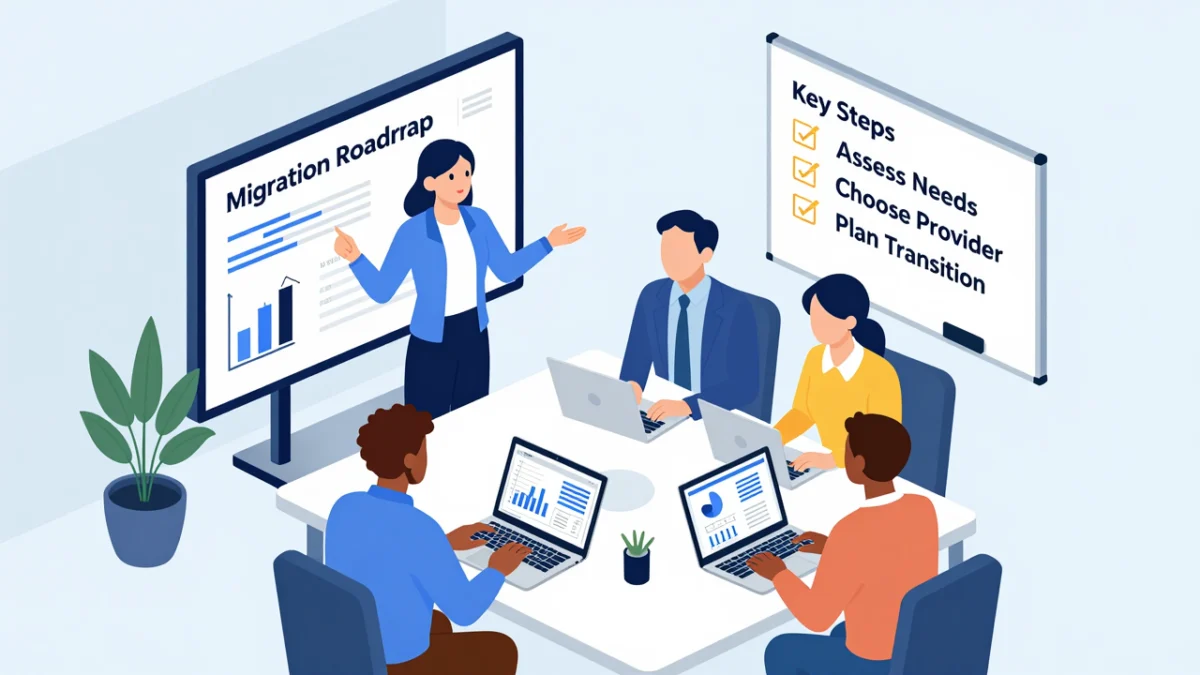
The global landscape of corporate information technology is undergoing a fundamental shift as organizations transition from traditional on-premise data centers to cloud-based environments. This migration, once viewed as a luxury for tech-forward startups, has become a strategic necessity for established enterprises seeking to maintain competitiveness in an increasingly digital economy. As of 2024, industry analysts report that over 90% of enterprises have adopted some form of cloud computing, driven by the need for greater agility, enhanced security, and long-term cost efficiencies. However, the success of these transitions depends entirely on the rigor of the underlying cloud migration strategy and the precision of its execution.
The Strategic Landscape of Cloud Migration
Cloud migration is the process of moving digital assets—including data, workloads, IT resources, and applications—into a cloud infrastructure. This transition is rarely a uniform "all-at-once" event; rather, it is a complex, multi-phased journey that requires a deep understanding of current IT health and future business objectives. According to Gartner, the worldwide end-user spending on public cloud services is projected to grow 20.4% in 2024, totaling nearly $679 billion. This surge in investment underscores the critical importance of selecting the correct migration path.

Industry leaders emphasize that migration is not merely a technical shift but a business transformation. Organizations must decide whether to move applications as they are, modify them to take advantage of cloud-native features, or replace them entirely with Software-as-a-Service (SaaS) solutions. The choice of strategy dictates the speed of the migration, the initial cost, and the eventual return on investment (ROI).
The 6 Rs: A Framework for Migration Strategies
To categorize the various approaches to cloud transition, the industry has widely adopted the "6 Rs" framework. This taxonomy allows IT leaders to evaluate each application in their portfolio and assign it the most appropriate migration path.

1. Rehosting (Lift and Shift)
Rehosting involves moving applications to the cloud without making any changes to the code or architecture. This is often the fastest way to migrate, making it ideal for organizations that need to exit a data center quickly. While it offers immediate migration, it does not leverage cloud-native features like auto-scaling, which may limit long-term cost efficiency.
2. Replatforming (Lift and Reshape)
Replatforming sits between rehosting and refactoring. It involves making minor adjustments to the application to take advantage of the cloud environment without changing its core architecture. For example, a company might move a legacy database to a managed database service like Amazon RDS to reduce administrative overhead while keeping the application code intact.

3. Refactoring (Re-architecting)
This is the most intensive but often the most rewarding strategy. Refactoring involves rewriting parts of the application to become "cloud-native." This allows the application to utilize advanced features such as microservices, serverless computing, and dynamic scaling. While the upfront cost and time are higher, the long-term agility and performance gains are significant.
4. Repurchasing (Drop and Shop)
In many cases, it is more efficient to abandon a legacy internal system in favor of a commercially available SaaS platform. Moving from an on-premise email server to Microsoft 365 or from a custom CRM to Salesforce are classic examples of repurchasing.

5. Retiring
A thorough audit often reveals that a significant portion of an enterprise’s application portfolio is no longer useful. Retiring these applications reduces the attack surface for cyber threats and cuts unnecessary maintenance costs.
6. Retaining
Certain applications may not be ready for the cloud due to compliance requirements, high latency needs, or technical dependencies. In these cases, organizations choose to keep the application in its current environment, revisit it in the future.

A Chronological Roadmap to Successful Transition
A successful migration follows a disciplined timeline, beginning with discovery and ending with continuous optimization.
Phase 1: Discovery and Assessment (Months 1-2)
The process begins with a comprehensive inventory of all IT assets. Organizations must identify every server, database, and application, as well as the complex web of interdependencies between them. Failure to map these dependencies often leads to "broken" applications post-migration.

Phase 2: Strategy and Planning (Months 2-3)
During this phase, stakeholders define Key Performance Indicators (KPIs). These metrics might include target uptime, expected reduction in latency, or a specific percentage reduction in operational costs. This is also when the specific "R" strategy is assigned to each application.
Phase 3: The Migration Execution (Months 3-12+)
Execution often begins with a "pilot" or "low-risk" migration to test the migration tools and team readiness. Once validated, the organization moves into a phased migration of more critical workloads. Technical teams use automation tools to move data and redirect traffic to the new cloud environment.

Phase 4: Post-Migration Optimization (Ongoing)
Migration does not end when the data reaches the cloud. Organizations must continuously monitor performance and costs. Cloud environments offer "right-sizing" opportunities where resources can be adjusted based on actual usage, preventing the "sticker shock" of unoptimized cloud bills.
Quantifying the Economic Impact and Benefits
The financial rationale for cloud migration is increasingly supported by hard data. Organizations typically report a 30% to 50% reduction in IT infrastructure costs over a five-year period. This is largely due to the shift from Capital Expenditure (CapEx)—buying and maintaining physical servers—to Operational Expenditure (OpEx), where companies pay only for the computing power they consume.

Beyond direct cost savings, the cloud provides a platform for revenue growth. Research suggests that companies that successfully migrate to the cloud can see a 15% increase in revenue growth potential due to faster time-to-market for new products. Furthermore, the ability to scale resources instantly allows businesses to handle seasonal spikes in traffic—such as Black Friday for retailers—without investing in permanent hardware that sits idle for the rest of the year.
Collaboration is another significant beneficiary. Cloud-native tools allow global teams to access the same data sets and applications in real-time. Studies have indicated that project turnaround times can be reduced by up to 30% when teams utilize cloud-based collaborative environments like Google Workspace or Microsoft Azure DevOps.

Addressing Systemic Challenges and Risks
Despite the benefits, the path to the cloud is fraught with challenges. One of the most significant hurdles is the "skills gap." Many IT departments are staffed by professionals trained in traditional hardware management who may lack experience in cloud architecture and security. Addressing this requires a robust investment in team training and, in some cases, the hiring of external cloud consultants.
Security remains a primary concern for executive leadership. The "Shared Responsibility Model" used by major providers like AWS, Microsoft Azure, and Google Cloud Platform (GCP) dictates that while the provider secures the "cloud," the customer is responsible for securing their data "in" the cloud. Misconfigurations—such as leaving a storage bucket open to the public—are the leading cause of data breaches in cloud environments.

Data compliance also adds a layer of complexity. For organizations in highly regulated sectors like healthcare (HIPAA) or finance (PCI-DSS), or those operating within the European Union (GDPR), ensuring that data residency and sovereignty laws are respected is paramount. This often leads to the adoption of "hybrid cloud" models, where sensitive data remains on-premise while less critical applications move to the public cloud.
Industry Perspectives and Stakeholder Reactions
The reaction from the C-suite regarding cloud migration has evolved from skepticism to enthusiastic adoption. Chief Financial Officers (CFOs) appreciate the transparency of cloud billing, which allows for more accurate departmental cost-tracking. Chief Information Officers (CIOs) view the cloud as a way to offload "undifferentiated heavy lifting"—like server patching and hardware cooling—allowing their teams to focus on innovation that directly impacts the customer experience.

Industry analysts point out that the most successful migrations are those that involve stakeholders from across the business, not just the IT department. When HR, Finance, and Marketing departments are involved in the planning phase, the resulting cloud environment is better aligned with the actual needs of the workforce.
The Broader Impact and Future Outlook
The implications of the mass migration to the cloud extend beyond corporate balance sheets. From a sustainability perspective, cloud providers operate their data centers far more efficiently than individual companies can. By moving to the cloud, many organizations are effectively lowering their carbon footprint, contributing to corporate environmental, social, and governance (ESG) goals.

Looking forward, the cloud is becoming the foundational layer for Artificial Intelligence (AI) and Machine Learning (ML). These technologies require massive amounts of data and computational power that are only feasible within cloud environments. As businesses move into the era of generative AI, having a robust cloud infrastructure will be the prerequisite for any organization hoping to leverage these transformative technologies.
In conclusion, cloud migration is a high-stakes endeavor that requires a balance of technical precision and strategic vision. By evaluating existing infrastructure, choosing the appropriate "6 Rs" strategy, and maintaining a focus on post-migration optimization, businesses can navigate the complexities of the digital transition. While the challenges of security, cost management, and cultural shifts are real, the rewards—unprecedented scalability, improved collaboration, and long-term resilience—make it the most significant IT undertaking of the modern era. As the technology continues to evolve, those who have successfully transitioned to the cloud will find themselves best positioned to lead in an increasingly unpredictable global market.
