

The United States Senate is currently deliberating a monumental shift in energy policy through the Bipartisan American Affordability and Jobs Act of 2026 (BAAJA), a 417-page legislative package designed to overhaul the nation’s aging permitting framework. While much of the public discourse surrounding the bill has focused on its implications for high-voltage transmission lines and the burgeoning data center industry, the legislation represents a historic turning point for hydropower—the nation’s oldest source of renewable utility-scale electricity. By addressing decades of regulatory friction, BAAJA seeks to unlock the latent potential of water-based energy while simultaneously accelerating the deployment of solar and storage technologies across the American landscape.
As the energy transition intensifies, the National Hydropower Association (NHA) has emerged as a vocal proponent of the bill, characterizing it as the most significant reform to hydropower licensing in a generation. The core of the industry’s support stems from a desire to mitigate the "unpredictable" nature of current federal requirements, which many developers argue have led to ballooning costs and prohibitive litigation risks. For a sector that provides essential baseload power and critical grid services, the efficiency gains promised by BAAJA could determine the viability of both existing facilities and future marine energy innovations.
The Regulatory Bottleneck: A Historical Context
To understand the urgency of BAAJA, one must look at the historical evolution of federal energy regulation. For nearly a century, the Federal Power Act has governed the licensing of non-federal hydroelectric projects. However, as environmental standards evolved through the late 20th century, particularly with the passage of the Clean Water Act in 1972, the licensing process became a complex web of overlapping jurisdictions. Today, relicensing a major dam can take upwards of a decade and cost tens of millions of dollars in administrative and legal fees.
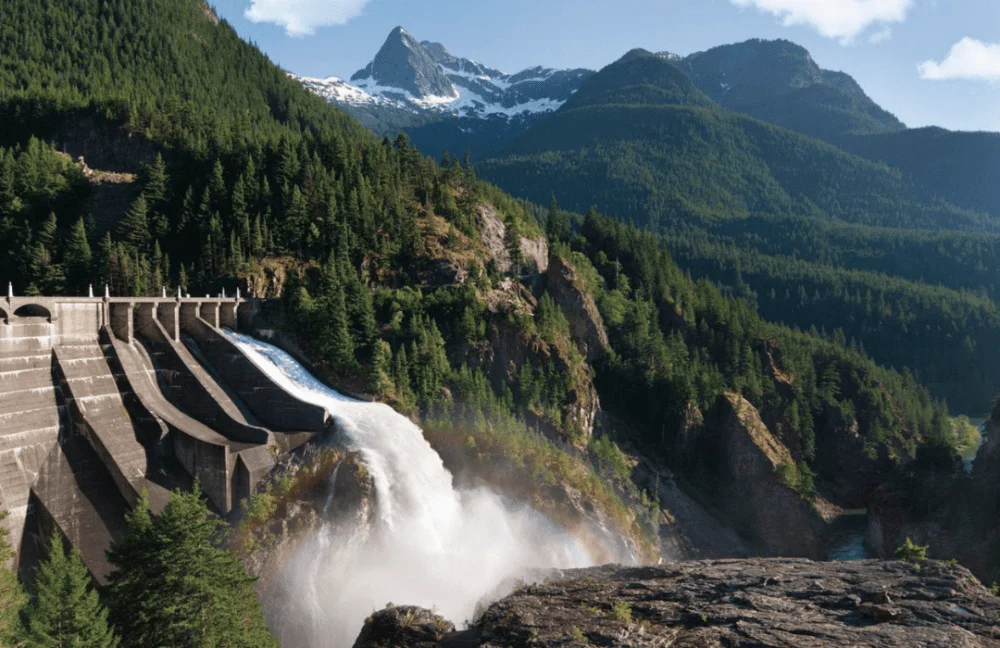
The Skagit River Hydroelectric Project in Washington state, operated by Seattle City Light, serves as a contemporary example of the complexities involved in modernizing legacy assets. Projects of this scale must balance energy production with salmon conservation, tribal treaty rights, and recreational land use. Industry advocates argue that while these considerations are vital, the current "one-size-fits-all" environmental review process often triggers redundant studies for even minor mechanical upgrades. BAAJA intends to rectify this by creating a tiered system of oversight that distinguishes between major structural changes and routine maintenance.
Reforming Section 4(e) and the Clean Water Act
One of the most consequential provisions within BAAJA targets Section 4(e) of the Federal Power Act. Currently, federal resource agencies have the authority to impose "mandatory conditions" on a hydropower license to protect federal reservations, such as national forests. Under the new legislation, these conditions must be "reasonably related" to the project’s actual impacts. This subtle change in phrasing is designed to prevent agencies from using the licensing process to force project owners to fund environmental mitigation efforts that are geographically or ecologically disconnected from the facility’s footprint.
Furthermore, BAAJA seeks to rein in the perceived "overreach" of state-level Section 401 certifications under the Clean Water Act. In recent years, the NHA and other industry groups have documented instances where states utilized Section 401 to deny permits or impose conditions based on factors entirely unrelated to water quality, such as public access or aesthetic preferences. The proposed reform would tie these certifications strictly to applicable water quality requirements and require regulators to provide "clearer" explanations for denials. By encouraging the "least burdensome" path to compliance, the bill aims to restore a sense of parity between federal energy goals and state environmental oversight.
Streamlining Maintenance and Emerging Marine Technologies
Beyond large-scale dams, BAAJA introduces a streamlined pathway for the "invisible" work that keeps the grid stable. The bill would allow for the maintenance, repair, and "non-substantial" alteration of existing facilities to proceed without automatically triggering a full-scale environmental impact statement. This is particularly relevant as the U.S. hydropower fleet ages; many turbines and control systems installed in the mid-20th century are reaching the end of their operational life and require modernizing to improve efficiency and fish-passage safety.
The legislation also looks toward the future of the "Blue Economy" by carving out a new licensing pathway for small-scale marine energy devices. Specifically, projects with a capacity of less than 5 megawatts—which includes experimental wave energy converters and tidal turbines—would benefit from an expedited review process. This move is seen as essential for the U.S. to maintain its competitive edge in marine renewable research, a field currently seeing rapid advancement in Europe and East Asia.
Supporting Data: The Economic and Environmental Stakes
The push for BAAJA is backed by a coalition of over 300 solar and storage companies, led by the Solar Energy Industries Association (SEIA). According to a new analysis released by SEIA, the stakes for the broader energy sector are immense. The analysis suggests that BAAJA could unlock an additional 167 gigawatts (GW) of solar capacity between 2028 and 2035. To put this in perspective, solar and storage have already accounted for 70% of all new electricity capacity added to the U.S. grid in the first half of 2026.
The economic implications of permitting delays are equally staggering. SEIA reports that approximately $120 billion in clean energy investment is currently stalled in various stages of the federal permitting process. By clearing these bottlenecks, BAAJA is projected to:
- Increase solar’s share of U.S. electricity generation to over 18% by 2035.
- Reduce cumulative power sector carbon dioxide (CO2) emissions by approximately 20%.
- Avoid an estimated $54 billion in public health damages by reducing reliance on fossil fuel combustion.
Tim Pawlenty, CEO of SEIA and former Governor of Minnesota, emphasized the connection between infrastructure and affordability. "You can’t lower energy costs if you can’t build the energy projects," Pawlenty stated. "These companies know that this bipartisan legislation will help get America building again."
FERC’s Role and the Value of Grid Services
A critical component of BAAJA is a mandated study by the Federal Energy Regulatory Commission (FERC) regarding market barriers. The bill requires FERC to author a comprehensive report detailing the specific value hydropower provides to the modern grid. Unlike intermittent wind and solar, hydropower offers a suite of "ancillary services" that are becoming increasingly valuable as coal and nuclear plants retire.
These services include:
- Long-Duration Energy Storage: Through pumped-storage hydro, which acts as a massive "water battery."
- Frequency Response: The ability to instantly adjust power output to maintain grid stability.
- Black Start Capabilities: The rare ability to restart the electrical grid after a total blackout without relying on an external power source.
By formalizing the economic value of these services, BAAJA could pave the way for new market structures that fairly compensate hydropower operators for the reliability they provide to the national bulk power system.
Political Outlook and Bipartisan Hurdles
Despite the broad support from industry trade groups and a diverse coalition of energy companies, the path to enactment for BAAJA remains complex. The bill has garnered significant bipartisan momentum in the Senate, where proponents argue that energy security and economic competitiveness are non-partisan issues. However, the legislation must still navigate the House of Representatives, where ideological divisions over the National Environmental Policy Act (NEPA) and state-versus-federal rights continue to stall comprehensive reform.
Critics of the bill, primarily from environmental advocacy groups, express concern that streamlining reviews could lead to "corner-cutting" that harms local ecosystems. They argue that the existing rigorous standards are necessary to protect endangered species and water rights. Conversely, BAAJA’s sponsors maintain that the bill does not roll back environmental protections but rather removes the "bureaucratic circularity" that causes projects to languish in administrative limbo for years.
Implications for the American Energy Landscape
If passed, BAAJA would represent a fundamental shift in how the United States approaches its energy infrastructure. For the hydropower industry, it offers a lifeline to modernize and expand at a time when the grid is under unprecedented pressure from the rise of artificial intelligence, electric vehicle adoption, and industrial electrification.
The timeline for the bill’s implementation will be critical. With the 2026 mid-term elections approaching, legislative windows are narrowing. However, the sheer volume of capital waiting on the sidelines—$120 billion—provides a powerful incentive for lawmakers to find common ground. The success of BAAJA would likely signal a new era of "permit-to-build" philosophy in Washington, where the speed of deployment is treated with the same urgency as the rigor of environmental protection.
As the Senate continues its mark-up of the Bipartisan American Affordability and Jobs Act, the energy sector remains in a state of watchful anticipation. Whether it is the refurbishment of a massive dam on the Skagit River or the deployment of a new wave-energy array off the coast of Oregon, the future of American renewables is increasingly tied to the legislative mechanics of permitting reform. The outcome of this debate will resonate through the U.S. economy and environment for decades to come, defining the country’s ability to meet its climate goals while ensuring a reliable and affordable power supply.
