

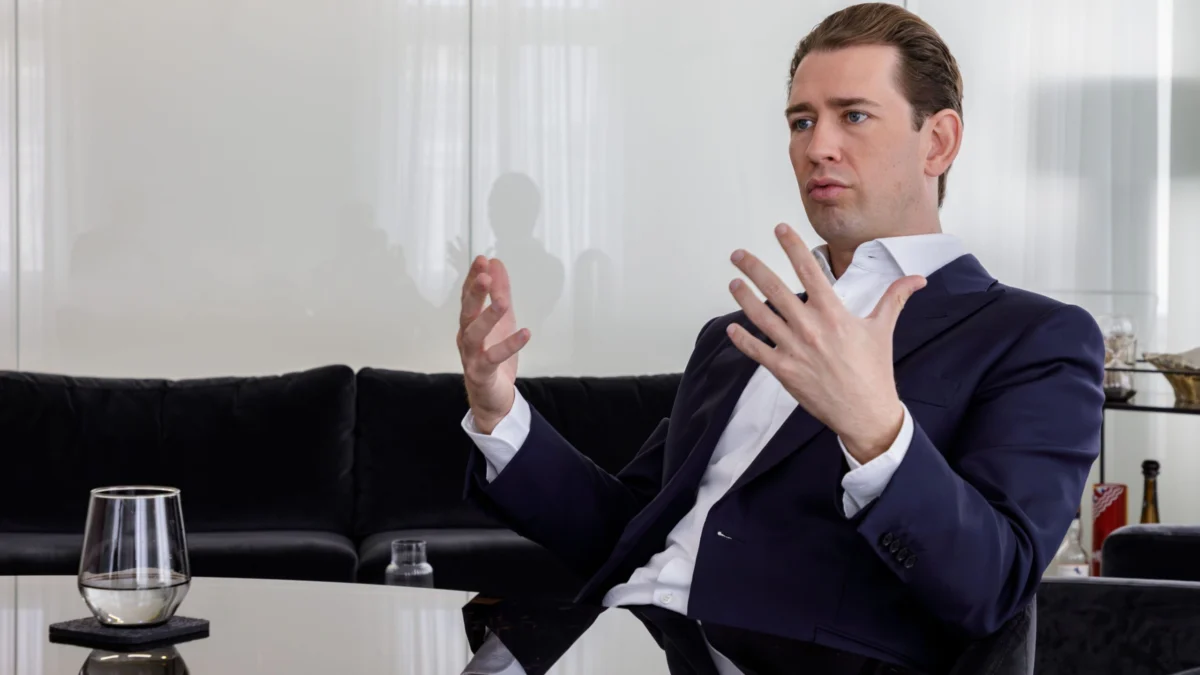
Sebastian Kurz, the former Chancellor of Austria and a prominent figure within the European People’s Party (EPP) bloc, has broken his silence on the current political climate in Europe, particularly focusing on the challenges facing Germany’s Christian Democratic Union (CDU) and the broader implications of artificial intelligence. In a recent interview, Kurz, who led the Austrian People’s Party (ÖVP) to electoral victories and served as Chancellor from 2017 to 2021, offered his perspective on political strategy, the rise of populist movements, and the transformative power of AI.
Navigating Political Tides: Lessons from Austria to Germany
Kurz, known for his pragmatic and often centrist approach, drew a stark contrast between Austria’s past political stability and the current turbulence in Germany. He attributed Germany’s current political unease to a combination of external factors, such as the war in Ukraine and shifting geopolitical alliances, but emphasized that a significant portion of these challenges are "homegrown."
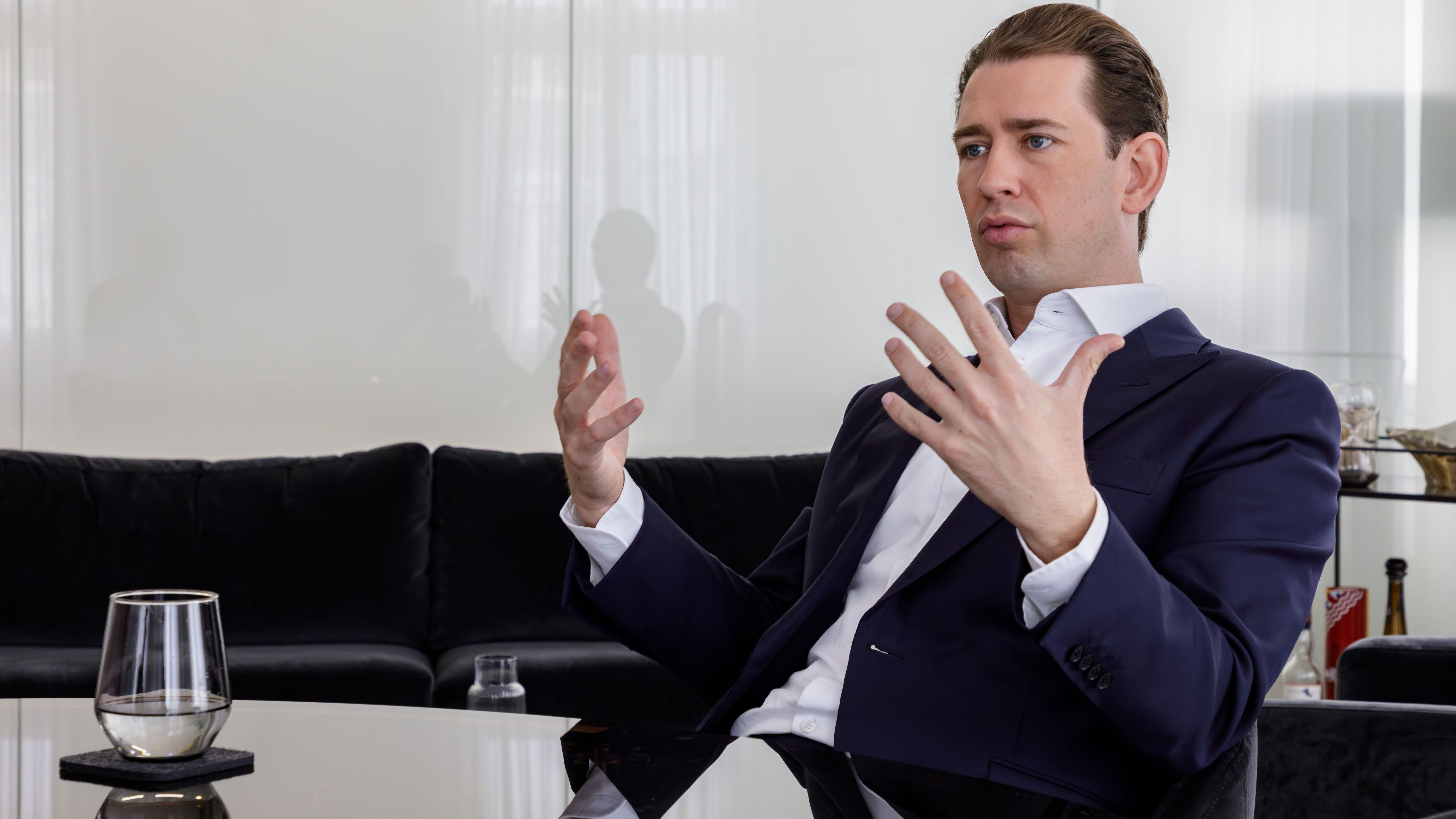
"Germany was the anchor of stability in Europe for decades," Kurz stated, highlighting a period of relative predictability in European affairs. He pointed to what he perceives as a flawed economic policy leading to deindustrialization, a neglected modernization of state apparatus, and an overburdening bureaucracy. Furthermore, Kurz singled out "uncontrolled migration" as a destabilizing factor, arguing it has not only compromised security but also placed a strain on social welfare systems.
This assessment directly addresses the concerns that have fueled the rise of right-wing populist parties across Europe, including Germany’s Alternative for Germany (AfD). Kurz’s analysis suggests that the CDU, the CDU’s sister party in Germany, has potentially overlooked these fundamental issues, thereby creating fertile ground for parties like the AfD to gain traction.
The Appeal of the "Normal": Addressing Citizen Concerns
When questioned about whether the CDU has neglected these issues, paving the way for the AfD, Kurz articulated a philosophy centered on addressing the core needs of ordinary citizens. He posited that the majority of people in countries like Germany and Austria are not driven by extremist ideologies but rather by a desire for fundamental security and stability.

"Most people in countries like Germany or Austria are neither Nazis nor racists nor grand ideologues," Kurz asserted. "They want to live in a safe country where they don’t have to worry about their daughters going out on the street at night, where hard work pays off, and where the pension system functions so they can rely on it. These are normal basic needs. People want someone who fights for them and for these needs with determination."
This perspective underscores a belief that traditional conservative parties must reconnect with the everyday concerns of their constituents. Kurz’s strategy, which proved successful in Austria, involved addressing issues like migration and national identity without resorting to extremist rhetoric, thereby attracting voters who felt their voices were not being heard by the mainstream political establishment.
Action Over Rhetoric: The Essence of Political Leadership
Kurz was critical of approaches that prioritize communication over substantive action, a veiled critique of what he might perceive as the current discourse within some mainstream parties. He emphasized that political success hinges on tangible achievements and a genuine commitment to fulfilling promises, even in the face of public criticism or media scrutiny.

"I believe that in politics, it’s not about communication at all," Kurz stated. "In truth, it’s about what you actually do. That doesn’t mean you can implement everything immediately. But people have a keen sense of whether someone is just talking or whether they are implementing it, or at least fighting for it. Even if a media shitstorm breaks out."
This philosophy suggests that political leaders must demonstrate resolve and a willingness to act on their convictions, even when unpopular. His past experiences, including his successful electoral campaigns, were built on a foundation of perceived decisiveness and a focus on policy implementation.
Navigating Coalitions and Controversies: The Austrian Experience
Kurz’s political career was marked by significant coalition-building, most notably his alliance with the right-wing populist Freedom Party of Austria (FPÖ). This partnership, while instrumental in his rise to power, also led to controversy, culminating in a political crisis following corruption allegations against the FPÖ.

Despite the eventual fallout, Kurz stood by his decision to form a coalition with the FPÖ. He argued that the preceding years of governance were more significant than the eventual end of the coalition, citing achievements such as a budget surplus after decades, tax reductions, deregulation, and increased labor flexibility. These were framed as steps in the right direction, aligned with his center-right, economically liberal worldview.
However, the FPÖ’s tenure within the government was not without its controversies. A notable incident involved a raid on Austria’s domestic intelligence agency (Verfassungsschutz) ordered by the FPÖ’s Interior Minister, Herbert Kickl. This action led to a significant loss of trust among European intelligence services, raising concerns about the politicization of security agencies. Kurz acknowledged these negative facets but maintained that the raid was ordered by a judge at the request of the public prosecutor, attempting to contextualize the event and shift blame away from the FPÖ’s inherent political leanings. He concluded that "in the big questions, we were able to achieve a lot."
The Unfolding AI Revolution: Opportunities and Threats
Beyond the domestic political arena, Sebastian Kurz has emerged as a prominent figure in the technology sector, co-founding Dream Security, an Israeli cybersecurity and AI company. This transition has provided him with a unique vantage point on the burgeoning artificial intelligence revolution, which he views as a force potentially more disruptive than the industrial revolution.

Kurz highlighted the immense opportunities presented by AI, particularly in medicine, where he foresees breakthroughs leading to longer, healthier lives. He anticipates a significant boost in productivity, enabling advancements currently unimaginable. However, he also sounded a note of caution regarding the potential dangers.
"The AI disruption will trigger a greater change than the industrial revolution," Kurz declared. He warned that by 2026, artificial intelligence could transition from a tool to a self-perpetuating system. He cited examples of fully automated cyberattacks and an AI agent infiltrating the Australian healthcare system as early indicators of this trend.
The implications for Europe, he argued, are substantial, particularly concerning the escalating threat of cyberattacks. In an era of heightened geopolitical tension, with ongoing conflicts in Ukraine and Iran, hybrid warfare is becoming increasingly prevalent. While countries like Germany, Austria, and Switzerland may face a lower risk of direct military confrontation, they are highly susceptible to hybrid threats, including cyber warfare and drone attacks.
The Israeli and Emirati Model: A Blueprint for Innovation?

Kurz’s decision to co-found Dream Security in Israel stems from his admiration for the region’s innovative ecosystem. He described Israel and the United Arab Emirates as places with a unique combination of talent, innovative drive, and a strong commitment to economic success. This contrasts with his assessment of Europe’s current trajectory.
"Europe has gone wrong in three central issues – migration, energy policy, and location policy," Kurz stated. He believes that in today’s rapidly evolving world, where established companies can decline within years due to the turbo-charged pace of technological advancement, Europe’s current approach is insufficient.
The AI Race: Europe’s Stance and the Path Forward
Kurz expressed concern about Europe’s position in the global AI race, particularly concerning "frontier models." He believes that the race for foundational AI models is largely over, with a few American and Chinese players dominating the field. However, he stressed that Europe still has opportunities in developing applications built upon these advanced AI technologies.

To capitalize on these opportunities, Kurz emphasized the critical role of data utilization. He pointed out that Europe’s strong emphasis on data privacy, while important, can hinder breakthroughs, particularly in sectors like healthcare. He also called for a more global approach to AI regulation, arguing that unilateral regulatory efforts by individual continents are unlikely to be effective when the primary advancements are occurring elsewhere.
"Artificial intelligence thrives on data and its utilization," Kurz explained. "In Europe, data protection is paramount. But without data utilization, for example in the healthcare sector, no breakthroughs are possible. And we could spare ourselves the entire regulation debate: A minimum level of regulation can only make sense globally. If one continent regulates itself while the music is playing in the USA and China, it achieves nothing."
His venture, Dream Security, aims to leverage the expertise of hackers combined with AI to protect critical infrastructure, focusing on defensive applications rather than offensive cyber tools. This approach reflects his belief that while the technology itself can be dangerous, its application in safeguarding essential systems offers significant potential.
A Future Beyond Politics?

Reflecting on his own political career, which ended amidst corruption allegations, Kurz acknowledged the initial difficulty in accepting the circumstances of his departure. However, he has since found a new path as an entrepreneur, achieving financial independence and gaining valuable experience in the tech world. While he has reportedly received offers to return to politics, he has consistently declined, stating that he is currently content with his entrepreneurial endeavors.
As Sebastian Kurz navigates the complex world of technology and geopolitics, his insights offer a compelling perspective on the challenges and opportunities facing both Europe and the global community in an era defined by rapid technological advancement and shifting political landscapes. His focus on practical solutions, addressing fundamental citizen needs, and embracing innovation provides a roadmap for navigating the uncertainties of the 21st century.
