

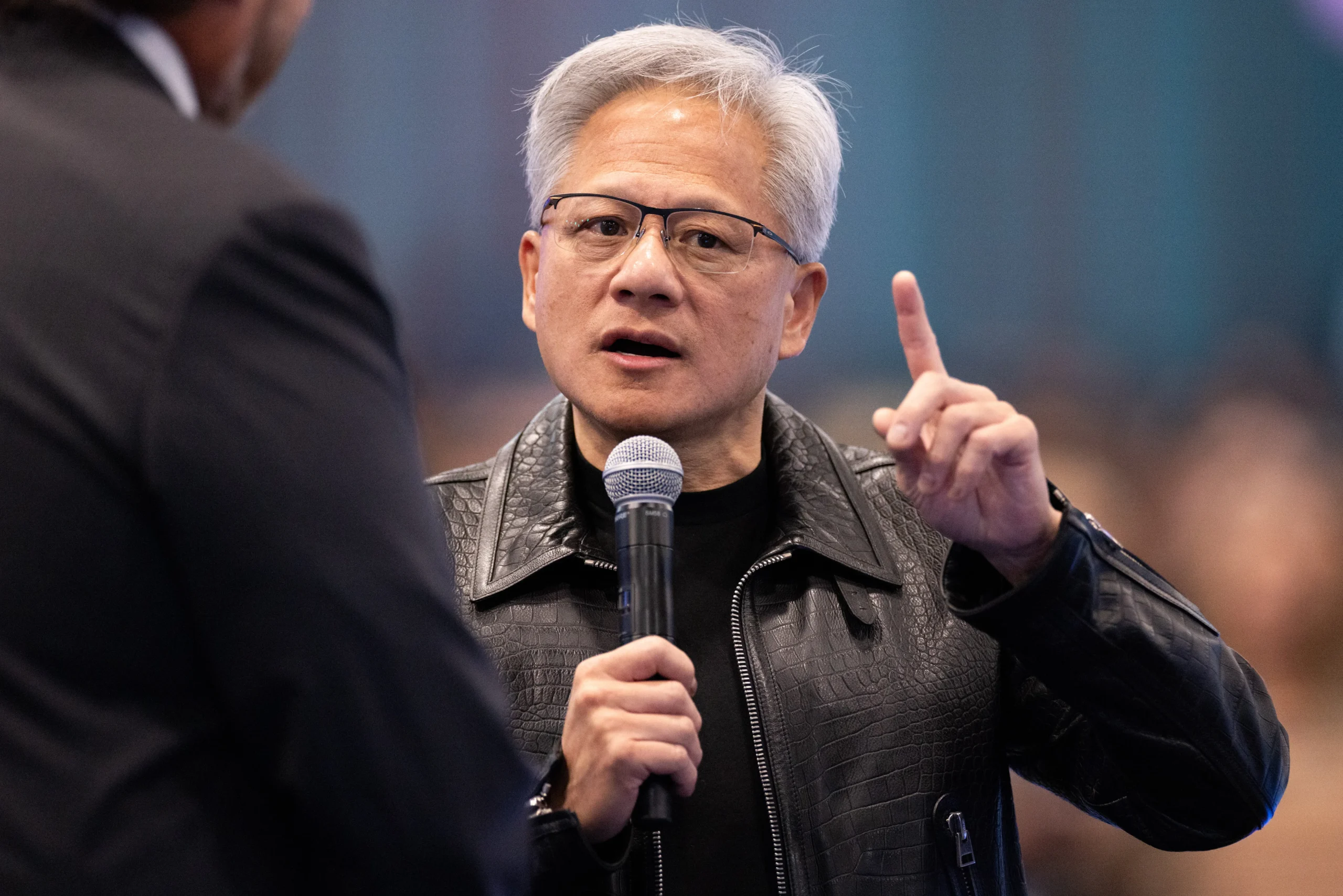
A highly sensitive intelligence memo circulated earlier this year has ignited fresh concerns regarding China’s persistent efforts to acquire advanced technology, alleging that technology executive Alice Huang was recruited by China’s Ministry of State Security (MSS) to spy on Nvidia CEO Jensen Huang. This revelation, first reported by The New York Times and subsequently elaborated upon by The Financial Times, underscores the intensifying geopolitical competition for semiconductor supremacy and artificial intelligence leadership. The reports indicate that the memo, purportedly based on U.S. intelligence, also suggested a romantic relationship between Jensen Huang and Alice Huang, an executive at Singapore-based company Megaspeed, adding a layer of personal complexity to the high-stakes espionage allegations.
Unveiling the Espionage Allegations
The core of the unfolding narrative centers on a U.S. intelligence memo that has sent ripples through both corporate and national security circles. According to reports, this document details an alleged operation orchestrated by the Chinese Ministry of State Security, China’s primary civilian intelligence agency. The target: Jensen Huang, the charismatic and influential CEO of Nvidia, a company that stands at the epicenter of the global artificial intelligence revolution. The alleged operative identified in the memo is Alice Huang, an executive associated with Megaspeed, a company reportedly based in Singapore.
The New York Times initially broke the story on November 6, 2026, revealing that Nvidia’s chief executive had been identified as a target of Chinese intelligence. The following day, The Financial Times expanded on these initial reports, adding a critical and sensational detail: the intelligence memo reportedly claimed a romantic relationship between Jensen Huang and Alice Huang. This alleged personal connection, if substantiated, would significantly complicate the nature of the alleged intelligence gathering, potentially offering a more intimate avenue for information extraction than typical corporate interactions.
Nvidia, a company known for its groundbreaking graphics processing units (GPUs) that are now the backbone of modern AI computing, quickly addressed the claims. An Nvidia spokesperson, responding to queries from The New York Times, stated that Jensen Huang’s interactions with Alice Huang were "not unusual." The spokesperson further emphasized that Nvidia does not share classified information with its customers, a statement intended to reassure stakeholders about the integrity of the company’s data and intellectual property. However, the nature and frequency of these "unusual" interactions remain open to interpretation and potential scrutiny by intelligence agencies.
The Geopolitical Chessboard: US-China Tech War
These allegations do not emerge in a vacuum but are set against a backdrop of an escalating technological and economic rivalry between the United States and China. Both nations are locked in a fierce competition for dominance in critical emerging technologies, particularly artificial intelligence, advanced semiconductors, and quantum computing. The U.S. has implemented increasingly stringent export controls aimed at restricting China’s access to advanced chips and chip-making equipment, fearing that such technology could be used to enhance China’s military capabilities and economic competitiveness at America’s expense.
Nvidia, with its near-monopoly on the high-end AI accelerator market, has become a linchpin in this geopolitical struggle. Its H100 and A100 GPUs are essential for training and deploying large language models and other sophisticated AI applications. The U.S. government views the unrestricted sale of these chips to China as a direct threat to national security, leading to a series of export restrictions, including those enacted in October 2022 and expanded in October 2023. These regulations aim to curb China’s ability to develop its indigenous AI ecosystem, forcing Nvidia to design modified, less powerful chips specifically for the Chinese market.
The strategic importance of Jensen Huang, as the leader of such a pivotal company, cannot be overstated. His insights into Nvidia’s technological roadmap, supply chain strategies, and global market positioning would be invaluable to any competing nation, particularly one seeking to circumvent U.S. export controls and accelerate its own technological advancements. Therefore, an alleged attempt to compromise him personally underscores the extreme lengths to which state actors might go to gain an advantage in this critical domain.
A Pattern of Concern: New Matrix and Supply Chain Loopholes
Adding another layer of complexity to the narrative, a separate New York Times report published on November 7, 2026, highlighted concerns surrounding New Matrix, a Chinese company authorized by the U.S. Commerce Department to purchase advanced Nvidia chips. The report detailed an investigation where reporters, upon visiting the listed office address for New Matrix, found only "a hollow gray shell." This discovery raises significant questions about the legitimacy of New Matrix and fuels suspicions that it could serve as a front for a blacklisted private equity firm or a conduit for illicit technology transfers.

Such instances highlight potential vulnerabilities in the export control regime, where front companies or shell corporations might be used to bypass restrictions and acquire sensitive technology. The U.S. Commerce Department’s Bureau of Industry and Security (BIS) is responsible for enforcing these controls, but the sheer volume and complexity of global trade make comprehensive oversight a formidable challenge. The Nvidia spokesperson’s assertion that the company sells "the first, best and most of our technology in America" serves as a defensive posture, aiming to reaffirm the company’s commitment to U.S. national security priorities while navigating the intricate demands of a global market. However, incidents like the New Matrix case suggest that vigilance must extend beyond direct corporate sales to the entire supply chain and customer network.
Chronology of Disclosures and Reactions
The timeline of these revelations has unfolded rapidly, bringing the issue to the forefront of public and corporate discourse:
- Earlier this Year (2026): The U.S. intelligence memo, detailing the alleged MSS recruitment of Alice Huang to spy on Jensen Huang, is reportedly circulated within intelligence circles. The specific date remains undisclosed, but its existence signals ongoing intelligence gathering regarding Chinese espionage activities.
- November 6, 2026 (PST): The New York Times breaks the story, citing U.S. intelligence, that Nvidia CEO Jensen Huang had been identified as a target of Chinese intelligence operations. This initial report sets the stage for broader scrutiny.
- Subsequently (November 6-7, 2026): The Financial Times publishes its own report, corroborating the NYT’s findings and adding the explosive detail that the intelligence memo also alleged a romantic relationship between Jensen Huang and Alice Huang. This adds a personal dimension to the espionage claims.
- November 7, 2026 (PST): A separate report from The New York Times sheds light on New Matrix, a Chinese company with suspicious operational details, raising further questions about the effectiveness of U.S. export controls and the potential for diversion of advanced Nvidia chips.
- Ongoing: Nvidia issues statements through its spokesperson, downplaying the significance of interactions with Alice Huang and reaffirming its commitment to not sharing classified information. Investigations by U.S. intelligence and law enforcement agencies are presumed to be ongoing, though details are not publicly disclosed. The Commerce Department likely faces internal and external pressure to review its export licensing processes.
Broader Implications and Future Outlook
The alleged espionage attempt on Jensen Huang carries significant implications for corporate security, international relations, and the future of technological competition.
Corporate Security and Due Diligence: The incident will undoubtedly prompt corporations, especially those in critical technology sectors, to enhance their internal security protocols and review their executives’ interactions with foreign entities. Due diligence processes for partnerships, customer relationships, and even personal associations may become more stringent. Companies might invest more in counter-intelligence training for senior leadership and implement more robust travel security measures. The line between legitimate business networking and potential intelligence gathering becomes increasingly blurred, demanding heightened awareness.
Strained US-China Relations: These allegations further exacerbate the already tense relationship between the U.S. and China. Washington will likely view this as further evidence of Beijing’s aggressive tactics to acquire sensitive technology, potentially leading to even stricter export controls, increased sanctions, or diplomatic retaliations. Beijing, in turn, is expected to deny the allegations, portraying them as unfounded accusations aimed at containing China’s technological rise. This cycle of accusation and denial further complicates efforts at cooperation on other global issues.
Investor Confidence and Market Dynamics: While the immediate impact on Nvidia’s stock may be limited given its strong market position and the lack of confirmed data breaches, sustained allegations or concrete evidence could introduce investor uncertainty. However, Nvidia’s crucial role in the AI industry means that any disruption would have broader market consequences. The company’s ability to navigate these geopolitical complexities while maintaining its technological edge will be closely watched.
Integrity of Export Controls: The New Matrix case, in particular, highlights the challenges in enforcing export controls. If front companies can easily circumvent restrictions, the entire framework designed to protect U.S. technological superiority could be undermined. This could lead to calls for more rigorous vetting of foreign buyers, enhanced intelligence sharing between government agencies and corporations, and potentially a reevaluation of the Commerce Department’s authorization processes.
Precedent for Future Espionage: Should these allegations prove true, they would serve as a stark reminder of the sophisticated and multi-faceted nature of state-sponsored economic espionage. The alleged use of personal relationships as a vector for intelligence gathering, rather than purely cyber or traditional human intelligence methods, suggests an evolving threat landscape that targets individuals as much as systems.
In conclusion, the alleged targeting of Nvidia CEO Jensen Huang by China’s Ministry of State Security, coupled with concerns about front companies circumventing export controls, represents a significant development in the ongoing U.S.-China tech rivalry. As the world races towards an AI-driven future, the protection of intellectual property and technological leadership remains a paramount national security interest, ensuring that incidents like this will continue to define the high-stakes competition on the global stage. The full extent of the intelligence memo’s findings and the ultimate implications of these allegations are likely to unfold in the coming months, shaping corporate strategies, government policies, and the delicate balance of power in the digital age.
