

The Florida Municipal Power Agency (FMPA), a joint action agency representing 32 community-owned electric utilities, has announced a significant technological upgrade to its grid management and disaster recovery protocols. By integrating Noteworthy AI’s "Inspect" platform, these utilities are transitioning from manual, labor-intensive asset inspections to an automated, artificial intelligence-driven model. This shift is designed to dramatically increase asset visibility, streamline routine maintenance, and accelerate the restoration of power following the increasingly frequent and severe weather events that characterize the Florida climate.
The implementation comes at a critical juncture for the state’s energy infrastructure. As Florida continues to face the dual challenges of rapid population growth and escalating climate volatility, the ability of municipal utilities to maintain a resilient and reliable grid is paramount. The 32 member utilities of the FMPA serve more than 2.5 million Floridians, spanning a diverse geographical range from the Panhandle to Key West. While these utilities are deeply rooted in their local communities, they often operate with fewer resources than the state’s massive investor-owned utilities (IOUs). The adoption of Noteworthy AI’s technology represents a strategic effort to bridge this resource gap through high-efficiency automation.
The Mechanics of AI-Enabled Grid Inspection
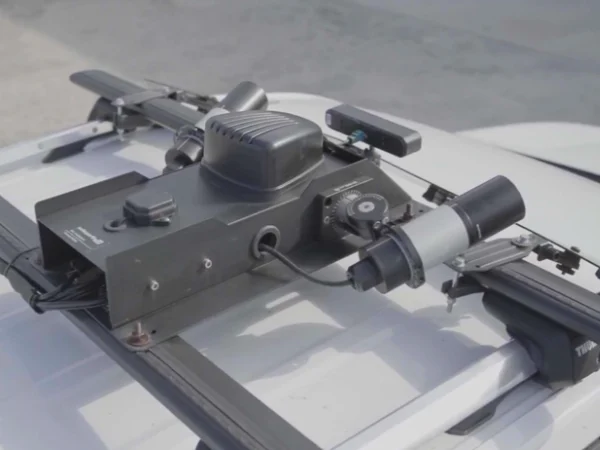
The core of the new system is the Noteworthy AI Inspect platform, which utilizes advanced computer vision and vehicle-mounted hardware. High-resolution cameras are mounted on standard utility fleet vehicles, such as pickup trucks or bucket trucks. As these vehicles navigate their service territories during routine operations, the cameras automatically capture geolocated, timestamped imagery of distribution poles, lines, and peripheral equipment.
Unlike traditional methods that require specialized inspection crews to stop and manually document every asset, the AI-enabled system operates at posted road speeds. The system’s edge-computing capabilities allow it to identify and geolocate distribution poles automatically. Once the data is uploaded to a cloud-based analysis engine, it provides near-real-time insights into the condition of the grid. This includes the identification of pole lean, equipment degradation, vegetation encroachment, and joint-use attachment inventories.

The distribution grid intelligence solution offers a multifaceted approach to utility management. It supports Geographic Information System (GIS) development by providing a visual "source of truth" for every asset on the map. It also facilitates outdoor lighting audits and ensures that third-party attachments—such as those from telecommunications companies—are properly accounted for and billed, creating new revenue streams for the municipalities.
Accelerating Recovery in the Wake of Hurricane Isaias
The practical utility of this technology was recently demonstrated following the landfall of Hurricane Isaias. A Category 2 storm that made landfall near Destin, Florida, Isaias caused significant damage to energy infrastructure across the Florida Panhandle, hitting FMPA member territories with high winds and heavy precipitation.
In the immediate aftermath of such a storm, the primary challenge for utility operators is "damage assessment." Traditionally, this process involves two-person crews driving or walking every circuit to document broken poles, downed lines, and damaged transformers. This manual method is inherently slow and prone to human error. Furthermore, during regional disasters, mutual aid resources are often stretched thin, as every utility in the area competes for the same pool of experienced assessors.
According to Paul Hynes, Noteworthy AI’s vice president of utility strategy and industry solutions, the AI-mounted vehicles allow a single driver to cover up to 20 times more ground per day than a traditional assessment crew. "The most impactful hours in restoration are the ones immediately after the all-clear," Hynes noted. "When cameras are already installed on utility and contractor vehicles, every activated truck becomes an automated damage assessor."
This speed is not merely a matter of convenience; it is a critical component of restoration logistics. By providing the command center with high-resolution imagery of damage in near-real-time, utility managers can deploy the right crews with the specific materials needed for each repair site. This targeted deployment reduces "windshield time"—the time spent by highly skilled line workers searching for damage—and ensures that power is restored to residents and critical infrastructure as quickly as possible.

Financial Fortification and FEMA Reimbursement
Beyond operational efficiency, the AI platform serves as a vital tool for financial recovery. Following a federally declared disaster, municipal utilities often rely on reimbursement from the Federal Emergency Management Agency (FEMA) to cover the astronomical costs of grid reconstruction. However, FEMA’s eligibility determinations are notoriously rigorous, requiring detailed documentation to prove that the damage was a direct result of the specific storm event and not a pre-existing condition.
The Noteworthy AI system provides a continuous, timestamped visual record of the grid. By maintaining a baseline of imagery from routine patrols, utilities can present "before and after" evidence for every damaged asset. Chris Ricciuti, founder and CEO of Noteworthy AI, emphasized the importance of this record-keeping for smaller utilities. "Disaster recovery reimbursement often comes down to documentation," Ricciuti explained. "A timestamped, geolocated image of a pole before a storm and the same pole after it is hard to dispute. When just a few rejected poles can leave a utility tens of thousands of dollars out of pocket, that record matters."
This financial protection is particularly relevant given the scale of recent storm impacts. Following the landfall of Hurricane Isaias, at least 62,295 insurance claims totaling more than $652.2 million were filed in Florida. For municipal utilities operating on tight budgets, the ability to secure full federal reimbursement is essential for maintaining long-term rate stability for their customers.
Economies of Scale through Joint Action
The FMPA operates as a Joint Action Agency, a model that allows independent municipal utilities to pool their resources to achieve economies of scale. Through the FMPA’s Joint Purchasing Program, member utilities can access the Noteworthy AI platform at negotiated rates that are significantly lower than conventional data collection methods. In some cases, the cost of AI-driven collection and analysis is up to 80% lower than traditional manual audits.
This collective approach also enhances the regional mutual aid network. In Florida, municipal utilities frequently send crews to assist neighboring cities after a storm. Under the new program, camera-equipped trucks from one FMPA member can be deployed to assess damage in a neighbor’s territory, providing standardized, high-quality data that can be shared instantly through the cloud. This interoperability is a game-changer for regional resilience, ensuring that even the smallest towns have access to the same high-tech tools as major metropolitan areas.

The program offers flexible deployment models to suit the varying needs of FMPA members. Utilities can choose to purchase camera systems for continuous use on their own fleets, rent equipment for specific seasonal baseline patrols, or engage turnkey collection services where Noteworthy AI provides both the vehicles and the drivers.
Case Study: Digital Transformation in the City of Starke
The City of Starke, a municipal member of the FMPA, serves as a primary example of how rapidly this technology can modernize utility operations. Prior to adopting the AI platform, the city’s utility department operated largely on "tribal knowledge"—the unwritten expertise of long-tenured employees—rather than a centralized digital database.
David Sparks, the utility director and assistant city manager for Starke, noted that the city lacked a comprehensive mapping system for its infrastructure. "We were working blind," Sparks admitted. "There was no way to know how many poles, transformers, streetlights, or joint-use attachments were out there."
In a single eight-hour collection period, the Noteworthy AI system inventoried and inspected approximately 2,300 poles throughout the city. This data provided Starke with a complete digital twin of its distribution network, including detailed information on every piece of equipment attached to each pole. Furthermore, a third-party attachment audit conducted using the AI data identified numerous uncounted pole attachments from telecommunications providers. The resulting increase in attachment revenue helped the city offset the cost of the technological deployment, effectively making the upgrade self-funding.
Broader Implications for the U.S. Utility Sector
The success of the FMPA’s AI initiative reflects a broader trend toward digital transformation in the global energy sector. There are approximately 2,000 community-owned, not-for-profit public power utilities in the United States, serving more than 55 million people. As these organizations face increasing pressure to modernize their grids while keeping costs low, AI-driven solutions are becoming an attractive alternative to traditional asset management.

The move toward "predictive maintenance" is a significant part of this shift. By using AI to detect early signs of equipment failure—such as rusted transformers or cracked insulators—before they cause an outage, utilities can transition from a reactive to a proactive operational stance. This not only improves reliability for the customer but also extends the lifespan of expensive capital assets.
Moreover, the integration of AI imagery with existing GIS platforms like Esri ArcGIS Online creates a unified operating picture for utility staff. Engineers, field crews, and customer service representatives can all access the same high-resolution visual data, improving communication and decision-making across the organization.
Conclusion
The partnership between the Florida Municipal Power Agency and Noteworthy AI represents a landmark in the application of artificial intelligence to public infrastructure. By turning every utility vehicle into a sophisticated data collection hub, Florida’s municipal utilities are setting a new standard for grid resilience and operational transparency.
As the state enters a future marked by more intense weather patterns and an ever-increasing reliance on electricity, the ability to rapidly assess damage and maintain an accurate digital record of the grid will be the difference between a quick recovery and a prolonged crisis. For the 2.5 million residents served by FMPA members, this technological upgrade offers the promise of a more resilient, reliable, and financially sound energy future. Through the power of AI and the collaborative spirit of joint action, Florida’s public power utilities are proving that they can compete with the largest energy providers in the nation, ensuring that their communities remain powered and protected regardless of what the next storm season may bring.
