

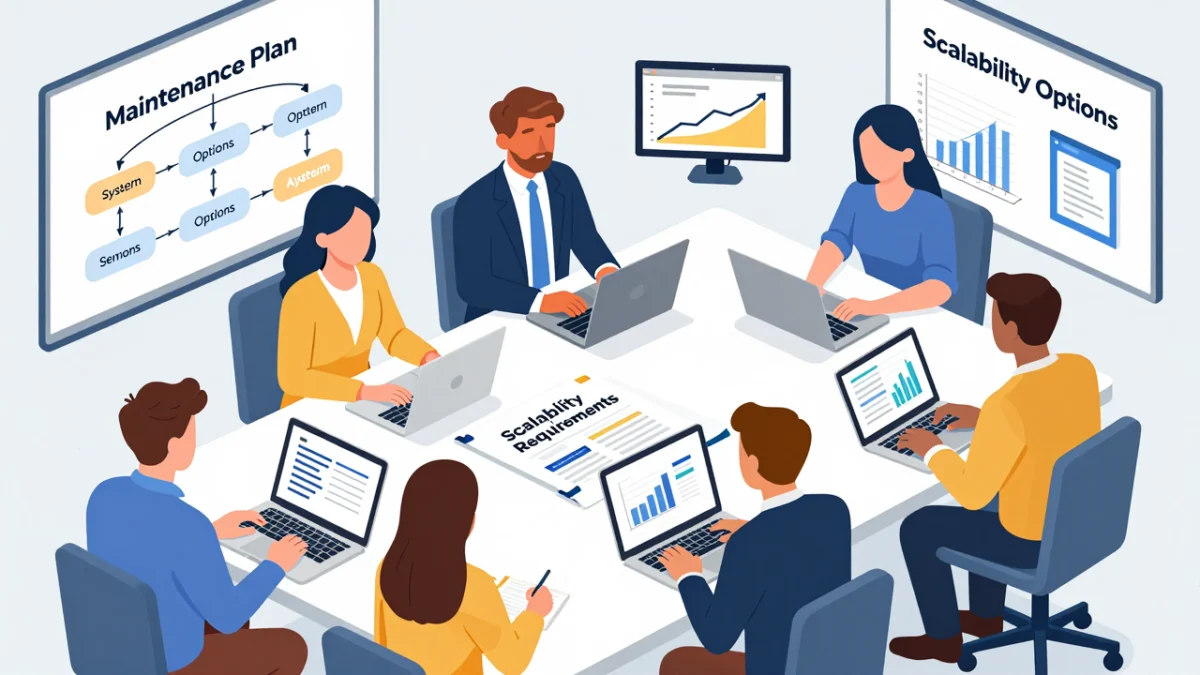
The selection of a technology stack is no longer merely a technical decision but a core business strategy that determines the agility, scalability, and long-term viability of a software enterprise in an increasingly competitive digital economy. As organizations transition from legacy systems to modern architectures, the "tech stack"—the combination of programming languages, frameworks, libraries, and infrastructure—acts as the structural foundation upon which user experiences are built and business logic is executed. Industry data suggests that a poorly chosen stack can lead to a 30% increase in development costs and a significant rise in technical debt within the first two years of a project’s lifecycle. Consequently, stakeholders must balance immediate performance requirements with long-term maintenance costs and the availability of skilled talent.

The Evolution of Software Architectures: A Historical Context
The methodology for selecting a tech stack has evolved significantly over the last three decades. In the late 1990s and early 2000s, the "LAMP" stack (Linux, Apache, MySQL, and PHP/Python/Perl) dominated the industry due to its open-source nature and reliability. However, as the demand for real-time interactivity and mobile responsiveness grew, the industry shifted toward JavaScript-centric models.
By 2010, the emergence of the MEAN stack (MongoDB, Express.js, Angular, and Node.js) marked a transition toward "full-stack" JavaScript development, allowing engineers to use a single language for both client-side and server-side logic. Today, the landscape is characterized by modularity and "stack agnosticism." The current era prioritizes microservices, serverless computing, and edge deployment, where developers mix and match specialized tools—such as React for the frontend, Go for high-performance microservices, and PostgreSQL for relational data—to meet specific project demands.

Core Components of the Modern Technology Stack
A comprehensive technology stack is divided into two primary segments: the frontend (client-side) and the backend (server-side). The frontend encompasses everything the user interacts with, including the user interface (UI) and user experience (UX) design. Currently, JavaScript remains the undisputed leader in this space, with the 2023 Stack Overflow Developer Survey indicating that nearly 64% of professional developers utilize JavaScript.
The backend serves as the "engine room" of the application, managing database interactions, server-side logic, and API integrations. This layer requires robust programming languages such as Python, Java, or Ruby, paired with frameworks like Django, Spring, or Ruby on Rails. Furthermore, the database layer—consisting of relational databases like PostgreSQL or NoSQL solutions like MongoDB—must be selected based on the structure and volume of the data the application intends to process.

Strategic Framework for Defining Project Objectives
Before committing to a specific set of tools, architectural leads must define the project’s core objectives. These objectives serve as the North Star for all subsequent technical decisions. High-performance applications, such as high-frequency trading platforms or real-time streaming services, require low-latency languages like C++ or Go. Conversely, a Minimum Viable Product (MVP) for a social media startup might prioritize rapid development cycles, favoring frameworks like Ruby on Rails or Next.js.
Market analysis shows that 40% of software projects fail due to a lack of alignment between the chosen technology and the actual business requirements. Organizations must evaluate whether their project requires:

- High Concurrency: The ability to handle thousands of simultaneous users (Node.js or Elixir).
- Data Integrity: Strict adherence to ACID properties for financial transactions (PostgreSQL or SQL Server).
- Rapid Prototyping: The ability to iterate quickly based on user feedback (Python or JavaScript).
Assessing Team Expertise and the "Bus Factor"
A critical but often overlooked factor in tech stack selection is the internal expertise of the development team. Utilizing a cutting-edge language like Rust may offer performance benefits, but if the existing team is only proficient in Java, the project will face significant delays due to the steep learning curve.
Senior architects often employ a "Skills Matrix Evaluation" to visualize team proficiency. This involves mapping out the current capabilities of the engineering department against the requirements of the new stack. Furthermore, organizations must consider the "Bus Factor"—a measurement of the risk associated with information and capabilities being concentrated in a small number of team members. If only one developer understands the core architecture of a project, the "Bus Factor" is one, representing a high risk to the project’s continuity. A resilient tech stack is one that is supported by a broad talent pool, ensuring that recruitment and onboarding remain feasible throughout the project’s duration.

Comparative Analysis of Frontend Technologies: React vs. Angular vs. Vue
The frontend market is currently dominated by three major players, each offering distinct advantages depending on the organizational structure.
- React (developed by Meta): React remains the most popular choice for component-heavy applications. Its ecosystem is vast, offering tools like Next.js for server-side rendering and Zustand for state management. Its flexibility allows developers to build complex SPAs (Single Page Applications) with ease.
- Angular (developed by Google): Angular is a comprehensive, "opinionated" framework. It provides a built-in structure for routing, forms, and HTTP client services. This makes it a preferred choice for large-scale enterprise applications where consistency across multiple teams is paramount.
- Vue.js: Vue is often cited for its accessibility and excellent documentation. With the release of Vue 3 and the Composition API, it offers a middle ground between the flexibility of React and the structure of Angular, making it ideal for teams that need to scale quickly without the overhead of a steep learning curve.
Evaluating Backend Performance: Node.js, Go, and Python
In the backend domain, the choice of technology directly impacts the application’s ability to handle CPU-bound vs. I/O-bound tasks.

- Node.js: Utilizing an event-driven, non-blocking I/O model, Node.js is exceptionally efficient for real-time applications such as chat apps or collaboration tools. It allows for "isomorphic" development, where JavaScript is used across the entire stack.
- Go (Golang): Developed by Google, Go has seen a surge in adoption for cloud-native infrastructure and microservices. Its ability to handle high concurrency with minimal memory overhead makes it a top choice for backend systems that must scale horizontally.
- Python: While not the fastest language in terms of raw execution, Python’s readability and the maturity of its libraries make it the industry standard for data science, artificial intelligence, and rapid API development. Frameworks like FastAPI have modernized Python backend development by introducing asynchronous capabilities.
The Rise of Full-Stack Meta-Frameworks: The T3 Stack
In recent years, a trend has emerged toward "opinionated" full-stack solutions that reduce configuration fatigue. The "T3 Stack" is a prime example, integrating Next.js (frontend), tRPC (type-safe APIs), Prisma (ORM), and NextAuth.js (authentication). By enforcing type safety from the database to the user interface, the T3 stack minimizes runtime errors and accelerates the development process. This approach is particularly beneficial for startups that need to maintain high code quality while operating under tight deadlines.
Economic Implications: Budgeting and Total Cost of Ownership
The financial impact of a tech stack extends far beyond the initial development phase. Decision-makers must account for the Total Cost of Ownership (TCO), which includes:

- Licensing Fees: While most modern stacks rely on open-source tools, some enterprise databases or third-party integrations require significant annual fees.
- Infrastructure Costs: Cloud providers like AWS, Azure, and Google Cloud offer varying price models for different languages and runtime environments. For instance, serverless functions (AWS Lambda) may be cost-effective for sporadic workloads but expensive for continuous processing.
- Maintenance and Technical Debt: Systems built on aging or niche technologies often require specialized consultants, increasing the long-term maintenance budget. Industry benchmarks suggest that maintenance costs typically account for 15% to 25% of the initial development budget annually.
Scalability, Maintenance, and Future-Proofing
A future-proof tech stack is one that can adapt to changing market conditions and technological advancements. Scalability should be considered in two dimensions: vertical (adding more power to existing servers) and horizontal (adding more servers to the pool). Cloud-native architectures, which utilize containerization (Docker) and orchestration (Kubernetes), allow applications to scale dynamically based on real-time demand.
Furthermore, the longevity of a technology is often tied to its community support. A framework with a large, active community on platforms like GitHub and Stack Overflow ensures a steady stream of security patches, updates, and third-party plugins. Choosing a "hyped" but unproven technology can lead to "bit rot," where the software becomes unmaintainable because the underlying libraries are no longer supported.

Risk Mitigation Through Prototyping and Testing
To finalize a tech stack decision, organizations should engage in rigorous prototyping. This involves building a "Proof of Concept" (PoC) using the proposed technologies to identify potential integration challenges. Testing API interactions with tools like Postman and conducting performance benchmarks ensures that the stack can handle the anticipated load.
Implementing Continuous Integration and Continuous Deployment (CI/CD) pipelines early in the process allows for automated testing, reducing the risk of regression errors. By A/B testing different architectural approaches during the prototyping phase, engineers can gather empirical data on latency, throughput, and developer productivity, leading to a more informed final decision.

Conclusion: Balancing Innovation with Reliability
The process of choosing the right tech stack is a delicate balancing act between adopting innovative technologies and relying on proven, stable frameworks. While the allure of new tools can drive developer engagement, the primary goal of any technology stack is to deliver value to the end-user and support the organization’s business objectives. By conducting a thorough analysis of project requirements, team expertise, economic constraints, and scalability needs, stakeholders can construct a foundation that not only meets the demands of today but is also resilient enough to navigate the challenges of tomorrow. The most successful projects are those where the technology stack serves as a silent enabler of growth, rather than a bottleneck to progress.
