

Recent calls for a deceleration in the development of artificial intelligence have sent ripples through related sectors, impacting stock valuations and prompting a re-evaluation of growth trajectories across numerous industries. Real estate, particularly the specialized domain of data centers, finds itself at the epicenter of this discussion, with major players like Digital Realty and Equinix experiencing immediate market reactions. However, industry leaders and analysts maintain that the foundational demand for digital infrastructure, fueled by both the widespread application of AI and ongoing digital transformation, is set for continued, robust expansion, potentially unlocking trillions in investment over the coming years.
The Recent Jolt: AI Slowdown Warnings and Market Reaction
The financial markets reacted swiftly in mid-September 2026 following pronouncements from prominent figures and organizations within the AI sphere advocating for a more measured pace of advancement. Leaders from Anthropic, OpenAI, and xAI, including Sam Altman and Elon Musk, voiced concerns regarding the rapid, unchecked progression of AI capabilities, citing potential safety, ethical, and societal implications. These warnings, which gained significant traction over a weekend, triggered an immediate downturn in the stock prices of companies closely tied to the AI boom. Data center Real Estate Investment Trusts (REITs), specifically Digital Realty (DLR) and Equinix (EQIX), two of the largest global providers of data center capacity, saw their shares slump on the Monday immediately following these widely publicized calls for a slowdown.
The rationale behind these appeals is multifaceted, encompassing fears of superintelligence developing beyond human control, the potential for misuse of advanced AI, and the sheer computational and energy demands of ever-larger models. While the specifics of a "slowdown" remain open to interpretation – whether it implies regulatory intervention, voluntary moratoriums, or a reallocation of resources – the market’s initial response reflected an apprehension that the explosive growth projected for AI might face unexpected hurdles.
Data Centers: The Unseen Engine of the Digital Age
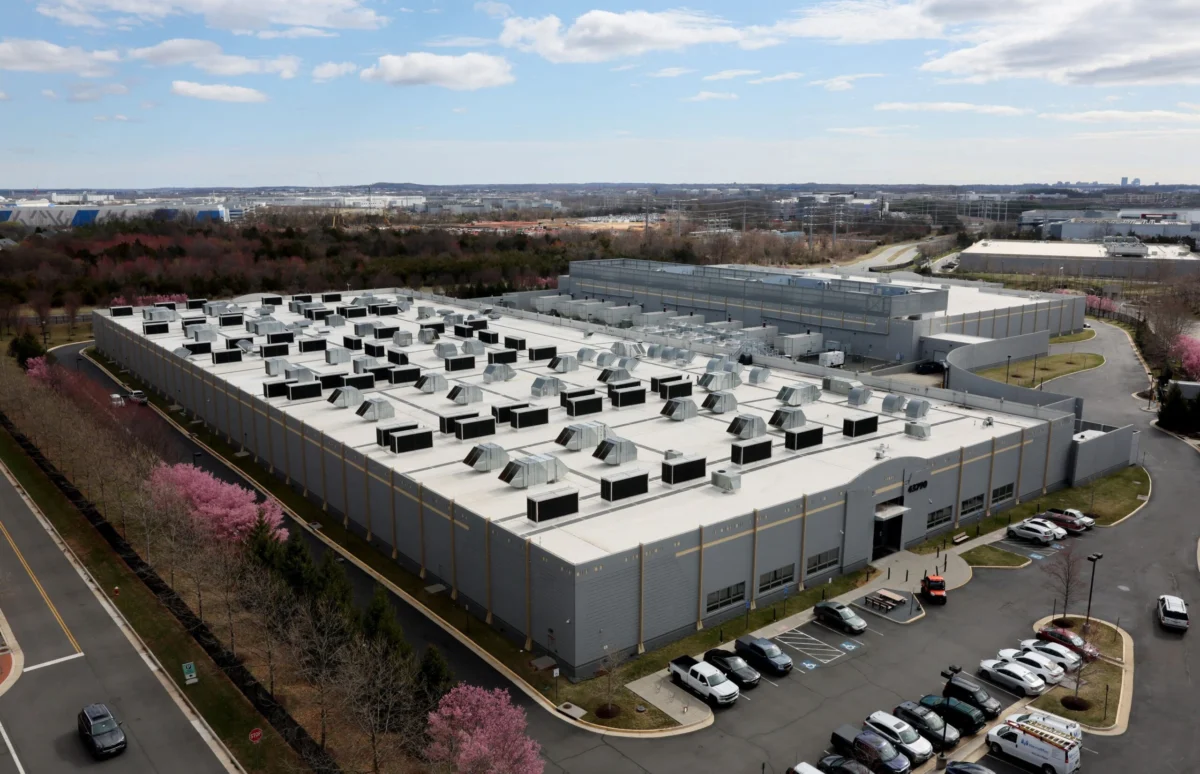
Data centers are the physical bedrock of the digital economy, housing the servers, storage systems, and networking equipment that power everything from social media and streaming services to enterprise applications and scientific research. Traditionally, their demand has been driven by the relentless expansion of cloud computing, the proliferation of enterprise IT infrastructure, and the ever-growing need for internet services. These facilities are complex ecosystems requiring vast amounts of power, sophisticated cooling systems, and highly secure environments, making their development and operation a capital-intensive endeavor.
In recent years, artificial intelligence has rapidly emerged as the single most significant new driver of demand for data center capacity. Its insatiable appetite for computational power, particularly during the training phase of large language models and other deep learning algorithms, has led to a surge in requirements for high-density power and specialized infrastructure. A comprehensive report from McKinsey projected that AI could account for approximately 70% of global data center capacity demand by 2030, underscoring its transformative impact on the sector. This forecast highlights a dramatic shift, where AI transitions from a niche application to the dominant force shaping the future of digital infrastructure.
Unpacking Demand: AI’s Dual Role and Broader Digital Transformation
While the headlines focused on a potential AI slowdown, industry experts differentiate between the various stages of AI development and adoption, arguing that the long-term physical infrastructure requirements remain largely unaffected by a possible deceleration in new model training.
AI’s Shifting Gravitational Pull: From Training to Inference
Andrew Batson, global head of data center research and strategy at JLL, offered a crucial distinction that frames the ongoing demand. He emphasized that "the real growth in data centers over the next handful of years is in inference – that’s the adoption by businesses and citizens of the tool into daily workflow." AI training involves feeding vast datasets into algorithms to create new models, a process that is incredibly resource-intensive and often takes place in specialized, concentrated environments. A slowdown in AI development might primarily impact the frequency or scale of these new model training cycles.
However, AI inference refers to the application of already trained models to perform tasks, generate content, or assist users in real-time. This includes everything from chatbots and recommendation engines to predictive analytics and autonomous systems. As Batson pointed out, current adoption rates indicate a vast untapped market: "Only 1 in 4 Americans use AI daily, so even if models are slow to be released, there is significant runway for adoption to grow and data center demand to increase." The widespread deployment of these inference capabilities, which will permeate virtually every industry and consumer interaction, requires a geographically distributed and robust data center footprint to ensure low latency and reliable performance. This sustained and expanding need for inference capacity forms the core of the enduring demand for data center space.
The Enduring Power of Non-AI Demand
Beyond AI, the underlying digital transformation sweeping across industries continues unabated, providing a strong baseline for data center growth. Andrew Power, CEO of Digital Realty, highlighted this often-overshadowed aspect in an exclusive interview with CNBC’s Property Play newsletter. Power acknowledged the market’s focus on AI but stressed that "there’s tremendous digital transformation happening that is not connected to AI." He further elaborated, stating, "There is tremendous cloud computing growth. Frankly, from my business lens, my seat, I think those demand trends, which are massive drivers of our business, have been stifled in these days of AI."
Power’s insight points to the ongoing expansion of enterprise cloud adoption, the continuous migration of legacy IT systems to modern data center environments, and the general increase in internet traffic and data generation worldwide. He noted that hyperscalers, the colossal providers of cloud services, have recently faced difficult choices, often needing to prioritize allocating existing capacity to burgeoning AI labs over expanding their commercial cloud offerings. This suggests that even if AI growth were to temper slightly, there’s a significant pent-up demand for general cloud and IT infrastructure that would readily fill any void, ensuring consistent utilization of data center assets.
Trillions in Investment: The Financial Landscape of Data Center Expansion
The projections for capital outlay in the data center sector are staggering, reflecting the fundamental nature of digital infrastructure in the global economy.
Staggering Projections for Infrastructure and Real Estate
The McKinsey report underscored the immense financial commitment required to meet the escalating demand, estimating that the total capital outlay needed for data center capacity by 2030 will approach nearly $7 trillion. A significant portion of this immense sum is allocated to the physical real estate itself. JLL, a global leader in real estate services, estimates that the real estate component alone could account for a colossal $3 trillion in investment over the next five years. This figure encompasses the acquisition of land, the construction of purpose-built facilities, and the necessary upgrades and expansions of existing infrastructure.
These figures are not merely theoretical; they represent tangible requirements for land, power infrastructure, advanced cooling systems, and secure buildings to house the ever-increasing volume of servers and networking equipment. The physical footprint of the digital world is expanding at an unprecedented rate, making data centers one of the most capital-intensive real estate asset classes.
Major Players and Strategic Financial Posture
Companies like Digital Realty are at the forefront of this expansion. CEO Andrew Power confirmed the scale of their ongoing commitment, revealing that Digital Realty’s development pipeline totals an impressive $20 billion under construction, a substantial increase from $10 billion at the end of 2023. This massive investment underscores the company’s long-term conviction in the sector’s growth trajectory, irrespective of short-term market fluctuations.
Power also articulated a strategic approach to funding such capital-intensive growth. "We evolved our funding model a couple of years ago," he stated, indicating proactive measures to ensure financial resilience. This evolution includes raising private capital and engaging in one-off joint ventures, diversifying funding sources beyond traditional corporate debt and equity. He emphasized the importance of a strong balance sheet: "We positioned the balance sheet in probably the most liquidity, the lowest leverage, the best place it could be in any potential storm. And I’m not suggesting today is an end-of-the-world storm or anything like that." This robust financial positioning allows Digital Realty to continue its expansion plans confidently, mitigating risks associated with market volatility.
Furthermore, the sector’s resilience is bolstered by significant institutional investment. Andrew Batson of JLL pointed to major financial powerhouses like Blackstone, BlackRock, and KKR, noting their "high conviction in this space." These large-scale institutional investors typically conduct extensive due diligence and commit capital with a long-term perspective, signaling a strong belief in the fundamental growth drivers of data centers. Their continued investment, Batson added, "on paper, still looks quite strong, despite some of the headlines here."
Geographic Imperatives: Locational Sensitivity and Data Sovereignty
The expansion of data center infrastructure is not a uniform global phenomenon; it is highly concentrated in specific, strategically vital markets. Digital Realty’s portfolio, for instance, focuses on key global hubs including Northern Virginia (often referred to as ‘Data Center Alley’), Dallas, Chicago, Singapore, Tokyo, Frankfurt, and Amsterdam. These locations are characterized by robust power grids, excellent fiber connectivity, access to skilled labor, and proximity to major population centers or financial hubs.
Power highlighted the "locational sensitivity" of workloads, explaining that "those workloads can’t choose any one of the 50 states." Certain applications require ultra-low latency, dictating proximity to end-users or specific network peering points. Moreover, regulatory considerations, particularly "data sovereignty" laws, play a critical role. Many countries mandate that data generated by their citizens or within their borders must be stored and processed domestically. This necessitates a global data center portfolio, as maintained by Digital Realty, to support international clients and ensure compliance with diverse national regulations. The persistent challenge in these prime markets, Power noted, is that "our markets’ demand has been outpacing supply now for several years. There’s pent-up need for infrastructure in those markets." This ongoing supply-demand imbalance in key locations continues to drive investment and development.
Beyond the Headlines: Long-Term Outlook and Sector Resilience
In conclusion, while the recent calls for an AI slowdown caused a momentary dip in the stock valuations of data center REITs, the underlying fundamentals of the sector remain exceptionally strong. Industry leaders like Andrew Power are keen to reassure shareholders that daily market "gyrations" will not derail long-term strategy. The distinction between AI training and AI inference is critical, with the latter poised to drive widespread, sustained demand as AI tools become ubiquitous in daily life and business operations.
Furthermore, the robust growth of cloud computing, enterprise IT, and general digital transformation continues to provide a powerful, independent demand vector. The massive capital commitments from major players like Digital Realty and the sustained interest from institutional investors underscore a deep-seated confidence in the sector’s future. With trillions of dollars projected for investment in data center infrastructure and real estate over the next five to seven years, the physical expansion of the digital world is set to continue its rapid trajectory, reinforcing the data center industry’s position as a cornerstone of the global economy, regardless of the precise pace of future AI model releases.
For those interested in tracking these evolving opportunities for real estate investors, from individuals to venture capitalists, private equity funds, family offices, institutional investors, and large public companies, the CNBC Property Play newsletter with Diana Olick offers in-depth coverage. Readers can sign up to receive future editions, straight to their inbox.
