

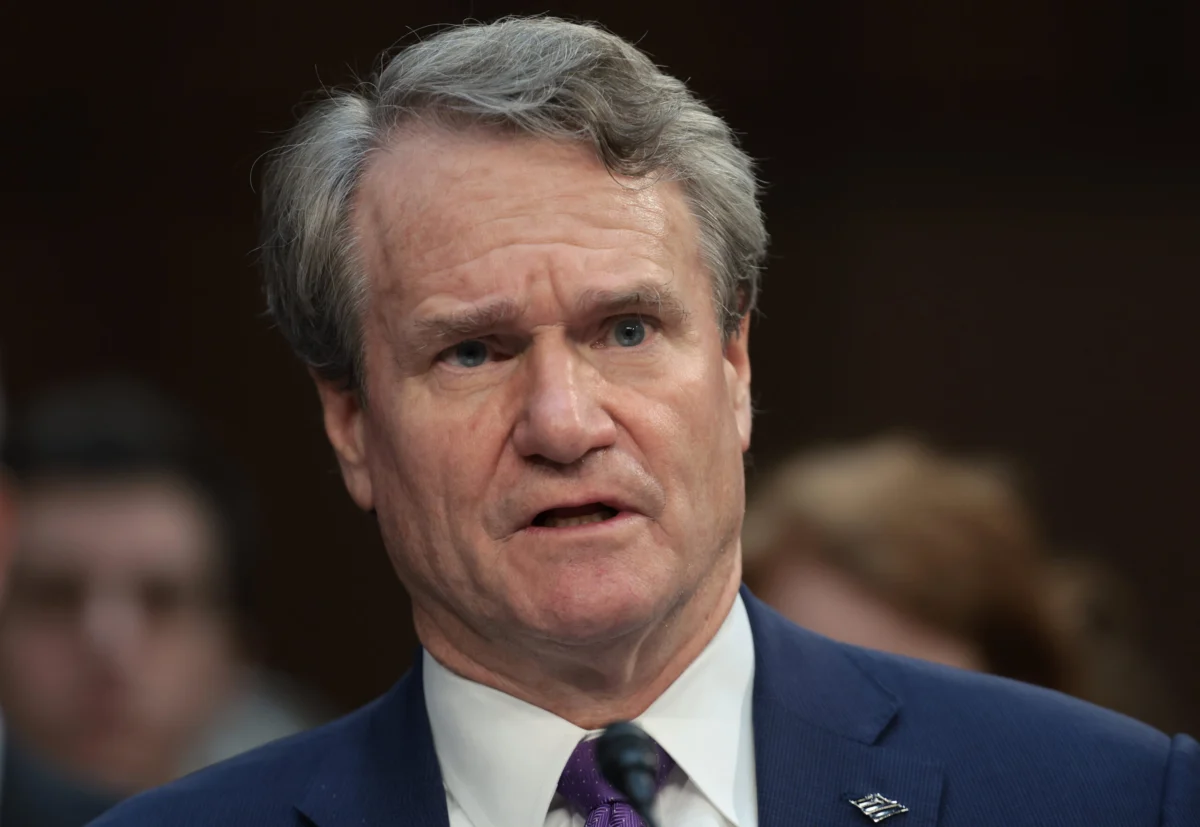
Bank of America, a titan in the global financial landscape, has signaled a notable deceleration in its Wall Street advisory and trading businesses for the third quarter of 2026, a stark contrast to the robust performance observed just months prior. Brian Moynihan, Chairman and CEO of Bank of America, conveyed a cautious outlook to analysts on Monday, September 14, 2026, during a presentation at the Barclays Global Financial Services Conference. His projections indicate that the earlier "AI-fueled advisory and trading boom" that invigorated capital markets may be encountering significant headwinds, prompting a re-evaluation of the industry’s growth trajectory.
Moynihan informed attendees that investment banking fees are anticipated to decline by more than 10% in the third quarter compared to the same period last year. Concurrently, trading revenue is expected to remain largely flat year-over-year. These figures represent a dramatic shift from the second quarter of 2026, a period in which the bank reported a substantial 50% surge in investment banking fees and a robust 33% increase in trading revenue. The CEO attributed the projected downturn in investment banking to broader market trends, citing Dealogic data indicating an overall market decline of 10%. He further acknowledged that Bank of America might experience a slightly more pronounced dip due to its specific positioning within certain less active business segments.
The market’s immediate reaction to Moynihan’s comments was palpable, with Bank of America shares registering a 5% decline in afternoon trading on Monday. This immediate investor response underscores the sensitivity of the market to signals of slowing growth from major financial institutions, particularly after a period of elevated activity and optimism. The subdued outlook from the nation’s second-largest bank by assets could serve as an early barometer, suggesting that the broader financial industry might be navigating a period of increased turbulence following what was perceived as a sustained surge in capital markets activity driven by technological advancements and renewed corporate appetite for deal-making.
A Look Back at the Second Quarter Boom
To fully appreciate the significance of Moynihan’s latest guidance, it is crucial to contextualize the "blockbuster" second quarter of 2026. This period was characterized by a confluence of factors that fueled a vibrant environment for investment banking and trading operations across Wall Street. The primary driver was a resurgence in mergers and acquisitions (M&A) activity, particularly within the technology and healthcare sectors, where companies sought strategic consolidations and expansions. The narrative of artificial intelligence (AI) innovation played a pivotal role, catalyzing numerous deals as firms scrambled to acquire AI capabilities, talent, or market share. Private equity firms, flush with capital, also contributed significantly to the deal flow, pursuing both large-cap and middle-market transactions.
Beyond M&A, capital markets experienced a robust period. Equity capital markets (ECM) saw a revival of initial public offerings (IPOs) and follow-on offerings, albeit selectively, for companies with compelling growth stories, especially those linked to disruptive technologies. Debt capital markets (DCM) remained active, supported by corporate refinancing needs and a relatively stable, though evolving, interest rate environment that still allowed for attractive borrowing costs for creditworthy entities. The demand for corporate credit, coupled with a diverse range of financing options, kept underwriters busy.
The trading desks, too, capitalized on this environment. Increased market volatility, often a boon for trading revenues, alongside robust client activity in equities, fixed income, currencies, and commodities (FICC), contributed to the significant year-over-year gains. Geopolitical developments, central bank policy adjustments, and shifting macroeconomic indicators provided ample opportunities for sophisticated trading strategies and client hedging solutions. Investors and corporations alike adjusted their portfolios and strategies in response to these dynamics, driving trading volumes and liquidity. Bank of America, with its expansive global footprint and diversified client base, was well-positioned to capture a substantial share of this activity, leading to the impressive 50% and 33% jumps in investment banking and trading revenues, respectively. This period marked a peak in post-pandemic capital markets resurgence, buoyed by innovation and abundant capital.
The Shifting Sands of the Third Quarter: Factors Behind the Deceleration
The transition from a booming second quarter to a more subdued third quarter reflects a complex interplay of macroeconomic shifts, evolving market sentiment, and sector-specific dynamics. Several factors are likely contributing to the anticipated decline in investment banking fees and flat trading revenues.
Macroeconomic Headwinds
Global economic growth projections have faced revisions, with concerns over persistent inflation, tighter monetary policies from central banks worldwide, and potential recessionary pressures in key economies. Higher interest rates, while potentially beneficial for net interest income in commercial banking, can dampen deal activity by increasing the cost of financing M&A transactions and making capital raises more expensive for corporations. The cost of borrowing directly impacts the viability of leveraged buyouts and large corporate acquisitions. Uncertainty surrounding these macroeconomic variables often leads corporate boards to postpone major strategic decisions, including mergers, acquisitions, and large-scale capital investments, until there is greater clarity on economic stability and future growth prospects. Companies prioritize preserving capital and managing existing liabilities in such environments.
Geopolitical Tensions
Ongoing geopolitical instability in various regions of the world continues to inject a layer of caution into global markets. Conflicts, trade disputes, and political uncertainties can disrupt supply chains, impact commodity prices, and create an unpredictable environment that discourages long-term investment and cross-border transactions. For instance, heightened tensions in key economic regions can lead to increased risk premiums, making international deals less attractive. This heightened risk perception can cause companies to become more conservative in their capital deployment strategies, favoring organic growth or smaller, less complex transactions over transformative deals. The unpredictability of global events often translates directly into a more cautious approach by corporate decision-makers and investors.
Regulatory Environment
The evolving regulatory landscape also plays a role in tempering capital markets activity. Increased scrutiny on large mergers, particularly in sectors deemed critical or concentrated (e.g., technology, healthcare, financial services), can prolong deal timelines or even scuttle transactions altogether. Antitrust concerns from global regulators have become more pronounced, leading companies to reconsider mega-mergers that might face significant hurdles. Furthermore, ongoing discussions around potential changes to capital requirements for banks, such as the persistent "Basel III endgame" proposals, could influence how banks allocate capital to their investment banking divisions, potentially impacting their capacity or willingness to underwrite certain deals or provide financing for highly leveraged transactions. Compliance costs and stricter capital frameworks can make certain advisory and underwriting services less profitable.
Sector-Specific Lulls
While the AI narrative remains strong, the initial frenzy of deal-making might be entering a more mature phase. Valuations for AI-related companies, which soared in previous quarters, might be facing closer scrutiny from investors seeking clearer paths to profitability and sustainable business models, leading to more cautious investment decisions. Some sectors that experienced significant M&A activity earlier in the year may also be seeing a natural cooling-off period as immediate strategic imperatives are addressed. For example, consolidation waves in certain industries naturally subside after a period of intense activity. Moynihan’s comment about Bank of America not being "as well positioned in some of the businesses that have more activity" suggests a potential shift in the areas driving the remaining deal flow, where other banks might have a stronger niche due to specialized expertise or client relationships. This could imply a pivot from generalist advisory to more niche, highly specialized transactions.
Citigroup’s Contrasting, Yet Measured, Outlook
Later on Monday, Citigroup’s Chief Financial Officer, Gonzalo Luchetti, offered a somewhat different, though still measured, perspective on the third quarter. Speaking to analysts, Luchetti projected "low-single-digit" revenue growth for investment banking and "mid-single-digit" revenue growth for trading at Citigroup. While these figures are modest compared to the previous quarter’s industry performance, they stand in contrast to Bank of America’s anticipated declines or flatness. This divergence suggests a nuanced landscape where individual bank strategies and market positioning play a crucial role.
Luchetti emphasized the critical role of September in determining the final quarterly results, stating, "September is a key month. These few weeks are very meaningful." This highlights the often back-loaded nature of capital markets activity, where a flurry of deals or trading volumes towards the end of a quarter can significantly impact the overall performance. Investment bankers often push to close transactions by quarter-end, and market participants adjust positions in anticipation of economic data or policy announcements. Citigroup’s more optimistic, albeit cautious, outlook could stem from a variety of factors: a different mix of business lines (e.g., stronger presence in emerging markets, specific commodities, or a particular M&A advisory niche), stronger positioning in specific active segments, or a more conservative approach to earlier guidance that allows for potential upside surprises. The disparity between Bank of America and Citigroup’s guidance suggests that while overall market conditions are challenging, the impact is not uniform across all major players, reflecting unique strategic focuses and client relationships that can lead to varying performance outcomes.
Broader Industry Implications: Is the AI Boom Losing Steam?
The muted outlook from Bank of America, combined with the more conservative projections from Citigroup, prompts a crucial question for the broader financial industry: Is the "AI-fueled advisory and trading boom" truly hitting turbulence, or is this merely a temporary consolidation after an exceptionally strong period?
The initial surge in AI-related deal-making was driven by both strategic imperative and speculative fervor. Companies across various sectors sought to integrate AI capabilities, leading to acquisitions of AI startups, investments in AI infrastructure, and significant capital raises for innovative ventures. This created a fertile ground for investment bankers and traders. However, periods of rapid growth often lead to questions of sustainability. Concerns about overvaluation, the long-term profitability of certain AI applications, and the regulatory challenges associated with rapidly evolving technology could be contributing to a more cautious environment. The intense competition for AI assets might also be driving up prices, making investors more hesitant.
If the "turbulence" proves to be more than a temporary lull, the implications for Wall Street could be significant. A prolonged slowdown in investment banking would impact fee-based revenues, a crucial component of earnings for universal banks and pure-play investment banks alike. Reduced trading activity, often linked to lower market volatility or decreased client engagement, would further pressure revenue streams. This could lead to cost-cutting measures, including potential reductions in headcount, a reassessment of growth strategies within capital markets divisions, or a greater emphasis on automation to improve efficiency.
For investors, the key concern would be the sustainability of earnings growth for these financial giants. While diversified banks like Bank of America and Citigroup have other robust segments, such as consumer banking, wealth management, and commercial lending, a weakness in capital markets can still significantly impact overall profitability and shareholder returns. Diversification helps mitigate risk, but a slowdown in a high-margin business like investment banking is always a material concern for analysts tracking quarterly performance.
Historical Context and Cyclical Nature of Investment Banking
It is important to view the current situation through the lens of history. Investment banking and capital markets are inherently cyclical. Periods of intense activity, driven by economic expansion, technological innovation, and abundant liquidity, are invariably followed by periods of contraction or moderation. These cycles are influenced by a myriad of factors, including interest rates, economic growth, investor confidence, and geopolitical stability.
Consider the dot-com boom of the late 1990s, which saw unprecedented levels of IPOs and tech M&A, followed by a sharp bust that led to significant consolidation and retrenchment within the industry. The pre-Global Financial Crisis (GFC) era also witnessed robust securitization and leveraged finance activity that eventually collapsed under the weight of subprime mortgages. More recently, the immediate post-pandemic period (2020-2021) saw a historic surge in capital markets activity, fueled by ultra-low interest rates, massive government stimulus, and a rapid digital transformation, only to normalize significantly in 2022 and early 2023 as monetary policy tightened aggressively to combat inflation.
The current situation, where an "AI-fueled boom" appears to be moderating, fits within this historical pattern. While the underlying technological advancements of AI are transformative and enduring, the pace and nature of financial activity built around them are subject to market sentiment, economic cycles, and investor appetite for risk. A deceleration, therefore, might not signal a fundamental failure of the AI thesis, but rather a natural progression towards more sustainable, albeit perhaps less frenetic, growth. This cyclicality is a constant reminder that even revolutionary technologies cannot fully insulate financial markets from broader economic forces.
Looking Ahead: Key Indicators and Investor Focus
As the financial community processes these revised outlooks, attention will invariably shift to several key indicators in the coming months that will shape future performance.
- Central Bank Policies: The trajectory of interest rates from the Federal Reserve, European Central Bank, and other major central banks will remain paramount. Further tightening could exacerbate the slowdown in deal-making and increase financing costs, while any hints of easing could reignite investor confidence and capital markets activity by making capital cheaper and encouraging risk-taking.
- Inflation Trends: Persistent or re-accelerating inflation could force central banks to maintain restrictive policies for longer, prolonging the challenging environment for investment banking and potentially leading to higher costs for businesses. Conversely, a clear downward trend in inflation could pave the way for more accommodative monetary policy.
- Corporate Earnings: Beyond financial institutions, the broader corporate earnings season will provide insights into the health of the real economy and corporate appetite for investment and M&A. Stronger, resilient corporate performance could eventually translate into renewed deal flow as companies feel more confident in their growth prospects.
- Geopolitical Stability: Any significant shifts in geopolitical tensions, positive or negative, could swiftly alter market sentiment and investor risk appetites. De-escalation of conflicts or resolution of trade disputes could boost confidence, while new instabilities could cause further contraction.
- Deal Pipeline and Backlog: While Moynihan pointed to a robust deal pipeline, particularly in middle-market investment banking, the conversion rate of this pipeline into completed transactions will be critical. Analysts will scrutinize future disclosures for signs of this pipeline translating into actual revenue, differentiating between announced deals and those that ultimately close.
- Credit Quality: With economic uncertainties, investors will also closely monitor credit quality metrics across bank balance sheets, particularly in commercial real estate, consumer lending, and corporate lending. Potential defaults or increased loan loss provisions could impact profitability beyond capital markets, underscoring the interconnectedness of a bank’s various business segments.
In conclusion, Bank of America’s cautious outlook for its third-quarter Wall Street operations serves as a significant bellwether for the financial industry. While the preceding quarters enjoyed a period of robust growth, notably propelled by an "AI-fueled boom," the latest projections suggest a return to more challenging, perhaps normalized, conditions. The divergence in outlooks between major players like Bank of America and Citigroup underscores the nuanced and segmented nature of the market. As the industry navigates this phase, the focus will be on adaptability, strategic positioning, and the ability to weather a potentially more subdued environment, reminding stakeholders of the inherent cyclicality and interconnectedness of global financial markets. The coming weeks, particularly the crucial month of September, will provide further clarity on whether this deceleration is a temporary blip or the beginning of a more sustained recalibration for Wall Street.
