

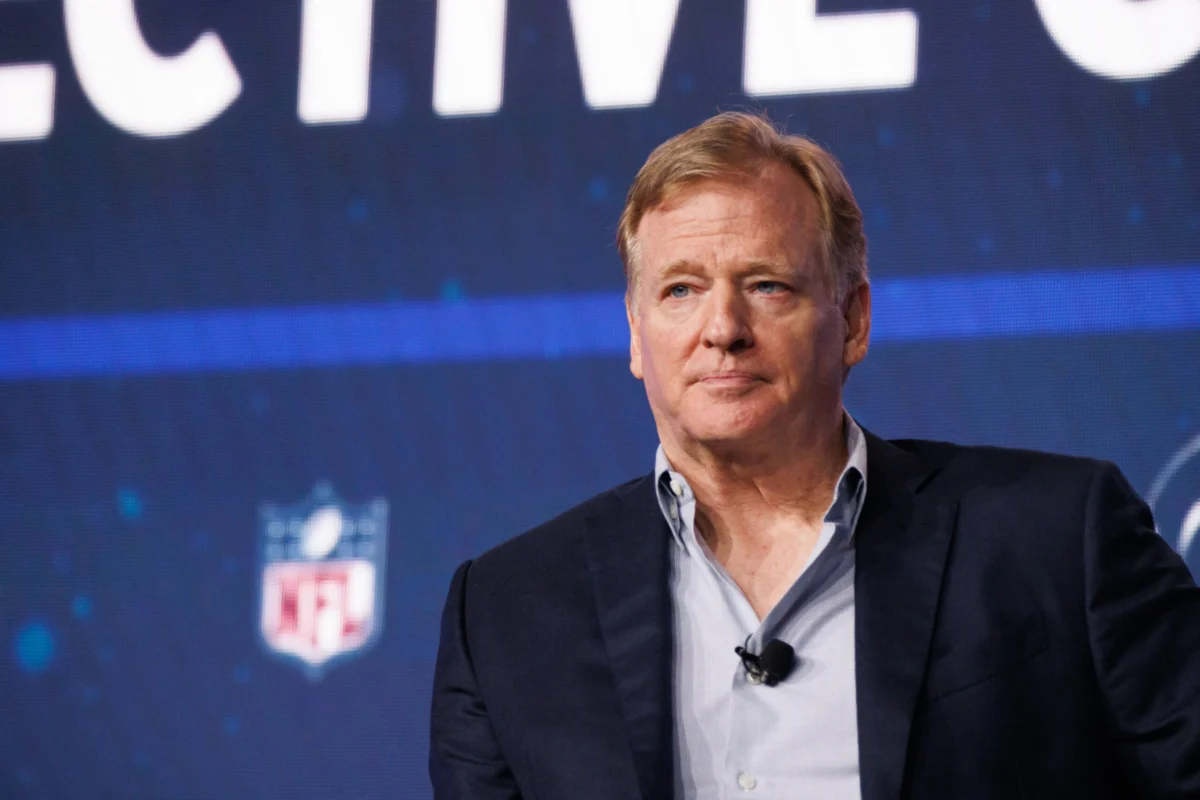
Melbourne, Australia — National Football League Commissioner Roger Goodell has indicated that the league is actively considering a fundamental overhaul of its game packages as it prepares for its next round of media rights negotiations. Speaking exclusively with CNBC ahead of the league’s inaugural regular-season matchup in Australia between the San Francisco 49ers and the Los Angeles Rams, Goodell emphasized the necessity of adapting to modern television consumption habits and the inexorable shift toward streaming platforms. This strategic review underscores a pivotal moment for the NFL, which consistently commands the highest viewership in American television, as it navigates a rapidly transforming global media landscape.
Goodell’s comments come at a time when media companies worldwide are grappling with unprecedented disruption. "One of the things we’re doing as a league is talking to our partners, talking to future partners, potential partners… and evaluating, should we repackage our current packages? Should we think differently about where we go with those things?" Goodell stated, highlighting a proactive approach to safeguard and expand the league’s immense value. The game in Sydney, Australia, scheduled for Thursday night at 8:35 p.m. ET, serves as a symbolic backdrop for these discussions, marking another significant stride in the NFL’s burgeoning internationalization strategy.
The Current Landscape: A Multi-Platform Empire
The NFL’s existing media rights structure is a complex tapestry woven across traditional broadcast, cable, and nascent streaming services, reflecting years of strategic deals designed to maximize reach and revenue. Currently, the league’s robust schedule is distributed across several key partners:
- Sunday Afternoon Games: Divided between Fox and Paramount Skydance-owned CBS, these packages represent the bulk of the Sunday schedule and are foundational to the league’s broadcast presence.
- Sunday Night Football: A prime-time staple, this package is held by NBC, consistently ranking as one of the most-watched programs on television.
- Monday Night Football: Long a cornerstone of ESPN’s programming, this package is now shared with Disney’s ABC, offering broad reach.
- Thursday Night Football: Amazon holds the exclusive streaming rights to this package, a landmark deal that signaled a significant shift towards digital platforms for premium live sports.
- Supplementary Games: Netflix recently acquired rights to five additional NFL games this season, further diversifying the league’s digital footprint and testing new distribution models.
This intricate web of partnerships has historically generated billions in revenue for the NFL, solidifying its position as the most valuable sports league globally. However, the contracts underpinning these deals, while robust, were crafted in an era predating the full-scale explosion of streaming and the fragmentation of audience attention.
The Opt-Out Clause: A Strategic Lever for Future Flexibility
Central to the NFL’s current strategic deliberations is a critical opt-out clause embedded within its current media rights agreements. This clause grants the league the option to renegotiate and resell its existing packages at the conclusion of the 2029-30 season. While Goodell remained circumspect about whether the league would definitively exercise this option, he underscored its profound importance.
"We don’t have to make that decision today. That’s the reason you have an option," Goodell explained. "[What] we said all along is that the option would be incredibly valuable to the NFL — to be able to evaluate what’s happening in the media landscape, to be able to look at the things that are happening out there and make the best decision for our fans and for our clubs and how we make sure we present our game in the best possible way and do it with the proper value."
This statement highlights the NFL’s astute foresight in securing flexibility in a volatile market. The ability to reassess its strategy just five years from now allows the league to capitalize on emerging technologies, shifting viewer preferences, and the evolving competitive landscape among media entities. It positions the NFL to potentially command even greater value, leveraging its unparalleled audience draw against a backdrop of increasing demand for exclusive live content. The league’s current domestic media rights deals, signed in 2021, are valued at over $110 billion over eleven years, underscoring the immense financial stakes involved in any future renegotiation. This makes the 2029-30 opt-out a potential trigger for another unprecedented surge in sports media valuation.

Adapting to Modern Consumption Habits: The Streaming Imperative
The impetus behind Goodell’s re-evaluation is clear: the seismic shift in how audiences consume media. Traditional linear television viewership continues its steady decline, particularly among younger demographics, while streaming services proliferate and capture an increasing share of viewing hours. Cord-cutting, the practice of canceling traditional cable or satellite TV subscriptions, has accelerated, forcing content providers to adapt or risk losing relevance.
"The world is changing for our partners. It’s changing for us. It’s changing for fans. Our fans are moving to other platforms," Goodell observed. This candid assessment acknowledges that the NFL, despite its dominant position, is not immune to these broader trends. Fans, particularly younger ones, expect flexibility, on-demand access, and multi-device viewing options. The traditional model of fixed broadcast windows and exclusive network channels is increasingly seen as restrictive in an era of personalized content feeds and subscription bundles.
The league’s foray into partnerships with pure-play streaming services like Amazon (Thursday Night Football) and Netflix (select games) is a direct response to this shift. These deals are not merely about incremental revenue; they are strategic experiments to understand how to best engage a digitally native audience and to explore new monetization avenues, such as targeted advertising and direct-to-consumer subscriptions. The success of Amazon’s "Thursday Night Football," which has demonstrably driven Prime Video subscriptions, provides a tangible example of the potential value unlock.
Navigating a Volatile Media Ecosystem: Partner Transformations
The NFL’s strategic review is further complicated by the significant transformations currently underway among its established media partners. The industry is in a state of flux, characterized by mega-mergers, acquisitions, and corporate restructuring, all aimed at achieving scale, consolidating content libraries, and competing more effectively in the streaming wars.
- Paramount Global and Warner Bros. Discovery: Paramount is reportedly attempting to acquire Warner Bros. Discovery for a staggering $110 billion, a deal that has faced delays amid antitrust challenges. Should this merger materialize, it would create a media behemoth with vast content assets and a sprawling distribution network, potentially altering its strategic priorities for NFL content.
- Fox and Roku: Fox has agreed to acquire Roku for $22 billion, a move that signals traditional broadcasters’ intent to gain greater control over streaming distribution and advertising technology. Integrating Roku’s platform with Fox’s content could create a powerful new ecosystem for sports delivery.
- Comcast and NBCUniversal: Earlier this year, Comcast announced plans to spin off NBCUniversal, separating its media and technology wings into distinct public companies. Such a reorganization could lead to a sharpened focus for NBCUniversal on its core entertainment and sports assets, potentially influencing its future bidding strategy for premium content like the NFL.
These corporate maneuvers create both opportunities and challenges for the NFL. On one hand, larger, more integrated media companies might have greater financial muscle and broader platforms to distribute NFL content. On the other hand, their internal strategic shifts could mean varying levels of commitment or new demands regarding packaging and exclusivity. The NFL must carefully assess the long-term viability and strategic alignment of its partners as it considers future deals.
A New Era of Global Ambition: Expanding Beyond U.S. Borders
Beyond domestic media consumption shifts, Goodell also highlighted the NFL’s increasingly global aspirations as a key factor in its media rights strategy. Historically, the NFL has been a predominantly U.S.-centric league, with international games viewed as niche events. This paradigm is rapidly changing.
"One of the challenges for us is to look at the changes, evaluate what’s working, what’s not, what we think is going to work beyond those option dates and the partners that can bring the greatest opportunity to reach those fans on a global basis," Goodell stated, adding, "We’ve never looked at it that way until recently."
This season, the NFL is scheduled to play regular-season games in an unprecedented number of international locations, including Spain, France, and Brazil, in addition to Australia. These games are not merely exhibition matches; they are strategic inroads into new markets designed to cultivate fan bases and unlock new revenue streams. The decision to grant Netflix global broadcast rights for the 49ers-Rams game in Australia is a clear indicator of this global shift. By partnering with a streaming giant that boasts hundreds of millions of subscribers worldwide, the NFL is signaling its intent to leverage digital platforms for rapid international expansion.

However, the current reality is that most NFL game rights remain U.S.-only, creating a potential disconnect between the league’s global ambitions and its existing media contracts. Future negotiations will likely see a greater emphasis on integrated global packages or more sophisticated regional rights deals, allowing the NFL to maximize its international commercial potential. This could attract new international bidders or incentivize existing partners to expand their global reach.
Balancing Tradition and Innovation: The Broadcast TV Commitment
Despite the pronounced shift towards streaming, Commissioner Goodell reiterated the NFL’s unwavering commitment to maintaining broad accessibility through traditional broadcast television. This commitment is crucial for ensuring that local markets retain free, over-the-air access to games, a cornerstone of the league’s popularity and cultural significance in the United States.
"One hundred percent of our games are available on broadcast television. I see that continuing," Goodell affirmed. This commitment typically manifests through simulcasting arrangements, where games streamed on services like Netflix and Amazon Prime Video are also carried by local broadcast stations, ensuring regional fans can watch without a paid subscription.
This dual strategy reflects a nuanced understanding of the diverse NFL fanbase. While a growing segment embraces streaming, a substantial portion still relies on traditional broadcast. Maintaining a presence on both platforms allows the league to cater to all demographics, preventing alienation of loyal viewers while simultaneously capturing new, digitally native audiences. It’s a delicate balancing act designed to maximize reach without sacrificing revenue or traditional viewership. The continued emphasis on free-to-air access also serves an important public relations function, reinforcing the NFL’s role as a national cultural institution accessible to all.
Implications and Future Scenarios
The NFL’s proactive approach to its media rights signals several potential implications for the future of sports broadcasting:
- Increased Fragmentation and Customization: The league might move towards more granular packaging, selling rights to specific time slots, teams, or even individual games, allowing for greater customization and potentially attracting a wider array of bidders, including niche platforms.
- Hybrid Models Dominance: Expect a continued evolution of hybrid models that blend traditional linear broadcasts with exclusive streaming windows and interactive features, pushing the boundaries of fan engagement.
- Enhanced Global Offerings: Future deals will likely feature more robust and integrated global rights packages, reflecting the NFL’s ambition to become a truly global sport.
- Rise of Tech Giants: The influence of tech companies like Amazon, Apple, and Google (YouTube TV) in sports broadcasting will only grow, potentially outbidding traditional media companies for premium content. Their deep pockets, global infrastructure, and data analytics capabilities make them formidable competitors.
- Direct-to-Consumer Potential: While not explicitly mentioned, the NFL could eventually explore more direct-to-consumer offerings, perhaps for international markets or supplementary content, giving them greater control over distribution and fan data.
- Evolving Advertising Models: As more games shift to streaming, advertising models will become more sophisticated, leveraging user data for highly targeted ads, potentially increasing revenue per viewer compared to traditional broadcast.
The stakes for the NFL are immense: maximizing its multi-billion-dollar media revenue, expanding its global footprint, and maintaining its position as the premier sports league in an ever-changing entertainment landscape. For media partners, securing NFL rights remains a crucial strategy for driving subscriptions, advertising revenue, and platform differentiation. The decisions made by the NFL in the coming years, particularly regarding the 2029-30 opt-out, will not only shape its own future but also significantly influence the broader trajectory of sports media and entertainment for decades to come. The era of static, long-term deals is giving way to a more dynamic, adaptable approach, with the NFL leading the charge.
