

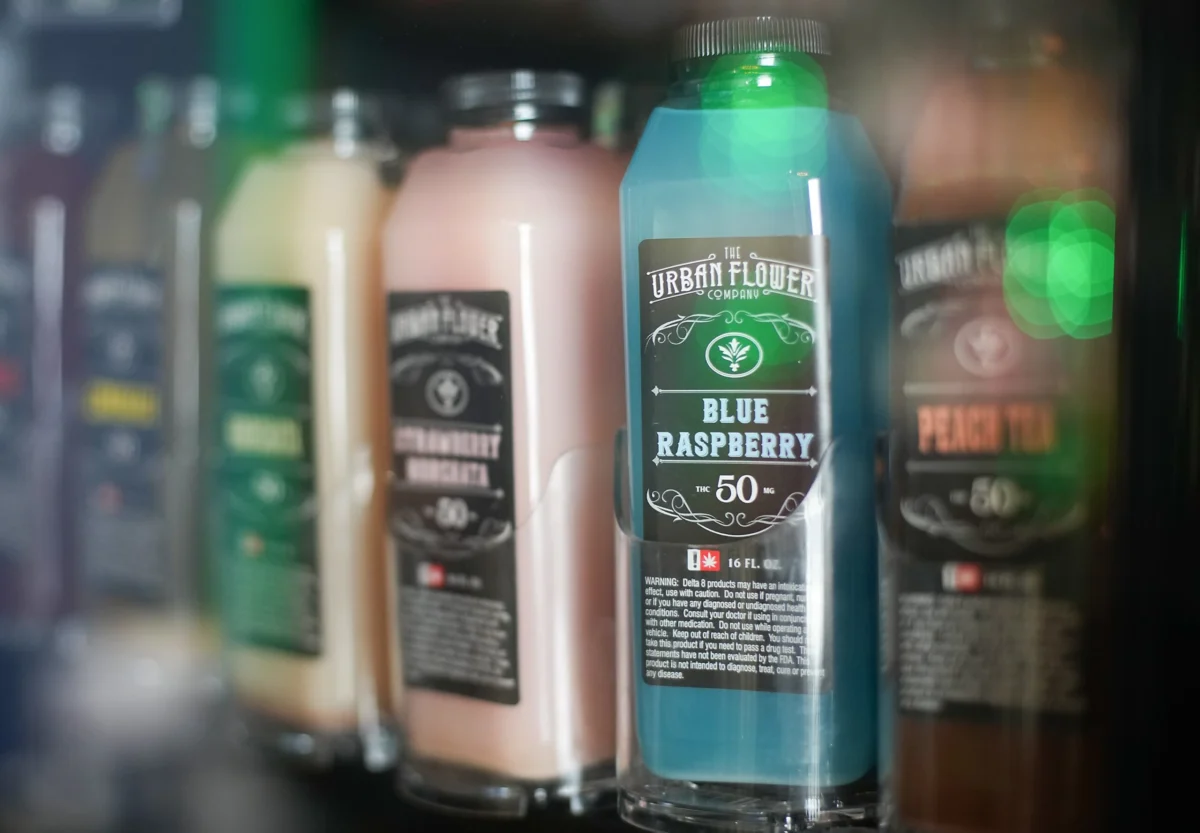
The burgeoning market for THC-infused beverages, hailed by many consumers as a healthier alternative to alcohol, now finds itself at a precarious crossroads as Congress repeatedly postpones a decision on its federal legality. This legislative uncertainty, marked by another temporary extension of existing regulations, has cast a long shadow over an industry experiencing explosive growth, threatening to dismantle established businesses and disrupt access for a rapidly expanding consumer base.
The latest development saw the House of Representatives pass a stopgap spending measure this week, not only keeping the U.S. government funded but also pushing back new federal restrictions on hemp-derived THC products. Originally slated to take effect on November 12, the deadline for compliance has now been extended to December 11. This reprieve offers the beleaguered hemp industry a mere additional month to intensively lobby lawmakers for a comprehensive regulatory framework that would permit the continued sale of these products, rather than outright banning them. The stakes are undeniably high, with the livelihoods of countless businesses and the preferences of millions of consumers hanging in the balance.
The Rise of a New Beverage Category
For individuals like Erica Fabian, a business owner and military spouse, THC-infused drinks represent a profound shift in personal wellness and family dynamics. Fabian attests to the transformative impact these beverages have had, particularly for her husband, a retired 20-year Navy SEAL veteran grappling with severe post-traumatic stress disorder. "Drinking [alcohol] is not healthy for both myself and my husband," Fabian shared, highlighting the conscious decision to seek alternatives. She describes THC beverages as an "actual game-changer," having witnessed their positive effects firsthand. This sentiment is echoed by a growing segment of the population seeking mindful consumption options that offer relaxation and mild euphoria without the adverse health consequences and impaired judgment often associated with alcohol.
The appeal of THC beverages lies in their typically lower levels of the psychoactive compound compared to traditional cannabis products, offering a more controlled and approachable experience. This has positioned them as a compelling choice for consumers prioritizing wellness, moderation, and an avoidance of alcohol. The market’s robust expansion underscores this demand, with THC beverages generating a staggering $239 million in measured U.S. retail sales in the 52 weeks through April, marking a monumental 135% increase from the previous year, according to data from NielsenIQ. This data encompassed over 1,170 products across more than 200 brands, illustrating the breadth and diversity of this rapidly evolving sector.
Navigating the Legal Labyrinth: The 2018 Farm Bill Loophole
The current legal ambiguity surrounding hemp-derived THC products stems directly from the landmark 2018 Farm Bill. This federal legislation fundamentally redefined hemp, distinguishing it from marijuana by legalizing cannabis plants and their derivatives containing less than 0.3% delta-9 tetrahydrocannabinol (THC) on a dry weight basis. The intent was to foster a legal market for industrial hemp, including products like CBD, fiber, and seeds.
However, the bill’s specific language created an unforeseen legal "loophole." While it explicitly regulated delta-9 THC, it did not explicitly address other intoxicating cannabinoids that can be derived from hemp, such as delta-8 THC, delta-10 THC, HHC, or even delta-9 THC that is converted from CBD, provided the final product adheres to the less than 0.3% delta-9 THC limit by weight. This omission inadvertently paved the way for manufacturers to legally produce and sell a wide array of intoxicating products, including edibles, vapes, and beverages, across states where recreational marijuana remains illegal at the federal level.
This regulatory lacuna has allowed the hemp-derived THC market to flourish in what many describe as a "gray area," operating outside the stringent testing, labeling, and age restrictions typically imposed on state-legal recreational cannabis markets or even alcohol. It is this lack of comprehensive federal oversight that has become the central point of contention in Congress.
A Chronology of Uncertainty: Congressional Delays and Industry Fallout
The legislative journey to address this loophole has been protracted and fraught with uncertainty. The current debate is not new; a previous measure, passed as part of a government funding bill in late 2023, initially set a deadline for November 2024 for companies to comply with new restrictions on intoxicating hemp products. This initial push aimed to close the loophole and bring these products under tighter federal control.
However, with the November 2024 deadline fast approaching, Congress has found itself unable to reach a consensus on a permanent solution. The recent stopgap measure, passed "this week," merely kicks the can down the road, extending the current regulatory status until December 11, 2024. While a temporary reprieve, it has done little to alleviate the deep-seated anxiety within the industry.
This prolonged legislative limbo has already exacted a heavy toll on businesses. Jake Bullock, CEO of Cann, a leading THC beverage maker, highlighted the paradoxical situation his company faces. Despite Cann being the top-selling THC drink at Target and the No. 2 nonalcoholic beverage at Sprouts, the specter of a ban has caused significant disruption. Bullock reported record sales to retailers but a sharp pullback from wholesalers. "Our distributors should be buying more from us, but they’re not," he explained, noting their reluctance to hold inventory that could become unsellable overnight.
The impact has been even more severe for smaller enterprises. Joe Gerrity, CEO and co-founder of hemp beverage manufacturer Crescent Canna, revealed the painful consequences of congressional inaction. His company has already been forced to lay off half of its employees this year due to the business uncertainty. Gerrity’s frustration is palpable: "Nine months after passing a bill that would kill tens of thousands of small businesses, Congress has come together and done something tremendous – given themselves an additional month to solve a problem that they created." He added, "I want to celebrate, but it shouldn’t take an army of lobbyists and tens of millions of dollars for Congress to protect small businesses from Congress."
The practical implications extend throughout the supply chain. Distributors are increasingly demanding financial guarantees from manufacturers, requiring documentation that stipulates buy-back and reimbursement for any product rendered unsellable by future regulatory changes. "This is an unprecedented situation, and nobody wants to get left holding the bag," Gerrity emphasized, illustrating the immense financial risk and planning hurdles faced by every link in the chain.
The Congressional Divide: Safety vs. Economic Freedom
The debate in Congress is sharply divided, primarily along lines of public safety versus economic freedom and consumer choice. Opponents of the current unregulated market, particularly House Republicans, argue that the absence of federal oversight poses significant risks, especially to children. Representative Andy Harris (R-Md.) has emerged as a vocal proponent for banning hemp-derived intoxicating products, asserting that their unregulated nature makes them inherently unsafe. Concerns extend beyond beverages to include high-potency edibles, vapes, and products containing synthetic cannabinoids, all of which critics argue lack adequate THC caps, testing requirements, and age verification protocols.
Conversely, the industry argues that a ban is an overreaction and that responsible regulation is the appropriate path forward. Jake Bullock of Cann articulated the industry’s position: their goal is not to preserve a "regulatory vacuum" but to establish a robust framework similar to the alcohol industry. He believes that Congress is "not worried" about lower-milligram dosage THC drinks, suggesting a targeted approach to regulation rather than a blanket prohibition. The industry contends that a ban would not only decimate a thriving sector but also push consumers back to unregulated illicit markets, where product safety is genuinely unverified.
Broader Implications: Economic, Social, and Public Health
The outcome of this congressional debate carries far-reaching implications. Economically, a ban would lead to the immediate collapse of a multi-million-dollar industry, resulting in mass layoffs, significant investment losses, and the closure of countless small businesses that have emerged in this space. It would also stifle innovation in a nascent sector that has shown immense potential for job creation and tax revenue.
Socially, a ban would remove a popular alcohol alternative that many consumers, like Erica Fabian, rely on for wellness and responsible recreation. This could push consumers back towards alcohol or towards illicit cannabis markets, which lack quality control and safety standards. The desire for non-alcoholic, mildly intoxicating options is a clear trend, and suppressing a legal market may simply empower illegal ones.
From a public health perspective, the arguments are complex. While critics highlight the risks of unregulated products, industry proponents argue that a regulated market would provide the necessary consumer protections—age limits, testing for contaminants, accurate labeling of THC content, and responsible marketing practices—that are currently absent. A ban, they contend, would eliminate the opportunity to build such a framework, leaving consumers vulnerable to potentially more dangerous products from illicit sources.
The Path Forward: Seeking a Regulatory Blueprint
As the December 11 deadline looms, the focus is squarely on Congress to forge a viable regulatory blueprint. Several models are being considered, including:
- Mirroring Alcohol Regulation: Implementing a federal framework similar to how alcohol is regulated, with age restrictions, licensing requirements, and strict product testing and labeling.
- FDA Oversight: Granting the Food and Drug Administration (FDA) authority to regulate hemp-derived cannabinoids, treating them as dietary supplements or food additives with specific safety and labeling requirements.
- State-Level Control with Federal Guidance: Allowing states to continue developing their own regulatory schemes, but with federal guidelines to ensure consistency and prevent a patchwork of conflicting laws.
The industry, through organizations and lobbyists, is actively advocating for a federal framework that differentiates between high-potency products and lower-dose beverages, acknowledging legitimate safety concerns while preserving market access for responsible products. They emphasize that regulation, not prohibition, is the most effective way to ensure consumer safety and product quality.
Uncertain Future for a Growing Market
For now, retailers can continue selling THC beverages, and consumers can continue purchasing them. However, the extended uncertainty makes long-term planning an impossibility for businesses. The reluctance of distributors to replenish inventory signals a deep-seated apprehension that could lead to supply chain disruptions even before any legislative ban is enacted.
Jake Bullock’s decision to continue building inventory, betting on Congress eventually reaching an agreement on regulation, reflects a desperate hope within the industry. But this hope is tempered by the stark reality articulated by Joe Gerrity: the industry is fighting for its very survival against legislative inaction that threatens to undo years of entrepreneurial effort and investment.
For consumers like Erica Fabian, the stakes are profoundly personal. "If there is a responsible way to regulate it, I absolutely think that is the way to go," she asserted, encapsulating the desire for safe, legal access to products that have genuinely improved quality of life. The coming weeks will determine whether Congress can move beyond temporary fixes to establish a clear, comprehensive, and equitable path forward for the rapidly evolving and increasingly popular THC beverage market. The decision will not only shape the future of an industry but also significantly impact consumer choice and public health.
