

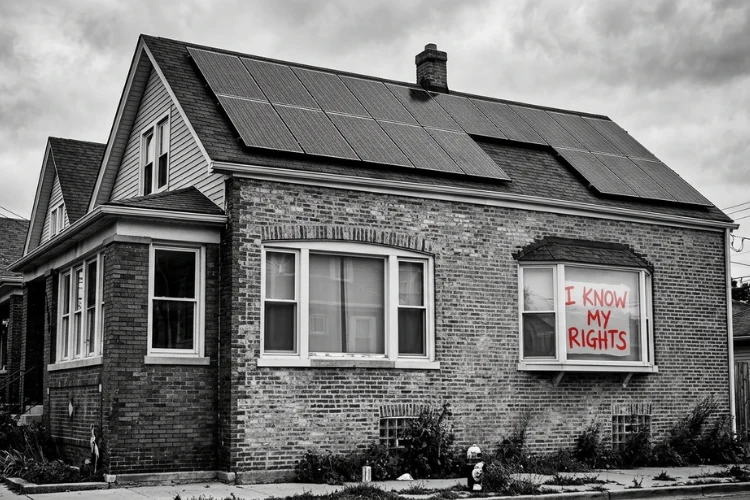
The legislative landscape for renewable energy in Illinois underwent a significant transformation on June 1, 2026, as key provisions of the Clean and Reliable Grid Affordability (CRGA) Act officially took effect. This milestone marks a pivotal chapter in the state’s ongoing effort to standardize solar access, particularly for residents served by municipal utilities and rural electric cooperatives. While the state has long been a leader in clean energy policy through the Climate and Equitable Jobs Act (CEJA) of 2021, a "postcode lottery" has persisted, where the feasibility of rooftop solar was often determined by a customer’s utility provider rather than their property’s solar potential. The implementation of the Solar Bill of Rights within the CRGA Act aims to dismantle these barriers, though advocates emphasize that the journey toward total energy equity remains incomplete.
The Regulatory Divide: Municipal Utilities vs. Investor-Owned Entities
In Illinois, the utility market is bifurcated between large investor-owned utilities (IOUs), such as Commonwealth Edison (ComEd) and Ameren, and approximately 40 municipal utilities and 25 rural electric cooperatives. While IOUs are regulated by the Illinois Commerce Commission (ICC) and must adhere to standardized state mandates regarding net metering and interconnection, municipal utilities and cooperatives (muni/co-ops) have historically enjoyed a high degree of local autonomy.
This autonomy resulted in a patchwork of policies. While some muni/co-ops embraced distributed generation, others implemented restrictive system-size caps, prohibitive insurance requirements, and opaque crediting structures. For the roughly 15% to 20% of Illinoisans served by these entities, the transition to solar has often been cost-prohibitive or administratively impossible. The Solar Bill of Rights was conceived by advocacy groups, including Vote Solar, to establish a baseline of consumer protections that apply regardless of a utility’s corporate structure.
Chronology of the Solar Bill of Rights
The push for standardized solar rights in Illinois gained momentum following the 2021 passage of CEJA, which set a goal for the state to reach 40% renewable energy by 2030 and 100% clean energy by 2050. However, as residential solar adoption surged in ComEd and Ameren territories, reports began to surface of "solar deserts" in rural and municipal areas where local utility boards had not updated their bylaws to accommodate modern distributed energy resources (DERs).
In 2024 and 2025, legislative sessions saw the introduction of the Solar Bill of Rights as a standalone concept. Advocacy efforts highlighted cases where homeowners were forced to pay for $1 million liability policies naming the utility as a beneficiary, or where farms were barred from installing systems large enough to offset their heavy machinery usage. These efforts culminated in the integration of key Solar Bill of Rights provisions into the CRGA Act, which was signed into law and reached its primary implementation deadline in mid-2026.
Immediate Impacts: Insurance and System Sizing
The June 2026 implementation of the CRGA Act addressed two of the most significant financial and technical hurdles for solar adopters in muni/co-op territories.
1. Elimination of Unfair Insurance Mandates
Prior to the new law, many small utilities required customers to list the utility as an "additional insured" on their homeowner’s insurance policies. This was often an impossible request for standard insurance carriers to fulfill, as the utility has no insurable interest in a private residence. When carriers did comply, they often charged high premiums, adding an average of $150 to $500 to a household’s annual expenses. The CRGA Act now prohibits utilities from requiring customers to carry liability insurance for the utility’s benefit. While utilities can still require solar contractors to maintain professional liability insurance—a standard industry practice—the burden is no longer placed on the individual ratepayer.
2. The 25-Kilowatt Right-Sizing Guarantee
The second major victory in the CRGA Act is the guarantee that customers can install systems up to 25 kilowatts (kW) of AC output. Previously, some cooperatives had capped residential solar at 5 kW or 10 kW, which was often insufficient for larger homes, small businesses, or agricultural operations. By setting the floor at 25 kW, the state has aligned muni/co-op territories with the standards used by the Illinois Shines program (the state’s adjustable block grant program). This allows for "right-sizing," ensuring that a system is built to match the customer’s actual load rather than an arbitrary regulatory ceiling.
The Unfinished Agenda: Six Remaining Provisions
Despite the success of the CRGA Act, proponents of the Solar Bill of Rights argue that the current protections are only a foundation. Six core provisions remain on the legislative horizon, aimed at ensuring long-term financial stability and transparency for solar owners.
Transparency in Crediting and Compensation
Currently, the rate at which a utility credits a customer for excess energy sent back to the grid (net metering) varies wildly among muni/co-ops. Some offer a 1-to-1 retail credit, while others offer a much lower "avoided cost" rate. The proposed "Fair and Transparent Credit" provision would require all utilities to publish clear, accessible information regarding their crediting policies and timelines, preventing "bill shock" for new solar owners.

Legacy Protections and Grandfathering
Solar installations are 25-to-30-year investments. However, without state-level legacy protections, a municipal utility board could theoretically vote to change its compensation structure overnight, significantly extending the payback period for existing systems. Advocates are seeking a 25-year "legacy period" to ensure that the rules in place at the time of interconnection remain in effect for the life of the system.
Expanding Financing through Leases and PPAs
In many cooperative territories, customers are required to own their solar equipment outright to qualify for interconnection. This excludes low-to-moderate-income (LMI) families who may not have the capital or credit for a direct purchase. Power Purchase Agreements (PPAs) and third-party leases are standard in IOU territories and are essential for scaling solar equitably. The Solar Bill of Rights seeks to mandate that all Illinois utilities allow these financing models.
Standardization of Interconnection and Metering Costs
"Soft costs" remain a significant barrier to solar deployment. In some instances, small utilities have charged several thousand dollars for "engineering studies" or specialized meters for simple residential setups. The proposed legislation would cap these fees and require they be commensurate with the actual work performed by the utility.
Access to Dispute Resolution
One of the most significant disparities is the lack of recourse for muni/co-op customers. While IOU customers can file formal complaints with the ICC, muni/co-op customers are often told that the local board’s decision is final. The Solar Bill of Rights proposes an ICC-led mediation process to provide a neutral ground for resolving technical and financial disputes.
Data-Driven Analysis of the Solar Market
According to data from the Solar Energy Industries Association (SEIA), Illinois is ranked among the top ten states for solar growth, with over 2,500 MW of solar installed as of early 2026. However, the distribution of this capacity is heavily skewed toward ComEd and Ameren service areas.
Economic modeling suggests that if the remaining six provisions of the Solar Bill of Rights are passed, it could unlock an additional 300 to 500 MW of distributed generation capacity in rural and municipal sectors over the next decade. Furthermore, the adoption of PPAs in these territories is expected to increase participation in the "Solar for All" program, which provides incentives specifically for LMI households.
Stakeholder Reactions and Economic Implications
The reaction to the CRGA Act and the proposed Solar Bill of Rights has been mixed along sectoral lines. Renewable energy developers have praised the move, noting that regulatory certainty is the primary driver of investment. "Standardization allows us to offer consistent pricing and products across the entire state," noted one regional solar installer. "When every town has its own insurance and sizing rules, it drives up the cost for everyone."
Conversely, some representatives of rural electric cooperatives have expressed concerns regarding "cost-shifting." They argue that if solar owners are credited at retail rates, the fixed costs of maintaining the grid are shifted to non-solar-owning members. This tension between "local control" and "state-wide standards" remains the primary hurdle for the remaining six provisions of the Bill of Rights.
Conclusion: The Path Toward 2030
The implementation of the initial Solar Bill of Rights provisions via the CRGA Act represents a landmark victory for energy democracy in Illinois. By removing the "additional insured" requirement and raising the system-size cap to 25 kW, the state has effectively opened the door for thousands of residents who were previously locked out of the clean energy economy.
However, as Illinois marches toward its 2030 renewable energy targets, the focus will likely shift toward the "unfinished business" of the Solar Bill of Rights. For the state to achieve a truly equitable transition, the remaining protections—focused on financing, transparency, and legacy rights—will be essential. The success of the CRGA Act has demonstrated that bipartisan progress on energy access is possible, setting the stage for a final legislative push to ensure that every Illinoisan, regardless of their utility provider, has a fair shot at a solar-powered future.
