

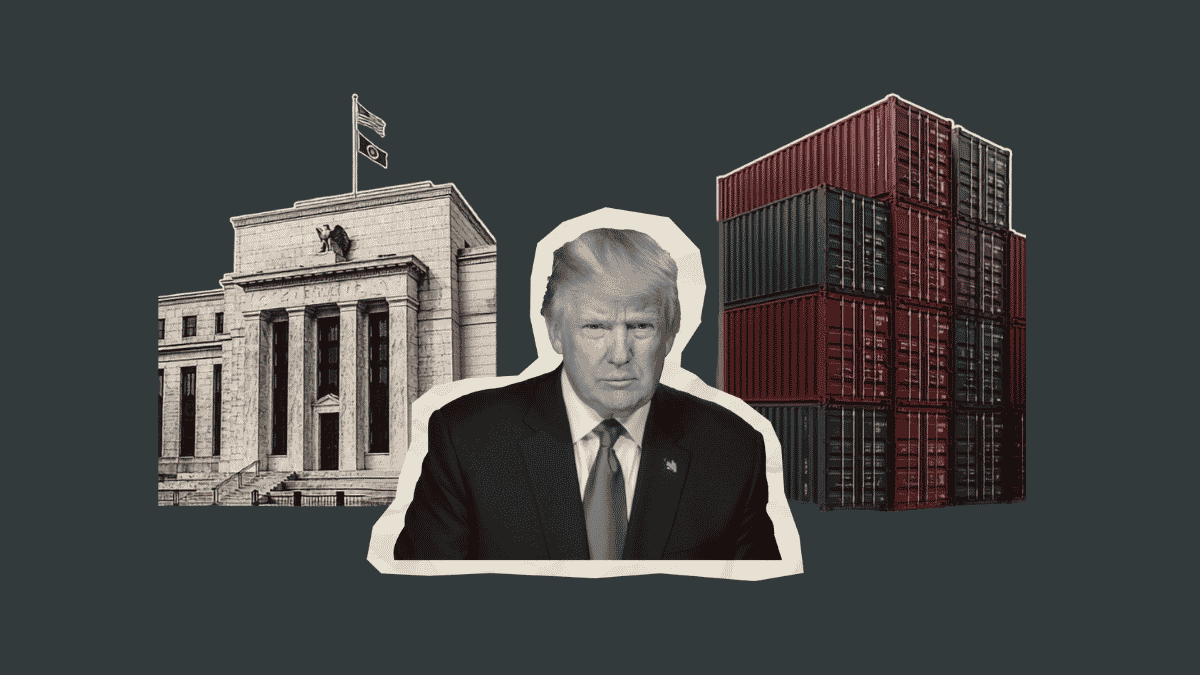
President Donald Trump issued a sweeping ultimatum to the Federal Reserve on Friday, demanding an immediate reduction in interest rates and threatening to suspend all trade with nations maintaining a trade deficit with the United States if the central bank fails to comply. The president’s comments, delivered via his Truth Social platform, represent a significant escalation in his long-standing campaign to influence monetary policy and mark a new strategy of linking central bank actions directly to international trade relations.
The demand follows the release of a robust August employment report that complicated the Federal Reserve’s path toward potential rate cuts. Data from the Bureau of Labor Statistics revealed that U.S. employers added 162,000 jobs in August, a figure that nearly tripled the consensus economist forecast of 56,000. Despite the surge in hiring, the national unemployment rate remained steady at 4.1%. In the immediate aftermath of the report, financial markets showed a muted response; the 10-year Treasury yield and average mortgage rates remained largely unchanged, suggesting that investors had already priced in a degree of economic resilience.
The Presidential Ultimatum and Trade Linkage
In his social media address, President Trump urged Federal Reserve Chairman Kevin Warsh and the Board of Governors to "get smart" regarding the nation’s borrowing costs. He argued that the underlying strength of the American economy should logically result in lower interest rates rather than the restrictive levels currently maintained by the central bank. "We should have the LOWEST RATE of any country in the World, like ‘the old days,’" the president wrote, referencing a period of historically low borrowing costs.
The most provocative element of the president’s statement was the explicit coupling of domestic monetary policy with global trade. Trump suggested that halting trade with deficit partners would serve as a more effective tool than traditional tariffs. "LOWER THE RATE OR I’LL STOP TRADING WITH COUNTRIES WITH WHICH WE HAVE A DEFICIT," the president declared. He further claimed that a recent U.S. Supreme Court decision regarding tariffs acknowledged the executive branch’s "absolute right" to take such actions, framing the potential trade suspension as a superior alternative to his administration’s previous reliance on import duties.
This rhetoric introduces a new layer of uncertainty for global markets. The United States currently runs trade deficits with dozens of nations, including many of its most critical strategic and economic partners such as China, Mexico, Germany, and Japan. A total suspension of trade with these entities would represent an unprecedented decoupling of the American economy from the global supply chain, likely triggering significant inflationary pressures and retaliatory measures from abroad.
The Hawkish Shift Under Chairman Kevin Warsh
The president’s pressure campaign comes at a time when the Federal Reserve, under the leadership of Chairman Kevin Warsh, appears to be moving in a more restrictive direction. During the recent Jackson Hole Economic Policy Symposium, Warsh adopted a notably hawkish tone, emphasizing that inflation remains a persistent threat to the American economy. Warsh attributed the current economic climate to 65 months of elevated prices and suggested that the central bank’s primary responsibility is to restore price stability through disciplined monetary policy.
Market expectations shifted rapidly following Warsh’s remarks. According to the CME Group’s FedWatch Tool, the implied probability of a 25-basis-point rate hike at the Federal Reserve’s upcoming September meeting jumped from 35.4% to 55.7% within 24 hours of the symposium. Following the release of the August jobs report on Friday, that probability climbed further to 58.4%. This trajectory runs directly counter to the president’s demands for immediate cuts, setting the stage for a potential constitutional and institutional showdown between the White House and the independent central bank.
A Chronology of Institutional Conflict
The current friction between President Trump and the Federal Reserve is the latest chapter in a multi-year effort by the administration to reshape the nation’s monetary authority. This conflict began shortly after the president’s second term commenced in early 2025, initially focusing on former Fed Chair Jerome Powell.
In July 2025, President Trump publicly stated he would "likely" fire Powell, though he later shifted tactics to seek legal grounds for removal "for cause." The administration cited alleged cost overruns associated with the renovation of the Federal Reserve’s headquarters in Washington, D.C., as a justification for dismissal. The pressure intensified in January 2026 when the Department of Justice served the Federal Reserve with grand jury subpoenas, threatening a criminal indictment related to Powell’s congressional testimony. While the DOJ eventually dropped the probe, Powell’s departure paved the way for the appointment of Kevin Warsh, whom the president initially viewed as a more aligned successor.
The administration’s efforts to influence the Fed have also extended to the Board of Governors. In August 2025, the president attempted to fire Governor Lisa Cook, alleging involvement in mortgage fraud. Cook successfully challenged the move in court, with a federal judge ruling that the administration had failed to demonstrate sufficient cause for her removal. The U.S. Supreme Court later upheld a ruling that limited the president’s ability to terminate Fed governors without prior notice and an opportunity for the official to respond to allegations.
These tensions have led to significant turnover within the institution. Governor Adriana Kugler resigned in August 2025, and Atlanta Fed President Raphael Bostic announced in November 2025 that he would retire at the conclusion of his term in February. The resulting vacancies have allowed the president to nominate new members, though the inherent independence of the Fed continues to be a point of contention.
Global Economic Context and Market Pressures
The president’s threats to halt trade coincide with a period of tightening monetary policy across the globe. While the U.S. considers its next move, other major economies are also grappling with persistent inflation and rising yields.
A Reuters poll of economists conducted in early September indicates that the European Central Bank (ECB) is poised to raise interest rates on September 10. This move would mark the second and likely final hike in a campaign that analysts describe as the shortest tightening cycle in 15 years. Similarly, the Bank of Japan (BoJ) is reportedly debating a rate increase for September, a significant shift for a nation that has maintained ultra-low or negative rates for decades.
The impact of these global shifts is evident in the bond markets. The yield on the 10-year Japanese government bond recently surpassed 3% for the first time since 1996, while the German 10-year bond yield rose to 3.33%, its highest level since 2011. These rising global yields put upward pressure on U.S. borrowing costs, regardless of the Federal Reserve’s domestic policy, as capital flows toward higher-returning sovereign debt.
Economic Implications of a Trade Halt
The prospect of the U.S. halting trade with deficit countries carries profound implications for the domestic and global economy. Unlike tariffs, which increase the cost of imported goods but allow trade to continue, a total suspension of trade would sever supply chains for essential components, consumer electronics, automobiles, and agricultural products.
Economists warn that such a move would likely result in:
- Supply Chain Paralysis: American manufacturers reliant on foreign intermediate goods would face immediate production halts.
- Surging Inflation: A sudden scarcity of consumer goods would drive prices significantly higher, potentially exacerbating the very inflation the Fed is currently fighting.
- Retaliatory Measures: Trading partners would almost certainly respond by seizing American assets or halting the export of critical materials (such as rare earth minerals) to the U.S.
- Dollar Volatility: The U.S. dollar’s status as the world’s reserve currency could be threatened if the U.S. uses trade access as a lever for monetary policy.
The legal basis for such an action remains a subject of intense debate. While the president cited a "ridiculous and very costly Tariff decision" by the Supreme Court as justification, legal scholars note that the International Emergency Economic Powers Act (IEEPA) grants the president broad authority over trade during declared national emergencies. However, using these powers to coerce an independent regulatory body like the Federal Reserve would likely face immediate and rigorous legal challenges.
The Path Forward for the Federal Reserve
As the September meeting of the Federal Open Market Committee (FOMC) approaches, Chairman Warsh and the board face a difficult balancing act. The strong August jobs report provides the Fed with the "higher for longer" justification it needs to keep rates elevated and ensure inflation returns to its 2% target. However, the unprecedented political pressure from the White House introduces a non-economic variable into their decision-making process.
If the Fed proceeds with a rate hike or maintains current levels, it risks further aggravating the executive branch and potentially triggering the trade measures the president has threatened. Conversely, if the Fed cuts rates in response to presidential demands, it risks losing its hard-won institutional credibility and signaling to markets that U.S. monetary policy is no longer independent of political cycles.
For now, the financial world remains on high alert. The intersection of employment data, hawkish central bank rhetoric, and aggressive executive trade policy has created a volatile environment for investors, homeowners, and international trading partners alike. As the "battle over rates" intensifies, the fundamental structure of American economic governance appears to be entering a period of significant transformation.
