

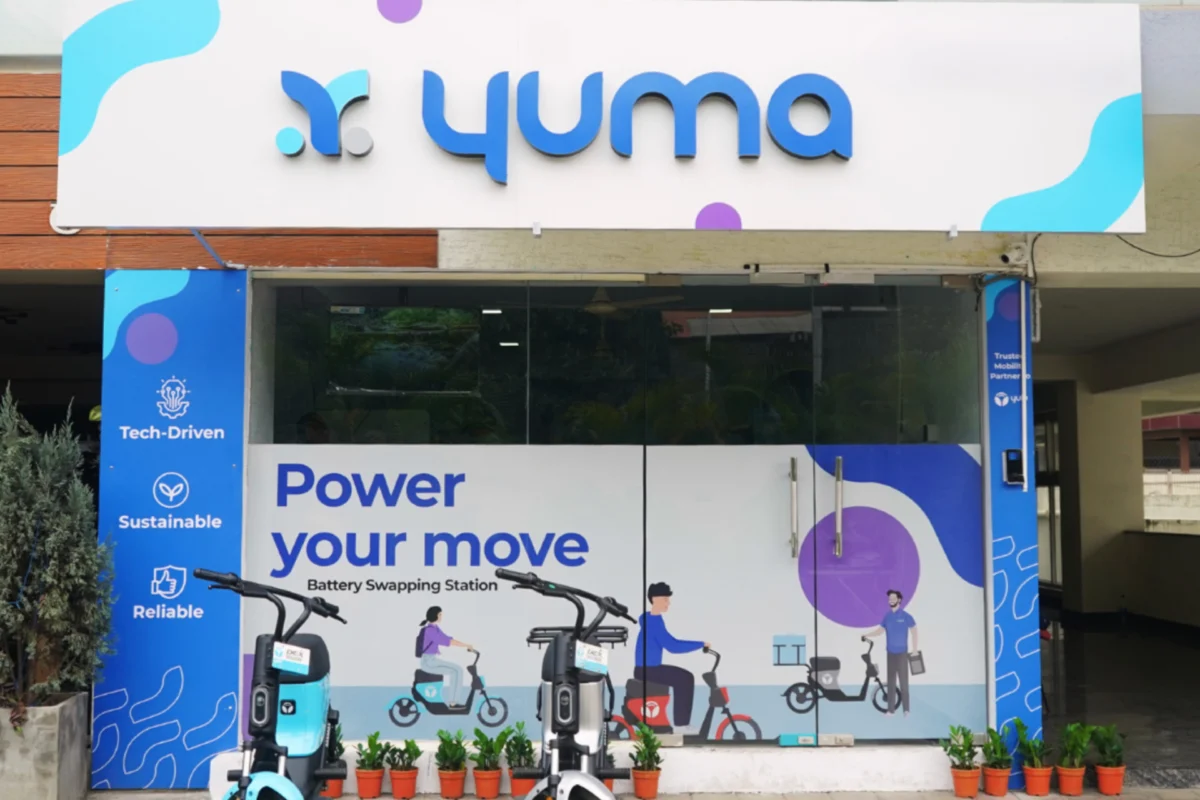
Canadian automotive parts giant Magna International has significantly bolstered its commitment to India’s electric vehicle (EV) sector, announcing an additional $35 million investment in Yuma Energy, a Bengaluru-based firm specializing in battery swapping networks for electric two- and three-wheelers. This latest capital injection elevates Magna’s stake in the joint venture, underscoring a strategic conviction that India presents a unique and scalable market for battery swapping, a model that has faced considerable hurdles in other parts of the world. The move reinforces Magna’s position at the forefront of India’s rapidly evolving mobility landscape, particularly within the burgeoning gig economy.
A Strategic Pivot: Why India for Battery Swapping?
The concept of battery swapping, while theoretically attractive for its promise of rapid energy replenishment, has largely struggled to gain widespread traction globally. Challenges such as a lack of standardization across different vehicle manufacturers, the high upfront capital expenditure for infrastructure, and consumer preferences for home charging or conventional fast charging in larger EV segments have hindered its adoption in markets like North America and Europe. However, India presents a vastly different economic and operational paradigm that Magna believes is ripe for disruption through swapping technology.
India’s transportation ecosystem is dominated by millions of two- and three-wheelers, which serve as the backbone of personal mobility and, increasingly, the country’s fast-growing delivery and logistics sectors. These vehicles, often operating on tight schedules with high daily mileage requirements, highlight a critical need for quick turnaround times that traditional charging methods cannot always meet. Muthu Subramanian, Managing Director of Yuma Energy, articulates this critical distinction: "With Indian gig workers’ high runtime on a daily basis, an EV makes absolute sense in terms of cost of ownership. Uptime is important." This emphasis on ‘uptime’ is central to the battery swapping value proposition in India, where every minute off the road directly translates to lost income for gig workers.
Furthermore, India’s power grid infrastructure, while improving, still presents challenges for widespread fast-charging solutions, especially in dense urban areas where space and consistent high-power supply can be limited. Battery swapping mitigates these issues by decentralizing the charging process and allowing for more efficient use of grid power at dedicated swapping stations. The sheer volume of two- and three-wheelers, coupled with a strong price sensitivity among consumers and commercial operators, creates a fertile ground for the economic viability of battery swapping at scale.
Yuma Energy: From Spinoff to Market Leader
Yuma Energy emerged in early 2023 as a strategic spin-off from Yulu, an Indian mobility startup renowned for its electric bike and scooter rental services. The formation of Yuma as a joint venture with Magna International marked a significant milestone, with Magna initially acquiring a 51% controlling stake. Since its inception, Yuma has demonstrated impressive operational growth, completing over 60 million battery swaps to date and deploying approximately 100,000 batteries across its expanding network.
Magna’s initial commitment to India’s micromobility and battery swapping market dates back to 2022, when it pledged a combined $77 million. Of this, $25 million was allocated to Yulu, and a substantial $52 million was directed towards the battery-swapping joint venture that would become Yuma. This staggered investment strategy reflects Magna’s phased approach, first seeding the market with Yulu’s micromobility services and then building out the essential energy infrastructure through Yuma. The latest $35 million investment further solidifies Magna’s conviction in Yuma’s business model and its potential for exponential growth. While the exact new ownership split remains undisclosed, this fresh capital injection will dilute Yulu’s initial 49% stake, cementing Magna’s even greater control and strategic oversight. Notably, Yulu and Yuma represent Magna’s sole startup investments in India, highlighting their focused strategy within this specific market segment.
Fueling the Gig Economy’s Electric Transition
The core of Magna and Yuma’s strategy is a direct bet on the rapid electrification of India’s gig economy. India’s gig worker population is projected to grow significantly, with estimates suggesting millions will be engaged in platform-based work by 2026. For these workers – be it food delivery riders, e-commerce logistics personnel, or last-mile connectivity providers – time is money. Charging an EV, even with fast chargers, can mean 20 to 30 minutes off the road, a significant loss of potential earnings. Battery swapping, by contrast, offers an exchange in under two minutes, minimizing downtime and maximizing productivity.
Subramanian estimates that only 10% to 15% of vehicles used by gig workers in India are currently electric. This low penetration, coupled with the compelling cost-of-ownership advantage offered by EVs over gasoline-powered vehicles, presents a massive untapped market for Yuma. As more gig workers transition to electric, the demand for efficient and readily available energy solutions like battery swapping will surge. The economics are clear: lower running costs per kilometer for EVs, combined with minimal downtime for energy replenishment, translate into higher net income for the gig worker, creating a powerful incentive for adoption.
The Economics of Scale and Path to Profitability
Building and maintaining a comprehensive battery swapping network is inherently capital-intensive. It requires significant upfront investment in batteries, swapping stations, and the underlying technological infrastructure to manage logistics and demand. Yuma, like many high-growth infrastructure businesses, is currently operating at a loss. Subramanian acknowledges this, stating, "It’s a capital-intensive business, and the unit economics will play out at scale." However, he also points to positive indicators: some of Yuma’s older, more established swapping stations are already EBITDA-positive, demonstrating the model’s viability once a critical mass of users is achieved.
For the financial year ending March 2026, Yuma reported approximately ₹1 billion (about $10.5 million) in revenue. The firm is targeting EBITDA break-even within the next two quarters, a challenging but achievable goal given its aggressive expansion plans. The bulk of Magna’s latest $35 million investment is earmarked for expanding Yuma’s swapping infrastructure and doubling its current fleet of approximately 100,000 batteries over the next 12 to 18 months. This forward-looking investment is crucial; Yuma must build capacity ahead of demand to ensure seamless service as EV adoption accelerates, especially among gig workers who rely on instantaneous power.
Diversifying Customer Base and Expanding Reach
While Yulu initially accounted for the vast majority of Yuma’s 60 million lifetime swaps, Yuma is actively diversifying its customer base. In the latest quarter, non-Yulu customers contributed 15% to 20% of swaps, a clear indication of Yuma’s growing appeal beyond its parent company. Subramanian projects that non-Yulu customers will constitute approximately 25% of swaps within the next two years, reflecting successful integration with a broader ecosystem of EV operators.
Yuma currently serves more than five independent fleets and has integrated its batteries with over 10 different vehicle platforms. This includes models from prominent Indian EV manufacturers such as Kinetic Green, Motovolt, BGauss, and Quantum Energy. This interoperability and growing customer roster are vital for Yuma’s long-term scalability, reducing its dependence on a single client and positioning it as a foundational infrastructure provider for the wider Indian EV market. The recent $93 million funding round secured by Yulu to expand its electric two-wheeler fleet further necessitates Yuma’s parallel expansion to meet the increased demand from its largest customer, while simultaneously catering to its growing external clientele.
Yuma’s operational footprint spans 18 Indian cities, including major metropolitan hubs like Bengaluru, Hyderabad, Mumbai, and the Delhi region, as well as tier-2 cities such as Jaipur, Lucknow, Indore, Coimbatore, Kochi, and Kolkata. With the fresh capital, the company plans to strategically expand into Chennai and Pune in the coming quarters, while also densifying its network in existing operational areas. This targeted expansion strategy ensures that Yuma is present in key economic centers and emerging EV markets across the country.
Technological Edge and Global Ambitions
A key differentiator for Yuma in the competitive Indian battery swapping landscape is its integrated approach to technology. Unlike many operators that solely manage swapping networks, Yuma designs and manufactures its own battery packs and charging units. Its battery packs are produced at a facility in Chennai, while charging units are manufactured in Bengaluru. This vertical integration provides Yuma with critical control over both the hardware and the sophisticated network management software, allowing for optimized performance, cost efficiency, and rapid iteration of its technology. This end-to-end control is crucial for ensuring battery safety, longevity, and overall network reliability.
While India remains Yuma’s primary focus for the next 12 to 18 months, the firm harbors broader international ambitions. Subramanian revealed plans to explore overseas expansion as part of Yuma’s longer-term roadmap. Southeast Asian markets, particularly Vietnam and Thailand, are identified as attractive due to their immense two-wheeler markets and nascent EV transitions. Parts of Africa also present compelling opportunities given similar transportation dynamics. While discussions about entering these markets are yet to commence, the strategic intent to leverage the India playbook for global expansion is clear, positioning Yuma as a potential global leader in two- and three-wheeler battery swapping solutions.
Broader Implications and Future Outlook
Magna’s deepened investment in Yuma Energy carries significant implications for India’s EV ecosystem and its broader energy transition. It signals robust confidence from a global automotive powerhouse in the viability and scalability of battery swapping for the micromobility and gig economy segments. This validation can attract further investment into the sector, spurring innovation and competition among service providers.
The success of Yuma’s model could accelerate EV adoption among India’s vast gig workforce, leading to substantial reductions in urban air pollution and greenhouse gas emissions. As India strives to meet its ambitious climate goals, efficient and accessible EV infrastructure is paramount. Battery swapping, by overcoming range anxiety and charging downtime, serves as a powerful enabler for this transition.
However, challenges remain. The industry still grapples with the need for greater standardization in battery design and communication protocols to foster broader interoperability, though Yuma’s proprietary system currently offers competitive advantages. Continued capital expenditure will be necessary as Yuma builds out its network ahead of demand, requiring sustained investor confidence. Nevertheless, with strong backing from Magna and a clear strategic focus on a market segment perfectly suited for its technology, Yuma Energy is poised to play a transformative role in shaping the future of electric mobility in India and potentially beyond.
