

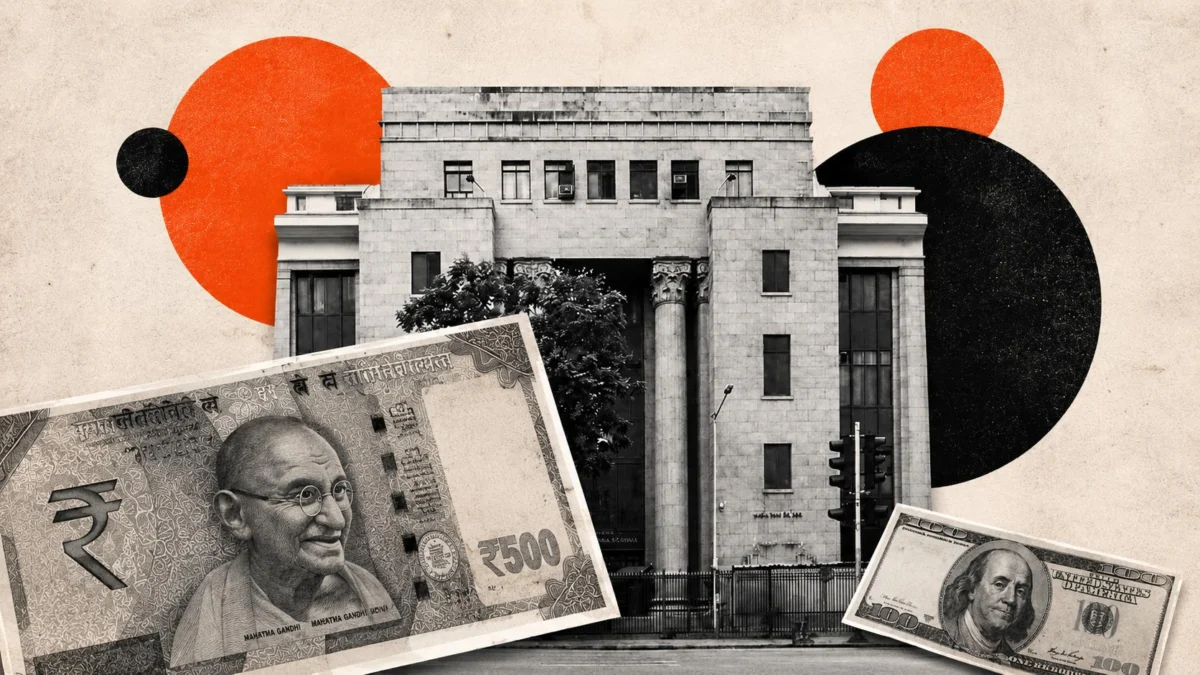
The Indian economy has delivered a powerful performance in the second quarter of fiscal year 2026-27, with Gross Domestic Product (GDP) expanding by a stronger-than-expected 7.8% year-on-year. This impressive growth figure, significantly surpassing the Bloomberg consensus estimate of 7.3%, has not only reinforced India’s position as a global economic outperformer but also recalibrated expectations regarding the Reserve Bank of India’s (RBI) future monetary policy trajectory. According to strategists at Commerzbank, this robust data print substantially reduces the likelihood of the central bank initiating any easing measures in the near term, shifting the focus firmly towards managing persistent inflation risks and potentially paving the way for an upward revision of the RBI’s own growth forecasts for the fiscal year.
The released data further revealed an upward revision of the preceding quarter’s (Q1 FY2026-27) GDP growth to a formidable 8.6% from an initial estimate of 7.8%. This consecutive streak of high-growth quarters paints a picture of an economy demonstrating remarkable resilience and sustained momentum, particularly amidst a complex global landscape marked by geopolitical tensions, notably the Middle East conflict, and elevated energy costs. The expansion has been characterized as relatively broad-based, indicating healthy contributions from both household demand and investment, which are critical pillars for sustainable economic progress. This sustained vigor challenges earlier concerns about potential slowdowns, instead presenting a narrative of an economy firmly on an accelerated growth path.
Understanding India’s Economic Trajectory and Resilience
India’s journey towards becoming a global economic powerhouse has been marked by a series of transformative phases, each contributing to its current robust standing. Historically, the nation has consistently aimed for high growth rates to uplift its vast population and integrate further into the global economy. The pre-pandemic era saw India maintaining a respectable growth trajectory, albeit with some cyclical fluctuations. The onset of the COVID-19 pandemic, however, presented an unprecedented challenge, leading to a sharp contraction in economic activity. Yet, the subsequent recovery was notably swift and resilient, largely aided by a combination of proactive government fiscal measures and accommodative monetary policies from the RBI.
The government’s strategic focus on capital expenditure, particularly in infrastructure development, coupled with production-linked incentive (PLI) schemes across various manufacturing sectors, provided significant impetus to investment and industrial output. Simultaneously, the RBI injected ample liquidity into the financial system and maintained historically low interest rates to support demand and facilitate credit flow. This coordinated policy response helped the economy not only rebound but also build a strong foundation for sustained growth.
In the more recent past, India, like many global economies, grappled with elevated inflationary pressures stemming from supply chain disruptions, soaring commodity prices – particularly crude oil and food items – and pent-up demand post-pandemic. This necessitated a pivot in monetary policy, with the RBI embarking on a tightening cycle to bring inflation back within its target band of 2-6%. Despite these global and domestic headwinds, the Indian economy has continued to demonstrate an impressive capacity for resilience, absorbing external shocks while maintaining strong internal demand dynamics. The latest GDP figures are a testament to this inherent strength, underscoring the efficacy of structural reforms and robust domestic consumption patterns that have positioned India as a consistent outperformer among major economies.
Detailed Analysis of Q2 FY2026-27 Economic Performance
The 7.8% year-on-year growth recorded in Q2 FY2026-27, covering the April-June period, marks the first quarter of the new fiscal year and sets a high benchmark for the economy. When combined with the upwardly revised Q1 data of 8.6% (from an initial 7.8%), the calendar first half of 2026 (January-June) recorded an average growth of approximately 8.2% on a GDP basis and an even stronger 8.4% on a Gross Value Added (GVA) basis. The distinction between GDP and GVA is crucial for a comprehensive understanding: GDP measures the total market value of all final goods and services produced, while GVA measures the total value of goods and services produced in an area, industry, or sector, minus the cost of intermediate inputs. The stronger GVA growth suggests robust activity across various productive sectors, signaling underlying health in the economy’s supply side.
The broad-based nature of the expansion is particularly encouraging, indicating that growth is not concentrated in just a few pockets but is rather a widespread phenomenon across various economic segments. Key sectors that have propelled this growth include:
- Manufacturing: Bolstered by government initiatives like the PLI schemes aimed at boosting domestic production and making India a global manufacturing hub, this sector has shown significant vitality. Improved capacity utilization levels and a resurgence in both domestic and export demand have contributed substantially.
- Services Sector: As the largest contributor to India’s GDP, the services sector, encompassing vital areas such as information technology, financial services, trade, hotels, and transport, has continued its strong recovery trajectory post-pandemic. Digitalization initiatives, robust domestic consumption, and the reopening of various sub-sectors have been key drivers.
- Investment: Gross Fixed Capital Formation (GFCF), a critical indicator of investment activity, has demonstrated sustained momentum. This is largely attributable to the government’s aggressive capital expenditure push, which acts as a catalyst for private investment. A gradual revival in private sector investment, driven by improved corporate balance sheets, optimistic demand outlooks, and government incentives, further underscores this trend.
- Household Consumption: Urban demand, in particular, has remained buoyant, fueled by improving employment prospects, rising disposable incomes, and festival-driven spending. While rural demand has shown some signs of moderation due to fluctuating agricultural incomes and higher inflation, the overall consumption story remains positive, underpinning much of the broad-based growth.
The economy’s ability to maintain such high growth rates despite global headwinds, including the lingering effects of the Middle East conflict on oil prices and general global economic slowdown fears, highlights its intrinsic resilience. Strategic measures, such as diversifying oil import sources, government subsidies on essential commodities, and a robust domestic market, have acted as effective buffers against external vulnerabilities, enabling India to maintain its growth momentum.
Implications for Reserve Bank of India (RBI) Monetary Policy
The robust Q2 GDP figures have profound implications for the RBI’s monetary policy stance, particularly ahead of its crucial Monetary Policy Committee (MPC) meeting scheduled for October 7. The most immediate consequence is the significant reduction in expectations for any near-term monetary policy easing. With growth exceeding forecasts and showing strong underlying momentum, the central bank’s primary focus will likely remain squarely on inflation management, aligning with its mandated objective of price stability while keeping growth in mind.
The RBI is currently projecting Consumer Price Index (CPI) inflation at 5.0% for FY2026-27. While this forecast falls within its comfort zone, several risks continue to loom large, necessitating a vigilant approach:
- Oil Prices: Global crude oil prices remain inherently volatile, influenced by geopolitical developments, supply-demand dynamics, and production cuts by major oil-producing nations. A renewed spike in oil prices would directly impact India’s substantial import bill, fuel domestic inflation through higher transport and input costs, and potentially widen the current account deficit, posing a challenge to macroeconomic stability.
- Food Inflation: Monsoon performance, which is critical for agricultural output, global food commodity prices, and persistent supply chain disruptions continue to pose significant risks to food inflation. Erratic weather patterns, unforeseen global supply shocks, or domestic distribution challenges could quickly push food prices higher, disproportionately affecting lower-income households.
- Second-Round Inflation Effects: The central bank will be vigilantly watching for signs of second-round effects, where initial price increases lead to higher wage demands across sectors, which in turn feed into further price increases, creating a potentially damaging wage-price spiral. Sustained high inflation expectations could entrench these effects, making it significantly harder and more costly to bring inflation down to the desired target.
Given the stronger-than-expected starting point for FY2026-27 and the continued momentum in investment and manufacturing, Commerzbank strategists, alongside many other market analysts and economic experts, now widely concur that there is an upside risk to the RBI’s full-year growth forecast of 6.7%. It is highly probable that the central bank will revise its growth projections upwards during the October 7 meeting, signaling greater confidence in the economy’s trajectory and strengthening its ‘wait-and-see’ approach. This stance would give policymakers more room to prioritize inflation risks over immediate growth concerns, making a prolonged pause in policy rates the most likely outcome. Any future rate action, whether a hike or a cut, would be contingent on a definitive and sustained trend in inflation and a clear shift in the global economic environment.
Impact on the Indian Rupee (INR) and External Sector Dynamics
The strong economic growth data provides a significant, albeit modest, supportive tailwind for the Indian Rupee (INR). Following the release of the GDP figures, the USD/INR pair eased by approximately 0.2% to near 95.20, reflecting an immediate positive reaction from currency markets. This appreciation, though slight, underscores several underlying factors that contribute to the Rupee’s strength.
Firstly, India’s robust growth reinforces its "relative growth advantage" compared to many other major economies that are facing slowdowns or even recessionary pressures. This makes India an increasingly attractive destination for foreign capital, encouraging portfolio inflows from international investors seeking higher returns in a stable and growing market. Increased foreign institutional investment (FII) in both equity and debt markets can provide crucial support to the Rupee by increasing the supply of foreign currency.
Secondly, the reduced expectations of monetary policy easing by the RBI contribute positively to the Rupee’s strength. A central bank that is not under immediate pressure to cut interest rates helps maintain a positive interest rate differential with developed economies, making Rupee-denominated assets more appealing to carry trade investors who seek to profit from interest rate disparities.
Commerzbank strategists currently maintain a near-term USD/INR range of 94-96, suggesting that while the Rupee has found some support from domestic fundamentals, a sustained and significant appreciation would necessitate more substantial shifts in the global landscape. Specifically, a durable decline in global crude oil prices would be instrumental. India is a major net importer of oil, and persistently high oil prices inflate its import bill, widen the Current Account Deficit (CAD), and exert depreciating pressure on the Rupee. An improvement in the broader external risk backdrop, encompassing factors like global geopolitical stability, a clearer and more benign path for major central bank policies (e.g., the US Federal
