

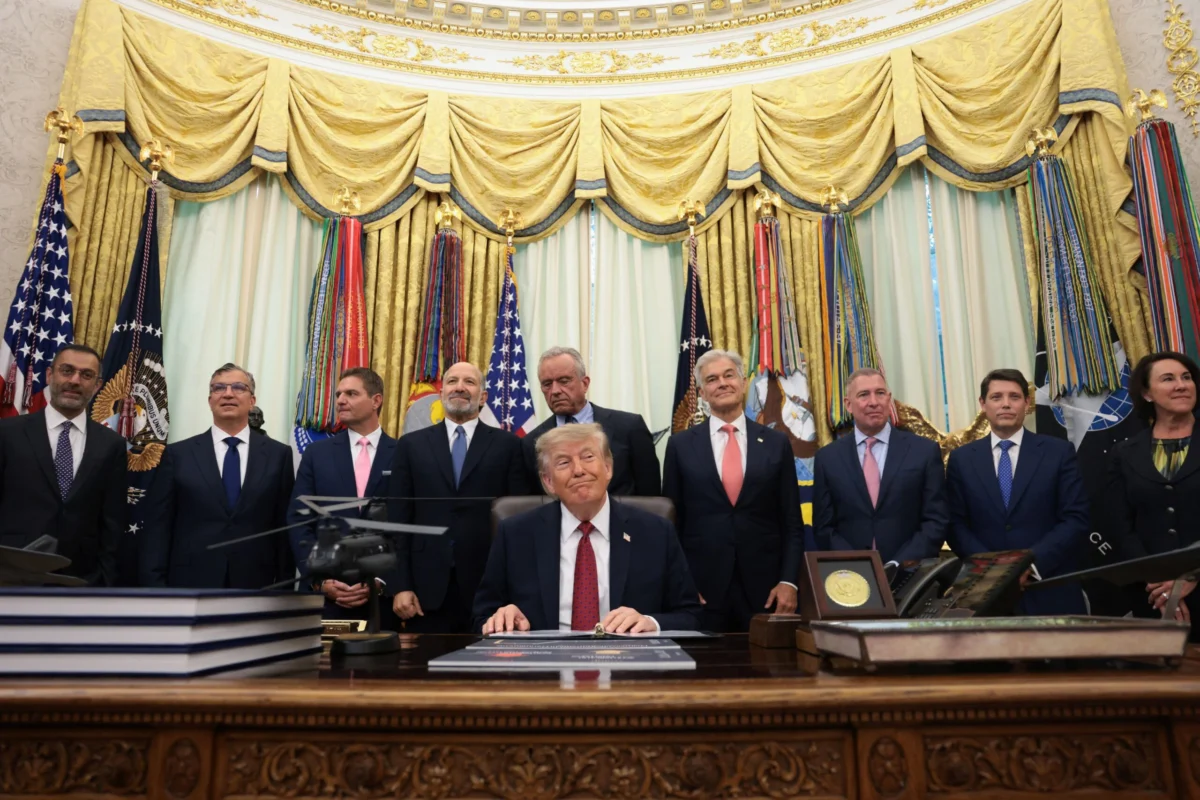
In a significant move aimed at curbing pharmaceutical expenditures and reinforcing his administration’s healthcare affordability agenda, U.S. President Donald Trump announced on Monday, August 31, 2026, that his administration had successfully brokered new drug pricing agreements with nine additional pharmaceutical manufacturers. These voluntary deals, forged under the controversial "most favored nation" (MFN) policy, mandate that these companies sell their medications at prices aligned with those charged in foreign countries, specifically targeting outpatient drugs for state Medicaid programs. This latest round of agreements brings the total number of participating drugmakers to 26, which the White House claims now encompasses approximately 90% of the domestic pharmaceutical market, with President Trump asserting that the remaining 10% "have no choice" but to follow suit.
Details of the Latest Agreements and Participating Companies
The nine pharmaceutical companies signing onto these new accords are Alcon, Astellas Pharma, BeOne Medicines, BridgeBio, CSL, Kyowa Kirin, Sun Pharma, Teva Pharmaceuticals, and UCB. While shares of most of these companies remained relatively stable following the announcement, Teva and BeOne experienced a modest decline of around 1%. The core tenet of these agreements dictates that these companies will provide substantial discounts on a range of outpatient drugs to every state Medicaid program. The objective is to standardize prices paid by states, ensuring they do not exceed what these same companies charge for identical medications in other developed nations, where drug costs are notoriously lower.
The scope of these newly discounted medications is broad, encompassing treatments for a variety of chronic and rare diseases that significantly impact patient populations across the United States. These include critical therapies for conditions such as hemophilia, various liver diseases, debilitating skin conditions, and several forms of cancer. The implications for patients suffering from these ailments, particularly those reliant on Medicaid, could be substantial, potentially leading to increased access and reduced financial burdens.
Beyond the immediate price reductions, a crucial component of these agreements involves significant commitments to bolstering domestic manufacturing capabilities. The White House reported that, collectively, the nine signatory companies have pledged to invest at least $19.6 billion in U.S. manufacturing in the near term. This strategic investment aligns with the administration’s broader goals of reducing America’s reliance on foreign supply chains for essential medicines and active pharmaceutical ingredients (APIs), thereby enhancing national security and economic resilience.
Further cementing the focus on national preparedness, Astellas, Sun Pharma, Teva, and UCB have also agreed to donate active pharmaceutical ingredients for key products to the federal government’s strategic reserve. This reserve is a vital component of the nation’s emergency preparedness infrastructure, designed to ensure a robust supply of critical medical components in the event of global supply chain disruptions, natural disasters, or public health crises. As a tangible example, UCB will contribute 163 tons of levetiracetam, a widely used anticonvulsant essential for controlling and preventing certain types of seizures, underscoring the practical impact of these provisions.
The Genesis and Evolution of the "Most Favored Nation" Policy
President Trump’s "most favored nation" drug pricing policy represents a radical departure from traditional U.S. pharmaceutical pricing mechanisms. The concept, typically employed in international trade agreements to ensure fair and non-discriminatory trade practices, was controversially adapted by the administration to address what it perceived as systemic inequities in global drug pricing. The administration’s argument has consistently been that other developed nations "freeload" off American innovation by negotiating significantly lower drug prices, leaving U.S. consumers to shoulder a disproportionate share of pharmaceutical research and development costs.
The formalization of this policy began with an executive order signed by President Trump in May 2025. This order explicitly called for the United States to align its pharmaceutical prices with the lowest prices paid in other comparable wealthy nations, effectively requiring drugmakers to offer their products to U.S. government programs at rates comparable to those found abroad. The executive order’s stated intent was not only to lower prices for American patients but also to "end global freeloading," suggesting a potential strategy to compel other nations to pay more for drugs, thereby reducing the perceived burden on U.S. consumers.
Prior to this latest announcement, the Trump administration had already secured similar pricing deals with 17 other major pharmaceutical companies over the past year. These earlier signatories included industry giants such as Pfizer, Eli Lilly, and Novo Nordisk. The cumulative effect of these agreements, now totaling 26 companies, represents a substantial portion of the U.S. pharmaceutical market, solidifying the administration’s assertion of widespread industry adoption, whether voluntary or under implicit pressure. The president’s declaration that the remaining 10% of the industry "have no choice" but to comply underscores the administration’s assertive stance and its determination to achieve near-universal participation in the MFN framework.
Understanding the U.S. Drug Pricing Landscape
The United States has long grappled with the highest prescription drug prices among developed nations, a persistent issue that has fueled public frustration and political debate for decades. A comprehensive 2024 study by the Rand Corporation starkly illustrated this disparity, finding that U.S. prescription drug prices were, on average, nearly three times higher than those overseas. For branded drugs, the discrepancy was even more pronounced, with prices exceeding four times those found in other countries.
Several complex factors contribute to this unique pricing environment in the U.S. Unlike many other nations where government entities directly negotiate drug prices, the U.S. system, particularly Medicare, is largely prohibited from doing so. This lack of centralized negotiation power, combined with robust patent protections that grant pharmaceutical companies extended periods of market exclusivity, allows manufacturers significant leeway in setting prices. Furthermore, the intricate web of pharmaceutical benefit managers (PBMs), insurers, and distribution channels adds layers of complexity and often opaque pricing structures, making it difficult for consumers and even healthcare providers to ascertain the true cost of medications. High marketing and administrative costs within the U.S. healthcare system are also frequently cited as contributing factors.
Past administrations and legislative bodies have made various attempts to address escalating drug costs, ranging from promoting generic competition to increasing transparency requirements. However, none have achieved the sweeping, direct price-linking mechanism championed by the Trump administration’s MFN policy. This historical context underscores the ambitious and, to some, unprecedented nature of the current approach.
Industry Reactions and Economic Implications
The pharmaceutical industry, represented by its primary trade association PhRMA (Pharmaceutical Research and Manufacturers of America), has consistently voiced strong opposition to the "most favored nation" policy. PhRMA has argued that linking U.S. drug prices to those in countries with socialized healthcare systems is not the optimal way to lower costs for Americans. Instead, the association has frequently placed blame on pharmacy benefit managers (PBMs), asserting that their rebate practices and opaque pricing models are the primary drivers of high out-of-pocket costs for patients. PhRMA’s core concern is that imposing foreign reference pricing could stifle pharmaceutical innovation, arguing that the higher U.S. prices are essential to fund the extensive and risky research and development necessary to bring new life-saving drugs to market.
Despite these vocal objections, the growing number of companies signing MFN deals indicates a strategic shift within the industry. The White House’s persistent pressure and the potential for regulatory penalties or public backlash appear to have compelled many drugmakers to engage. The original article notes that these "most favored nation" deals have already profoundly impacted the commercial strategies, bottom lines, and manufacturing pipelines of major pharmaceutical companies.
Economically, the impact is multi-faceted. On one hand, the commitment of nearly $20 billion in U.S. manufacturing investments by the latest nine companies alone represents a significant economic stimulus and a strategic re-shoring of critical production capabilities. This move aims to insulate drugmakers from future tariff threats and reduce vulnerabilities in global supply chains, aligning with broader national security objectives. On the other hand, the lower prices in the U.S. are undeniably weighing on pharmaceutical companies’ bottom lines. For instance, Novo Nordisk, a signatory to an earlier MFN deal, has publicly acknowledged that it will take time for increased prescription volumes, spurred by lower prices, to offset the immediate revenue dip resulting from these agreements. This highlights a delicate balancing act for manufacturers: adapting to reduced profit margins in their most lucrative market while simultaneously investing in new infrastructure.
Furthermore, drugmakers are drastically expanding direct-to-consumer channels for their products. This includes offering medicines directly through initiatives like the president’s "TrumpRx portal," which was launched in February 2026. This shift bypasses traditional intermediaries, potentially allowing companies to better control pricing and distribution while fostering a more direct relationship with patients. However, the long-term implications for drug innovation and the overall pharmaceutical R&D ecosystem remain a subject of intense debate among economists and public health experts.
Implications for Patients and the Healthcare System
For patients, particularly those covered by state Medicaid programs, these agreements promise tangible benefits. Reduced drug prices mean lower costs for states, which can translate into greater budget flexibility and potentially expanded access to medications for vulnerable populations. For individuals suffering from chronic and rare diseases like hemophilia, liver conditions, skin ailments, and various cancers, the availability of essential treatments at more affordable rates could significantly improve health outcomes and quality of life.
However, the broader impact on the U.S. healthcare system and all patients is still evolving. While the MFN policy directly targets government programs, the hope is that these price reductions will create a downward pressure on drug prices across the entire market. Critics, however, voice concerns that companies might seek to offset lost revenue by increasing prices in other segments of the market or by limiting the availability of certain drugs in the U.S. if the economic incentives become too unfavorable. The delicate balance between ensuring affordability and incentivizing pharmaceutical innovation remains a central tension in this policy discussion.
The contribution of active pharmaceutical ingredients to the federal strategic reserve is another critical benefit, addressing concerns about national health security. The pandemic underscored the vulnerabilities of global supply chains and the dangers of over-reliance on foreign manufacturers for essential medical components. By securing domestic supplies of APIs, the administration aims to enhance the country’s resilience in the face of future health crises or geopolitical disruptions.
Political Dimensions and the Road Ahead
The timing of these announcements is undeniably linked to the political calendar, specifically the upcoming midterm elections. Healthcare affordability, and prescription drug costs in particular, consistently rank as top concerns for American voters. By securing these deals, the Trump administration seeks to demonstrate concrete action on a pressing issue, positioning itself as a champion for consumers against powerful pharmaceutical interests. This narrative serves as a potent political tool, highlighting tangible achievements in a policy area that has historically been challenging for any administration to tackle effectively.
The president’s assertive tone, declaring that the remaining 10% of the industry "have no choice" but to participate, suggests a strong resolve to see this policy fully implemented. This approach aligns with his administration’s broader strategy of using executive authority and direct negotiation to bypass legislative gridlock and deliver on campaign promises.
As the U.S. navigates the complexities of healthcare reform, the "most favored nation" policy represents a bold and contentious experiment. While it promises immediate relief for government programs and aims to fundamentally reshape the economics of the pharmaceutical industry, its long-term effects on innovation, drug availability, and the broader healthcare market will continue to be closely scrutinized. The ongoing debate between consumer advocates, the pharmaceutical industry, and policymakers underscores the profound challenges inherent in balancing access, affordability, and the imperative for medical advancement in the world’s largest pharmaceutical market. The success and sustainability of these deals will ultimately be measured by their ability to deliver consistent savings for Americans without compromising the future of medical innovation.
