

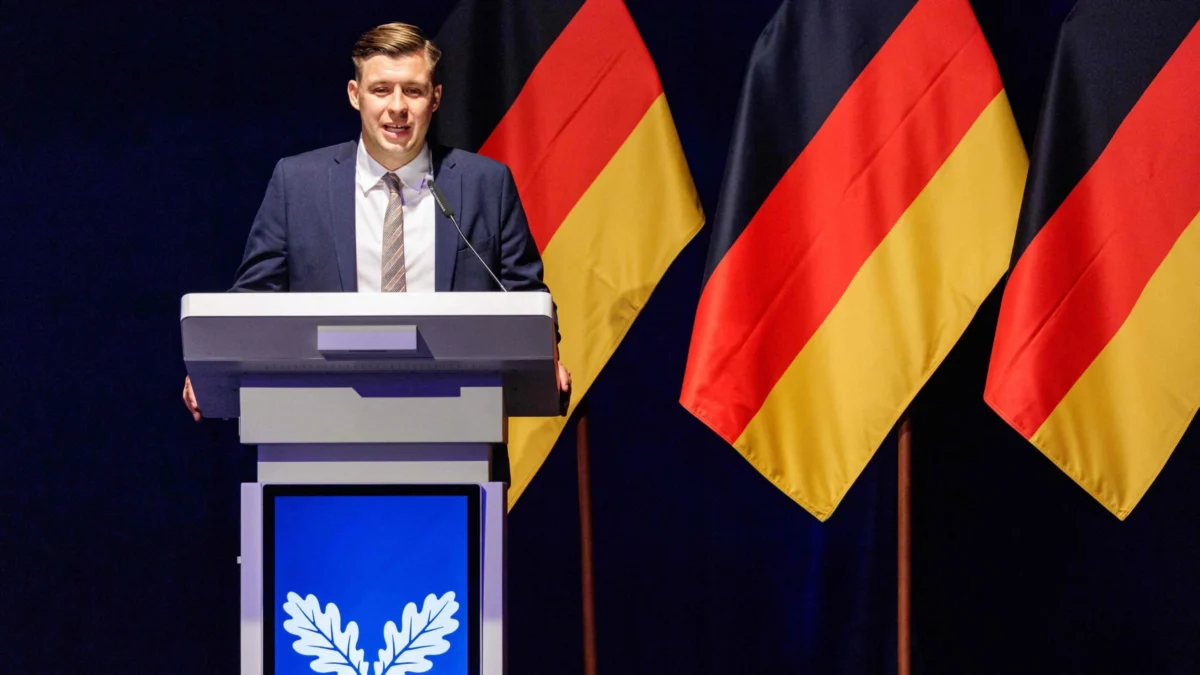
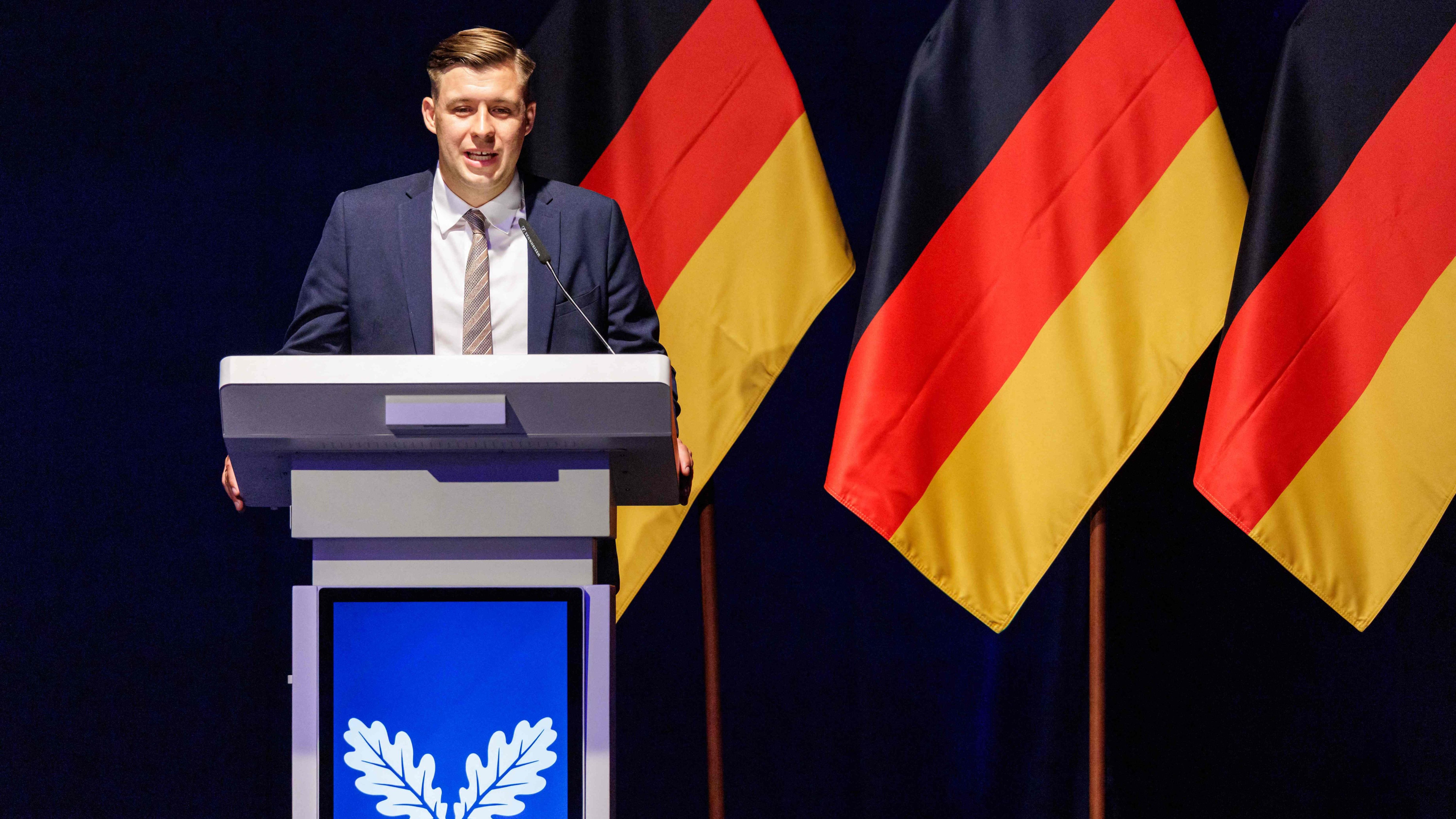
A significant internal rift has emerged within Germany’s Alternative for Germany (AfD) party concerning the future of the Euro currency, a disagreement that is casting a shadow over the party’s prospects in the upcoming state elections in Eastern Germany. The conflict pits the party’s co-leader, Alice Weidels, who has recently reiterated her call for Germany’s exit from the Eurozone, against the leader of the AfD’s youth organization, "Generation Deutschland" (GD), Jean-Pascal Hohm, who openly opposes such a move. This ideological divergence within a prominent opposition party highlights the complex economic and political considerations at play, particularly as the AfD seeks to capitalize on public sentiment in key federal states.
The Euro Debate: A Deepening Divide Within the AfD
The controversy was ignited by recent statements from Alice Weidels, a leading figure in the AfD and a member of the Bundestag, who once again advocated for Germany’s withdrawal from the European single currency. This stance, while not entirely new for some factions within the AfD, has been met with strong resistance from the younger generation of the party. Jean-Pascal Hohm, the chairman of Generation Deutschland, has explicitly distanced his organization from Weidels’ position, stating, "We do not want a German exit from the Euro." This clear demarcation underscores a generational and perhaps strategic difference in how the party envisions its role within both Germany and the broader European Union.
The AfD, traditionally known for its Eurosceptic platform, has consistently questioned the benefits of European integration and the sustainability of the Euro. However, the specific call for a unilateral German exit from the currency bloc represents a more radical position, one that carries substantial economic risks and potential disruptions. Critics of such a move often point to the potential for severe currency devaluation, hyperinflation, capital flight, and a significant blow to Germany’s export-oriented economy. The re-emergence of this debate within the party suggests a struggle for dominance over the AfD’s future direction, with the youth wing seemingly opting for a more pragmatic, or at least less disruptive, approach to economic policy.

Background Context: The AfD’s Electoral Landscape
This internal conflict is particularly acute given the timing. The AfD is preparing for crucial state elections in Brandenburg, Saxony, and Thuringia, regions in Eastern Germany where the party has historically enjoyed strong support. The upcoming ballots are seen as a significant test for the AfD’s ability to translate its national polling numbers into tangible electoral victories and potentially influence regional governance. A party divided on fundamental economic issues, especially one as sensitive as currency policy, risks alienating voters who are seeking stability and clear leadership.
The AfD’s rise in Eastern Germany has been attributed to a variety of factors, including dissatisfaction with mainstream political parties, concerns over immigration, and economic anxieties. However, the party’s economic platform, particularly its stance on the Euro, has often been a point of contention. While some voters may be drawn to the idea of regaining monetary sovereignty, others may be wary of the economic instability that a Euro exit could entail. The current dispute between Weidels and Hohm could therefore have a direct impact on voter perception and turnout in these key elections.
Chronology of the Dispute: A Developing Rift
While the exact timeline of private discussions is not publicly available, the public statements surrounding the Euro issue have become more pronounced in recent weeks. Weidels’ repeated calls for a German Euro exit, often framed as a necessary step to protect national economic interests, have been met with increasing public dissent from within the party’s younger ranks. Hohm’s explicit rebuttal, made in his capacity as the leader of the AfD’s youth organization, signifies a direct challenge to the established party leadership on this critical policy point.
The "Generation Deutschland" organization, while part of the broader AfD, often seeks to project a distinct image, potentially aiming to appeal to a younger demographic or to present a more moderate face of the party on certain issues. This latest dispute suggests that this differentiation may extend to core economic policy, indicating a growing divergence in ideological priorities and strategic outlooks between the party’s older guard and its emerging leadership.

Supporting Data and Economic Implications
Germany’s membership in the Eurozone has been a cornerstone of its post-war economic success. As the largest economy in the EU, Germany benefits immensely from the single currency, which facilitates trade, investment, and tourism by eliminating currency exchange costs and risks. German exports, a critical driver of the nation’s economic growth, are particularly sensitive to currency fluctuations. A hypothetical return to the Deutsche Mark would likely lead to a rapid and substantial appreciation of the new German currency, making German goods significantly more expensive on the global market and potentially triggering a severe recession.
Data from the German Federal Statistical Office (Destatis) consistently shows that a significant portion of Germany’s Gross Domestic Product (GDP) is derived from exports. In 2023, for instance, exports accounted for approximately 47% of Germany’s GDP. A sudden reintroduction of a national currency would disrupt these trade flows, potentially leading to job losses and a decline in economic output. The German Institute for Economic Research (DIW Berlin) and other economic think tanks have repeatedly warned of the catastrophic consequences of a Euro exit, estimating potential GDP contractions of double-digit percentages in the short to medium term.

Reactions and Statements from Related Parties
While official statements from mainstream political parties regarding the internal AfD dispute are likely to be cautious, the broader implications of the debate are undeniable. Traditional parties such as the Christian Democratic Union (CDU) and the Social Democratic Party (SPD) are expected to highlight the economic risks associated with the AfD’s radical economic proposals. Their messaging will likely focus on stability, European cooperation, and the potential damage to Germany’s international standing.
Business associations, such as the Federation of German Industries (BDI), have consistently advocated for Germany’s continued membership in the Eurozone, emphasizing the benefits of economic stability and predictable trade conditions. Any significant internal debate within a major political party that questions these fundamentals will undoubtedly be closely monitored by the business community, with potential implications for investment decisions and economic confidence.

Broader Impact and Analysis
The internal conflict within the AfD over the Euro presents a multifaceted challenge. Firstly, it exposes a potential ideological struggle for the party’s soul: should it prioritize radical national sovereignty, even at the risk of economic upheaval, or adopt a more pragmatic approach to economic policy? The AfD’s youth wing, by opposing a Euro exit, may be attempting to broaden the party’s appeal and present a more responsible image, particularly to undecided voters who might be deterred by extreme economic proposals.
Secondly, this debate highlights the inherent difficulties in managing a large and diverse political party. While the AfD has been unified by its opposition to immigration and its critique of established political parties, its internal cohesion on complex economic policy issues remains a significant question mark. The upcoming state elections will serve as a crucial barometer for whether this internal division is perceived as a sign of strength (e.g., a dynamic party with diverse viewpoints) or a weakness (e.g., a party lacking a coherent and stable economic vision).
The timing of this dispute, so close to critical elections, is particularly noteworthy. If the AfD leadership, represented by Weidels, insists on its radical stance, it risks alienating a segment of its own base, including younger voters who may be more attuned to the practical economic consequences. Conversely, if the youth wing’s more moderate stance gains traction, it could signal a shift in the party’s overall direction, potentially leading to a more palatable image for a broader electorate, but also risking internal backlash from more ideologically rigid factions. The outcome of this internal debate could have significant repercussions not only for the AfD’s electoral performance but also for the future of Germany’s economic policy discourse and its role within the European Union. The challenge for the AfD is to navigate these internal tensions without jeopardizing its electoral ambitions, particularly in the sensitive political climate of Eastern Germany.
