

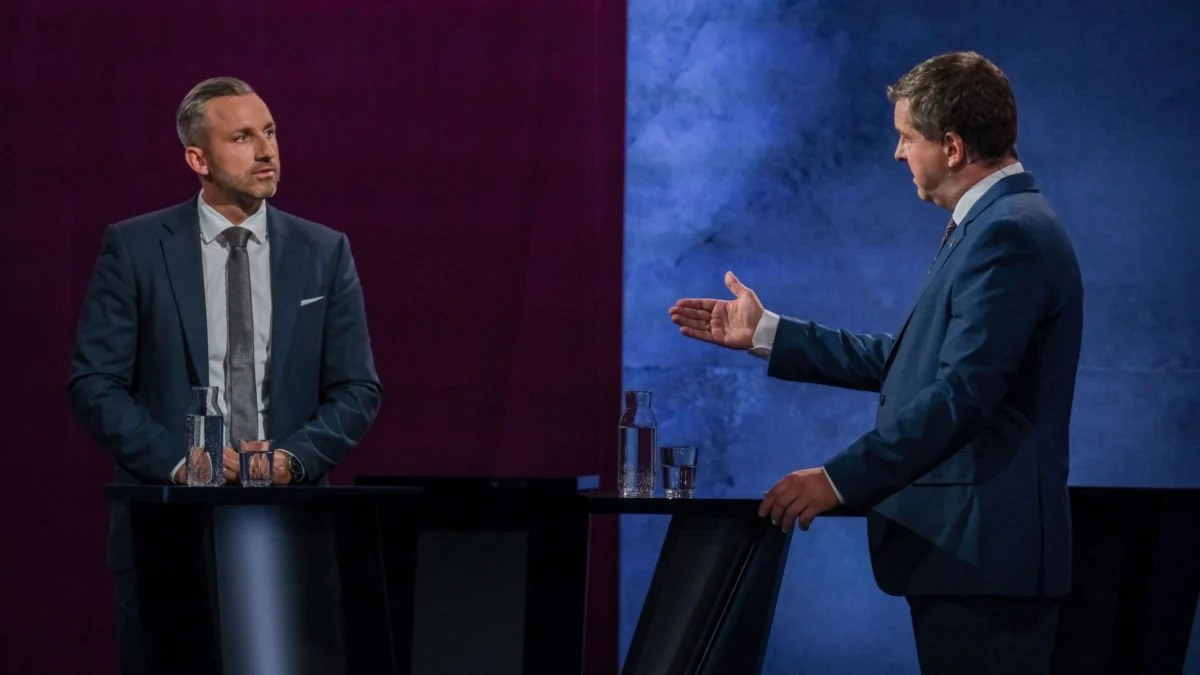
The political landscape of Saxony-Anhalt is in fervent anticipation as the state election looms, with a pivotal television duel between incumbent Minister President Reiner Haseloff (CDU) and AfD leader Ulrich Siegmund igniting a fiery exchange just eleven days before the polls. The confrontation, broadcast in the MDR election arena, saw both candidates engage in a fierce verbal battle, revealing not only their campaign strategies but also their individual vulnerabilities.
A Clash of Styles and Substance in the Arena
Sven Schulze, the 47-year-old CDU Minister President, presented a composed yet serious demeanor. Clad in a dark suit adorned with the state emblem on his lapel, his expressions ranged from a stern gaze to a subtly downturned mouth, conveying a sense of skepticism and, at times, a hint of discontent. His messaging, encapsulated by the assertive slogan "I have delivered," aimed to underscore his track record and the perceived stability he brings to the state.
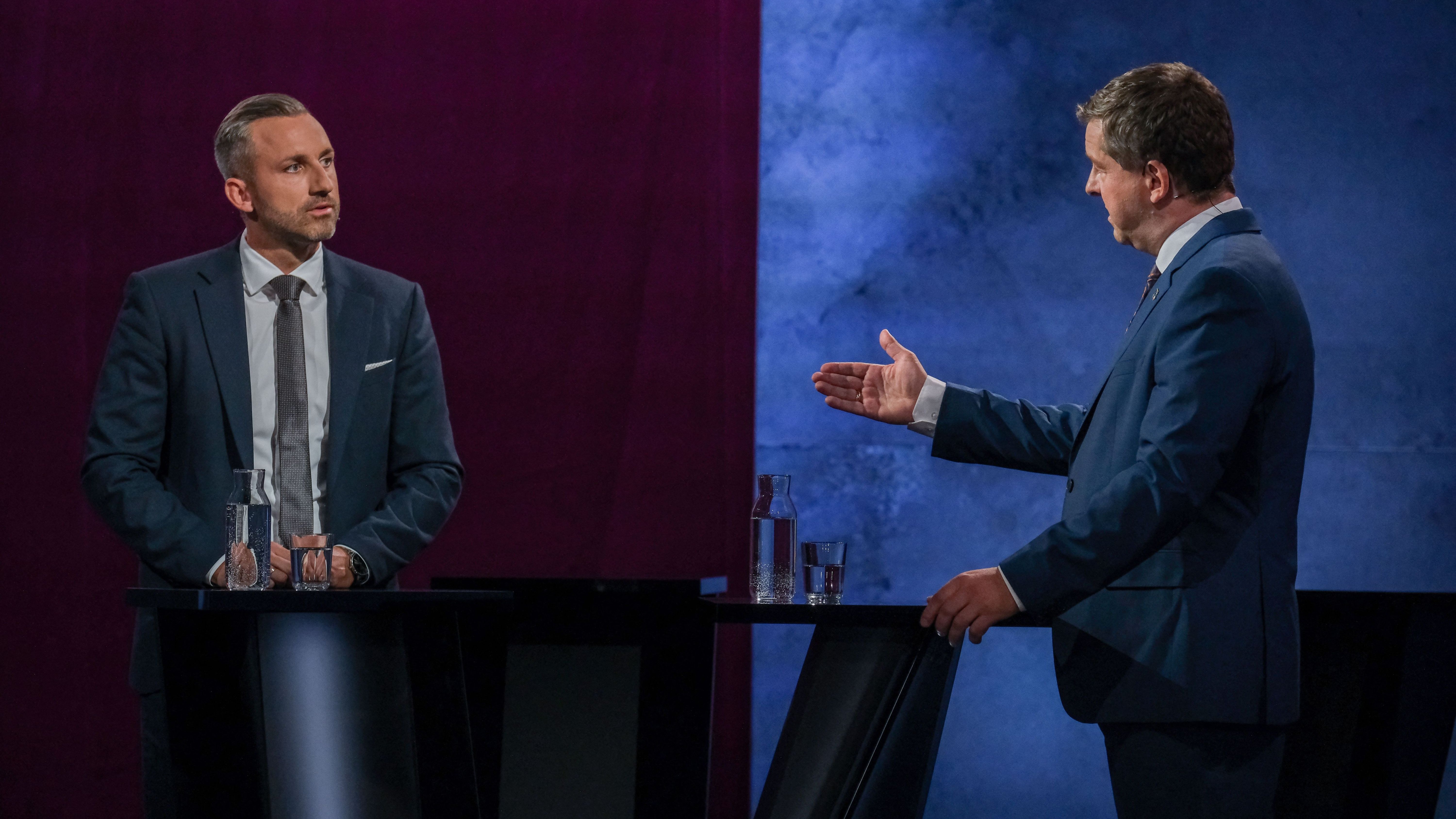
In stark contrast, Ulrich Siegmund, the 35-year-old AfD frontrunner, opted for a dark suit with a slender tie and a crisp white pocket square. His approach was characterized by a more dynamic and confrontational style. He actively sought eye contact with his opponent, punctuated by frequent, almost dismissive smiles, projecting an image of both affability and calculated confidence. As Siegmund spoke, his eyes widened, his gaze fixed intently on Schulze, signaling a readiness to challenge and dismantle the incumbent’s narrative.
The duel, held in the studios of MDR, served as a crucial platform for both candidates to sway undecided voters and galvanize their respective bases. With the election just over a week away, the stakes were exceptionally high, placing a palpable pressure on Schulze, as the incumbent, to defend his record and project an image of continued leadership.
Background: The Political Climate in Saxony-Anhalt
Saxony-Anhalt, a state in eastern Germany, has witnessed a significant rise in support for the Alternative for Germany (AfD) party in recent years. This trend reflects broader political shifts across the region, often attributed to a complex interplay of economic anxieties, concerns about immigration, and a perceived disconnect between traditional political parties and the concerns of the electorate.

The CDU, historically the dominant force in the state, faces the challenge of maintaining its electoral strength against a resurgent AfD. The party’s strategy often centers on highlighting its role in governance, economic stability, and social cohesion. The slogan "I have delivered" by Schulze is a direct attempt to capitalize on this, emphasizing tangible achievements and promising continuity.
The AfD, on the other hand, has successfully positioned itself as an opposition force, appealing to voters who feel marginalized or unheard by the established political order. Their campaign rhetoric often focuses on issues such as national identity, border security, and a critique of current government policies. Siegmund’s more aggressive and direct style in the debate is a reflection of this strategy, aiming to disrupt the incumbent’s narrative and appeal to a sense of change.
Key Moments and Exchanges in the TV Duel
The television debate was marked by several heated exchanges that illuminated the core differences between the two candidates and their parties.
-
Economic Policy: Schulze likely emphasized his government’s efforts in attracting investment, creating jobs, and managing the state’s finances. He might have pointed to specific infrastructure projects or economic development initiatives undertaken during his tenure. Siegmund, conversely, would have likely focused on critiques of current economic policies, potentially highlighting inflation, energy costs, or what he perceives as a neglect of local industries. He might have proposed alternative economic models or advocated for greater national economic sovereignty.
-
Immigration and Security: This is a perennial hot-button issue in German politics, particularly in the eastern states. Schulze would have defended the government’s approach to managing migration, emphasizing integration efforts and the importance of European cooperation. He might have also stressed the need for continued security measures. Siegmund, as is characteristic of the AfD, would have likely adopted a much tougher stance, advocating for stricter border controls, limitations on asylum, and a focus on what he terms "internal security" through increased law enforcement.
-
Social Issues and Identity: The debate likely touched upon social policies, cultural values, and the concept of national identity. Schulze would have likely spoken about social inclusion, diversity, and the importance of a united Saxony-Anhalt. Siegmund might have raised concerns about what he perceives as a decline in traditional values or an overemphasis on certain progressive agendas, appealing to a sense of traditional German identity.
-
Personal Attacks and Weaknesses: The intensity of the duel suggests that both candidates likely probed each other’s perceived weaknesses. Schulze might have questioned Siegmund’s experience or the AfD’s policy proposals, framing them as unrealistic or detrimental to the state. Siegmund, in turn, could have targeted Schulze’s record, questioning the effectiveness of his policies or highlighting perceived failures or broken promises. The description of Schulze’s "skeptical, almost sullen" look when listening, and Siegmund’s "deliberately relaxed" demeanor, suggest a psychological dimension to their confrontation, with each trying to gain a mental advantage.

Data and Trends Shaping the Election
Recent polling data and election trends provide crucial context for the duel. For instance, if recent surveys indicate a tightening race or a slight surge for the AfD, this would explain the heightened urgency and confrontational tone. Data on voter turnout in previous state elections, particularly in Saxony-Anhalt, can also shed light on the demographics and political leanings of the electorate.
Key indicators to consider include:
- AfD’s Rising Support: The AfD has consistently polled higher in Saxony-Anhalt than in many western German states. Understanding the factors driving this support – be it economic dissatisfaction, cultural concerns, or a protest vote – is vital.
- CDU’s Challenge: The CDU, while still a major player, faces the challenge of retaining its traditional voter base while appealing to a broader spectrum of the electorate. The performance of the current government, particularly on economic and social issues, will be a significant factor.
- Coalition Dynamics: The potential for coalition building after the election is always a consideration. The ability of the CDU to form a stable government, potentially with other parties, will be influenced by the overall election results.
Potential Reactions and Implications

The fallout from this televised debate is likely to be significant.
- Undecided Voters: The duel will undoubtedly influence a segment of undecided voters who may be swayed by the candidates’ performance, their arguments, and their perceived leadership qualities.
- Base Mobilization: Both campaigns will be working to interpret the debate in a way that energizes their core supporters and encourages them to vote.
- Media Scrutiny: Political commentators and media outlets will dissect the debate, analyzing the strengths and weaknesses of each candidate’s performance, which will further shape public perception.
The implications of this election extend beyond Saxony-Anhalt. The success or failure of the CDU in holding off the AfD could have broader repercussions for the national political landscape and the trajectory of mainstream parties in Germany. A strong showing by the AfD could embolden similar movements in other regions and further complicate the formation of stable governing coalitions at both the state and federal levels.
Schulze’s "Delivered" Promise vs. Siegmund’s Challenge
Schulze’s campaign slogan, "I have delivered," is a direct appeal to voters based on his perceived accomplishments as Minister President. This strategy aims to project an image of competence, stability, and a proven ability to govern effectively. It suggests that under his leadership, Saxony-Anhalt has seen progress and that continuity is the best path forward. This message is particularly targeted at voters who prioritize security, economic predictability, and a steady hand at the helm.

However, the effectiveness of this message is contingent on the public’s perception of his government’s achievements. If voters feel that the government has not delivered on key promises, or that certain challenges remain unaddressed, this slogan could be perceived as out of touch or even disingenuous. The AfD, under Siegmund, is likely to exploit any perceived shortcomings in Schulze’s delivery, arguing that the current government has failed to adequately address the needs of the populace.
Siegmund’s challenge to Schulze is not merely about policy differences; it is also about positioning the AfD as the true voice of the people, offering a radical alternative to the status quo. His direct and often aggressive approach in the debate suggests a strategy of confronting the incumbent head-on, aiming to expose perceived weaknesses and capitalize on any public dissatisfaction.
The visual cues during the debate – Schulze’s "skeptical" and "sullen" expressions versus Siegmund’s "friendly" and "deliberately relaxed" demeanor – are indicative of a psychological battle for dominance. Each candidate is attempting to project an image of strength and control, while simultaneously undermining the confidence of their opponent.
As the election day approaches, the voters of Saxony-Anhalt will weigh the promises of continuity and delivery against the call for change and a decisive break from current policies. The outcome of this Landtagswahl will not only determine the future leadership of the state but also offer valuable insights into the evolving political currents shaping Germany.
